1912 Wheat Penny Coin Value: How Much Is It Worth?
A 1912 Wheat Penny can range from about $1.88 in well-worn Good-4 condition up to $376 at the MS63 grade level, depending on which mint produced it. Proofs, major varieties, and error coins fall outside that span.
Original surfaces, degree of wear, and copper color all play into what a specific coin will bring.
Fast Way to Identify Your 1912 Wheat Penny
Snap clear photos of the front and back of your 1912 penny and upload them for a preliminary identification. Good lighting and a close-up of the area below the date help determine the mint and any visible irregularities.
This is not a substitute for professional authentication, but it gives you a useful starting point.
1912 Wheat Penny Value
Upload both sides of your 1912 Wheat Penny.
Front Obverse
Upload photo
Back Reverse
Upload photo
Which 1912 Wheat Penny Versions Are Worth Money?
- The 1912-D penny commands the highest circulated guide value at $12 in G4 and reaches $376 at MS63, making it the branch to check first among circulation strikes.
- The 1912-S penny follows closely, listed at $22 in G4 and $354 at MS63, with the San Francisco mintmark adding collector demand.
- The 1912 Philadelphia matte proof, with its squared rims and distinctive prepared surface, carries a guide estimate of $825 at PR63, well above any circulation strike at comparable grade.
- Any 1912 cent with a confirmed collectible error such as a repunched mintmark, doubled die obverse, or off-center strike may carry additional value beyond standard guide figures.
Step 1: Identify Your 1912 Wheat Penny Mint Mark and Version
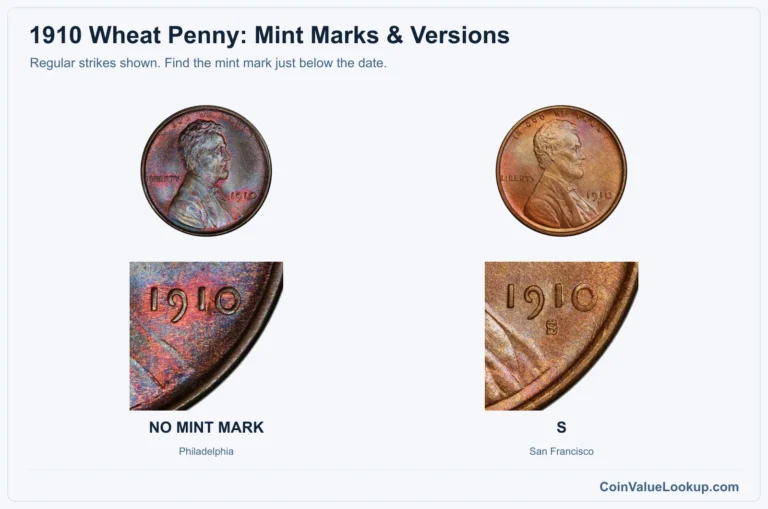
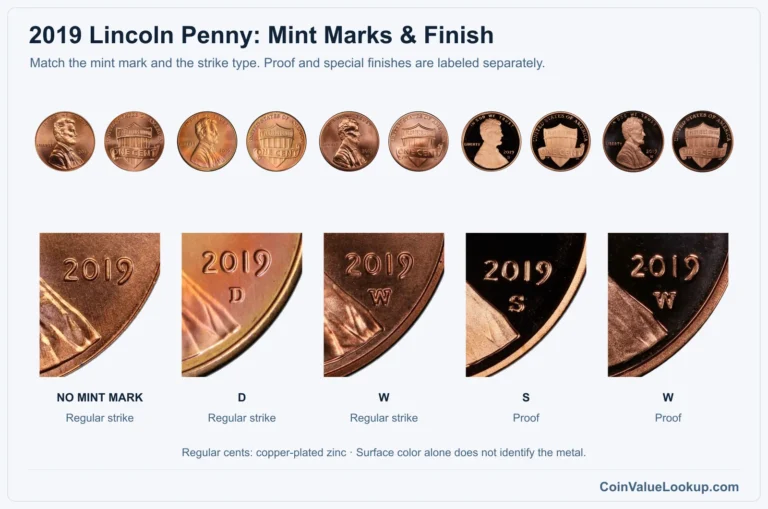
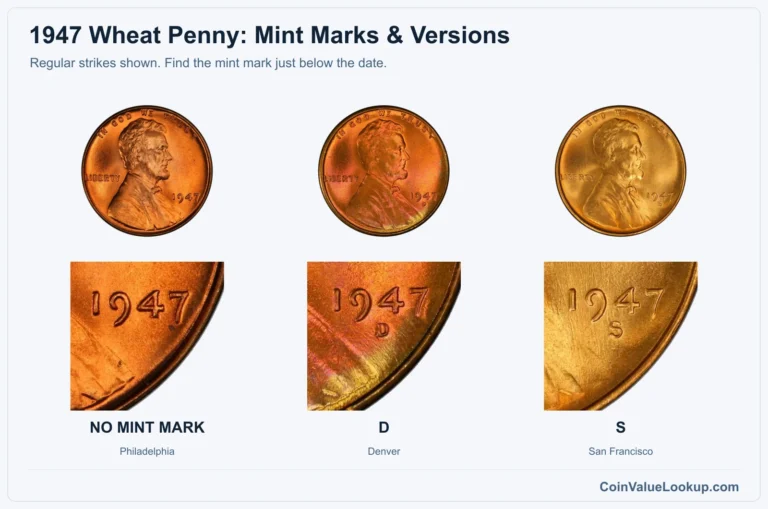
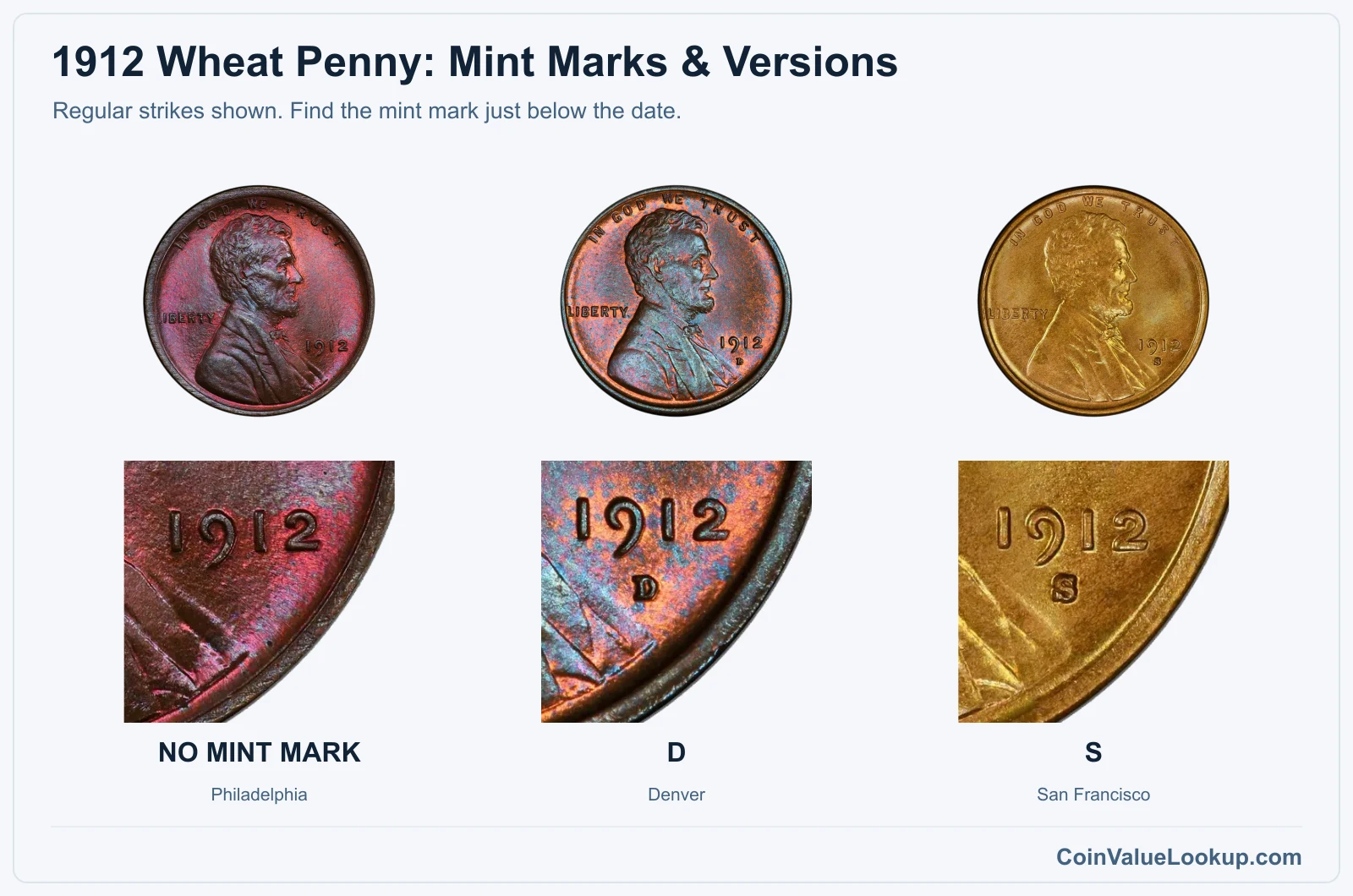
Flip the coin to Lincoln's side and look just below the date. A small "D" means Denver, an "S" means San Francisco, and no letter at all means Philadelphia.
All three mints struck circulation cents in 1912, and Philadelphia also produced a limited matte proof version.
The coin should weigh about 3.11 grams with a plain, smooth edge. Its alloy is 95% copper with 5% tin and zinc, giving that familiar warm brown or reddish tone.
A Wheat reverse with two wheat ears flanking "ONE CENT" confirms you have a Lincoln Wheat cent rather than a later Memorial design.
Do not confuse a well-struck San Francisco business strike with a proof. The 1912 matte proof carries no mintmark because it was made in Philadelphia.
Sharp rims and a distinctive matte surface texture set proofs apart from ordinary coins that simply happen to look nice. Color alone, whether red, brown, or somewhere between, does not establish the coin's grade or proof status.
Step 2: Check Your 1912 Wheat Penny Grade
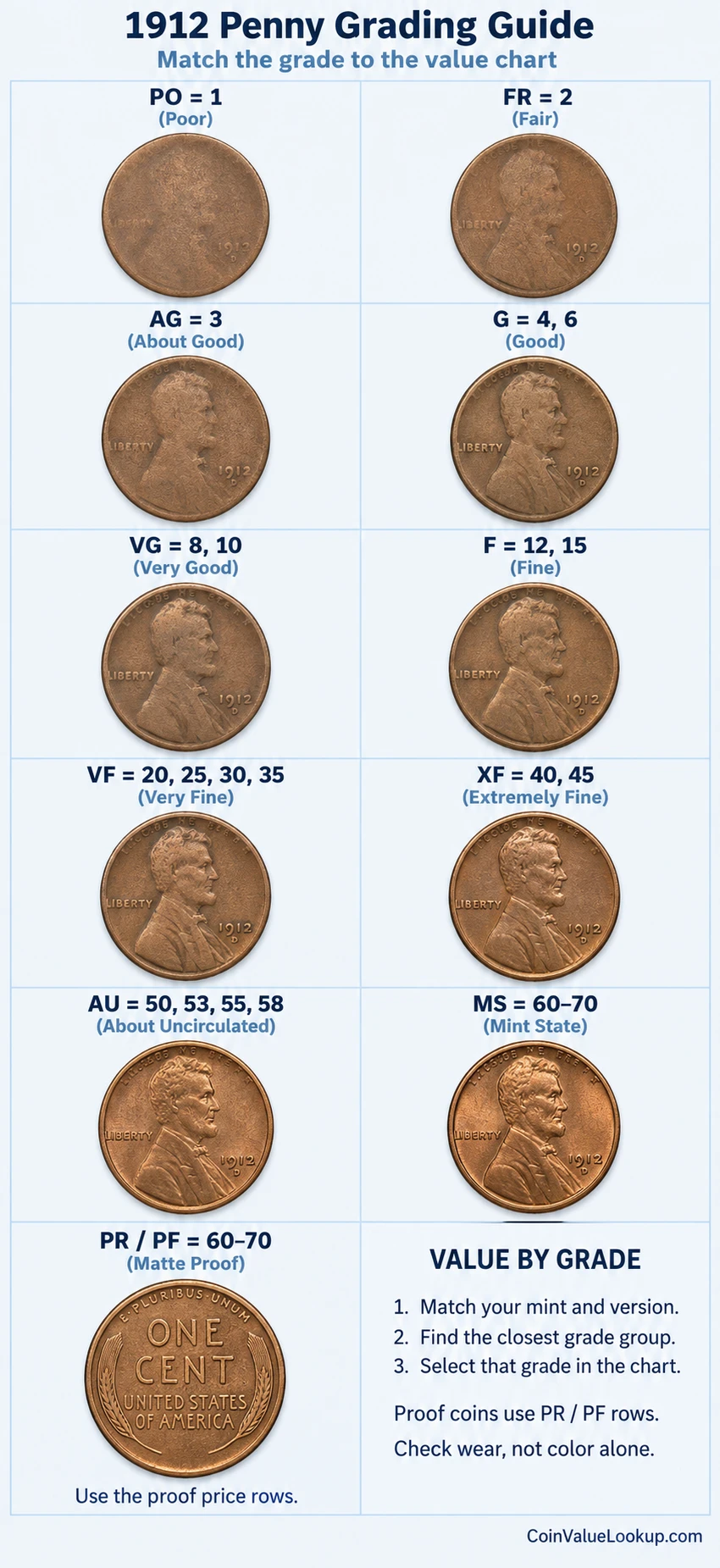
Start with Lincoln's cheekbone, jawline, and the fine hair strands above his ear. These are the first places to lose detail as a coin circulates.
On the reverse, check the individual wheat grain lines and the horizontal lines between the stalks.
A coin grading around Good-4 will show a clear outline of Lincoln but very little interior detail. Move up to Fine and you start seeing partial hair lines and stronger wheat detail.
At Mint State 63, expect full design sharpness with original luster, though minor contact marks are allowed.
Weak strikes can fool you. Some 1912 cents left the press with soft detail that looks like wear but is not.
Compare your coin to the reference image and pay attention to whether the flat spots match high-point wear patterns or appear uniformly soft across the whole design.
Treat color and surface quality as separate factors. A coin with original brown toning and no problems is more appealing than a cleaned coin that looks artificially bright.
Spots, corrosion, and evidence of cleaning all reduce a coin's desirability regardless of how much detail remains.
Step 3: Check 1912 Wheat Penny Value by Mint and Version
1912 Wheat Penny
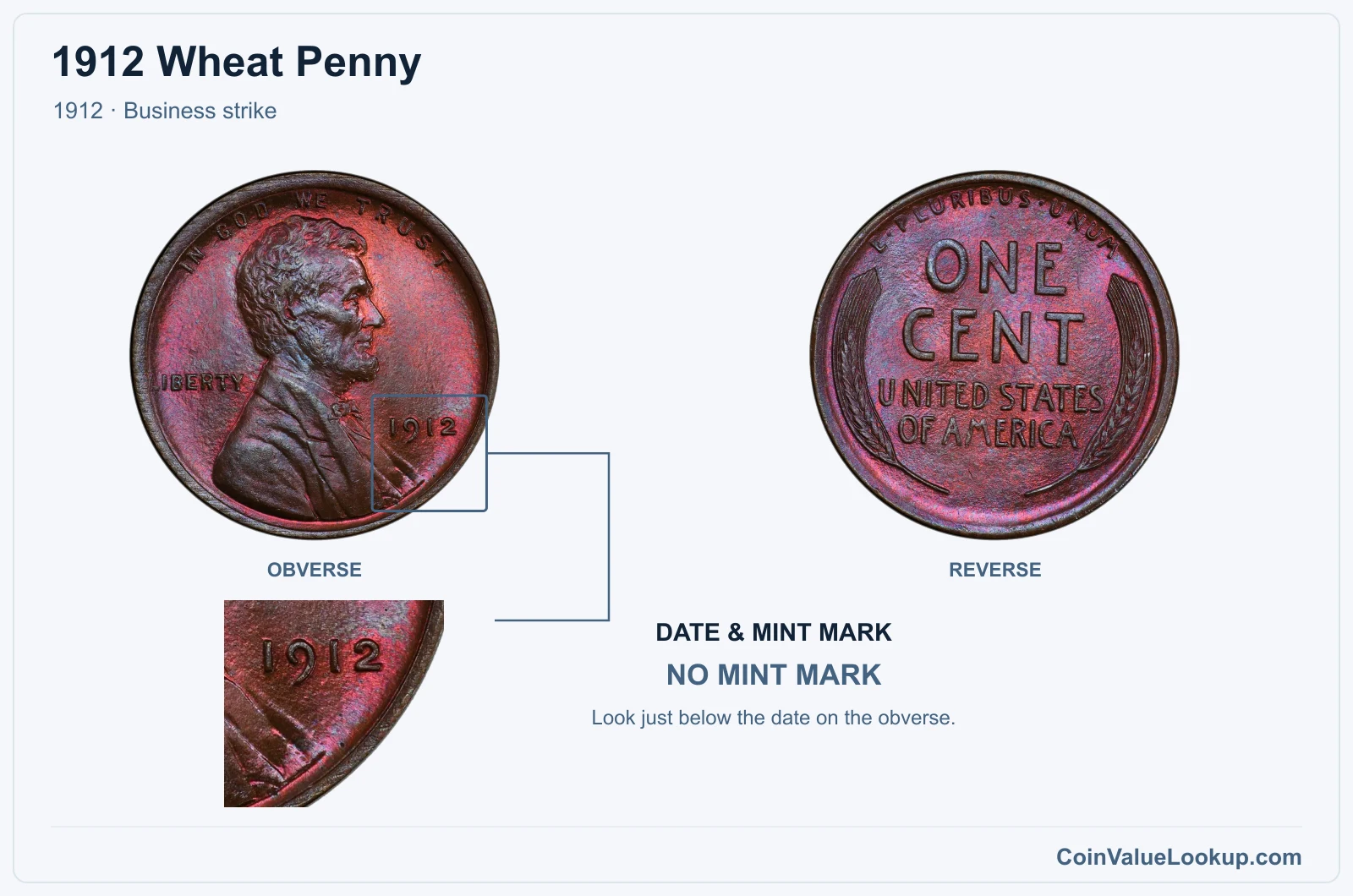
The 1912 Philadelphia cent has no mintmark below the date. It is a standard business strike in the 95% copper alloy, weighing about 3.11 grams with a plain edge.
Guide estimates place this coin at roughly $1.88 in Good-4 condition and around $61 at MS63. That makes it the most affordable of the three circulation mints for this date.
Original surfaces with honest brown or red-brown toning will always outperform a cleaned example, even at the same technical grade.
| Range | Grade | Price | Auction Records | Appraisal |
|---|---|---|---|---|
| PO | PO 1 | — | Coin Identifier | |
| FR | FR 2 | — | Coin Identifier | |
| AG | AG 3 | — | Coin Identifier | |
| G | G 4 | — | Coin Identifier | |
| G 6 | — | Coin Identifier | ||
| VG | VG 8 | — | Coin Identifier | |
| VG 10 | — | Coin Identifier | ||
| F | F 12 | — | Coin Identifier | |
| F 15 | — | Coin Identifier | ||
| VF | VF 20 | — | Coin Identifier | |
| VF 25 | — | Coin Identifier | ||
| VF 30 | — | Coin Identifier | ||
| VF 35 | Coin Identifier | |||
| XF | XF 40 | Coin Identifier | ||
| XF 45 | Coin Identifier | |||
| AU | AU 50 | — | Coin Identifier | |
| AU 53 | — | Coin Identifier | ||
| AU 55 | Coin Identifier | |||
| AU 58 | Coin Identifier | |||
| MS | MS 60 | — | Coin Identifier | |
| MS 61 | — | Coin Identifier | ||
| MS 62 | Coin Identifier | |||
| MS 63 | Coin Identifier | |||
| MS 64 | Coin Identifier | |||
| MS 65 | Coin Identifier | |||
| MS 66 | Coin Identifier | |||
| MS 67 | — | — | — | |
| MS 68 | — | — | — | |
| MS 69 | — | — | — | |
| MS 70 | — | — | — |
1912 Wheat Penny — D
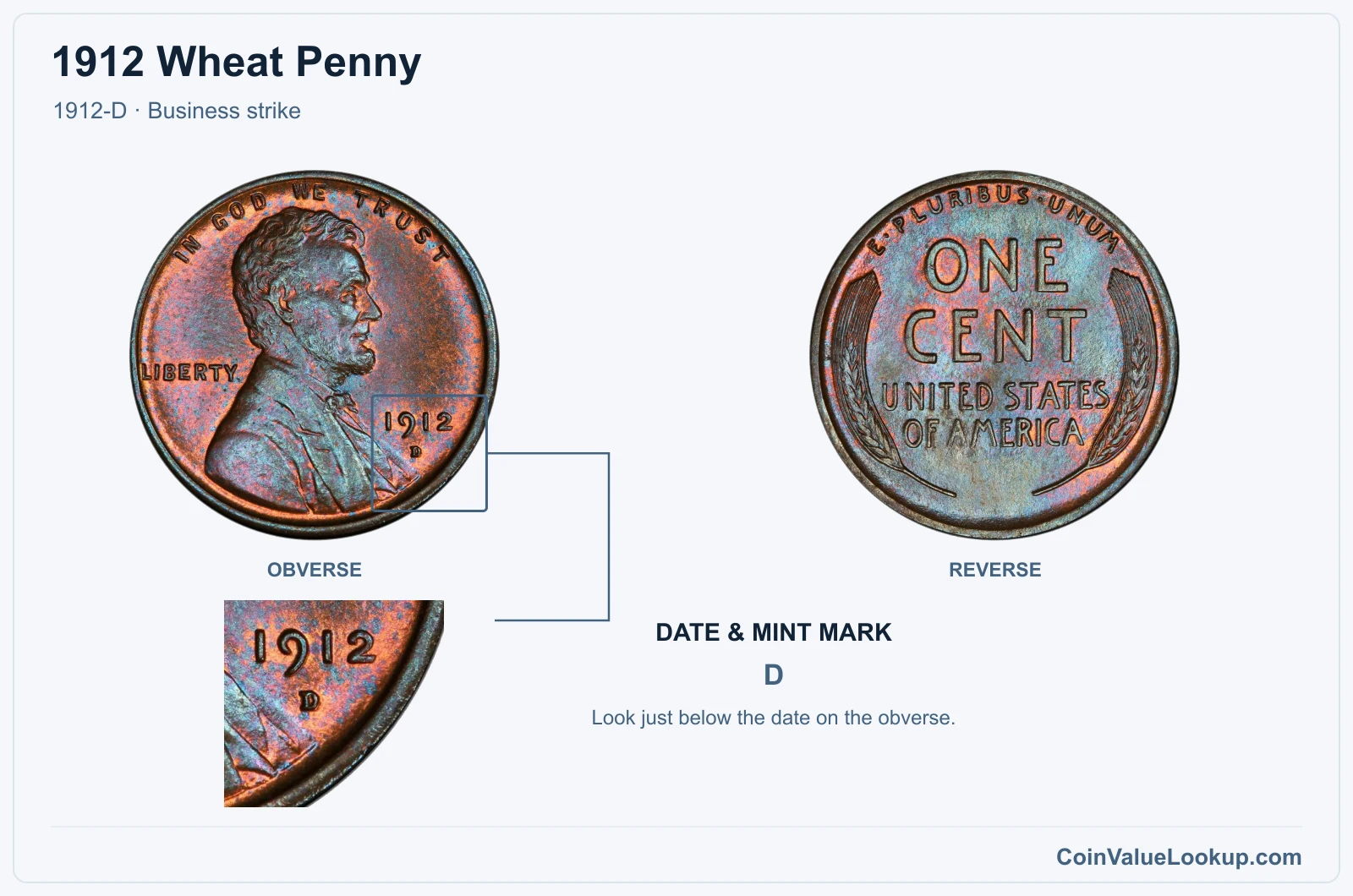
Look for a small "D" below the date to identify the Denver issue. The 1912-D carries a guide estimate of about $12 in Good-4, jumping to roughly $376 at MS63.
That is a significant premium over the Philadelphia coin in every grade. Denver's output for this year attracts steady collector interest, so even well-worn examples hold decent value.
In uncirculated condition the coin becomes genuinely scarce, which explains the steep climb to the MS63 figure. Match the exact mint and grade before assuming any price applies to your piece.
| Range | Grade | Price | Auction Records | Appraisal |
|---|---|---|---|---|
| PO | PO 1 | — | Coin Identifier | |
| FR | FR 2 | — | Coin Identifier | |
| AG | AG 3 | — | Coin Identifier | |
| G | G 4 | — | Coin Identifier | |
| G 6 | — | Coin Identifier | ||
| VG | VG 8 | — | Coin Identifier | |
| VG 10 | — | Coin Identifier | ||
| F | F 12 | — | Coin Identifier | |
| F 15 | — | Coin Identifier | ||
| VF | VF 20 | — | Coin Identifier | |
| VF 25 | — | Coin Identifier | ||
| VF 30 | Coin Identifier | |||
| VF 35 | — | Coin Identifier | ||
| XF | XF 40 | Coin Identifier | ||
| XF 45 | Coin Identifier | |||
| AU | AU 50 | Coin Identifier | ||
| AU 53 | Coin Identifier | |||
| AU 55 | Coin Identifier | |||
| AU 58 | Coin Identifier | |||
| MS | MS 60 | — | Coin Identifier | |
| MS 61 | Coin Identifier | |||
| MS 62 | Coin Identifier | |||
| MS 63 | Coin Identifier | |||
| MS 64 | Coin Identifier | |||
| MS 65 | Coin Identifier | |||
| MS 66 | Coin Identifier | |||
| MS 67 | — | — | — | |
| MS 68 | — | — | — | |
| MS 69 | — | — | — | |
| MS 70 | — | — | — |
1912 Wheat Penny — S
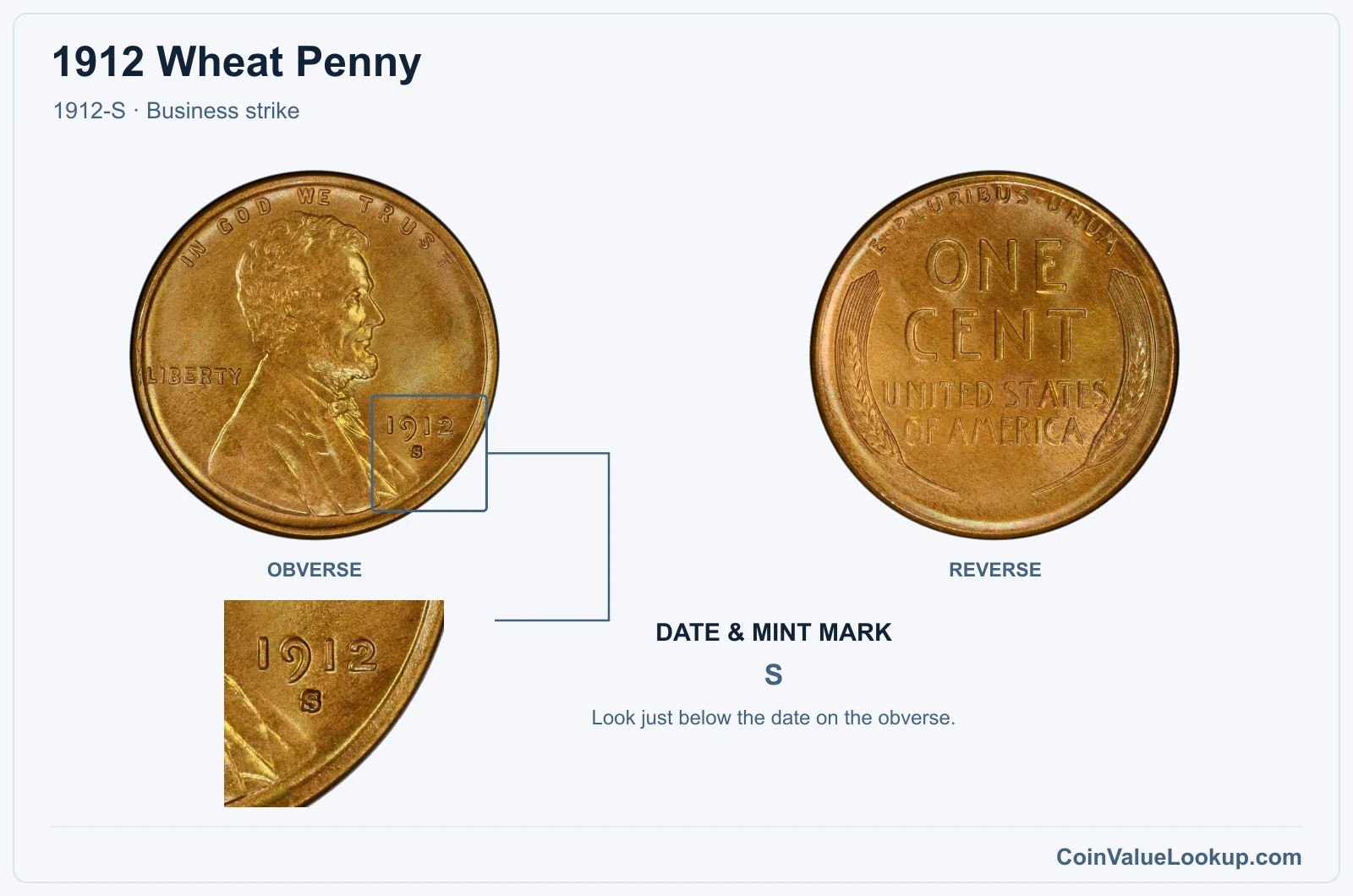
The 1912-S shows a small "S" mintmark below the date, confirming San Francisco production. Guide estimates start at about $22 in Good-4 and rise to approximately $354 at MS63.
That G4 figure actually exceeds the Denver coin's, so a worn example is still worth examining carefully. Do not confuse this business strike with the Philadelphia matte proof just because it looks sharp.
A San Francisco circulation coin will show normal luster patterns rather than the squared rims and prepared matte surface of a proof. Original, problem-free surfaces matter a great deal at every grade level.
Coin Value Lookup is a handy place to look up guides for other dates and mints in the Wheat cent series while you are sorting through your collection.
| Range | Grade | Price | Auction Records | Appraisal |
|---|---|---|---|---|
| PO | PO 1 | — | Coin Identifier | |
| FR | FR 2 | — | Coin Identifier | |
| AG | AG 3 | — | Coin Identifier | |
| G | G 4 | — | Coin Identifier | |
| G 6 | — | Coin Identifier | ||
| VG | VG 8 | Coin Identifier | ||
| VG 10 | — | Coin Identifier | ||
| F | F 12 | — | Coin Identifier | |
| F 15 | Coin Identifier | |||
| VF | VF 20 | Coin Identifier | ||
| VF 25 | Coin Identifier | |||
| VF 30 | Coin Identifier | |||
| VF 35 | Coin Identifier | |||
| XF | XF 40 | Coin Identifier | ||
| XF 45 | Coin Identifier | |||
| AU | AU 50 | Coin Identifier | ||
| AU 53 | Coin Identifier | |||
| AU 55 | Coin Identifier | |||
| AU 58 | Coin Identifier | |||
| MS | MS 60 | Coin Identifier | ||
| MS 61 | Coin Identifier | |||
| MS 62 | Coin Identifier | |||
| MS 63 | Coin Identifier | |||
| MS 64 | Coin Identifier | |||
| MS 65 | Coin Identifier | |||
| MS 66 | — | Coin Identifier | ||
| MS 67 | — | — | — | |
| MS 68 | — | — | — | |
| MS 69 | — | — | — | |
| MS 70 | — | — | — |
1912 Wheat Penny — PR
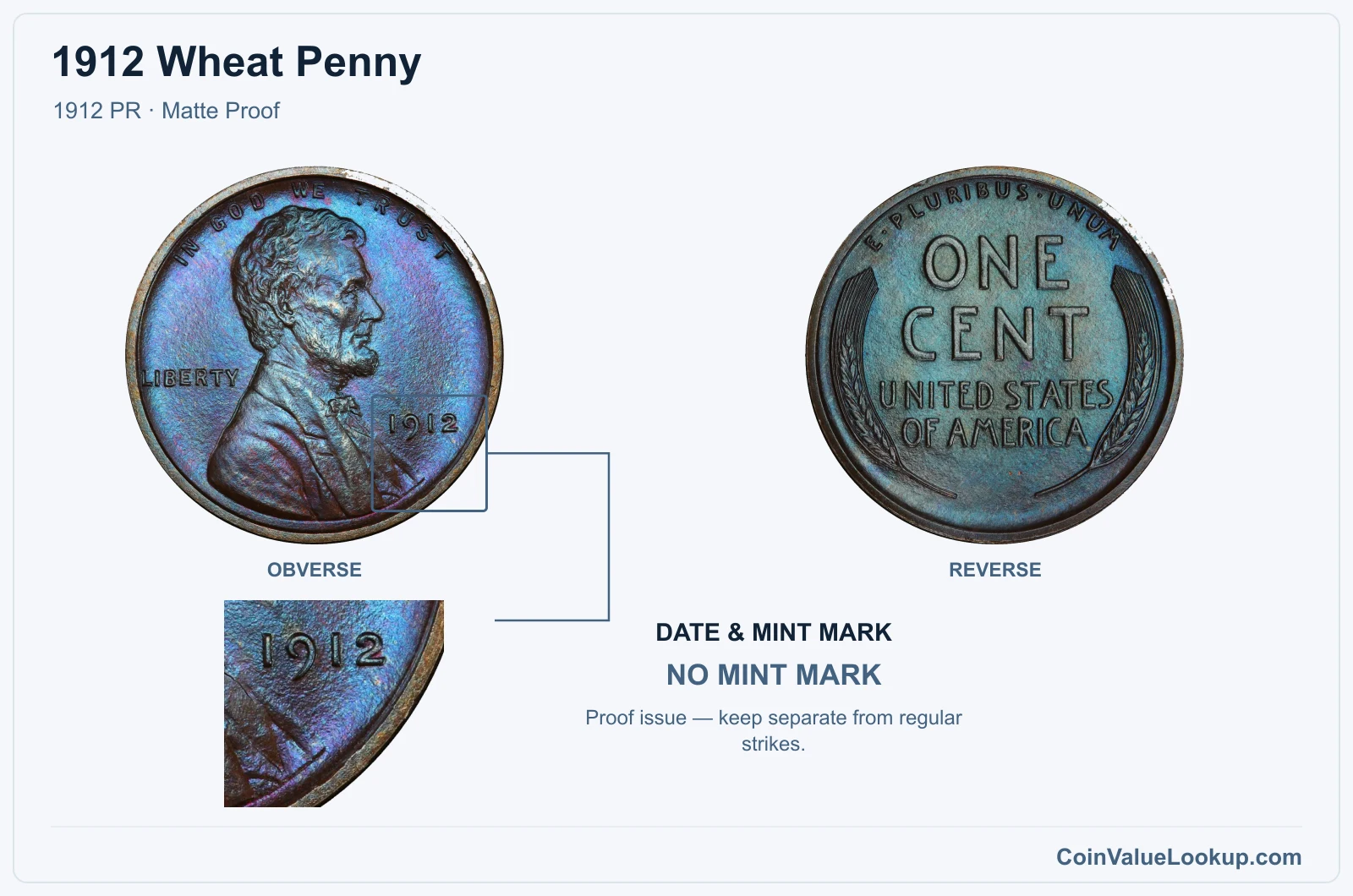
The 1912 matte proof was struck in Philadelphia and carries no mintmark, just like the regular business strike. What sets it apart is the manufacturing process: these proofs have a distinctive matte surface texture, sharply squared rims, and precise design detail that ordinary coins simply do not show.
They are not the mirror-finish proofs most people picture when they hear the word "proof." The guide estimate sits at about $825 in PR63. Authentication by a professional grading service is strongly recommended because telling a matte proof from a particularly well-struck circulation coin requires experience.
A lustrous, shiny surface actually argues against proof status for this era of Lincoln cents.
| Range | Grade | Price | Auction Records | Appraisal |
|---|---|---|---|---|
| PR | PR 1 | — | Coin Identifier | |
| PR 2 | — | Coin Identifier | ||
| PR 3 | — | Coin Identifier | ||
| PR 4 | — | Coin Identifier | ||
| PR 6 | — | Coin Identifier | ||
| PR 8 | — | Coin Identifier | ||
| PR 10 | — | Coin Identifier | ||
| PR 12 | — | Coin Identifier | ||
| PR 15 | — | Coin Identifier | ||
| PR 20 | — | Coin Identifier | ||
| PR 25 | — | Coin Identifier | ||
| PR 30 | — | Coin Identifier | ||
| PR 35 | — | Coin Identifier | ||
| PR 40 | — | Coin Identifier | ||
| PR 45 | — | Coin Identifier | ||
| PR 50 | — | Coin Identifier | ||
| PR 53 | — | Coin Identifier | ||
| PR 55 | — | Coin Identifier | ||
| PR 58 | — | Coin Identifier | ||
| PR 60 | — | Coin Identifier | ||
| PR 61 | Coin Identifier | |||
| PR 62 | Coin Identifier | |||
| PR 63 | Coin Identifier | |||
| PR 64 | Coin Identifier | |||
| PR 65 | Coin Identifier | |||
| PR 66 | Coin Identifier | |||
| PR 67 | Coin Identifier | |||
| PR 68 | — | — | — | |
| PR 69 | — | — | — | |
| PR 70 | — | — | — |
1912 Wheat Penny Error List
1. 1912 Wheat Penny — Repunched Mintmark
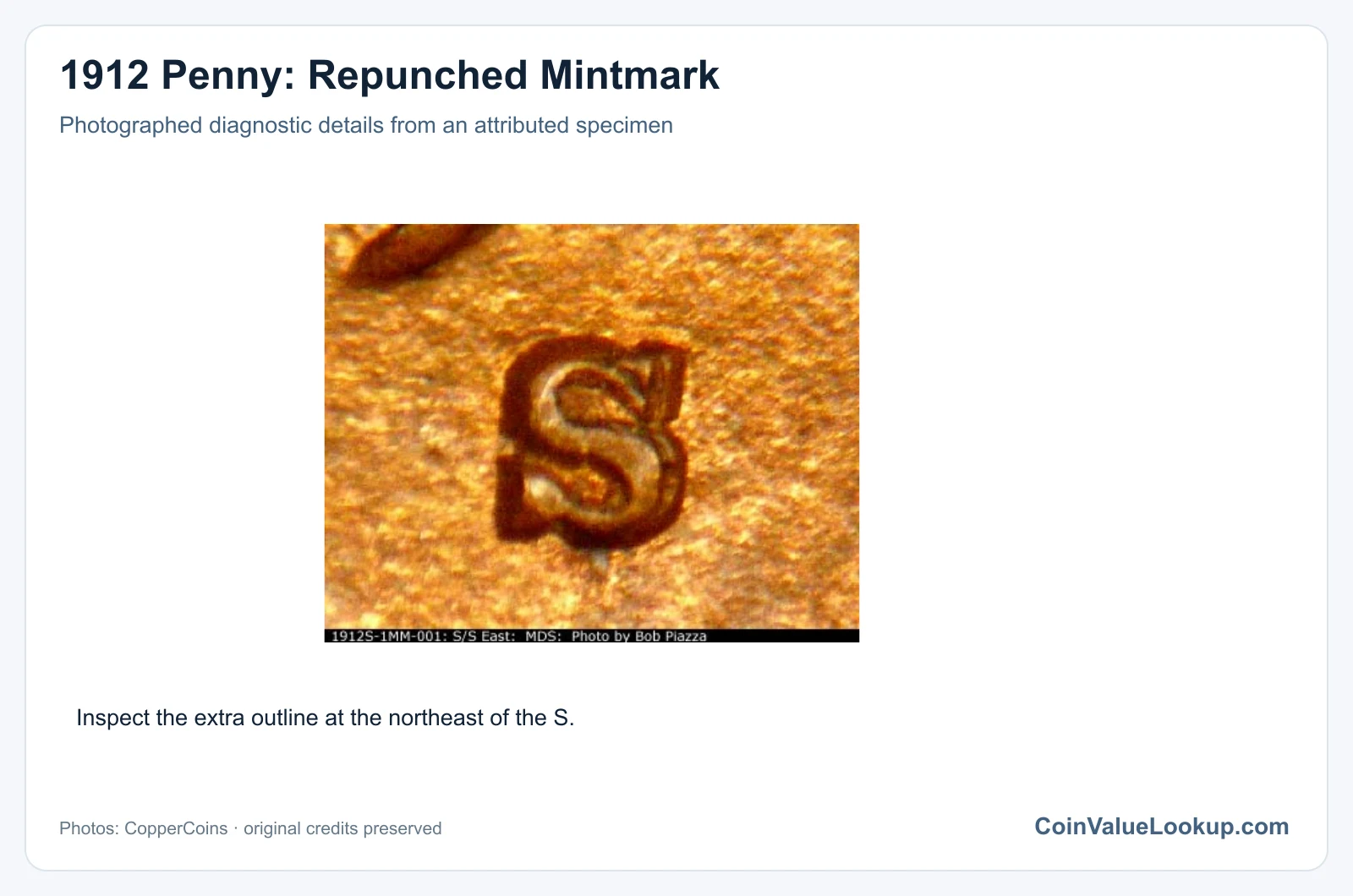
A repunched mintmark occurs when the mintmark punch was applied more than once in slightly different positions on the working die. On a 1912 Wheat cent this applies only to the Denver and San Francisco issues, since Philadelphia coins carry no mintmark at all.
Look under magnification for traces of a second letter partially visible beneath or beside the primary "D" or "S." The remnant may appear as a notch, a shadow, or a partial outline of the same letter.
Do not confuse this with machine doubling, which produces a flat shelf around the mintmark rather than a clearly separated second impression. Die chips or corrosion near the letter can also mimic a repunched mark.
Value depends on the strength and visibility of the repunching, the coin's overall condition, and authentication by a recognized grading service.
2. 1912 Wheat Penny — Off-Center Strike
An off-center strike happens when the planchet is not properly seated between the dies at the moment of striking. The result is a crescent-shaped blank area on one side and a displaced design on the rest of the coin.
Collectors generally prefer examples where the date remains fully visible, since that confirms the year and makes the coin identifiable.
The degree of off-center displacement matters. A 5% shift is subtle; a 50% shift is dramatic and visually striking.
Check that the blank area shows original planchet surface rather than evidence of post-mint damage like filing or flattening. A clipped planchet or a one-sided misalignment can resemble an off-center error at first glance but will show different edge and design characteristics.
Individual value depends on the severity, date visibility, and authenticated condition.
3. 1912 Wheat Penny — Die Crack / Die Chip
Die cracks appear as thin raised lines on the coin's surface, tracing the path of a fracture in the steel die. A die chip is a small raised blob where a piece of the die broke away, leaving a void that filled with metal during striking.
If a crack reaches the rim and a chunk of the die collapses, the result is a raised irregular blob called a cud.
These features are raised above the coin's field because they correspond to missing metal in the die. That is the key distinction: scratches and corrosion are incuse, sitting below the surface.
Foreign material stuck to a coin can also look like a raised feature but will not show the consistent, die-struck sharpness of a genuine crack or chip. Value depends on size, location, and the coin's overall grade, assessed individually.
4. 1912 Wheat Penny — Doubled Die Obverse
A doubled die obverse results from a misalignment during die manufacture, producing consistent doubling in the design elements on every coin struck by that die. On a 1912 Wheat cent, examine the lettering in "LIBERTY," "IN GOD WE TRUST," and the date under magnification.
True die doubling shows separated or notched images with distinct edges, and the doubling will appear in the same direction and magnitude across multiple design elements.
Machine doubling is the common lookalike. It creates a flat, shelf-like distortion rather than the rounded, separated profiles of a genuine doubled die.
Reflections under certain lighting or contour changes from a worn die can also fool you. Authentication matters here because the difference between a valuable doubled die and worthless mechanical doubling is significant.
Value is assessed individually based on the strength of doubling and the coin's condition.
5. 1912 Wheat Penny — Broadstrike
A broadstrike occurs when the collar die, which normally confines the planchet during striking, fails to contain it. The coin spreads outward, producing a slightly larger diameter with a smooth or distorted edge instead of the normal sharp rim.
The full design is present but may appear stretched near the periphery.
Check the edge profile carefully. A genuine broadstrike will show metal flow outward in all directions with an even, unconfined edge.
Post-mint damage from being placed on a hard surface and hammered flat can produce a similar spread, but the edge texture and metal flow will differ. An off-center strike shifts the design to one side and leaves a blank crescent, which is a different error entirely.
Individual value depends on the degree of spread, the coin's condition, and professional authentication.
6. 1912 Wheat Penny — Clipped Planchet
A clipped planchet error occurs when the blank is punched from strip metal that overlaps a previously punched hole, or when the cutting operation goes wrong. The result is a missing curved, straight, or irregular section along the edge.
Genuine clips often show a characteristic weakness in the design opposite the missing area, called the Blakesley effect, where metal did not flow fully during striking.
Look at the edge texture where the clip occurs. A real clip will show the same surface character as the rest of the planchet edge, not a sharp filed cut or rough corrosion.
Post-mint damage from tools or vice grips can remove metal from the edge but usually leaves tool marks and a different surface finish. Value varies by clip size, shape, whether the date is intact, and the coin's authenticated condition.
7. 1912 Wheat Penny — Lamination / Split Planchet
A lamination error shows as peeling, flaking, or splitting within the coin's metal. This happens when impurities or gas pockets in the planchet alloy create a weak layer that separates during or after striking.
On a 1912 Wheat cent you might see a retained flap of metal still attached at one edge, or a missing layer exposing a rougher surface underneath.
Photograph both the affected face and the edge together, since the separation is often visible from the side. This helps distinguish a genuine lamination from surface scraping, corrosion pitting, or deliberate alteration.
A coin that has been intentionally split or scraped will show tool marks and an unnatural surface. Lamination errors are valued individually based on the size and visual impact of the flaw, plus the coin's overall grade and authentication status.