1865 Liberty Seated Half Dollar Coin Value: How Much Is It Worth?
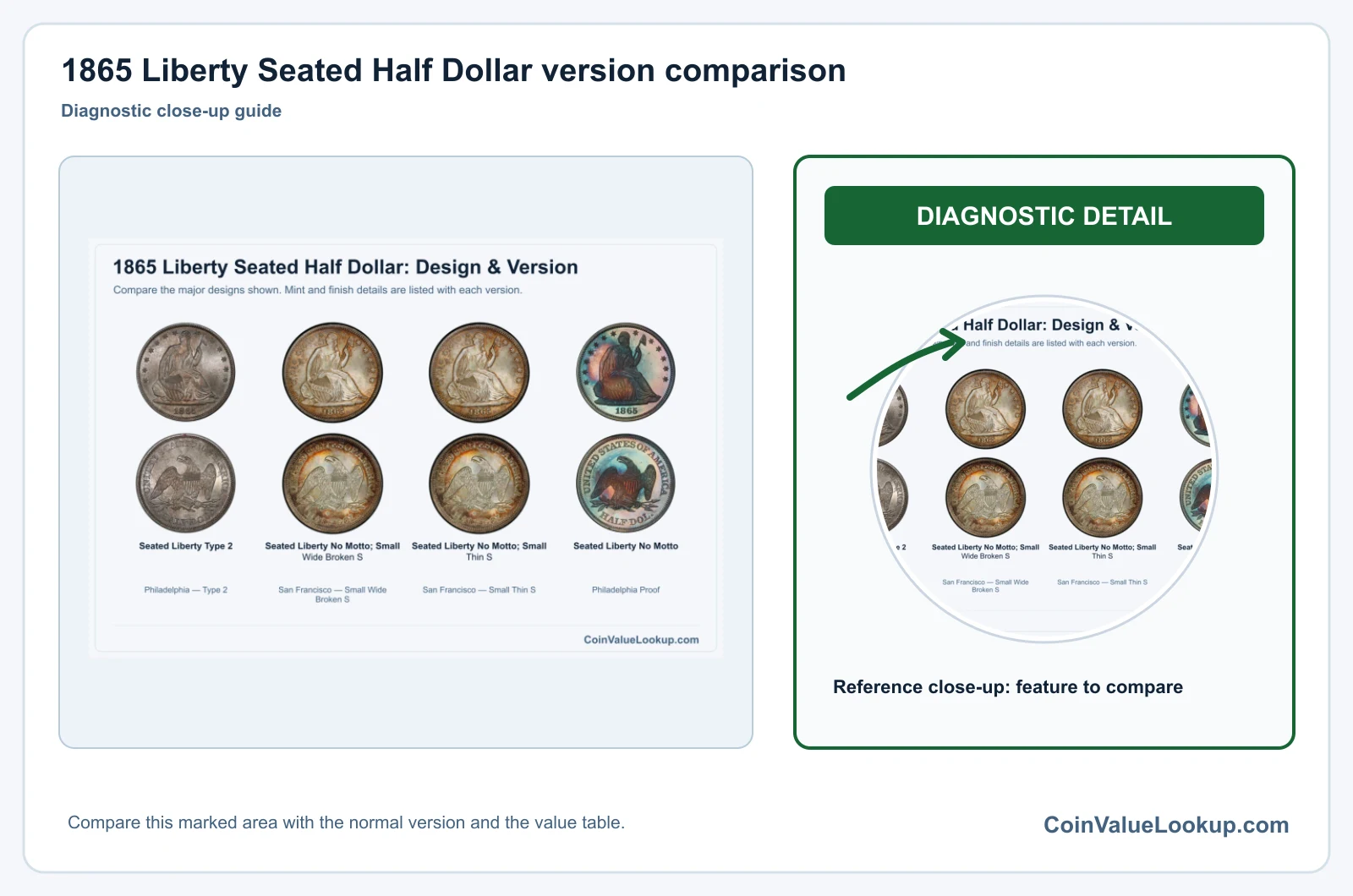
The 1865 Liberty Seated Half Dollar is a Civil War-era silver coin that carries real collector value even in well-worn condition. Philadelphia mint guide estimates range from about $141 in G4 to $1,016 in AU50.
San Francisco pieces, Proof strikes, and specific mintmark or date varieties can shift that value further. Exact worth depends on grade, surfaces, and the precise version you hold.
Fast Way to Identify Your 1865 Liberty Seated Half Dollar
The quickest way to start identifying your 1865 half dollar is to upload clear photos of both the front and back. A preliminary look at your coin's mintmark, date style, and overall condition can point you toward the right version and a realistic value range.
Snap both sides in even lighting and submit them for a first pass.
1865 Liberty Seated Half Dollar Value
Upload both sides of your 1865 Liberty Seated Half Dollar.
Front Obverse
Upload photo
Back Reverse
Upload photo
Which 1865 Liberty Seated Half Dollar Versions Are Worth Money?
- Philadelphia Type 2 strikes range from roughly $141 in G4 to $1,016 in AU50 per guide estimates, making even circulated examples worth checking.
- San Francisco coins come in two mintmark styles, Small Wide Broken S and Small Thin S, each worth confirming under magnification.
- Proof strikes from Philadelphia are a separate category; a PR63 example carries a guide value around $2,005.
- Repunched date, die crack, and misplaced date varieties exist for this year and can add collector interest beyond the base value.
Step 1: Identify Your 1865 Liberty Seated Half Dollar Mint Mark and Version
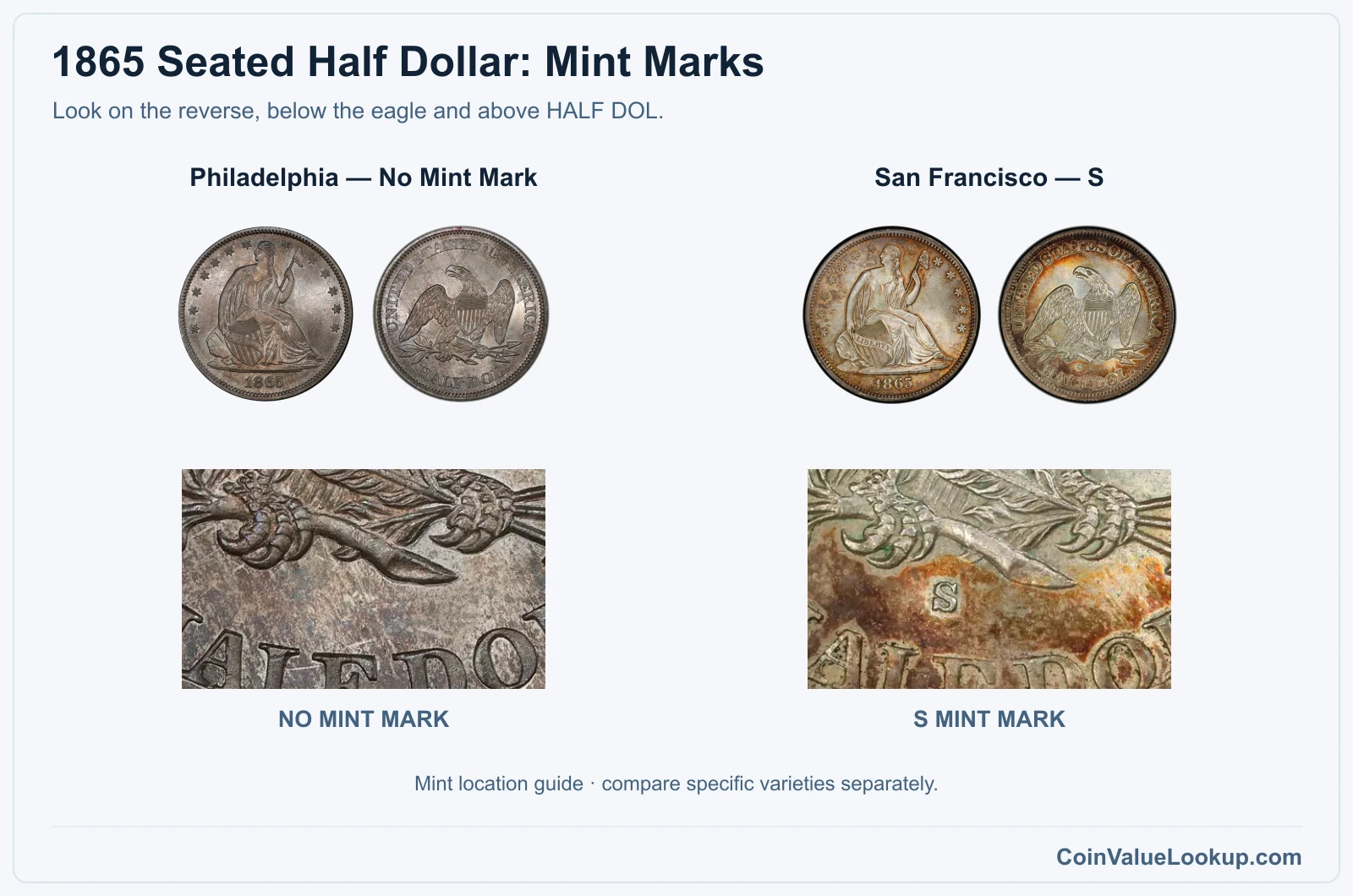
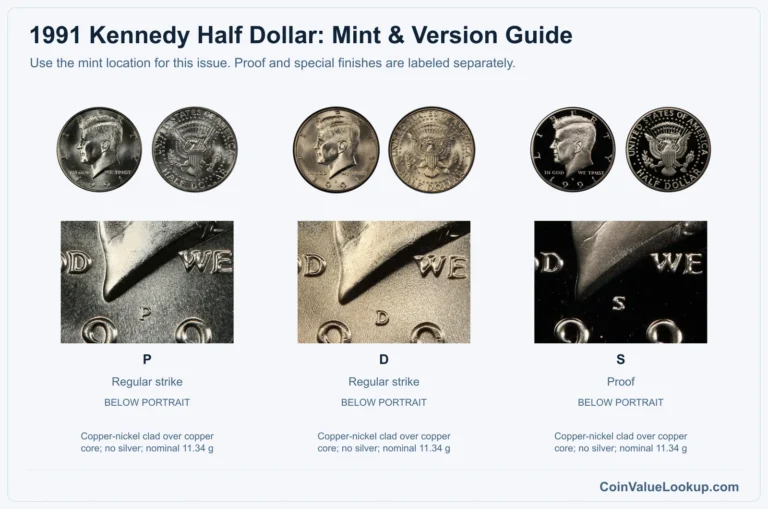
First, confirm you actually have a half dollar. Read the reverse: it should say HALF DOL.
beneath the eagle. A half dime or quarter can fool you at a glance, especially if the coin is worn.
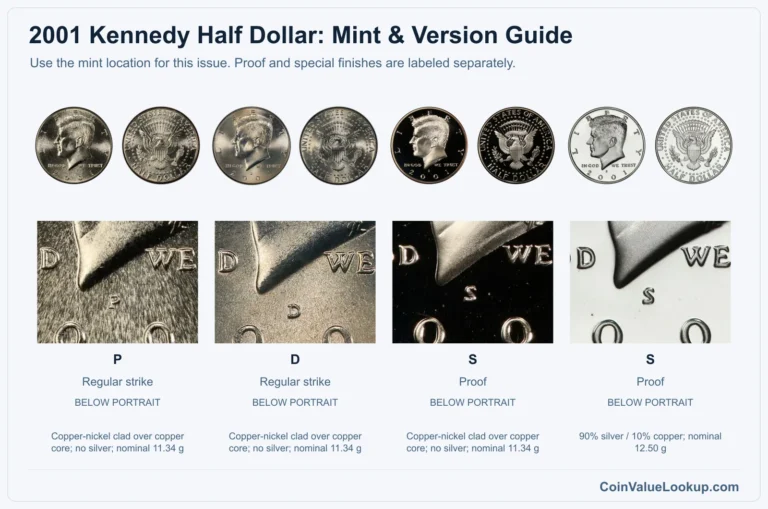
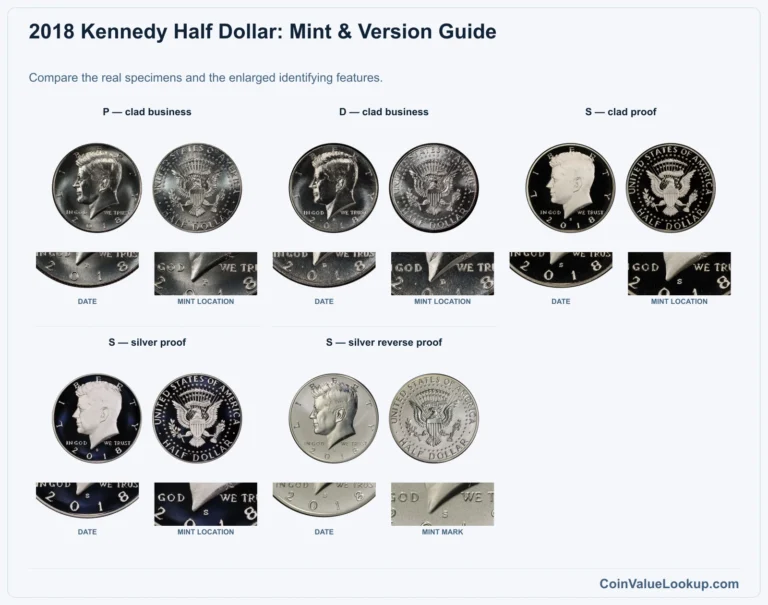
Next, flip to the reverse and look below the eagle. Philadelphia coins have no mintmark at all.
San Francisco pieces carry a small "S" in that spot. There is no New Orleans or Carson City issue for 1865.
The coin is 90% silver and 10% copper, weighing about 12.44 grams with a reeded edge. It belongs to the No Motto design, meaning there is no banner above the eagle.
The motto IN GOD WE TRUST was added beginning in 1866.
You may see references to Type 1 and Type 2 reverses. These describe different hub designs, not errors.
Type 2 has a longer base on the letter L in HALF and a small lump near the eagle's left leg. Type 1 has a shorter L base and no leg lump.
For 1865, the Philadelphia issue uses the Type 2 reverse.
Proof and Specimen are manufacturing finishes applied at the mint, not grades above Mint State. Do not assume a shiny coin is a Proof.
Step 2: Check Your 1865 Liberty Seated Half Dollar Grade
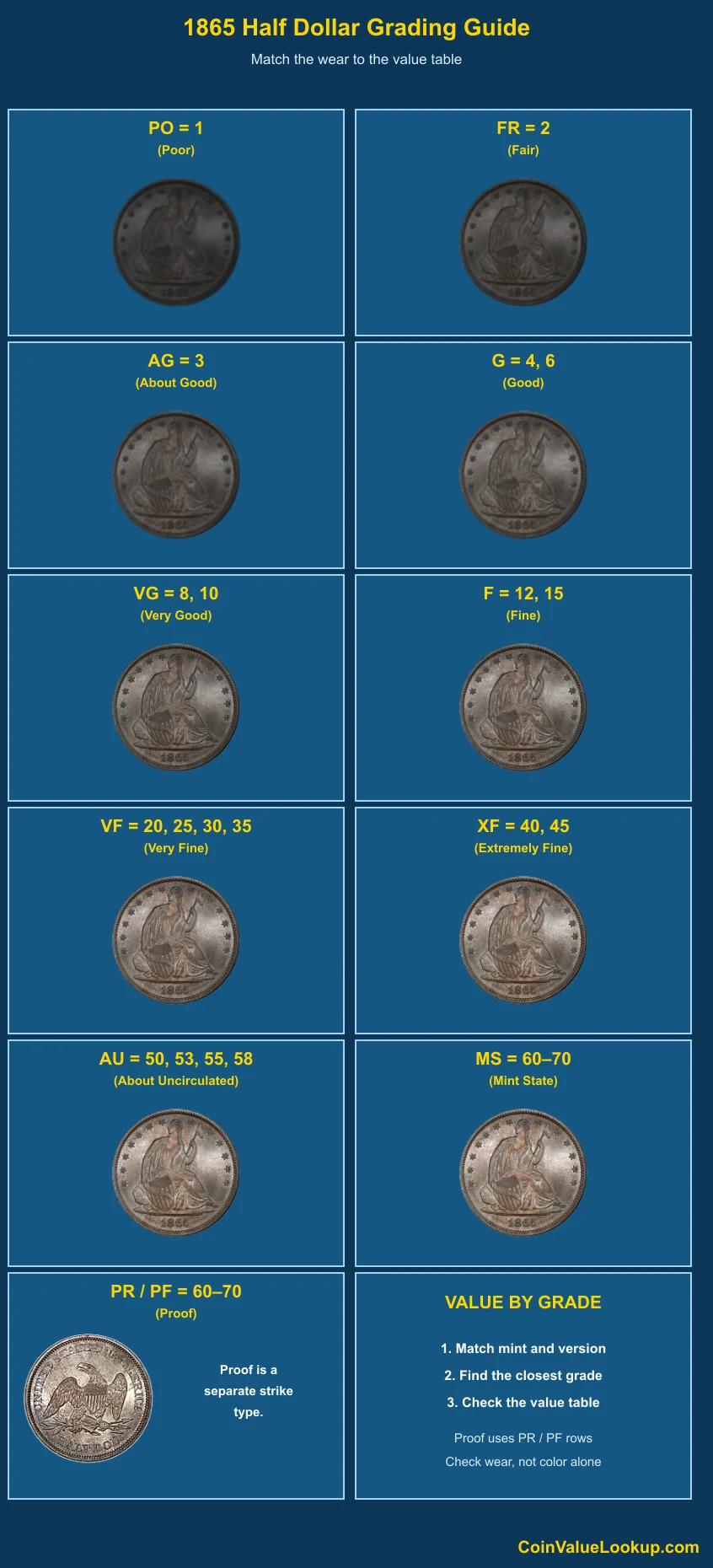
Start with the obverse. Liberty's head, the breast area, and the knee are the first places to lose detail.
On higher-grade coins these features are sharp, with full hair strands visible around the ear and cap.
The shield on Liberty's arm is another telltale. Its horizontal and vertical lines should be distinct in better grades.
As wear increases, the lines merge and flatten.
On the reverse, the eagle's breast feathers and wing tips show wear earliest. Compare what you see to the reference image.
Don't confuse a weak strike with heavy wear. A weakly struck coin still shows cartwheel luster when tilted under a light, even if certain details look soft.
A worn coin loses that luster entirely in the high points.
Always check the edge and both surfaces for cleaning, scratches, or damage. These problems reduce value sharply, sometimes more than a couple of grade points would.
Step 3: Check 1865 Liberty Seated Half Dollar Value by Mint and Version
1865 Liberty Seated Half Dollar — Philadelphia — Type 2
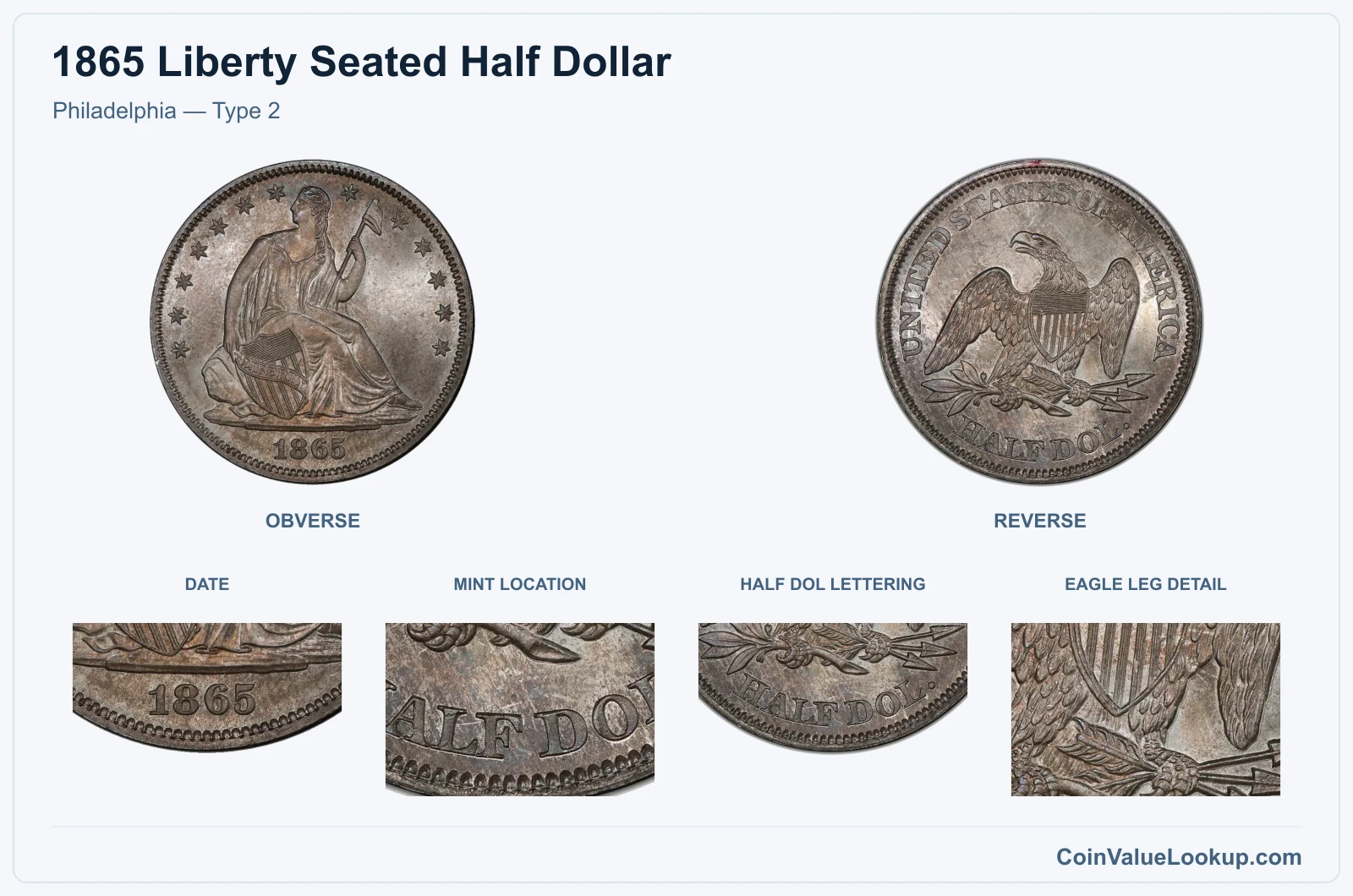
The Philadelphia Type 2 is the main business-strike issue for 1865. It has no mintmark.
On the reverse, look at the base of the letter L in HALF: it extends longer than on the earlier Type 1 hub, and there is a small lump near the eagle's left leg.
Guide estimates from USA Coin Book place this coin at about $141 in G4, $394 in VF20, and $1,016 in AU50. These are guide-level estimates, not guaranteed sale prices.
No separate premium for the Type 2 hub is currently adopted, since all Philadelphia 1865 halves use this reverse.
When examining your coin, compare both faces against known examples. The hub diagnostic is subtle but consistent.
Ordinary-issue reference: Ordinary-issue reference only: The table below shows prices for the 1865 Liberty Seated Half Dollar (regular strike). It does not represent the value of the specific Philadelphia — Type 2 variety or its variety premium. Year, mint, metal and strike type are matched; the specific variety is not priced by this table.
Range Grade
Price Auction Records Appraisal PO PO 1
Coin Identifier FR FR 2
—
Coin Identifier AG AG 3
—
Coin Identifier G G 4
—
Coin Identifier
G 6
Coin Identifier VG VG 8
Coin Identifier
VG 10
Coin Identifier F F 12
—
Coin Identifier
F 15
Coin Identifier VF VF 20
Coin Identifier
VF 25
Coin Identifier
VF 30
Coin Identifier
VF 35
Coin Identifier XF XF 40
Coin Identifier
XF 45
Coin Identifier AU AU 50
Coin Identifier
AU 53
Coin Identifier
AU 55
Coin Identifier
AU 58
Coin Identifier MS MS 60
—
Coin Identifier
MS 61
Coin Identifier
MS 62
Coin Identifier
MS 63
Coin Identifier
MS 64
Coin Identifier
MS 65
Coin Identifier
MS 66
Coin Identifier
MS 67
Coin Identifier
MS 68
—
—
—
MS 69
—
—
—
MS 70
—
—
—
1865 Liberty Seated Half Dollar — San Francisco — Small Wide Broken S
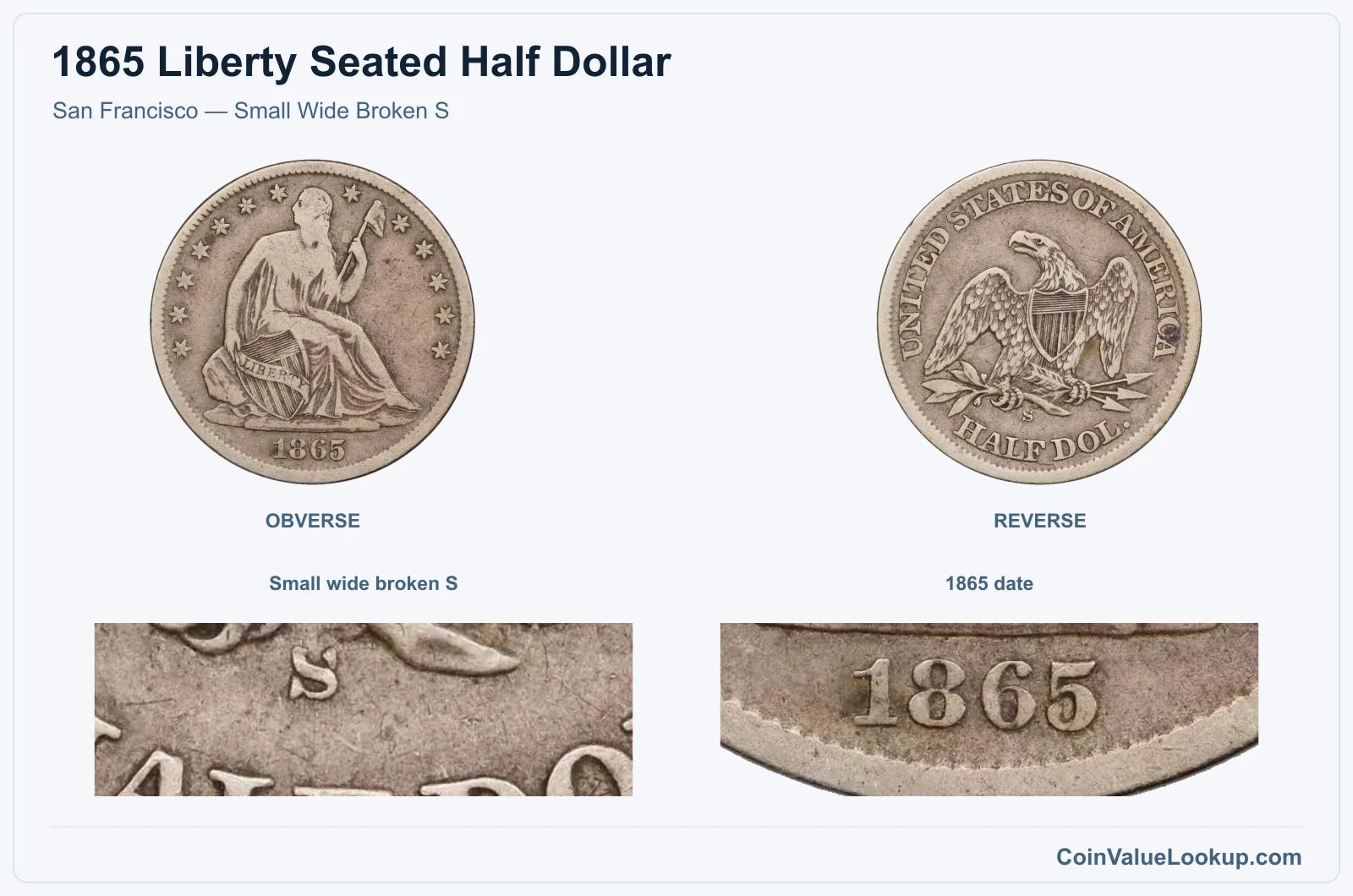
San Francisco struck 1865 half dollars with two different mintmark punches. The Small Wide Broken S variety uses a punch where the S appears broader and shows a break or gap in part of the letter.
This is a feature of the original punch, not post-mint damage or a removed mintmark.
Look below the eagle on the reverse. Compare the shape and width of the S against the Small Thin S alternative.
Magnification helps.
Aggregate San Francisco guide estimates run about $141 in G4, $394 in VF20, and $947 in AU50. No separate subtype premium is currently adopted, so treat these as shared San Francisco figures for now.
Coin Value Lookup is a useful starting point if you want to look up additional coin guides and compare values across other dates in the Seated Liberty series.
Ordinary-issue reference: Ordinary-issue reference only: The table below shows prices for the 1865-S Liberty Seated Half Dollar (regular strike). It does not represent the value of the specific San Francisco — Small Wide Broken S variety or its variety premium. Year, mint, metal and strike type are matched; the specific variety is not priced by this table.
Range Grade
Price Auction Records Appraisal PO PO 1
—
Coin Identifier FR FR 2
—
Coin Identifier AG AG 3
—
Coin Identifier G G 4
—
Coin Identifier
G 6
Coin Identifier VG VG 8
—
Coin Identifier
VG 10
—
Coin Identifier F F 12
Coin Identifier
F 15
Coin Identifier VF VF 20
Coin Identifier
VF 25
Coin Identifier
VF 30
Coin Identifier
VF 35
Coin Identifier XF XF 40
Coin Identifier
XF 45
Coin Identifier AU AU 50
Coin Identifier
AU 53
Coin Identifier
AU 55
Coin Identifier
AU 58
Coin Identifier MS MS 60
—
Coin Identifier
MS 61
Coin Identifier
MS 62
Coin Identifier
MS 63
Coin Identifier
MS 64
Coin Identifier
MS 65
Coin Identifier
MS 66
—
—
—
MS 67
—
—
—
MS 68
—
—
—
MS 69
—
—
—
MS 70
—
—
—
1865 Liberty Seated Half Dollar — San Francisco — Small Thin S
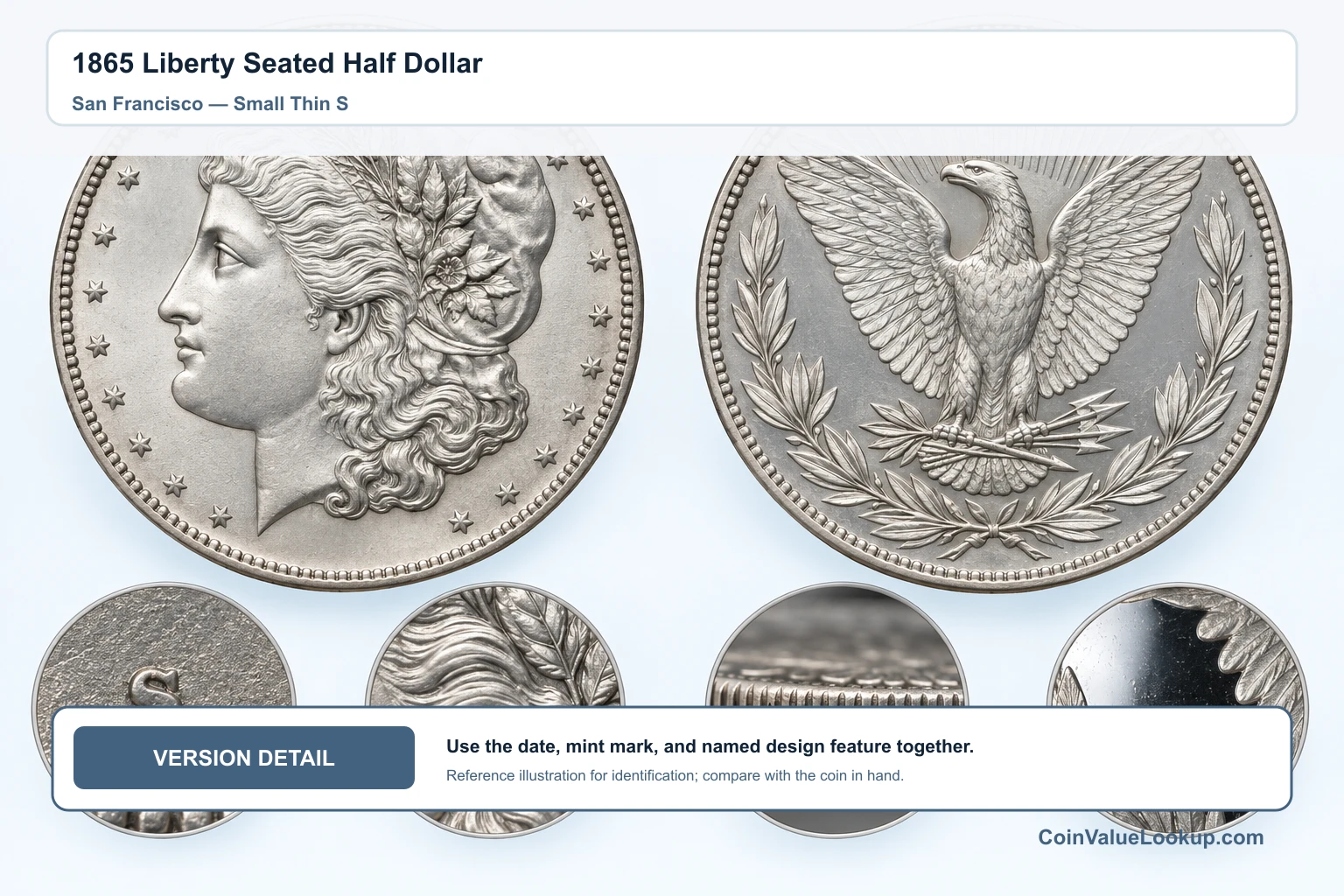
The Small Thin S is the second San Francisco mintmark style for 1865. Compared to the Small Wide Broken S, this punch produces a narrower, more delicate-looking letter.
The S sits in the same position below the eagle, but its proportions are visibly different under a loupe.
A thin or small mintmark is not evidence that the letter was removed or altered. It is simply a different punch used at the San Francisco Mint.
Guide estimates mirror the aggregate San Francisco figures: roughly $141 in G4, $394 in VF20, and $947 in AU50. No distinct subtype premium has been adopted for this variety.
Proper attribution still matters for registry collectors tracking specific die marriages.
Ordinary-issue reference: Ordinary-issue reference only: The table below shows prices for the 1865-S Liberty Seated Half Dollar (regular strike). It does not represent the value of the specific San Francisco — Small Thin S variety or its variety premium. Year, mint, metal and strike type are matched; the specific variety is not priced by this table.
Range Grade
Price Auction Records Appraisal PO PO 1
—
Coin Identifier FR FR 2
—
Coin Identifier AG AG 3
—
Coin Identifier G G 4
—
Coin Identifier
G 6
Coin Identifier VG VG 8
—
Coin Identifier
VG 10
—
Coin Identifier F F 12
Coin Identifier
F 15
Coin Identifier VF VF 20
Coin Identifier
VF 25
Coin Identifier
VF 30
Coin Identifier
VF 35
Coin Identifier XF XF 40
Coin Identifier
XF 45
Coin Identifier AU AU 50
Coin Identifier
AU 53
Coin Identifier
AU 55
Coin Identifier
AU 58
Coin Identifier MS MS 60
—
Coin Identifier
MS 61
Coin Identifier
MS 62
Coin Identifier
MS 63
Coin Identifier
MS 64
Coin Identifier
MS 65
Coin Identifier
MS 66
—
—
—
MS 67
—
—
—
MS 68
—
—
—
MS 69
—
—
—
MS 70
—
—
—
1865 Liberty Seated Half Dollar — Philadelphia Proof
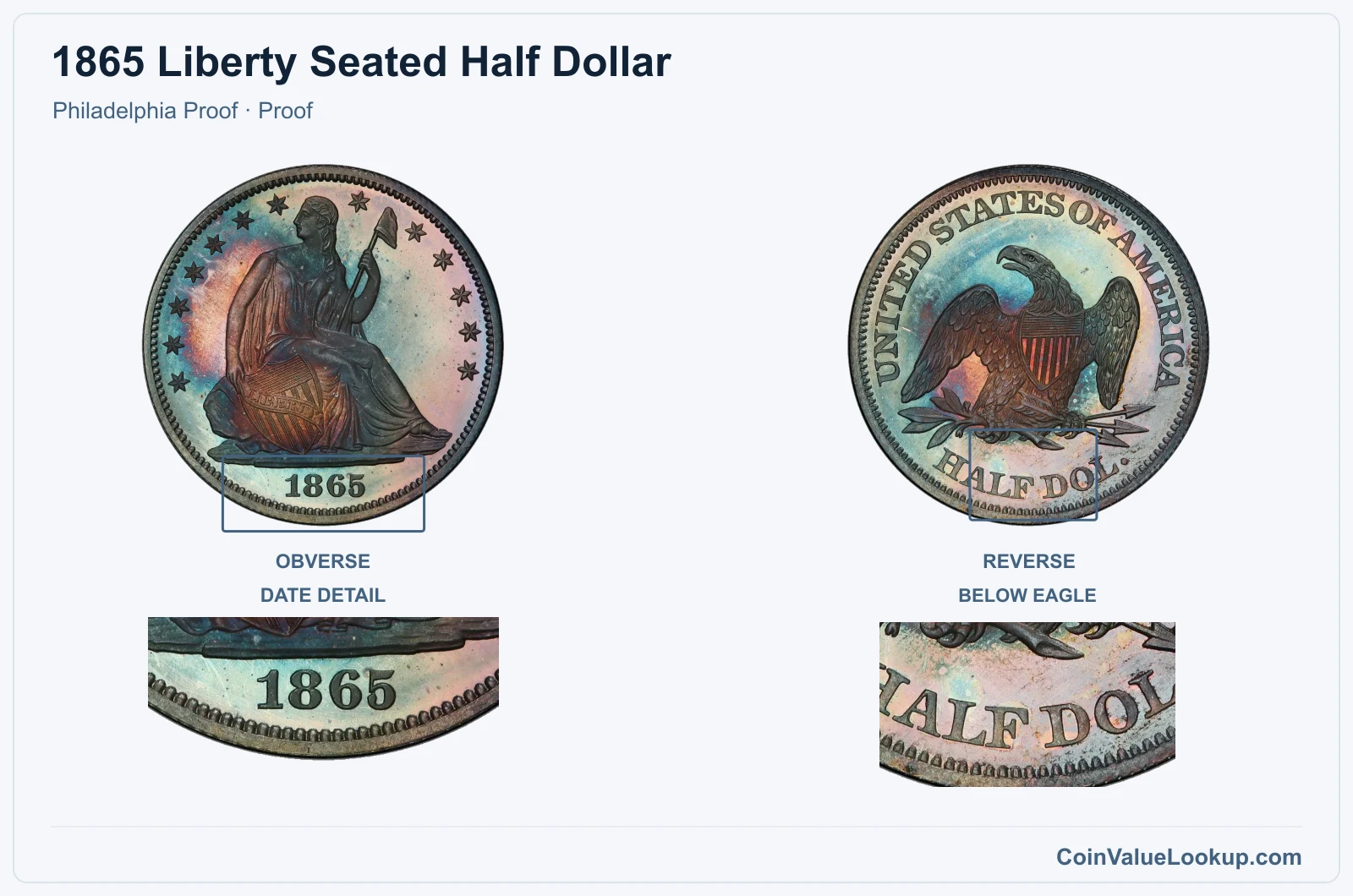
Philadelphia Proof half dollars from 1865 were struck in small numbers for collectors using specially prepared dies and planchets. Genuine Proofs show deeply mirrored fields, sharp rims, and crisp detail that business strikes rarely match.
Do not assume any bright or lightly circulated coin is a Proof. True Proof surfaces have a liquid, reflective quality in the fields with frosted or fully brilliant devices.
Cameo and deep cameo designations describe the degree of frost contrast and remain within the Proof category.
A guide estimate for PR63 is about $2,005. This is a separate value track from circulation strikes and should not be blended with business-strike pricing.
Professional authentication is strongly recommended before buying or selling any coin claimed to be a Proof.
Range Grade
Price Auction Records Appraisal PR PR 1
—
Coin Identifier
PR 2
—
Coin Identifier
PR 3
—
Coin Identifier
PR 4
—
Coin Identifier
PR 6
—
Coin Identifier
PR 8
—
Coin Identifier
PR 10
—
Coin Identifier
PR 12
—
Coin Identifier
PR 15
—
Coin Identifier
PR 20
—
Coin Identifier
PR 25
—
Coin Identifier
PR 30
—
Coin Identifier
PR 35
—
Coin Identifier
PR 40
—
Coin Identifier
PR 45
—
Coin Identifier
PR 50
—
Coin Identifier
PR 53
—
Coin Identifier
PR 55
Coin Identifier
PR 58
Coin Identifier
PR 60
Coin Identifier
PR 61
Coin Identifier
PR 62
Coin Identifier
PR 63
Coin Identifier
PR 64
Coin Identifier
PR 65
Coin Identifier
PR 66
Coin Identifier
PR 67
Coin Identifier
PR 68
Coin Identifier
PR 69
—
—
—
PR 70
—
—
—
1865 Liberty Seated Half Dollar Error List
1. 1865 Liberty Seated Half Dollar — Repunched Date
Repunched date varieties on the 1865 half dollar involve digits that were punched into the die more than once, leaving traces of the earlier impression. Philadelphia examples show repunching on the 1 and the 5, and San Francisco issues also have recut 1 and 5 varieties.
Under magnification, look for doubled serifs, shadow outlines, or shifted remnants near the base or top of those digits. The extra impressions are raised, following the contour of the number.
Do not confuse this with machine doubling, which produces flat, shelf-like distortion, or with simple date damage from contact marks. A genuine repunched date shows distinct, raised remnants of a second punch position.
No specific price premium has been adopted for this variety. Value depends on the visibility of the repunching, overall coin condition, and collector demand for the particular die pairing.
2. 1865 Liberty Seated Half Dollar — Die Crack / Die Chip
Die cracks appear as thin, raised lines on the coin's surface, caused by fractures in the steel die during production. On the 1865 half dollar, Philadelphia specimens have been reported with light cracks visible on both the obverse and reverse.
These lines are always raised, since metal flowed into the crack in the die face. That is the key distinction.
Scratches or corrosion lines are incuse, meaning they cut into the surface. Foreign material sitting on a coin can also mimic a crack, but it will not have the same sharp, consistent relief.
Check both sides carefully under magnification. A single die may produce cracks in several locations, but they all originate from the same cause.
No numerical price premium has been adopted. The value added depends on the crack's size, location, and the coin's overall grade and eye appeal.
3. 1865 Liberty Seated Half Dollar — Misplaced Date
A misplaced date occurs when one or more date digits are punched into the wrong area of the die, leaving a partial impression in an unexpected location such as inside the rock base, near the rim, or within the denticles. A Philadelphia misplaced-date variety is recorded in the catalog for 1865.
Look carefully at the area around and beneath the date. Under magnification, you may spot the tops, bottoms, or curves of digits where they should not appear.
These remnants are from an errant first punch that was corrected by the engraver.
Do not mistake wear, tooling marks, or scratches for a misplaced digit. Genuine examples show the same font style and relief as the properly placed date.
No specific price has been adopted for this variety. Condition, the clarity of the misplaced impression, and the specific die involved all affect collector interest.