1938 Mercury Dime Coin Value: How Much Is It Worth?
The 1938 Mercury dime is a 90% silver coin that remains affordable across most grades. Guide estimates from USA Coin Book place business strikes between about $5.73 in G4 and $56 in MS65, depending on the mint.
Philadelphia proofs, Full Bands designations, and specific error varieties each carry their own value considerations beyond those baseline figures.
Fast Way to Identify Your 1938 Mercury Dime
Want a quick read on your 1938 dime? Upload clear photos of the front and back, and our identifier can offer a preliminary take on which mint and version you might have.
It is not a substitute for professional grading or authentication, but it is a solid starting point before you dig deeper.
1938 Mercury Dime Value
Upload both sides of your 1938 Mercury Dime.
Front Obverse
Upload photo
Back Reverse
Upload photo
Which 1938 Mercury Dime Versions Are Worth Money?
- Philadelphia business strikes range from about $5.73 in G4 to $41 in MS65 per USA Coin Book estimates; original surfaces and strong strikes add appeal.
- Denver business strikes range from about $5.73 in G4 to $46 in MS65, with the D mintmark visible on the lower-left reverse.
- San Francisco business strikes carry the highest MS65 guide estimate of about $56, making sharp S-mint coins worth a close look.
- Philadelphia proofs are valued around $379 in PR65; these brilliant silver strikes are a distinct manufacturing finish.
- Coins with fully separated fasces bands (Full Bands designation) can attract premiums above regular Mint State prices.
- Doubled die obverse, repunched mintmark, and off-center strike errors have been reported for 1938 dimes and are worth checking.
Step 1: Identify Your 1938 Mercury Dime Mint Mark and Version
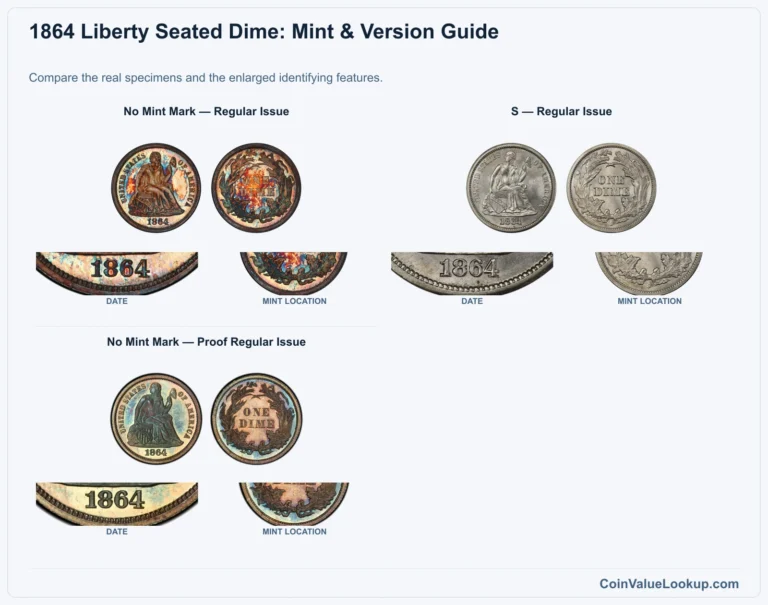
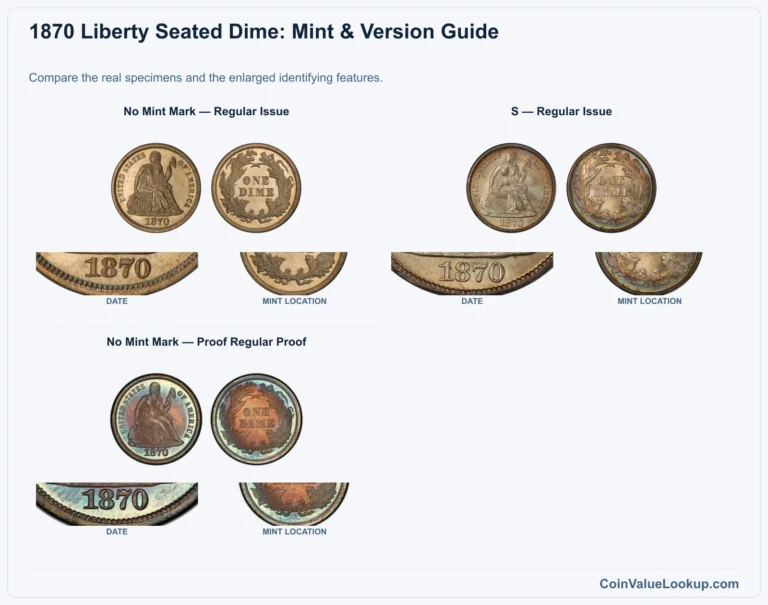
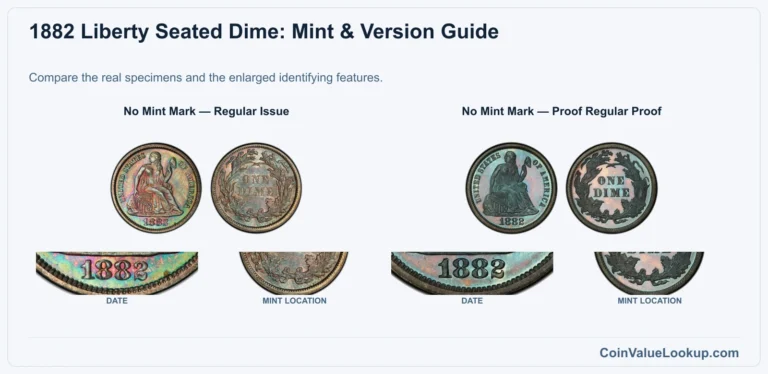
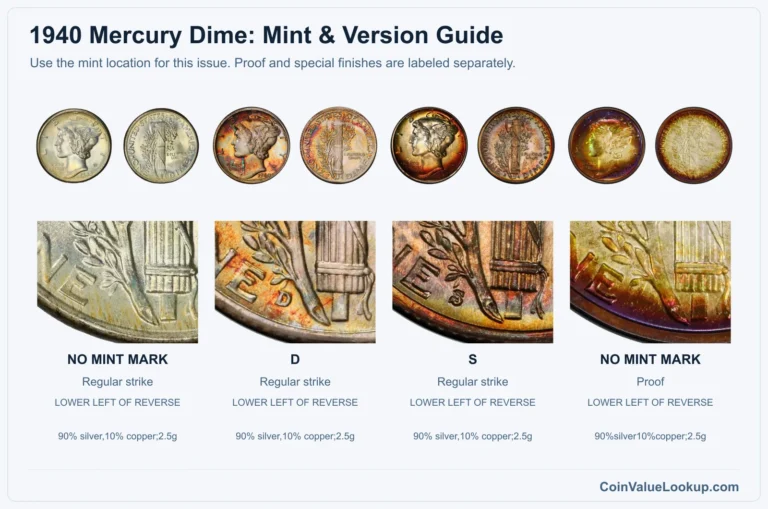
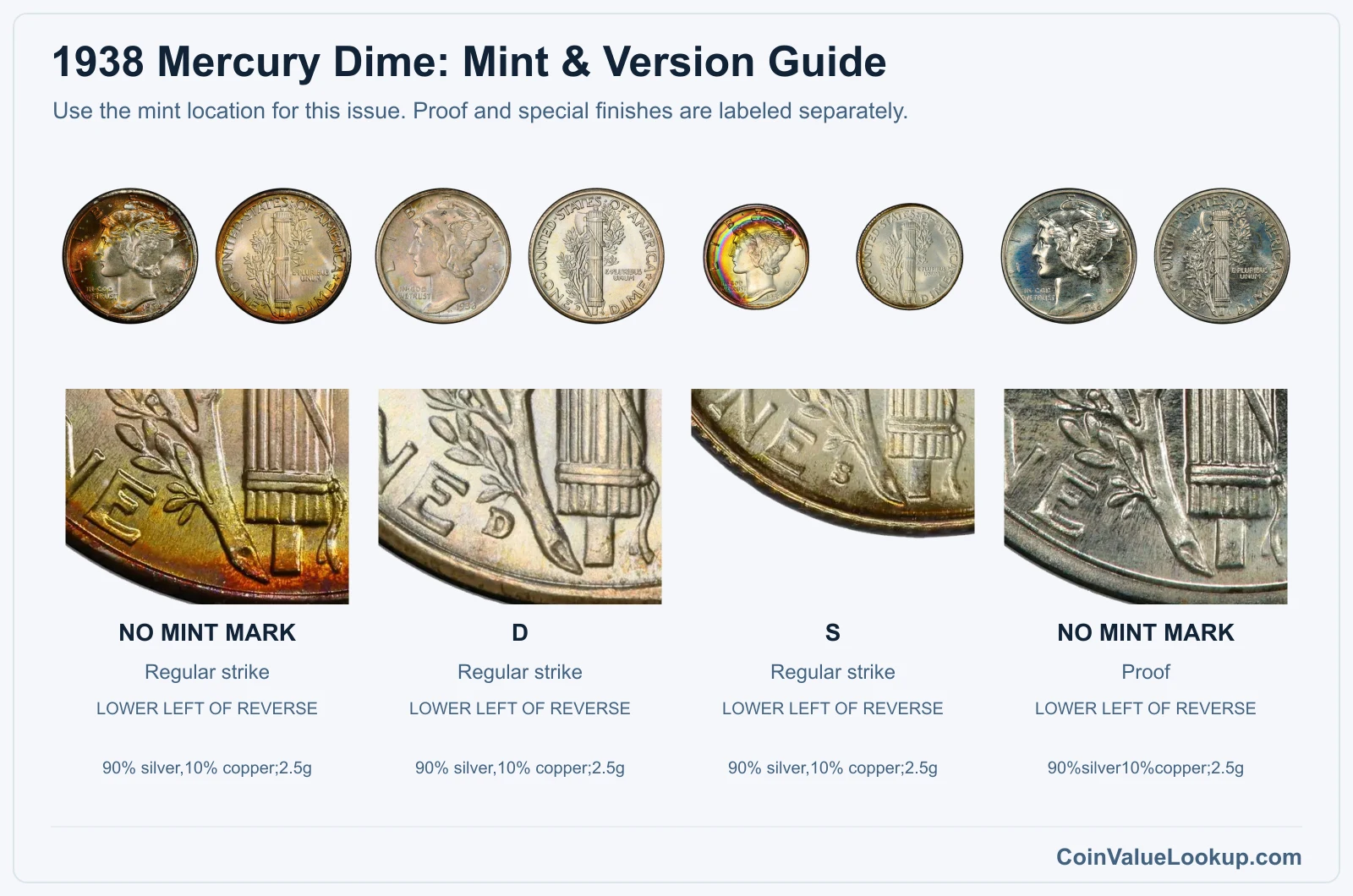
Three mints produced business-strike Mercury dimes in 1938: Philadelphia, Denver, and San Francisco. Philadelphia coins carry no mintmark.
Denver pieces show a small "D" and San Francisco pieces show an "S," both located on the lower-left reverse near the word ONE.
Do not confuse the "AW" monogram on the obverse with a mintmark. Those are the initials of designer Adolph Weinman, and they appear on every Mercury dime regardless of mint.
All 1938 dimes are struck in 90% silver and 10% copper, weigh about 2.5 grams, and measure 17.9 mm with a reeded edge. Philadelphia also produced proof strikes this year, which are a separate manufacturing finish, not a higher grade of business strike.
Step 2: Check Your 1938 Mercury Dime Grade
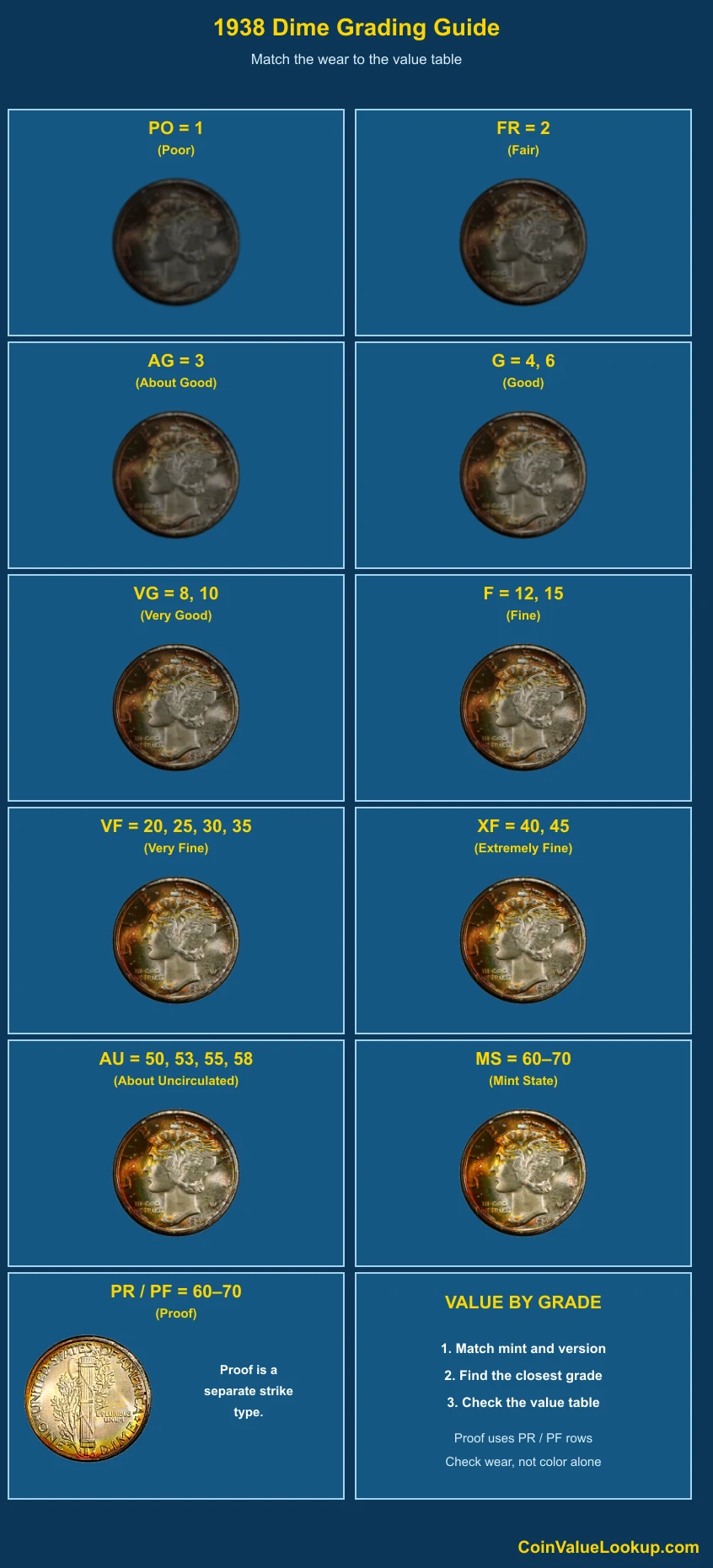
Start by checking the hair detail above and in front of Liberty's ear, then look at the wings on the cap. On the reverse, examine the horizontal and diagonal bands on the fasces bundle.
These are the first areas to soften with wear, so they tell the story fastest.
Luster matters. A coin can look sharp in photos but show cleaning hairlines or heavy contact marks in hand.
Weak peripheral legends or incomplete bands are not always signs of circulation; some coins simply received a soft strike at the mint.
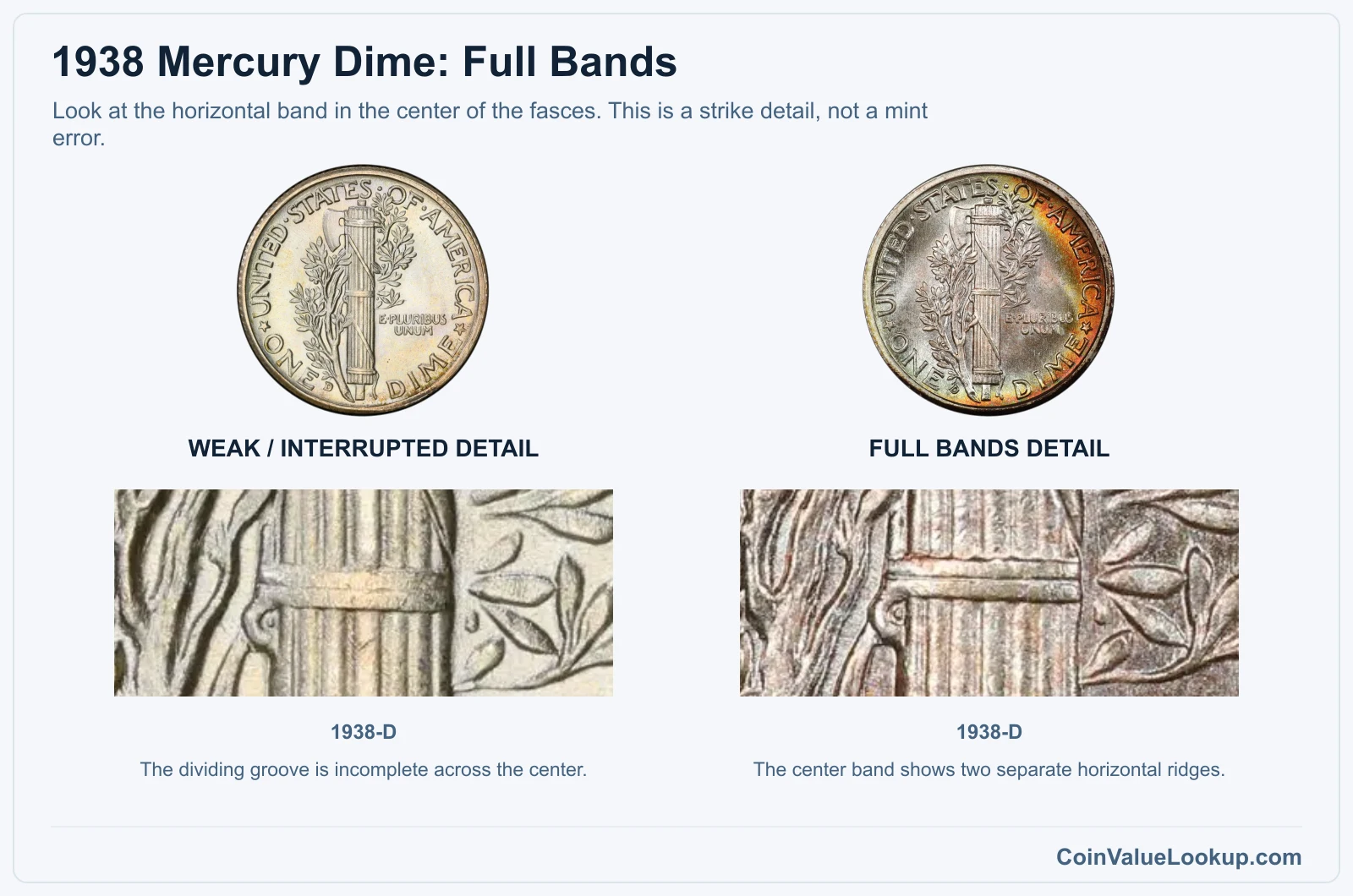
Full Bands is a strike designation, not an error or a different alloy. NGC checks that the central and outer bands on the fasces show clear separation.
Different grading services may apply slightly different criteria, so keep that in mind when comparing labels. Use the comparison image alongside your coin to gauge actual wear versus strike weakness.
Step 3: Check 1938 Mercury Dime Value by Mint and Version
1938 Mercury Dime — No Mint Mark — Silver Circulation
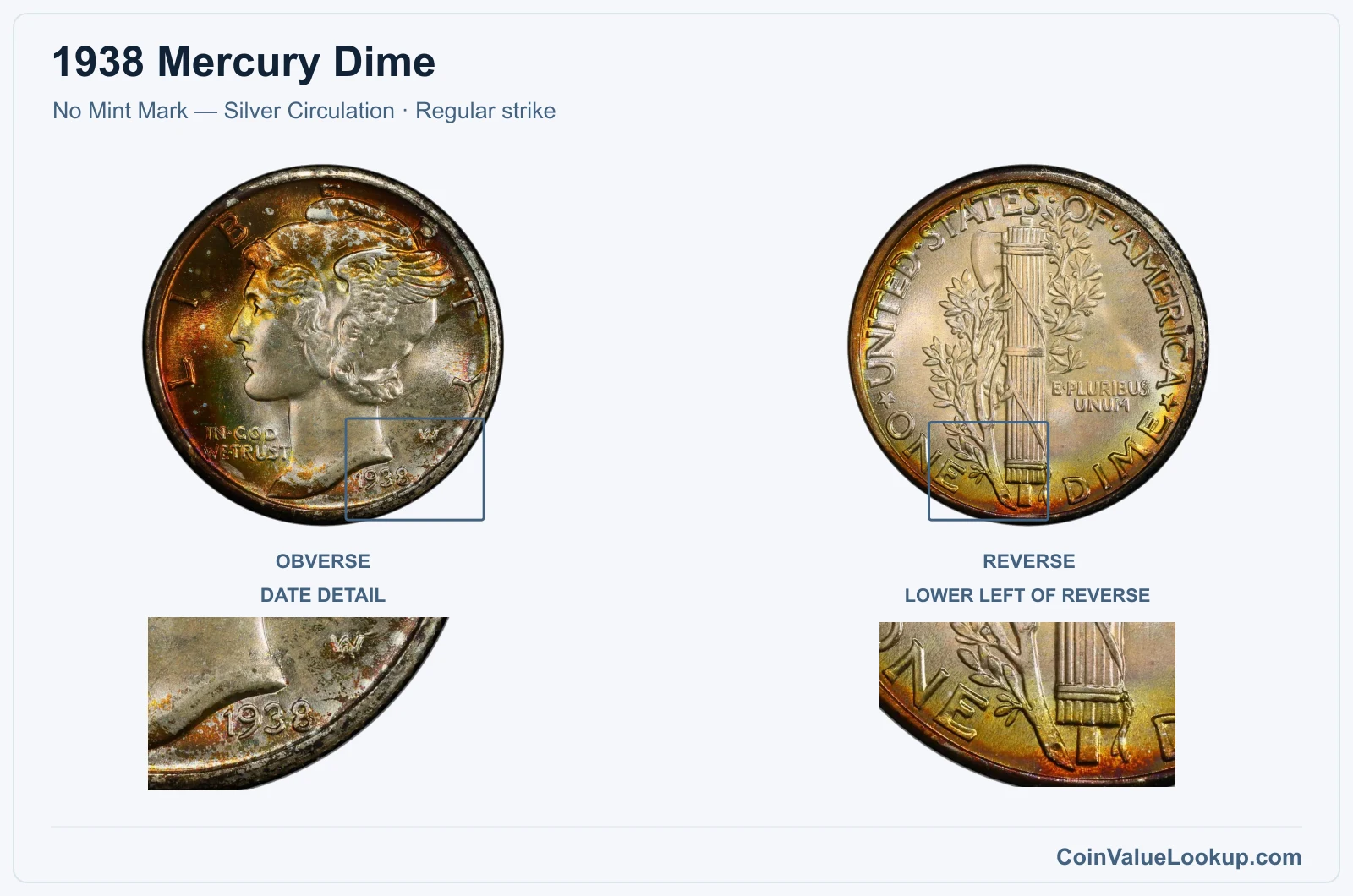
The 1938 Philadelphia dime has no mintmark at all. Look at the lower-left reverse beside ONE and confirm that the space is blank.
USA Coin Book estimates place this coin at roughly $5.73 in G4 and $41 in MS65.
Full Bands examples, where the fasces bands show complete separation, can command more than the regular MS65 figure, but those prices depend on the specific grading service designation and are not included in the base guide numbers above. Original, uncleaned surfaces go a long way toward collector appeal on this date.
Range Grade
Price Auction Records Appraisal PO PO 1
—
Coin Identifier FR FR 2
—
Coin Identifier AG AG 3
—
Coin Identifier G G 4
—
Coin Identifier
G 6
—
Coin Identifier VG VG 8
—
Coin Identifier
VG 10
—
Coin Identifier F F 12
—
Coin Identifier
F 15
—
Coin Identifier VF VF 20
—
Coin Identifier
VF 25
—
Coin Identifier
VF 30
—
Coin Identifier
VF 35
—
Coin Identifier XF XF 40
—
Coin Identifier
XF 45
—
Coin Identifier AU AU 50
—
Coin Identifier
AU 53
—
Coin Identifier
AU 55
—
Coin Identifier
AU 58
Coin Identifier MS MS 60
—
Coin Identifier
MS 61
—
Coin Identifier
MS 62
Coin Identifier
MS 63
Coin Identifier
MS 64
Coin Identifier
MS 65
Coin Identifier
MS 66
Coin Identifier
MS 67
Coin Identifier
MS 68
Coin Identifier
MS 69
—
—
—
MS 70
—
—
—
1938 Mercury Dime — D — Silver Circulation
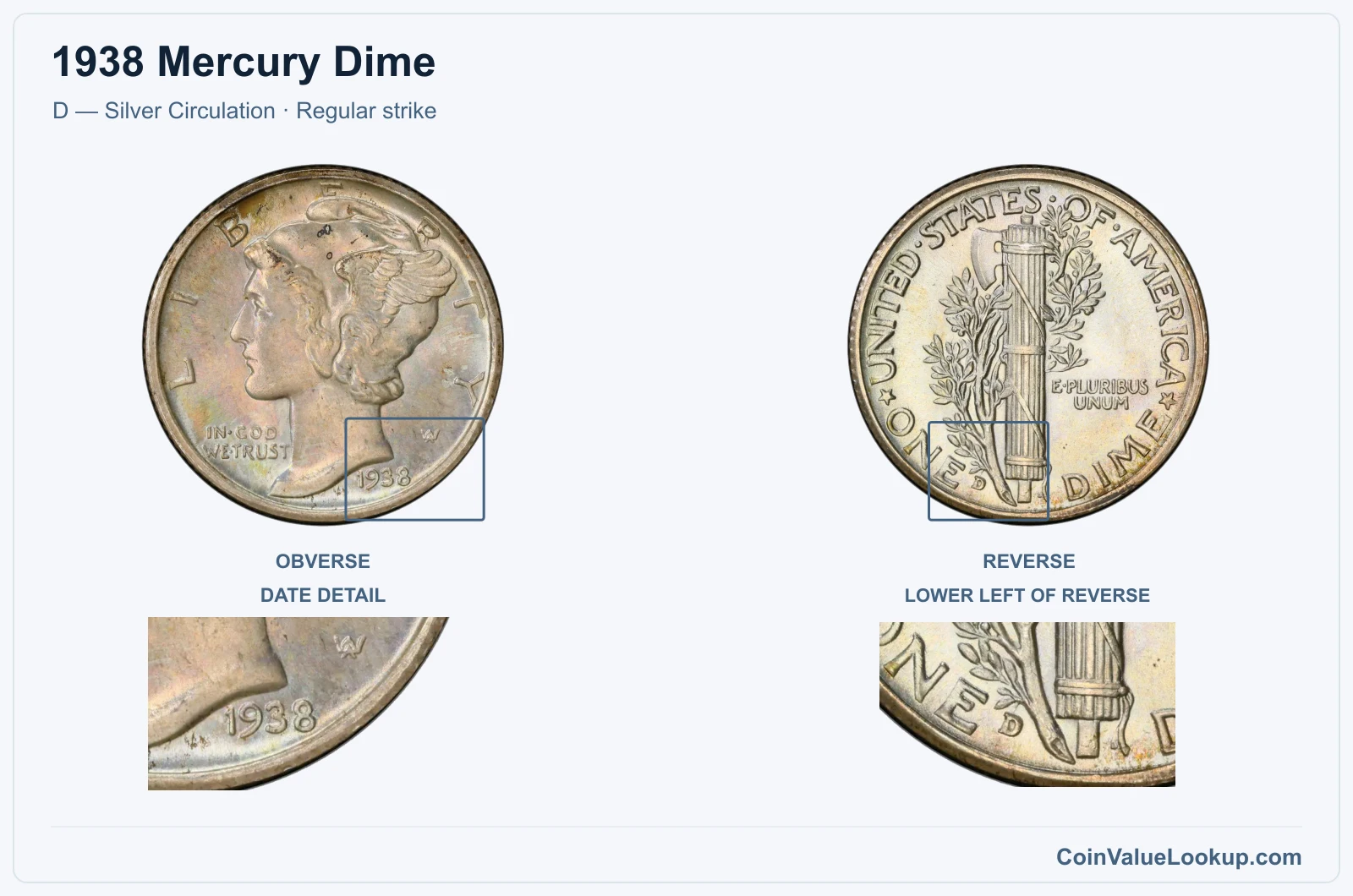
Denver struck 1938 dimes carry a small "D" on the lower-left reverse. It sits right next to the word ONE, so a basic loupe is usually enough to spot it.
Guide estimates from USA Coin Book run about $5.73 in G4 up to $46 in MS65. That modest premium over the Philadelphia issue in upper grades reflects collector demand for well-struck Denver coins.
As with all Mercury dimes, Full Bands separation can add value beyond the standard Mint State estimate, though no separate Full Bands price is provided here.
Range Grade
Price Auction Records Appraisal PO PO 1
—
Coin Identifier FR FR 2
—
Coin Identifier AG AG 3
—
Coin Identifier G G 4
—
Coin Identifier
G 6
—
Coin Identifier VG VG 8
—
Coin Identifier
VG 10
—
Coin Identifier F F 12
—
Coin Identifier
F 15
—
Coin Identifier VF VF 20
—
Coin Identifier
VF 25
—
Coin Identifier
VF 30
—
Coin Identifier
VF 35
—
Coin Identifier XF XF 40
—
Coin Identifier
XF 45
—
Coin Identifier AU AU 50
—
Coin Identifier
AU 53
—
Coin Identifier
AU 55
—
Coin Identifier
AU 58
Coin Identifier MS MS 60
—
Coin Identifier
MS 61
—
Coin Identifier
MS 62
—
Coin Identifier
MS 63
—
Coin Identifier
MS 64
—
Coin Identifier
MS 65
Coin Identifier
MS 66
Coin Identifier
MS 67
Coin Identifier
MS 68
Coin Identifier
MS 69
—
—
—
MS 70
—
—
—
1938 Mercury Dime — S — Silver Circulation
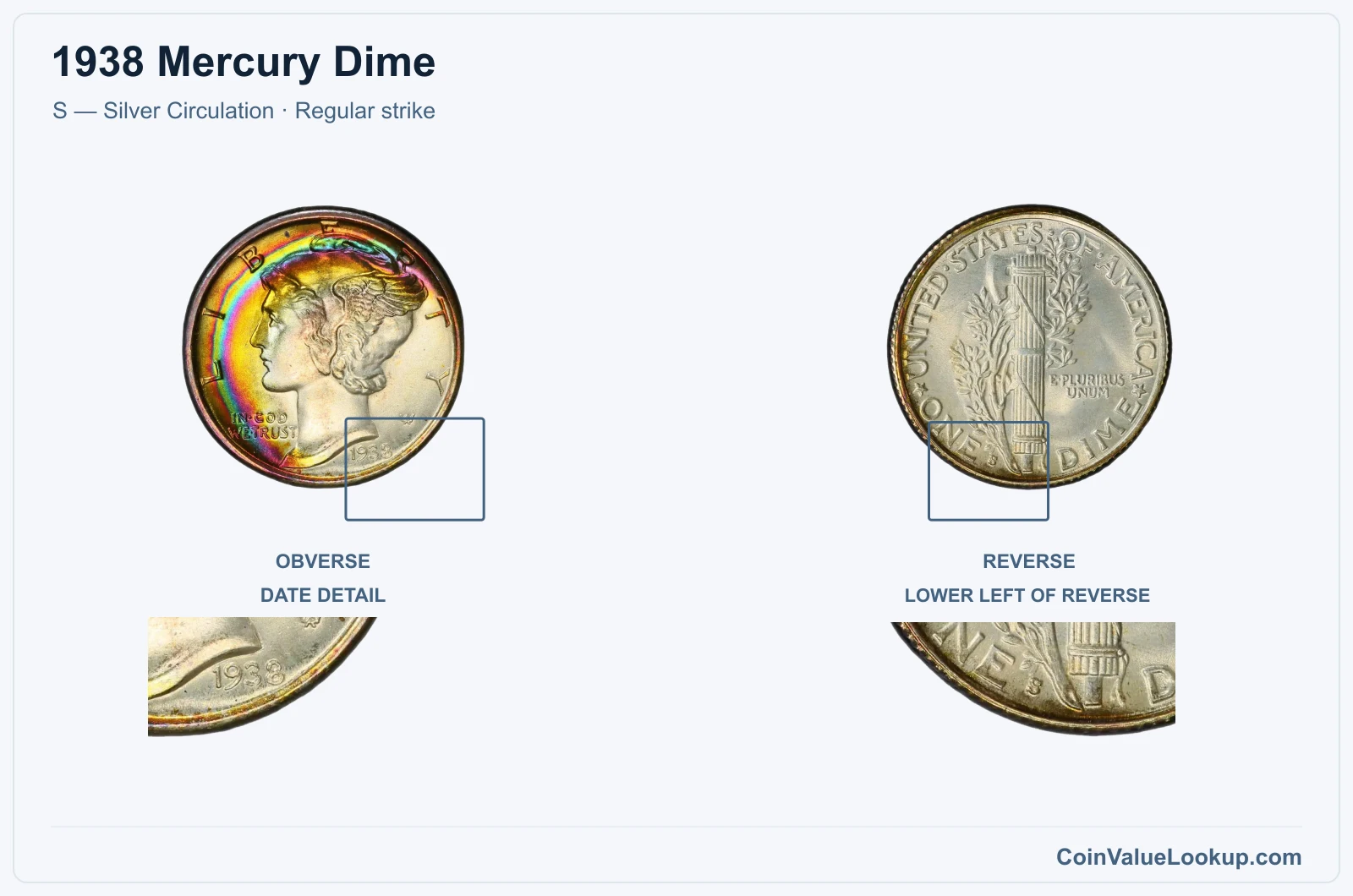
San Francisco dimes show an "S" in the same lower-left reverse location. Among the three business-strike mints this year, the S-mint carries the highest MS65 guide estimate at about $56 per USA Coin Book.
Coin Value Lookup is a handy place to compare values across Mercury dime dates and mints when you are sorting through a group. It can help you prioritize which coins deserve closer inspection.
In lower grades the S-mint tracks the same $5.73 in G4 as its siblings. The real separation shows up in Mint State, where strong luster and full detail make a difference.
Range Grade
Price Auction Records Appraisal PO PO 1
—
Coin Identifier FR FR 2
—
Coin Identifier AG AG 3
—
Coin Identifier G G 4
—
Coin Identifier
G 6
—
Coin Identifier VG VG 8
—
Coin Identifier
VG 10
—
Coin Identifier F F 12
—
Coin Identifier
F 15
—
Coin Identifier VF VF 20
—
Coin Identifier
VF 25
—
Coin Identifier
VF 30
—
Coin Identifier
VF 35
—
Coin Identifier XF XF 40
—
Coin Identifier
XF 45
—
Coin Identifier AU AU 50
—
Coin Identifier
AU 53
—
Coin Identifier
AU 55
—
Coin Identifier
AU 58
—
Coin Identifier MS MS 60
—
Coin Identifier
MS 61
—
Coin Identifier
MS 62
—
Coin Identifier
MS 63
Coin Identifier
MS 64
Coin Identifier
MS 65
Coin Identifier
MS 66
Coin Identifier
MS 67
Coin Identifier
MS 68
Coin Identifier
MS 69
—
—
—
MS 70
—
—
—
1938 Mercury Dime — No Mint Mark — Silver Proof
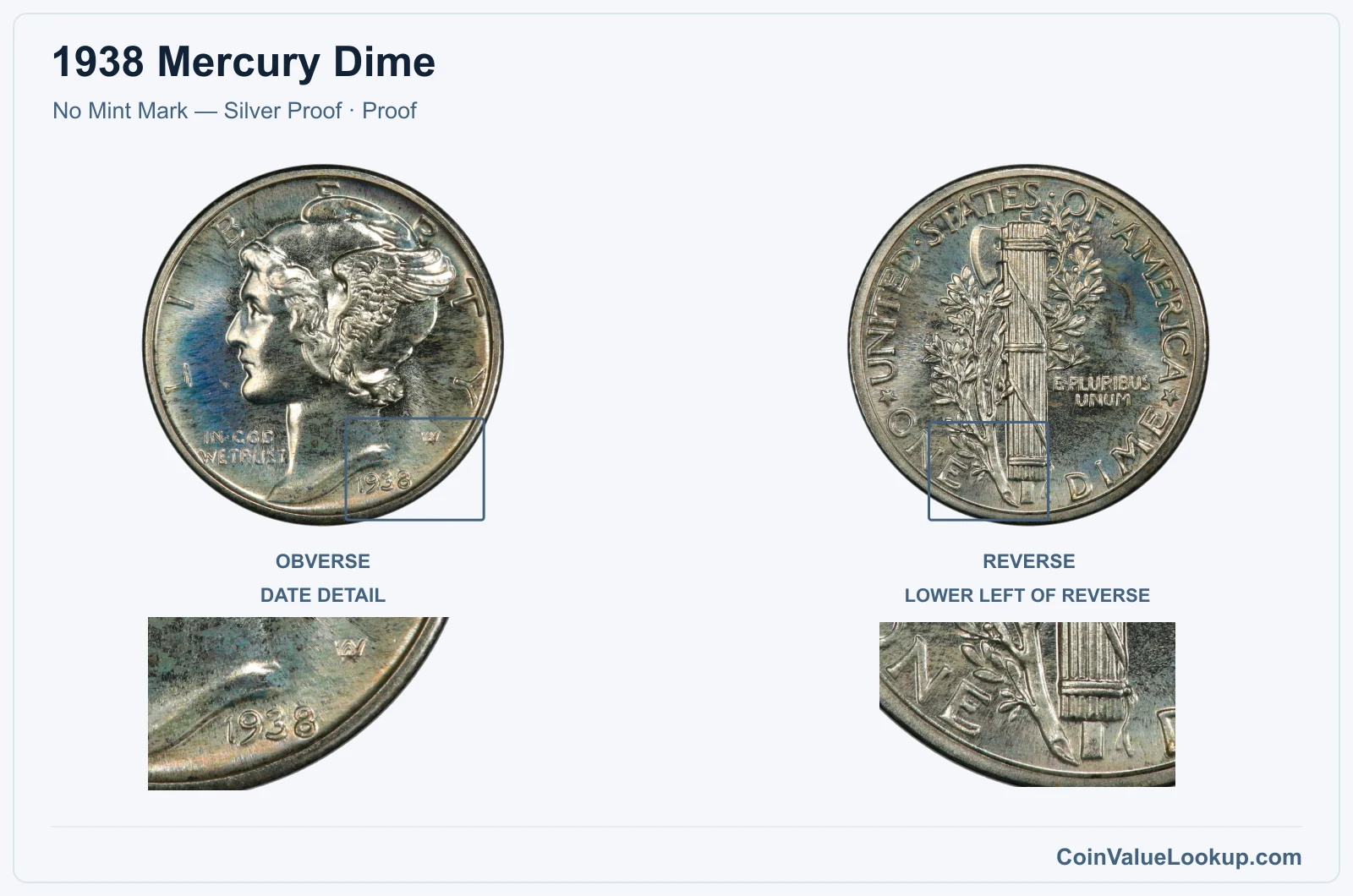
Philadelphia produced proof Mercury dimes from 1936 through 1942, and the 1938 is part of that run. These are brilliant silver strikes with deeply mirrored fields and crisp design elements, made specifically for collectors on special planchets and dies.
A PR65 example carries a USA Coin Book guide estimate of about $379. That is a different category entirely from business strikes, so do not compare proof values directly to Mint State numbers.
No mintmark appears on the proof either, just like the Philadelphia business strike, so the reflective fields and sharp rims are your main visual clues.
Range Grade
Price Auction Records Appraisal PR PR 1
—
Coin Identifier
PR 2
—
Coin Identifier
PR 3
—
Coin Identifier
PR 4
—
Coin Identifier
PR 6
—
Coin Identifier
PR 8
—
Coin Identifier
PR 10
—
Coin Identifier
PR 12
—
Coin Identifier
PR 15
—
Coin Identifier
PR 20
—
Coin Identifier
PR 25
—
Coin Identifier
PR 30
—
Coin Identifier
PR 35
—
Coin Identifier
PR 40
—
Coin Identifier
PR 45
—
Coin Identifier
PR 50
—
Coin Identifier
PR 53
—
Coin Identifier
PR 55
—
Coin Identifier
PR 58
—
Coin Identifier
PR 60
Coin Identifier
PR 61
Coin Identifier
PR 62
Coin Identifier
PR 63
Coin Identifier
PR 64
Coin Identifier
PR 65
Coin Identifier
PR 66
Coin Identifier
PR 67
Coin Identifier
PR 68
Coin Identifier
PR 69
Coin Identifier
PR 70
—
—
—
1938 Mercury Dime Error List
1. 1938 Mercury Dime — Doubled Die Obverse
Doubled die obverse errors have been reported for 1938 Mercury dimes. On an affected coin, you will see consistent doubling or notching on obverse letters or design elements.
The key word is consistent: every instance of the doubled feature should show the same direction and degree of separation.
Compare suspect areas under good lighting to a normal 1938 dime. Machine doubling, which is flat and shelf-like, is the most common lookalike and carries little or no premium.
True hub doubling produces raised, rounded separation.
No specific price range is available here. Value depends on the visibility of the doubling, overall coin condition, and which elements are affected.
Professional attribution helps confirm what you are looking at.
2. 1938 Mercury Dime — Repunched Mintmark
Repunched mintmark varieties occur when the mintmark punch was applied more than once in slightly different positions. On a 1938 dime, inspect the D or S mintmark closely for traces of an earlier, offset impression underneath or beside the final mark.
You will want at least 5x magnification. Look for a second outline, a notch, or a partial letter peeking out from behind the primary mark.
Die chips, corrosion, and machine doubling around the mintmark can mimic a repunched mark, so compare to a known normal example at the same magnification.
No numerical price is provided for this variety. The premium depends on the clarity of the repunching and the coin's overall grade.
3. 1938 Mercury Dime — Off-Center Strike
Off-center strikes happen when the planchet is not properly seated between the dies at the moment of striking. The result is a design that is shifted to one side, leaving a blank crescent on the opposite edge.
For collectible value, the date needs to remain fully visible. A 1938 dime struck 5–10% off-center with a clear date and readable legends is more desirable than one struck 50% off-center where you cannot tell the year.
Do not confuse an off-center strike with a clipped planchet, one-sided die misalignment, or post-mint damage from a vise or hammer. A genuine off-center coin shows uniform displacement of the entire design.
No specific price range is available; value varies with the degree of offset and condition.