1963 Washington Quarter Coin Value: How Much Is It Worth?
A 1963 Washington quarter is a 90% silver coin, and that silver content alone gives even well-worn examples a baseline value around $16.43 in Good condition. Gem uncirculated pieces in MS65 grade reach roughly $27 to $30 depending on mint, according to guide estimates.
The real upside comes from attributed varieties like the Type B reverse, prooflike designations, or genuine mint errors.
Fast Way to Identify Your 1963 Washington Quarter
The quickest way to start figuring out what you have is to upload clear photos of the front and back of your coin. That lets us help with a preliminary identification of the mint, variety, and general condition.
Snap both sides in good natural light, and avoid glare if you can.
1963 Washington Quarter Value
Upload both sides of your 1963 Washington Quarter.
Front Obverse
Upload photo
Back Reverse
Upload photo
Which 1963 Washington Quarter Versions Are Worth Money?
- The 1963 Type B Reverse in MS67 sold for $1,020 at Heritage in July 2021, making it a variety worth learning to identify.
- A 1963 quarter struck on a cent planchet brought $1,116.25 in MS65 Brown at Heritage, a dramatic wrong-planchet error.
- A retained copper fragment error in MS64 realized $720 at Heritage in July 2021.
- Prooflike and Type B Prooflike Philadelphia business strikes carry collector premiums tied to authenticated condition and attribution.
- High-grade original examples, especially MS65 and above with strong luster, are where ordinary 1963 quarters begin to exceed melt value meaningfully.
Step 1: Identify Your 1963 Washington Quarter Mint Mark and Version
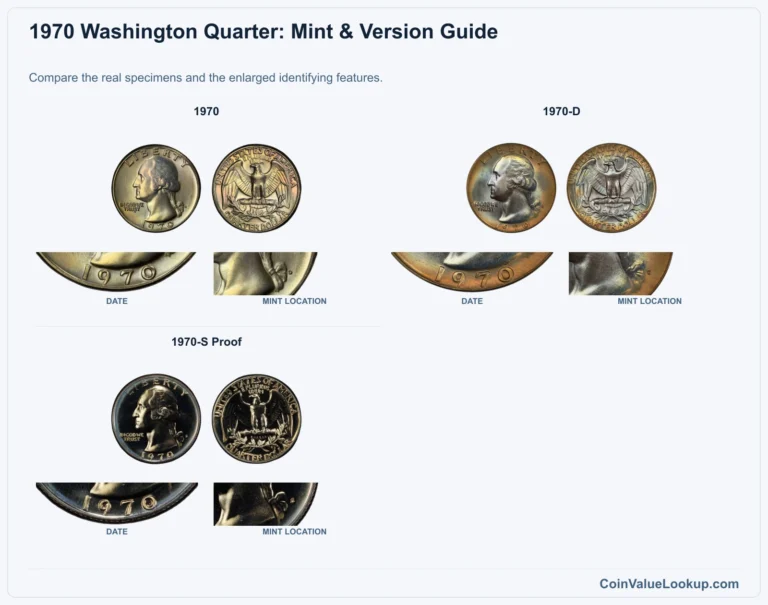
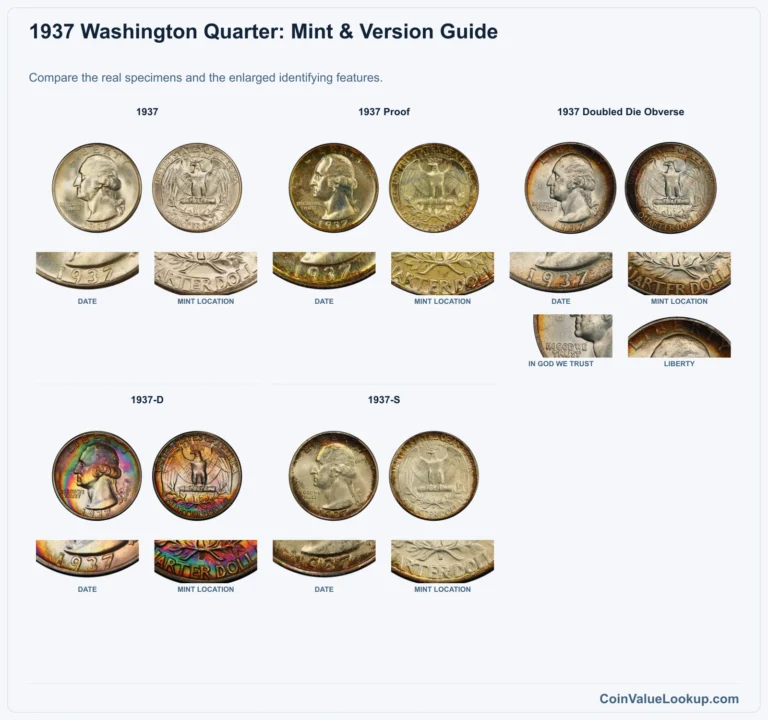
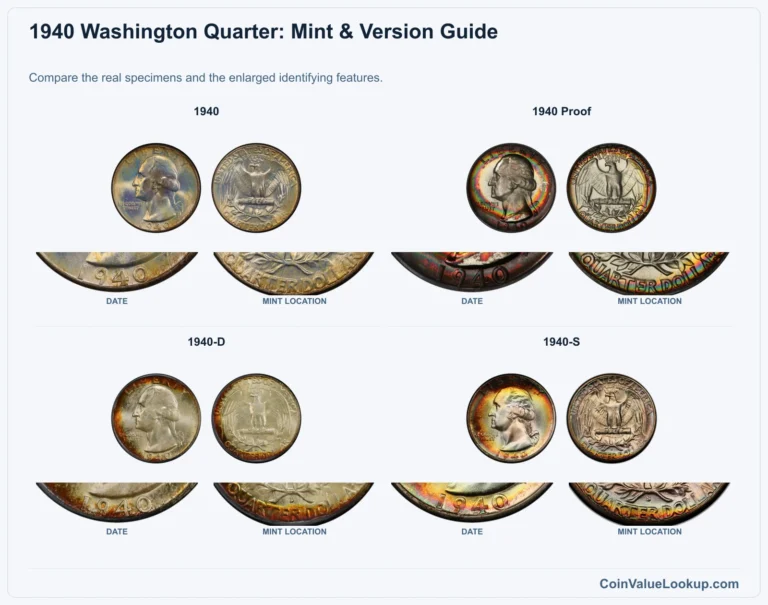
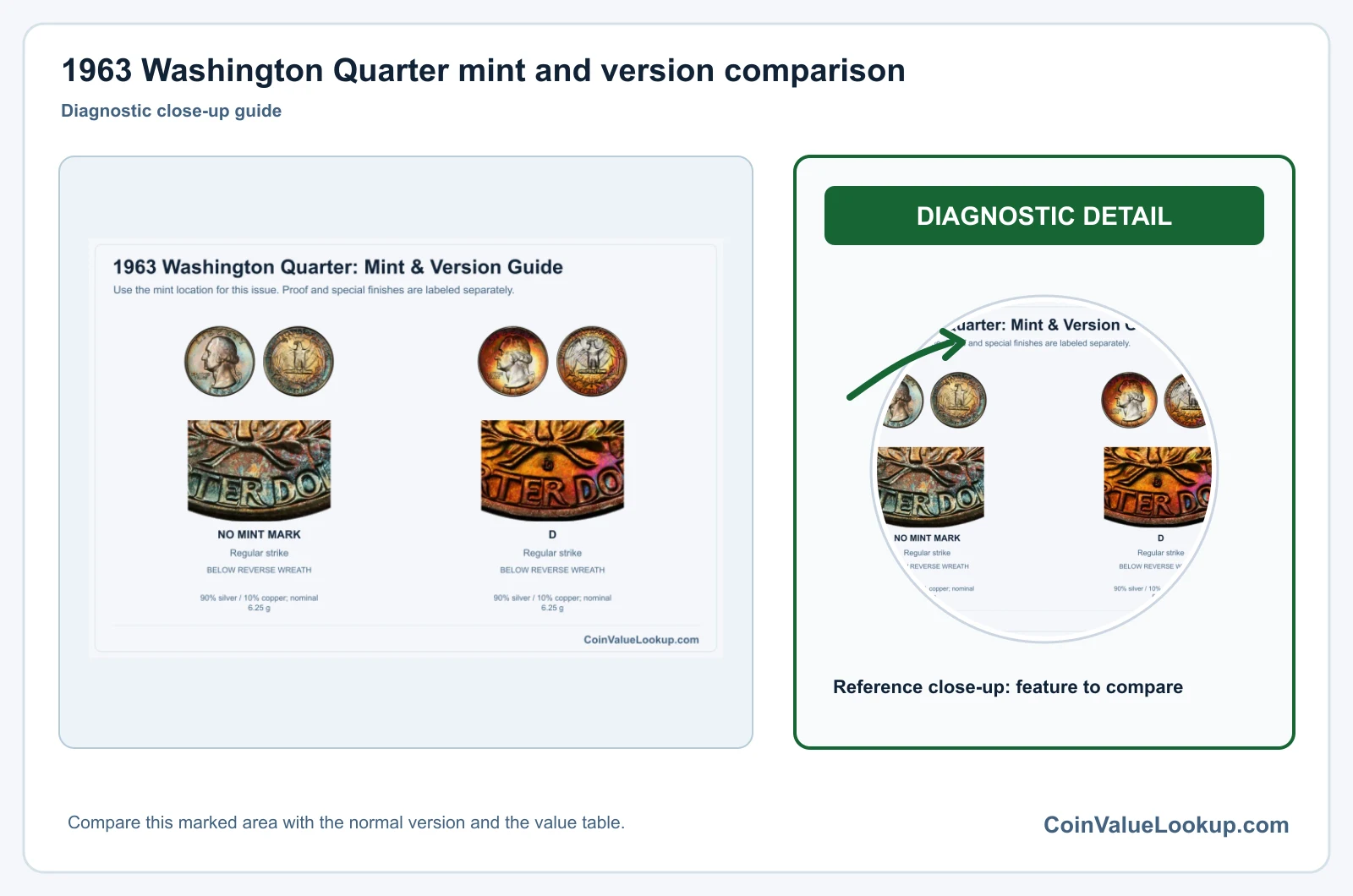
The 1963 Washington quarter comes from two mints. Philadelphia coins carry no mintmark, while Denver pieces show a small D below the wreath on the reverse.
Both are struck in 90% silver and 10% copper, weighing about 6.25 grams with a diameter of roughly 24.3 mm.
If your coin has a visible copper stripe on the edge, it is a later clad issue, not a 1963 silver quarter. Edge color alone does not authenticate alloy, but it is a fast first check.
Philadelphia also produced proof quarters in 1963, struck on specially prepared planchets with mirror fields. A polished circulated coin is not a proof, no matter how shiny someone has made it.
Beyond the standard strikes, PCGS recognizes a Type B reverse variety with noticeably separated letters E and S in STATES. There are also prooflike business strikes and a combined Type B prooflike branch.
PL is a surface designation on a business strike, not a proof finish.
Step 2: Check Your 1963 Washington Quarter Grade
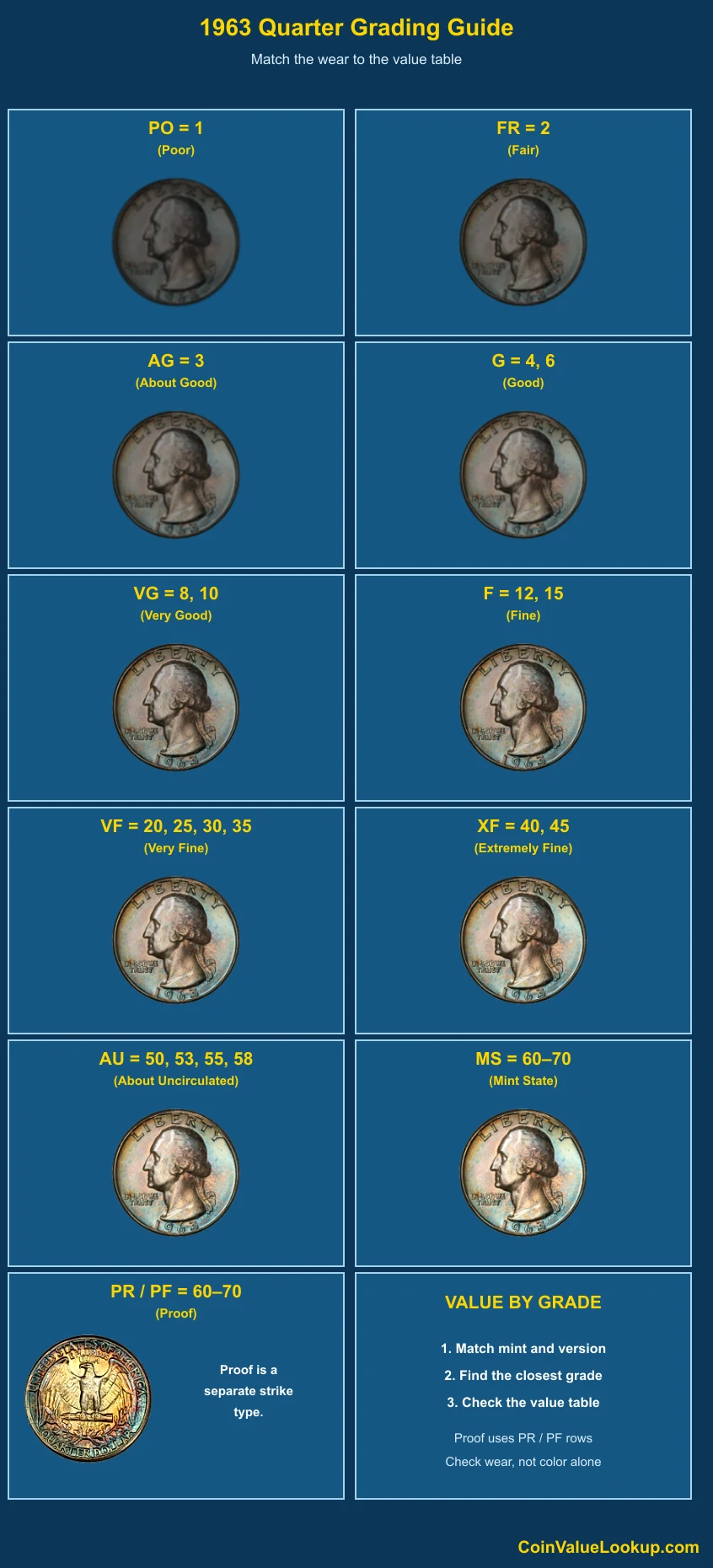
Start by examining the hair detail just above Washington's ear. On a well-circulated coin, this area goes flat first, followed by the cheek and jawline.
On the reverse, the eagle's breast feathers lose definition early.
Compare your coin's luster breaks against known strike weakness for this date, since some softness is from the dies rather than wear. The comparison image is your friend here.
Hairlines, bag marks, and rim dings all push the grade down. On proofs, surface hairlines and haze matter more than high-point wear, since the coin was never meant to circulate.
Step 3: Check 1963 Washington Quarter Value by Mint and Version
1963 Washington Quarter
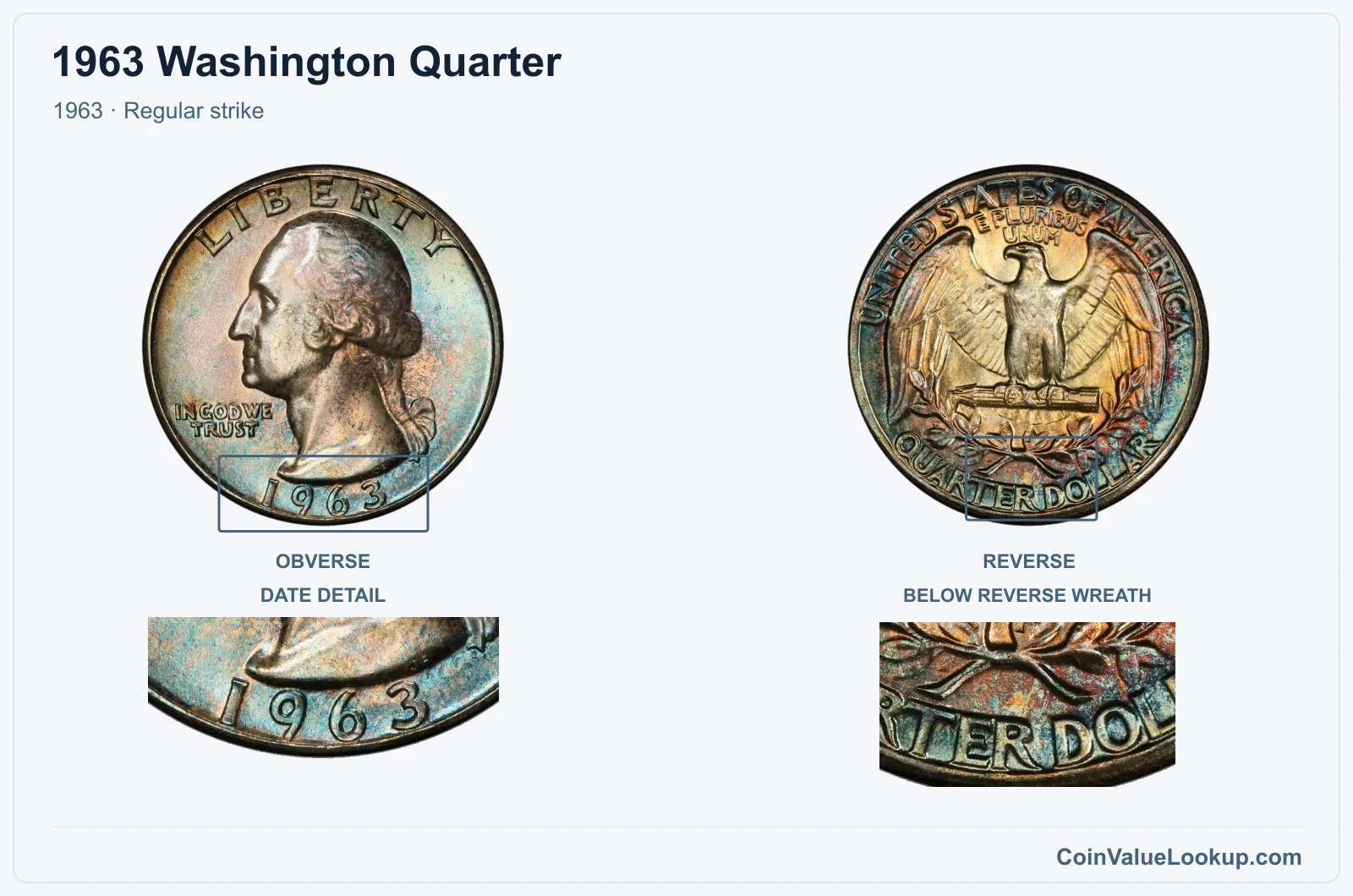
The 1963 Philadelphia business strike is the no-mintmark issue. In circulated grades around Good-4, guide estimates place it near $16.43, largely reflecting silver content.
An MS60 uncirculated example runs about $20, while a Gem MS65 reaches approximately $27.
Ordinary Gems are relatively accessible for this date, so condition and eye appeal matter if you are looking at higher grades. Original, untouched luster is the key separator between a coin worth a modest premium and one that just tracks silver melt.
| Range | Grade | Price | Auction Records | Appraisal |
|---|---|---|---|---|
| PO | PO 1 | — | Coin Identifier | |
| FR | FR 2 | — | Coin Identifier | |
| AG | AG 3 | — | Coin Identifier | |
| G | G 4 | — | Coin Identifier | |
| G 6 | — | Coin Identifier | ||
| VG | VG 8 | — | Coin Identifier | |
| VG 10 | — | Coin Identifier | ||
| F | F 12 | — | Coin Identifier | |
| F 15 | — | Coin Identifier | ||
| VF | VF 20 | — | Coin Identifier | |
| VF 25 | — | Coin Identifier | ||
| VF 30 | — | Coin Identifier | ||
| VF 35 | — | Coin Identifier | ||
| XF | XF 40 | — | Coin Identifier | |
| XF 45 | — | Coin Identifier | ||
| AU | AU 50 | — | Coin Identifier | |
| AU 53 | — | Coin Identifier | ||
| AU 55 | — | Coin Identifier | ||
| AU 58 | Coin Identifier | |||
| MS | MS 60 | — | Coin Identifier | |
| MS 61 | — | Coin Identifier | ||
| MS 62 | — | Coin Identifier | ||
| MS 63 | Coin Identifier | |||
| MS 64 | Coin Identifier | |||
| MS 65 | Coin Identifier | |||
| MS 66 | Coin Identifier | |||
| MS 67 | Coin Identifier | |||
| MS 68 | — | — | — | |
| MS 69 | — | — | — | |
| MS 70 | — | — | — |
1963 Washington Quarter — Proof
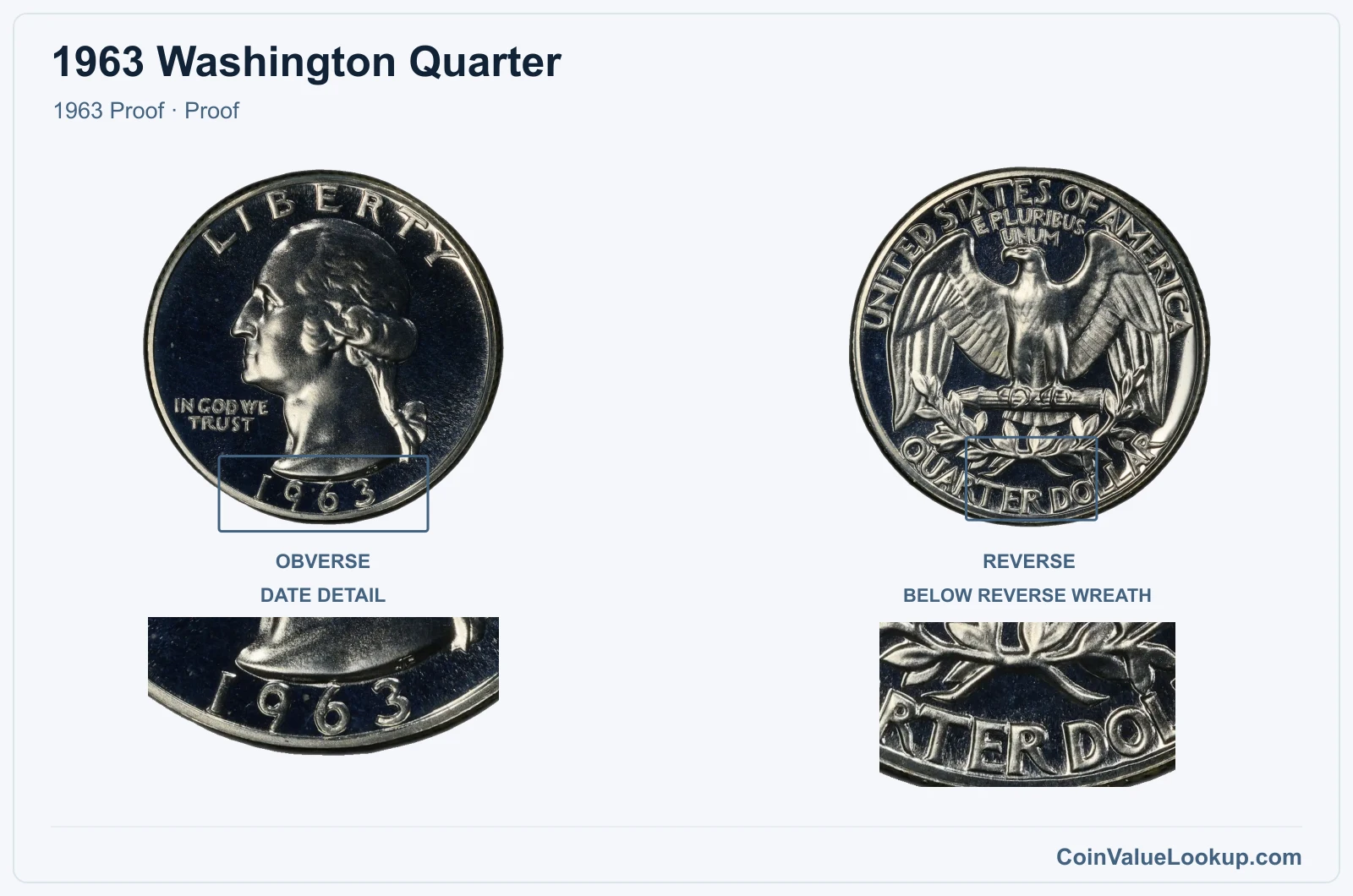
Philadelphia struck proof quarters in 1963 using the same 90% silver composition. These have mirror fields and sharp, squared rims from multiple strikes on polished dies.
A PR65 example runs about $23 according to guide estimates.
Do not confuse a polished circulation strike with a proof. Genuine proofs have a specific surface quality and edge finish that cleaning cannot replicate.
If your coin came from a sealed proof set, that is a good start. Loose proofs need closer inspection for hairlines and haze, which affect both grade and desirability.
| Range | Grade | Price | Auction Records | Appraisal |
|---|---|---|---|---|
| PR | PR 1 | — | Coin Identifier | |
| PR 2 | — | Coin Identifier | ||
| PR 3 | — | Coin Identifier | ||
| PR 4 | — | Coin Identifier | ||
| PR 6 | — | Coin Identifier | ||
| PR 8 | — | Coin Identifier | ||
| PR 10 | — | Coin Identifier | ||
| PR 12 | — | Coin Identifier | ||
| PR 15 | — | Coin Identifier | ||
| PR 20 | — | Coin Identifier | ||
| PR 25 | — | Coin Identifier | ||
| PR 30 | — | Coin Identifier | ||
| PR 35 | — | Coin Identifier | ||
| PR 40 | — | Coin Identifier | ||
| PR 45 | — | Coin Identifier | ||
| PR 50 | — | Coin Identifier | ||
| PR 53 | — | Coin Identifier | ||
| PR 55 | — | Coin Identifier | ||
| PR 58 | — | Coin Identifier | ||
| PR 60 | — | Coin Identifier | ||
| PR 61 | — | Coin Identifier | ||
| PR 62 | — | Coin Identifier | ||
| PR 63 | — | Coin Identifier | ||
| PR 64 | Coin Identifier | |||
| PR 65 | Coin Identifier | |||
| PR 66 | Coin Identifier | |||
| PR 67 | Coin Identifier | |||
| PR 68 | Coin Identifier | |||
| PR 69 | Coin Identifier | |||
| PR 70 | Coin Identifier |
1963 Washington Quarter — D
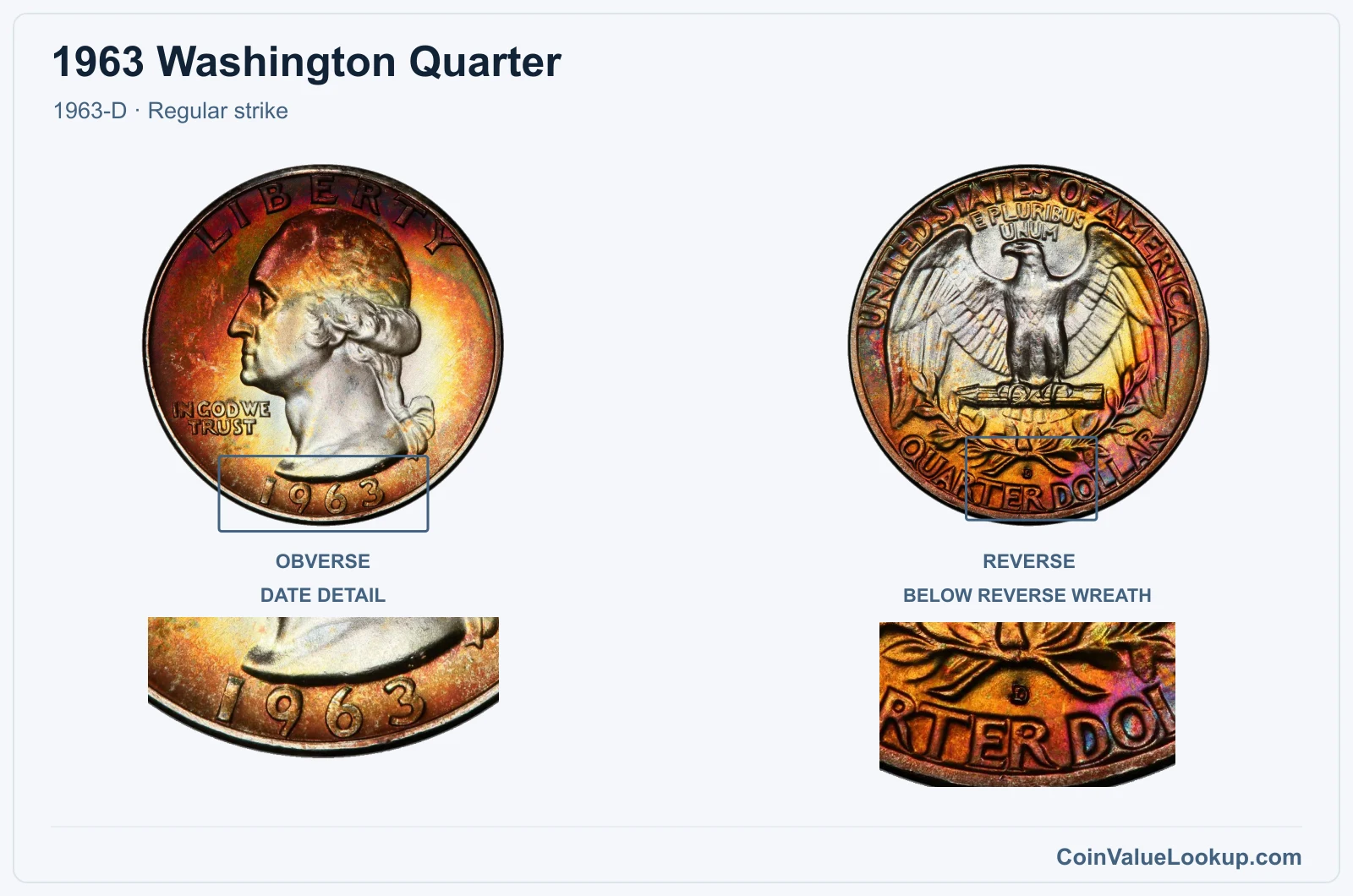
The 1963-D carries a small D mintmark below the reverse wreath. Guide estimates put a Good-4 example at about $16.43, an MS60 around $20, and a Gem MS65 at roughly $30, a slight edge over the Philadelphia business strike in that grade.
Coin Value Lookup is a useful starting point if you want to look up guide values for other Washington quarter dates or related series. It can help you quickly compare what different years and mints are worth.
Denver's 1963 production was large, so finding one in pocket change or an old collection is common. The premium over melt really only kicks in at higher uncirculated grades with clean surfaces.
| Range | Grade | Price | Auction Records | Appraisal |
|---|---|---|---|---|
| PO | PO 1 | — | Coin Identifier | |
| FR | FR 2 | — | Coin Identifier | |
| AG | AG 3 | — | Coin Identifier | |
| G | G 4 | — | Coin Identifier | |
| G 6 | — | Coin Identifier | ||
| VG | VG 8 | — | Coin Identifier | |
| VG 10 | — | Coin Identifier | ||
| F | F 12 | — | Coin Identifier | |
| F 15 | — | Coin Identifier | ||
| VF | VF 20 | — | Coin Identifier | |
| VF 25 | — | Coin Identifier | ||
| VF 30 | — | Coin Identifier | ||
| VF 35 | — | Coin Identifier | ||
| XF | XF 40 | — | Coin Identifier | |
| XF 45 | — | Coin Identifier | ||
| AU | AU 50 | — | Coin Identifier | |
| AU 53 | — | Coin Identifier | ||
| AU 55 | — | Coin Identifier | ||
| AU 58 | — | Coin Identifier | ||
| MS | MS 60 | — | Coin Identifier | |
| MS 61 | — | Coin Identifier | ||
| MS 62 | — | Coin Identifier | ||
| MS 63 | Coin Identifier | |||
| MS 64 | Coin Identifier | |||
| MS 65 | Coin Identifier | |||
| MS 66 | Coin Identifier | |||
| MS 67 | Coin Identifier | |||
| MS 68 | Coin Identifier | |||
| MS 69 | — | — | — | |
| MS 70 | — | — | — |
1963 Washington Quarter — Type B Reverse Quarter
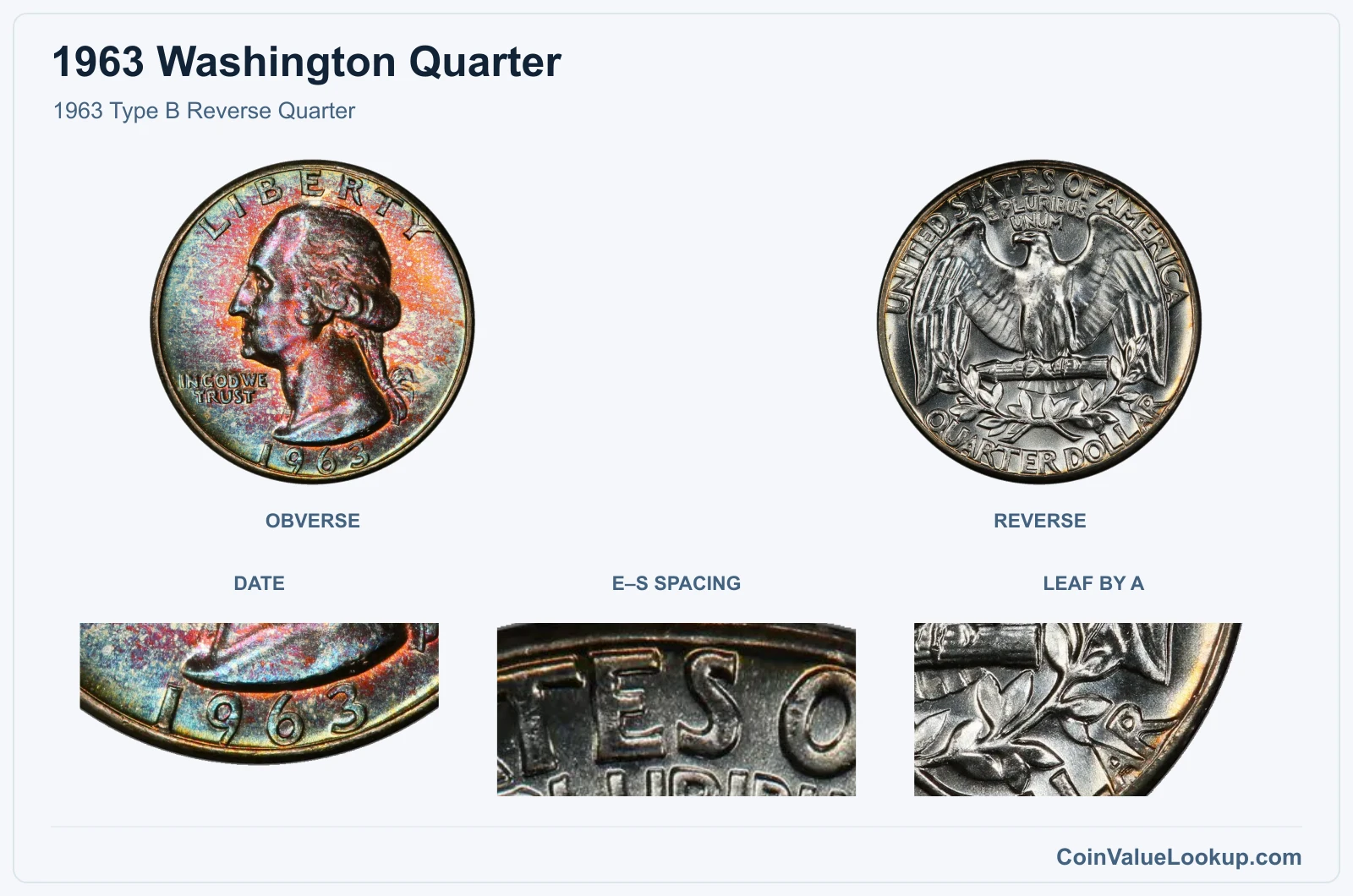
The 1963 Type B Reverse is a Philadelphia business strike that used a different reverse hub than the standard circulation die. The tell is the letters E and S in STATES: on a normal coin they nearly touch, while on the Type B they are clearly separated.
Grab a loupe and compare.
This is not a proof-style coin. Standard proofs use their own reverse hub and are a separate category entirely.
The Type B is specifically a circulation reverse variant.
A single MS67 example sold for $1,020 at Heritage in July 2021. That is one recorded sale at an exceptional grade, not a broad market range, but it shows the variety commands real attention when the coin is both correctly attributed and well preserved.
Range Grade
Price Auction Records Appraisal PO PO 1
—
Coin Identifier FR FR 2
—
Coin Identifier AG AG 3
—
Coin Identifier G G 4
—
Coin Identifier
G 6
—
Coin Identifier VG VG 8
—
Coin Identifier
VG 10
—
Coin Identifier F F 12
—
Coin Identifier
F 15
—
Coin Identifier VF VF 20
—
Coin Identifier
VF 25
—
Coin Identifier
VF 30
—
Coin Identifier
VF 35
—
Coin Identifier XF XF 40
—
Coin Identifier
XF 45
—
Coin Identifier AU AU 50
—
Coin Identifier
AU 53
—
Coin Identifier
AU 55
—
Coin Identifier
AU 58
—
Coin Identifier MS MS 60
—
Coin Identifier
MS 61
—
Coin Identifier
MS 62
—
Coin Identifier
MS 63
—
Coin Identifier
MS 64
Coin Identifier
MS 65
Coin Identifier
MS 66
Coin Identifier
MS 67
—
—
—
MS 68
—
—
—
MS 69
—
—
—
MS 70
—
—
—
1963 Washington Quarter — Prooflike Quarter
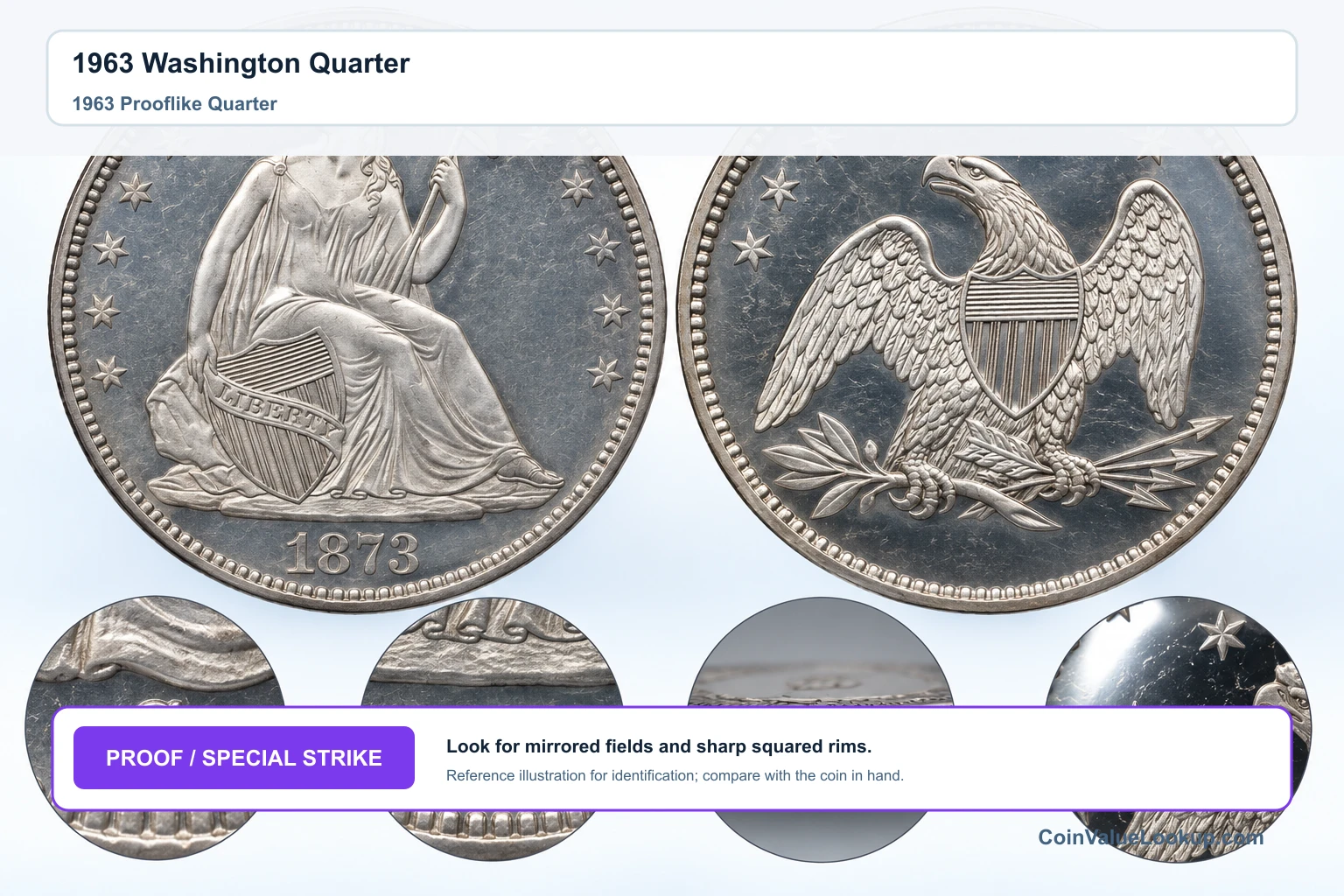
PCGS recognizes a prooflike designation for 1963 Philadelphia business strikes that exhibit notably reflective fields. This is a surface characteristic from fresh dies, not a proof finish.
A coin someone polished at home does not qualify.
To get the PL attribution, the reflectivity needs to meet PCGS standards and the coin must be a genuine business strike, not a proof. There is no supported price range available for this branch, so value depends on the individual coin's authenticated condition, eye appeal, and market demand at the time of sale.
Range Grade
Price Auction Records Appraisal PO PO 1
—
Coin Identifier FR FR 2
—
Coin Identifier AG AG 3
—
Coin Identifier G G 4
—
Coin Identifier
G 6
—
Coin Identifier VG VG 8
—
Coin Identifier
VG 10
—
Coin Identifier F F 12
—
Coin Identifier
F 15
—
Coin Identifier VF VF 20
—
Coin Identifier
VF 25
—
Coin Identifier
VF 30
—
Coin Identifier
VF 35
—
Coin Identifier XF XF 40
—
Coin Identifier
XF 45
—
Coin Identifier AU AU 50
—
Coin Identifier
AU 53
—
Coin Identifier
AU 55
—
Coin Identifier
AU 58
—
Coin Identifier MS MS 60
—
Coin Identifier
MS 61
—
Coin Identifier
MS 62
—
Coin Identifier
MS 63
—
Coin Identifier
MS 64
—
Coin Identifier
MS 65
—
Coin Identifier
MS 66
—
Coin Identifier
MS 67
—
—
—
MS 68
—
—
—
MS 69
—
—
—
MS 70
—
—
—
1963 Washington Quarter — Type B Reverse Prooflike Quarter
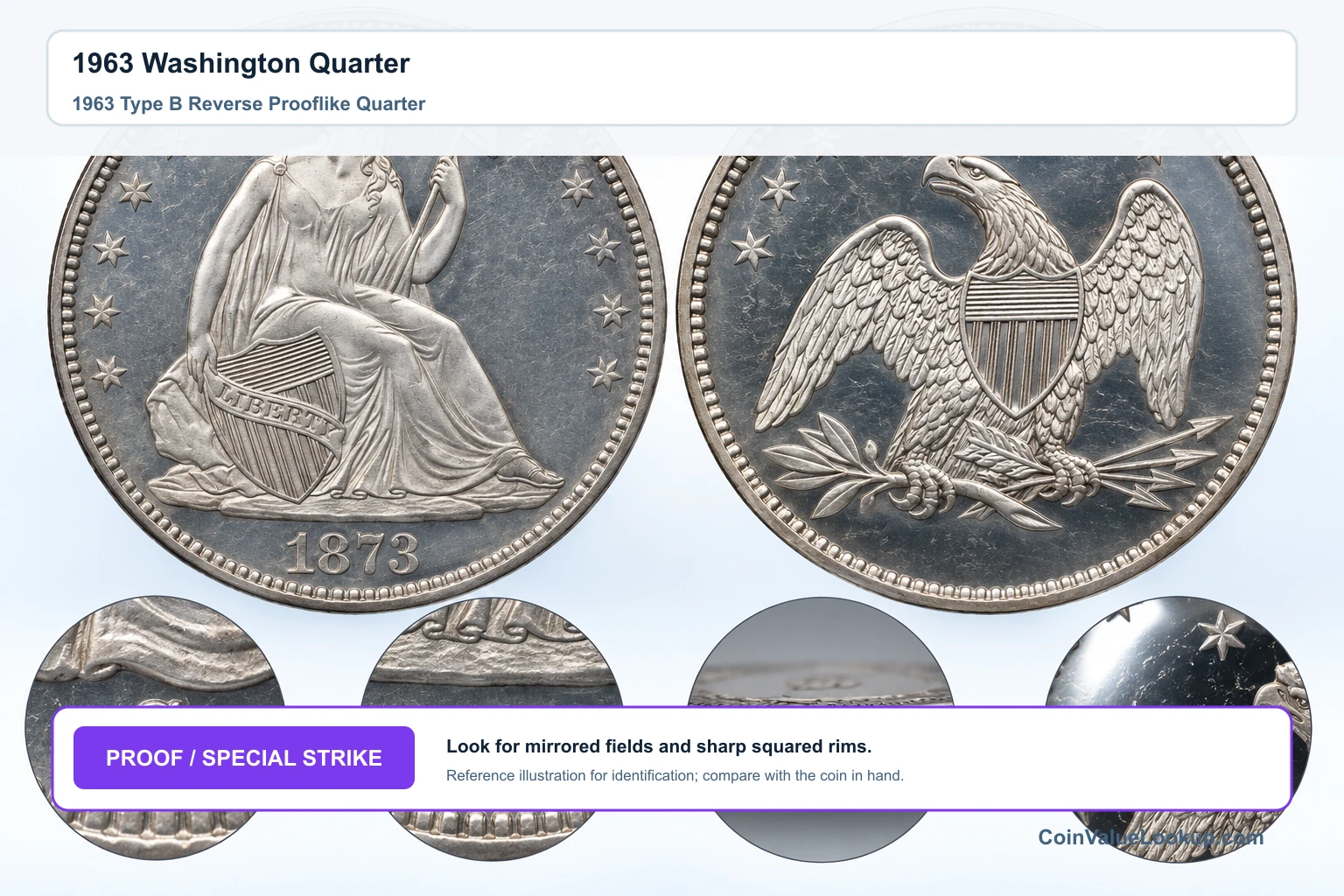
This is the intersection of two Philadelphia varieties: the Type B reverse hub combined with prooflike business-strike surfaces. Both attributes must be independently confirmed.
You need the separated ES in STATES for the Type B call, plus genuinely reflective fields for the PL designation.
Polished coins and standard proofs are excluded. A proof uses its own reverse hub and is struck differently, so it cannot be a Type B prooflike business strike.
No reliable numeric price range is available for this combined variety. Value depends entirely on authenticated identity, preservation, and the specific coin's visual appeal.
Third-party certification matters here more than usual, since both the reverse hub and the surface designation need professional confirmation.
Ordinary-issue reference: Ordinary-issue reference only: The table below shows prices for the 1963 Washington Quarter (regular strike). It does not represent the value of the specific 1963 Type B Reverse Prooflike Quarter variety or its variety premium. Year, mint, metal and strike type are matched; the specific variety is not priced by this table.
Range Grade
Price Auction Records Appraisal PO PO 1
—
Coin Identifier FR FR 2
—
Coin Identifier AG AG 3
—
Coin Identifier G G 4
—
Coin Identifier
G 6
—
Coin Identifier VG VG 8
—
Coin Identifier
VG 10
—
Coin Identifier F F 12
—
Coin Identifier
F 15
—
Coin Identifier VF VF 20
—
Coin Identifier
VF 25
—
Coin Identifier
VF 30
—
Coin Identifier
VF 35
—
Coin Identifier XF XF 40
—
Coin Identifier
XF 45
—
Coin Identifier AU AU 50
—
Coin Identifier
AU 53
—
Coin Identifier
AU 55
—
Coin Identifier
AU 58
Coin Identifier MS MS 60
—
Coin Identifier
MS 61
—
Coin Identifier
MS 62
—
Coin Identifier
MS 63
Coin Identifier
MS 64
Coin Identifier
MS 65
Coin Identifier
MS 66
Coin Identifier
MS 67
Coin Identifier
MS 68
—
—
—
MS 69
—
—
—
MS 70
—
—
—
1963 Washington Quarter Error List
1. 1963 Washington Quarter — Struck Through a Retained Copper Fragment
This 1963 Philadelphia quarter was struck with a foreign copper fragment trapped between the die and planchet. The fragment became embedded during striking, leaving a visible interruption in the surrounding design.
It is retained material physically pressed into the coin's surface, not toning or exposed copper from a clad core. The 1963 quarter is a solid silver alloy coin, so any copper inclusion is foreign.
Do not confuse this with post-mint damage like filing, corrosion, adhesive residue, or hammered-on material. Genuine struck-through errors show the object was present during the minting process, with design flow around and over the obstruction.
An ANACS MS64 example realized $720 at Heritage in July 2021. Authentication matters, since the visual can be mimicked by damage.
2. 1963 Washington Quarter — Struck on a Cent Planchet
A 1963 quarter struck on a Lincoln cent planchet is a dramatic wrong-planchet error. The coin displays copper cent color, a noticeably smaller diameter than a normal quarter, and distorted or missing peripheral lettering where the smaller blank could not fill the quarter dies.
Weight and edge examination are critical for confirmation. A normal 1963 quarter weighs about 6.25 grams in silver; a cent planchet is significantly lighter and all copper.
Copper plating, chemical alteration, or environmental damage on a silver quarter can imitate the color, so visual appearance alone is not sufficient.
Heritage records a 1963 quarter on cent planchet graded MS65 Brown by NGC that sold for $1,116.25. That is a single confirmed specimen, not a broad price range.
Third-party certification is essential for this type of error.
3. 1963 Washington Quarter — Doubled Die Obverse
Doubled die obverse varieties have been reported for the 1963 Washington quarter. The doubling appears on obverse lettering or design elements and should show consistent separation or notching when compared to a normal coin under the same lighting and magnification.
Do not confuse this with machine doubling, which produces flat, shelf-like displacement without the raised, separated profile of a true doubled die. Reflections and worn die contours can also create misleading appearances under certain angles.
No supported price range is available for this variety. Value depends on the specific doubled die attribution, the visibility and strength of the doubling, and the coin's overall condition.
Professional attribution is the practical path to confirming what you have.
4. 1963 Washington Quarter — Doubled Die Reverse
Doubled die reverse varieties have also been reported for the 1963 quarter. Look at the reverse legends and design contours, comparing closely against a normal example.
True hub doubling shows consistent, directional separation in the affected areas.
Machine doubling is the most common lookalike. It tends to produce flat, shelf-like distortion rather than the raised and clearly split profiles of genuine hub doubling.
Random damage and reflections from luster can also fool you, especially in photos.
There is no adopted price range for this variety. The value of any individual coin depends on which specific doubled die it matches, how visible the doubling is, and the coin's grade.
Authentication by a recognized third-party service is the best way to confirm the variety.
5. 1963 Washington Quarter — Repunched Mintmark
Repunched mintmark varieties exist for the 1963-D quarter specifically. This means the D mintmark was punched into the working die more than once, leaving traces of the earlier position visible alongside the final mark.
To spot it, examine the D below the reverse wreath under magnification. Look for remnants of a second punch, such as a partial letter offset from the primary D.
Compare at matching magnification against a normal 1963-D mintmark.
Die chips, corrosion, and machine doubling around the mintmark area can mimic an RPM. The distinction is that a true repunched mintmark shows a clearly separate impression, not just mushy edges or buildup.
No supported price range is available. Value varies with the specific RPM variety, its visibility, and overall coin condition.
6. 1963 Washington Quarter — Off-Center Strike
Off-center strikes have been reported for the 1963 quarter. An off-center coin shows the design shifted to one side with an unstruck crescent of blank planchet on the opposite edge.
The more dramatic the shift, the more visually striking the error, but collectors generally want the date to remain visible.
Do not confuse this with a clipped planchet, which has a curved bite from a punching error, or with post-mint flattening that distorts the rim on one side. A genuine off-center strike affects the entire design position uniformly relative to the planchet.
No supported price range is available for this error. Value depends on the percentage of off-center displacement, whether the date is readable, and the coin's preservation.
Each piece is evaluated individually.