1805 Draped Bust Cent Coin Value: How Much Is It Worth?
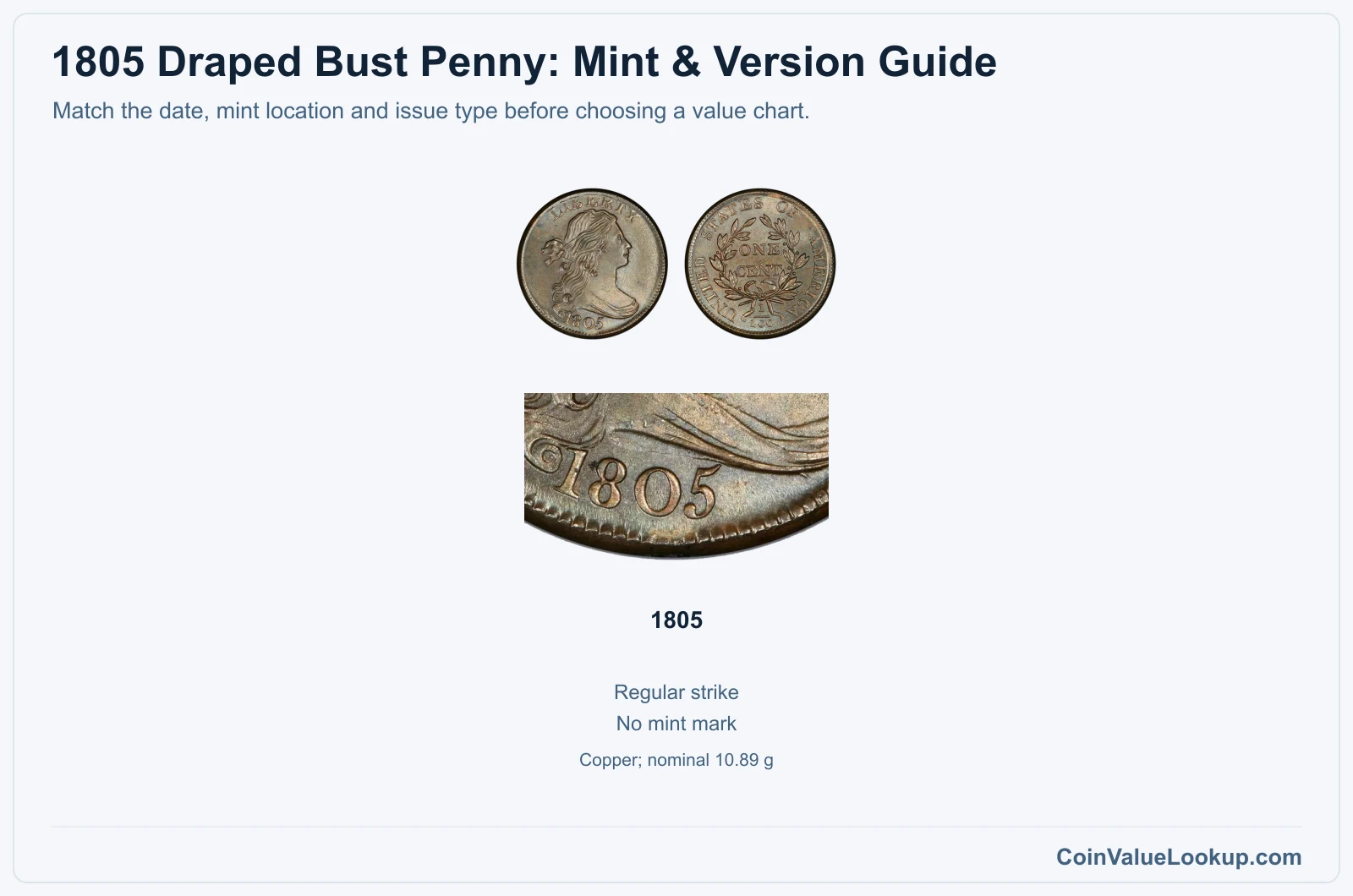
The 1805 Draped Bust Cent is a genuinely old copper coin, and even well-worn examples carry real value. Guide estimates from USA Coin Book place ordinary business strikes from around $112 in Good-4 condition up to roughly $2,767 in Extremely Fine-40.
Your actual coin's worth depends on its specific variety, surface quality and grade, so identifying exactly what you have comes first.
Fast Way to Identify Your 1805 Draped Bust Cent
Snap clear photos of both the front and back of your 1805 cent under good lighting. Upload them here for a preliminary identification based on design details, condition clues and any visible oddities.
This is not a certified authentication or precise grade assignment, but it gives you a solid starting point before deciding on next steps.
1805 Draped Bust Cent Value
Upload both sides of your 1805 Draped Bust Cent.
Front Obverse
Upload photo
Back Reverse
Upload photo
Which 1805 Draped Bust Cent Versions Are Worth Money?
- The 1805 business strike in Extremely Fine-40 carries a USA Coin Book guide estimate near $2,767, reflecting the scarcity of sharp survivors from this early date.
- Even a heavily worn Good-4 example guides around $112, so any genuine 1805 Draped Bust Cent has meaningful value worth verifying.
- Coins with prominent mint errors such as die breaks or off-center strikes may command individual premiums beyond normal date values, depending on severity and authentication.
Step 1: Identify Your 1805 Draped Bust Cent Mint Mark and Version
The 1805 Draped Bust Cent features Liberty facing right with flowing hair and a draped bust on the obverse. The reverse shows a wreath surrounding the denomination.
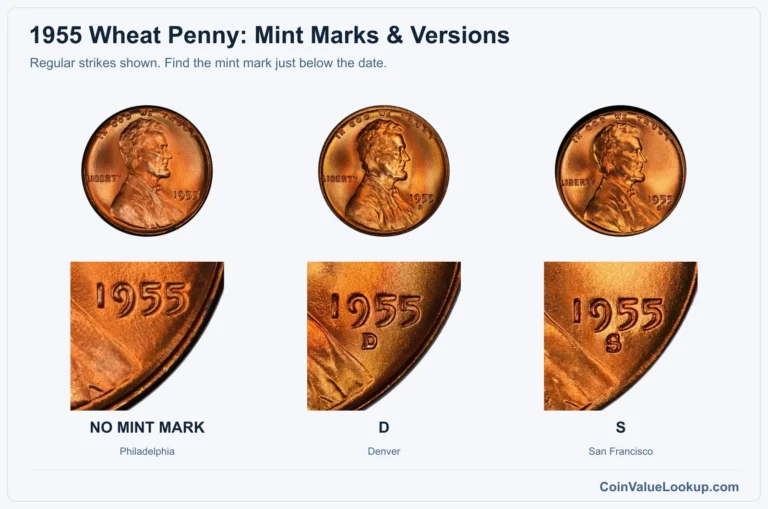
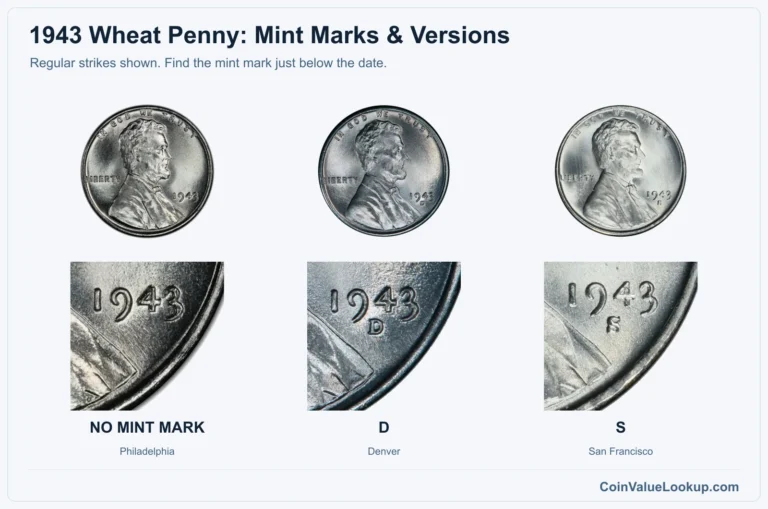
All of these were struck at Philadelphia, so there is no mintmark to look for.
Confirm the coin matches the Draped Bust design rather than a Classic Head or Coronet type, which came later. Check the date carefully, because date-punch shapes varied.
Look at the legend wording and wreath details on both sides.
Weight should be close to 10.89 grams for a full copper planchet, but wear, corrosion and period production tolerances mean weight alone does not prove authenticity. Use it as supporting evidence alongside the design match.
Original surfaces and legible detail matter far more than brightness; a dark, crusty original will generally beat a cleaned, shiny coin in the market.
Step 2: Check Your 1805 Draped Bust Cent Grade
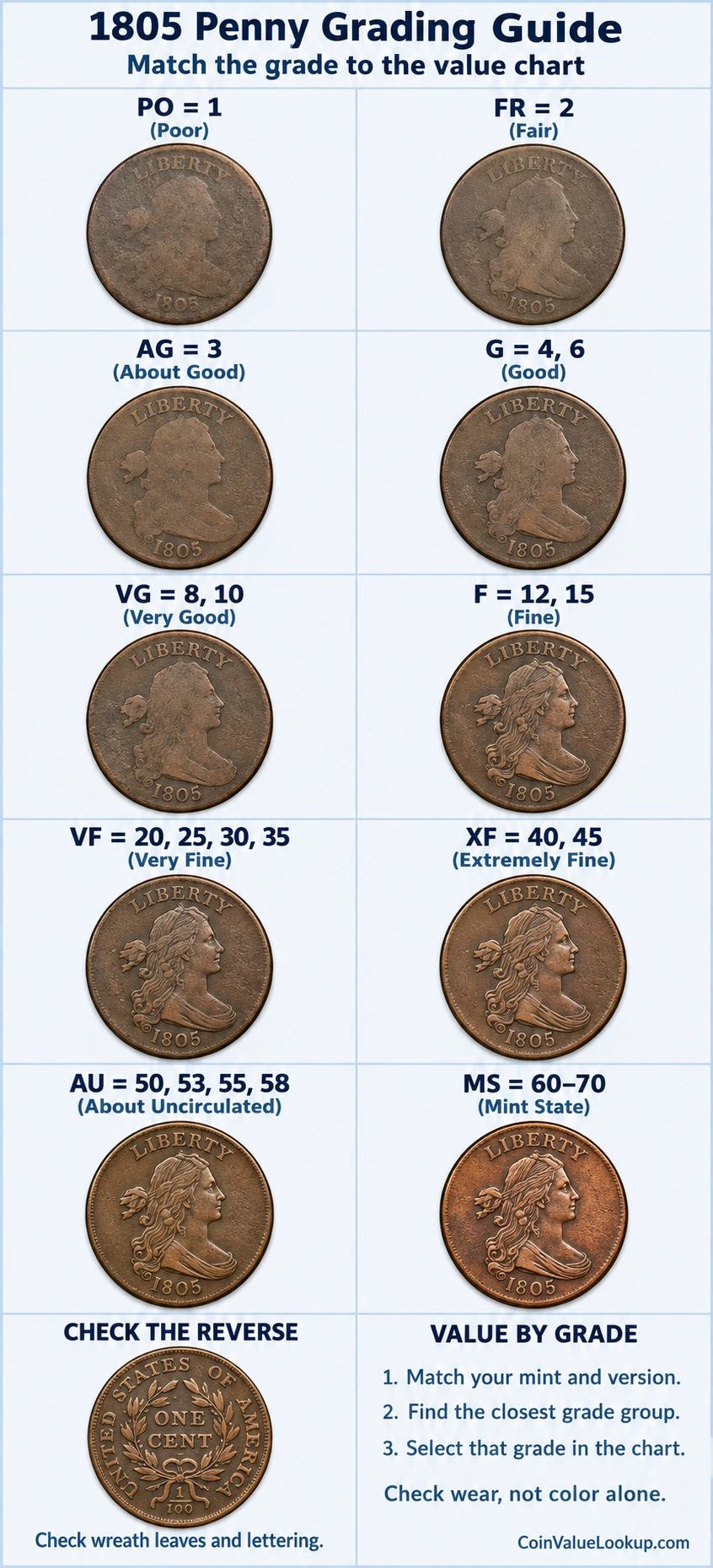
Start with Liberty's hair above the forehead and the cheek. On a well-worn coin those areas merge into flat planes.
Compare your coin's remaining detail against the comparison image for this type.
The wreath leaves on the reverse lose their vein lines early. By Good-4 the outline is visible but interior detail is gone.
At Extremely Fine-40 most hair strands and leaf veins remain sharp.
Do not confuse a weak original strike with heavy wear. Some 1805 cents left the press soft in spots.
Likewise, porosity or corrosion eats detail in ways circulation does not. Surface problems can substantially lower market value even when the remaining design sharpness looks decent.
On copper cents you may see color described as BN, RB or RD. Those are color designations, not different alloys.
After two centuries most survivors are solidly brown, and that is perfectly normal.
Step 3: Check 1805 Draped Bust Cent Value by Mint and Version
1805 Draped Bust Cent
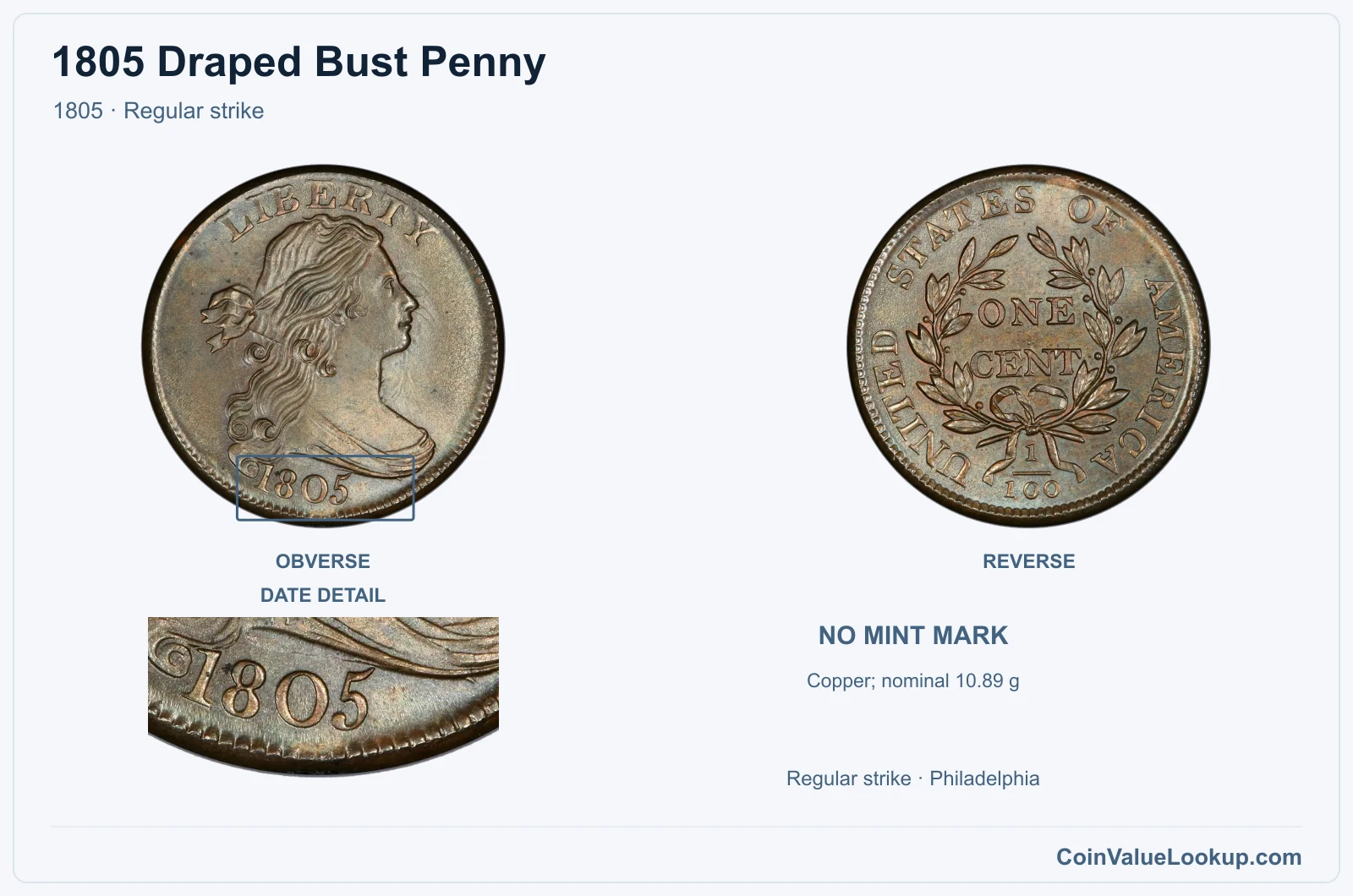
The 1805 Draped Bust Cent was struck at Philadelphia in copper, with no mintmark. Look for Liberty's draped bust facing right on the obverse and a wreath enclosing the denomination on the reverse.
USA Coin Book guides this date at approximately $112 in Good-4, rising to about $2,767 in Extremely Fine-40. Survivors span a wide condition range, and most show honest brown surfaces after more than two centuries of existence.
Original surfaces count for a lot on early copper. A coin with natural color, even if dark, will typically be preferred over one that has been cleaned or tooled.
If you can see clear date digits and a full outline of Liberty, you likely have at least a Good-grade coin. Anything with crisp hair detail and sharp wreath veins is worth a careful look.
Coin Value Lookup is a good place to explore guides for other early U.S. copper dates alongside this one.
| Range | Grade | Price | Auction Records | Appraisal |
|---|---|---|---|---|
| PO | PO 1 | — | Coin Identifier | |
| FR | FR 2 | Coin Identifier | ||
| AG | AG 3 | Coin Identifier | ||
| G | G 4 | Coin Identifier | ||
| G 6 | Coin Identifier | |||
| VG | VG 8 | Coin Identifier | ||
| VG 10 | Coin Identifier | |||
| F | F 12 | Coin Identifier | ||
| F 15 | Coin Identifier | |||
| VF | VF 20 | Coin Identifier | ||
| VF 25 | Coin Identifier | |||
| VF 30 | Coin Identifier | |||
| VF 35 | Coin Identifier | |||
| XF | XF 40 | Coin Identifier | ||
| XF 45 | Coin Identifier | |||
| AU | AU 50 | Coin Identifier | ||
| AU 53 | Coin Identifier | |||
| AU 55 | Coin Identifier | |||
| AU 58 | Coin Identifier | |||
| MS | MS 60 | — | Coin Identifier | |
| MS 61 | Coin Identifier | |||
| MS 62 | Coin Identifier | |||
| MS 63 | Coin Identifier | |||
| MS 64 | — | Coin Identifier | ||
| MS 65 | Coin Identifier | |||
| MS 66 | Coin Identifier | |||
| MS 67 | — | — | — | |
| MS 68 | — | — | — | |
| MS 69 | — | — | — | |
| MS 70 | — | — | — |
1805 Draped Bust Cent Error List
1. 1805 Draped Bust Cent — Clashed Dies
A die clash happens when the obverse and reverse dies strike each other without a planchet between them. On an 1805 Draped Bust Cent, look for faint impressions of the opposite design transferred onto the wrong side, such as traces of the wreath appearing near Liberty's portrait or vice versa.
These ghost images will align with where the opposing die would have contacted the surface.
Do not confuse random scratches or raised lines with a genuine clash. True clash marks follow the geometry of the other die's design and repeat consistently.
No specific pricing is available for this error on the 1805 cent; value depends on the clash's visibility, the coin's overall grade and whether it has been authenticated by a recognized service.
2. 1805 Draped Bust Cent — Die Crack
Die cracks show up as thin raised lines running across the coin's surface. They formed when the steel die developed a fracture during use.
On an 1805 cent, look for a line that crosses a field or cuts through a letter or device and sits slightly above the surrounding surface.
A raised line is the key distinction. Scratches from handling or cleaning are incuse, meaning they cut into the metal.
Corrosion lines tend to be irregular and pitted. A genuine die crack will be crisp and follow a path that makes mechanical sense from the die's stress points.
No adopted price range exists for this error on the 1805 date; each example needs individual assessment based on the crack's prominence, location and the coin's authenticated condition.
3. 1805 Draped Bust Cent — Die Break / Cud
A cud is a specific type of die break where a chunk of the die rim has broken away. The result is a raised, featureless blob of metal along the coin's edge, sometimes obliterating part of the design or legend.
Smaller interior die breaks can also appear as raised lumps away from the rim.
Do not mistake a rim dent or corrosion patch for a cud. A genuine cud is raised and connects to the rim, with a clear boundary where normal design resumes.
Interior die chips tend to be smaller and rounder. For the 1805 Draped Bust Cent, no specific pricing is supported for this category.
Value hinges on the break's size, location and the coin's overall grade and authentication.
4. 1805 Draped Bust Cent — Off-Center Strike
An off-center strike occurs when the planchet is not properly seated between the dies. Part of the design is missing, replaced by a blank crescent of unstruck metal.
On an 1805 cent, the key question is whether the date remains fully visible; a readable date dramatically increases desirability.
Be careful not to confuse this with a clipped planchet or post-mint damage. An off-center coin will show the entire design shifted in one direction, with the blank area smooth and unworked.
A filed or damaged edge looks different under magnification. No numeric price range is adopted for off-center 1805 cents.
Each coin must be evaluated individually based on the percentage of offset, date visibility, condition and authentication.
5. 1805 Draped Bust Cent — Clipped Planchet
A clipped planchet means the blank was cut incompletely before striking, leaving a curved, straight or ragged portion missing from the coin's edge. On an 1805 Draped Bust Cent, look for a corresponding area of design weakness directly opposite the clip, caused by uneven metal flow during striking.
That weakness opposite the missing area is a good diagnostic.
Do not confuse a clip with an edge that has been filed, cut or corroded after minting. A genuine clip will show a natural metal-flow pattern and the edge texture will differ from a sharp cut.
No numeric pricing is supported for clipped 1805 cents. Each piece needs individual evaluation based on clip size, type and the coin's authenticated grade.
6. 1805 Draped Bust Cent — Lamination / Split Planchet
Lamination errors happen when layers within the copper separate, creating a peeling flap, a missing patch or a visible split in the planchet. On an 1805 cent, photograph the edge alongside the affected face to document the separation clearly.
These can look superficially like scraping or deliberate damage. The difference is that a lamination follows the metal's internal structure.
The edges of the flaw tend to be irregular and layered rather than showing sharp tool marks. Corrosion can mimic a shallow lamination, so close inspection matters.
No adopted price exists for this error on the 1805 date. Value depends on the flaw's size, whether the flap is retained, the coin's overall condition and professional authentication.