1801 Draped Bust Dollar Coin Value: How Much Is It Worth?
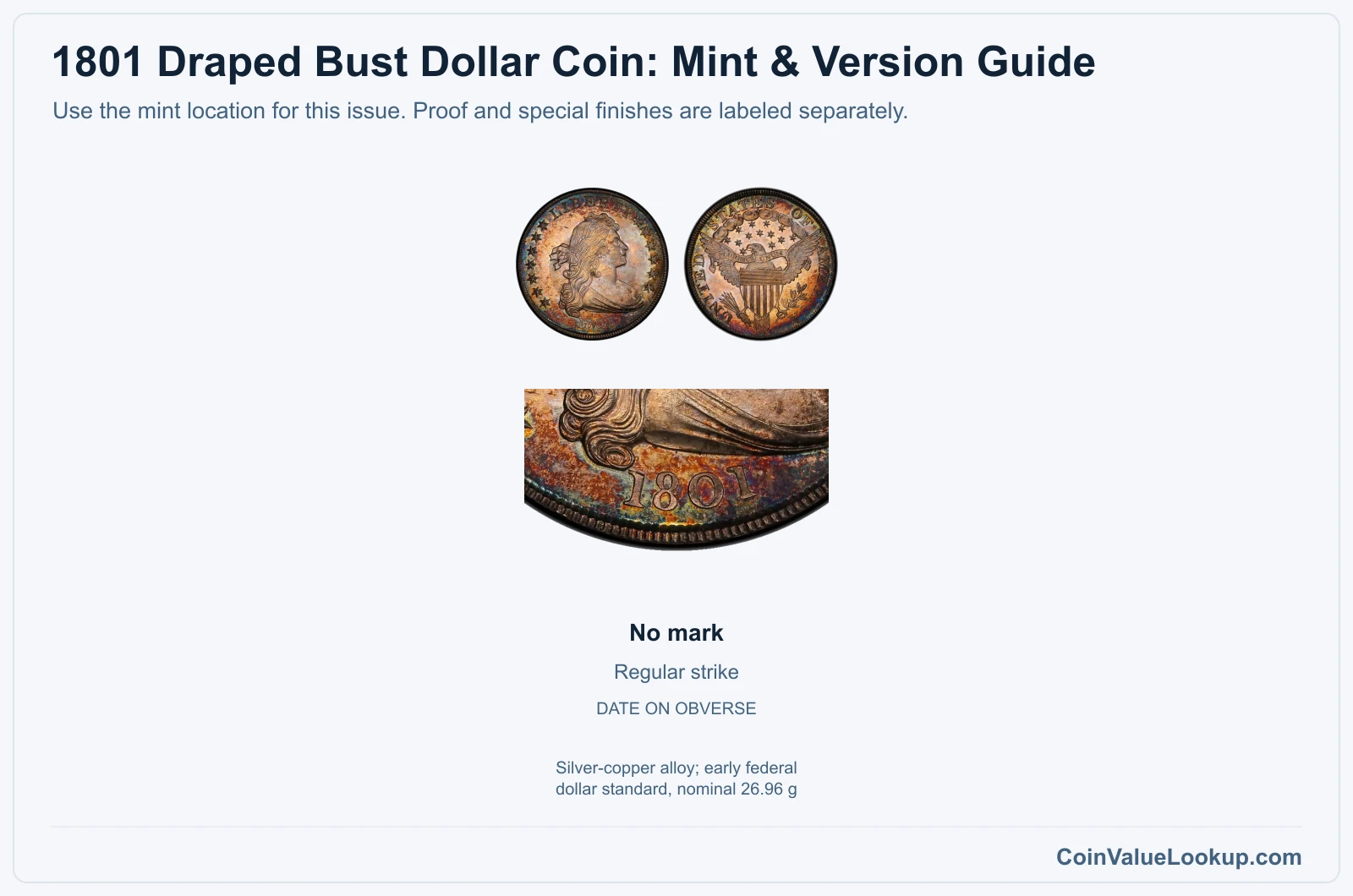
The 1801 Draped Bust Dollar is one of the earliest silver dollars struck by the United States Mint. Only Philadelphia produced these coins, and surviving examples are scarce after more than two centuries.
Because no single reliable price range covers every condition, the value of your specific coin depends on its authenticated identity, preservation and whether any mint-made anomalies are present.
Fast Way to Identify Your 1801 Draped Bust Dollar
Upload clear photos of both the front and back of your 1801 dollar for a preliminary identification. Good lighting without glare helps reveal design details, surface condition and any unusual features.
This step can help you figure out which branch your coin falls into before seeking a professional assessment.
1801 Draped Bust Dollar Value
Upload both sides of your 1801 Draped Bust Dollar.
Front Obverse
Upload photo
Back Reverse
Upload photo
Which 1801 Draped Bust Dollar Versions Are Worth Money?
- The 1801 Philadelphia issue is the sole branch for this date — confirm the Heraldic Eagle reverse and lettered edge before assessing value.
- Original, unclean surfaces in higher grades command the strongest collector interest; polished or cleaned coins lose significant comparability and appeal.
Step 1: Identify Your 1801 Draped Bust Dollar Mint Mark and Version
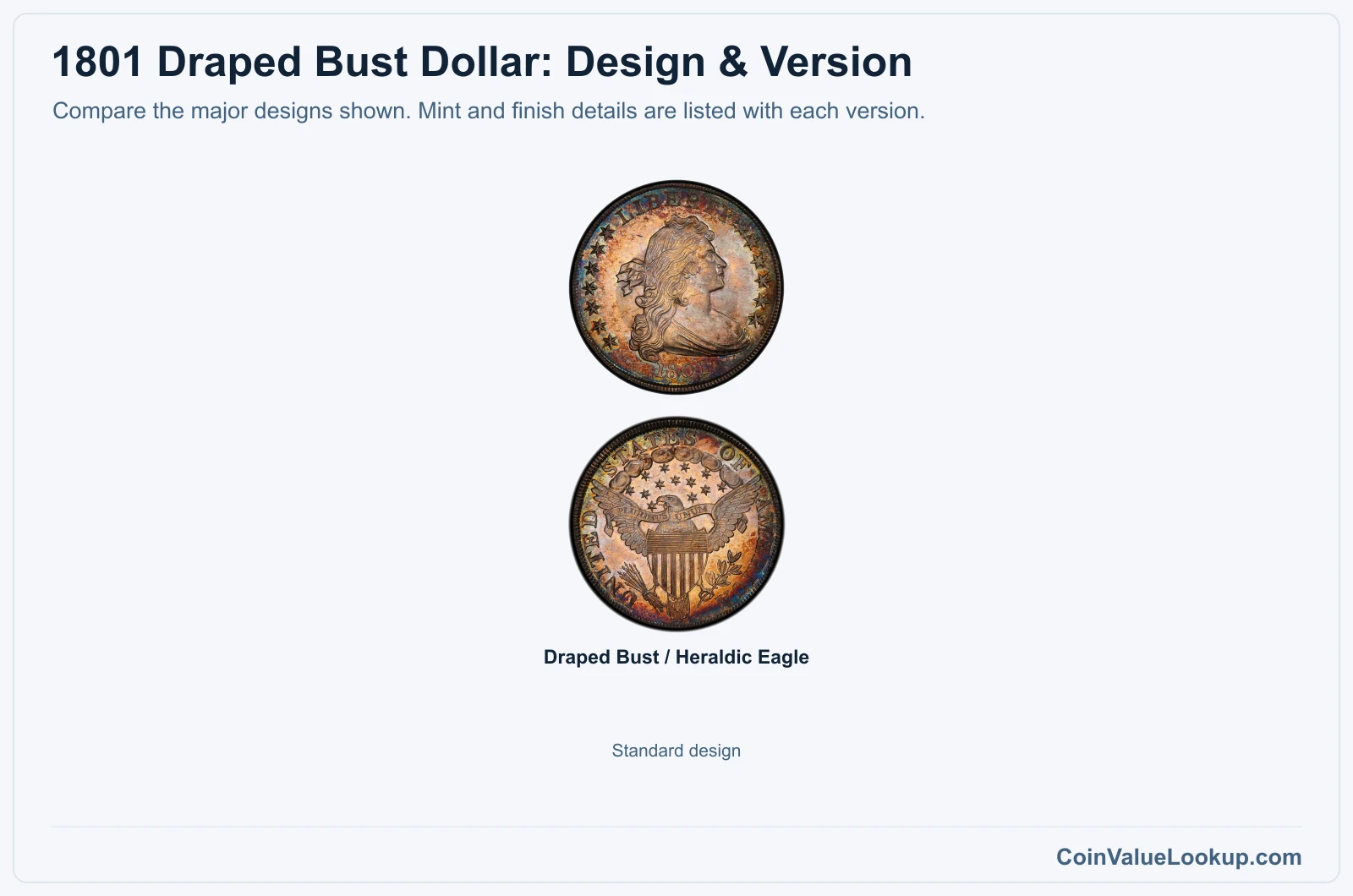
Every 1801 Draped Bust Dollar was struck at the Philadelphia Mint, so there is no mintmark to hunt for. The obverse shows Liberty facing right with flowing hair and draped fabric across her bust, surrounded by stars and the date 1801.
Flip it over and you should see a Heraldic Eagle with a shield on its chest, arrows and an olive branch in its talons, and the inscription UNITED STATES OF AMERICA.
The coin is a silver-copper alloy with a nominal weight of about 26.96 grams. Its edge is lettered, not reeded, which is a detail many beginners overlook.
If the edge is smooth or reeded, something is off.
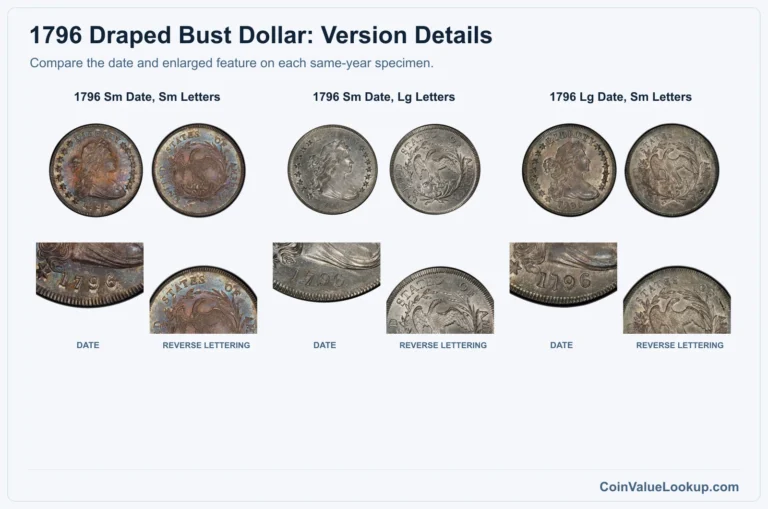
Look carefully at the date numerals and star placement. Differences in letter spacing, star count or die cracks can distinguish one die pairing from another.
Confirming these basics is essential before you start comparing values.
Step 2: Check Your 1801 Draped Bust Dollar Grade
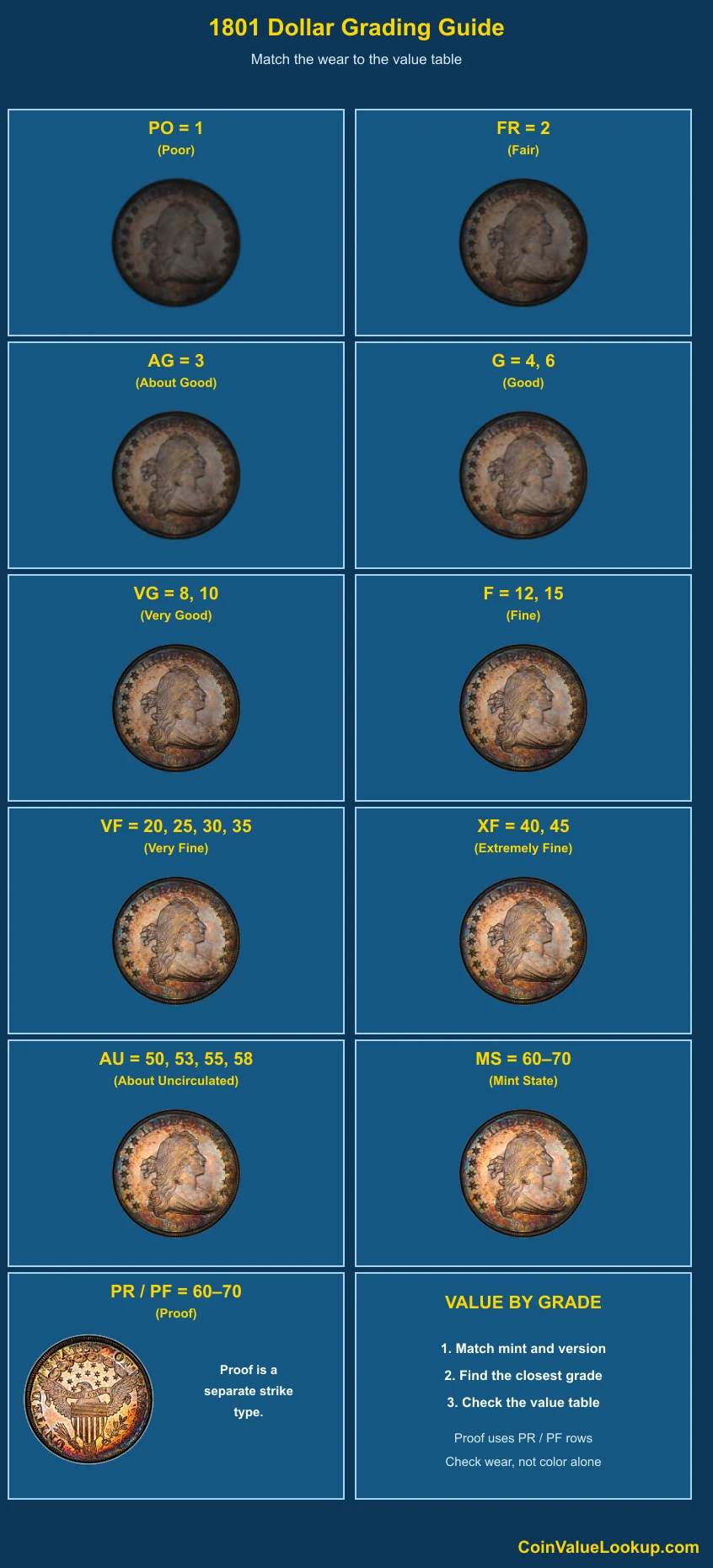
Start with Liberty's hair above the forehead and near the ear. On a well-circulated coin, those high points flatten first, blending individual strands into a smooth patch.
The drapery across Liberty's bust also loses its fine lines early in the wear process.
On the reverse, check the eagle's breast feathers and wing tips. Strike weakness on early dollars can mimic wear, so compare your coin against a known same-type example at similar grades.
A coin that still shows full feather detail and original luster across the fields is a different animal from one that has been cleaned or polished.
Use the comparison image to see how a circulated example, an About Uncirculated piece and a Mint State coin differ side by side. AU coins retain most detail but show light friction on the highest points.
Mint State coins preserve full original luster with no wear, though bag marks and adjustment marks are common on early dollars and do not mean the coin circulated.
Coin Value Lookup is a handy starting point when you want to look up guides for other dates and denominations in the Draped Bust series. It can save you a lot of time versus hunting through multiple references.
Step 3: Check 1801 Draped Bust Dollar Value by Mint and Version
1801 Draped Bust Dollar
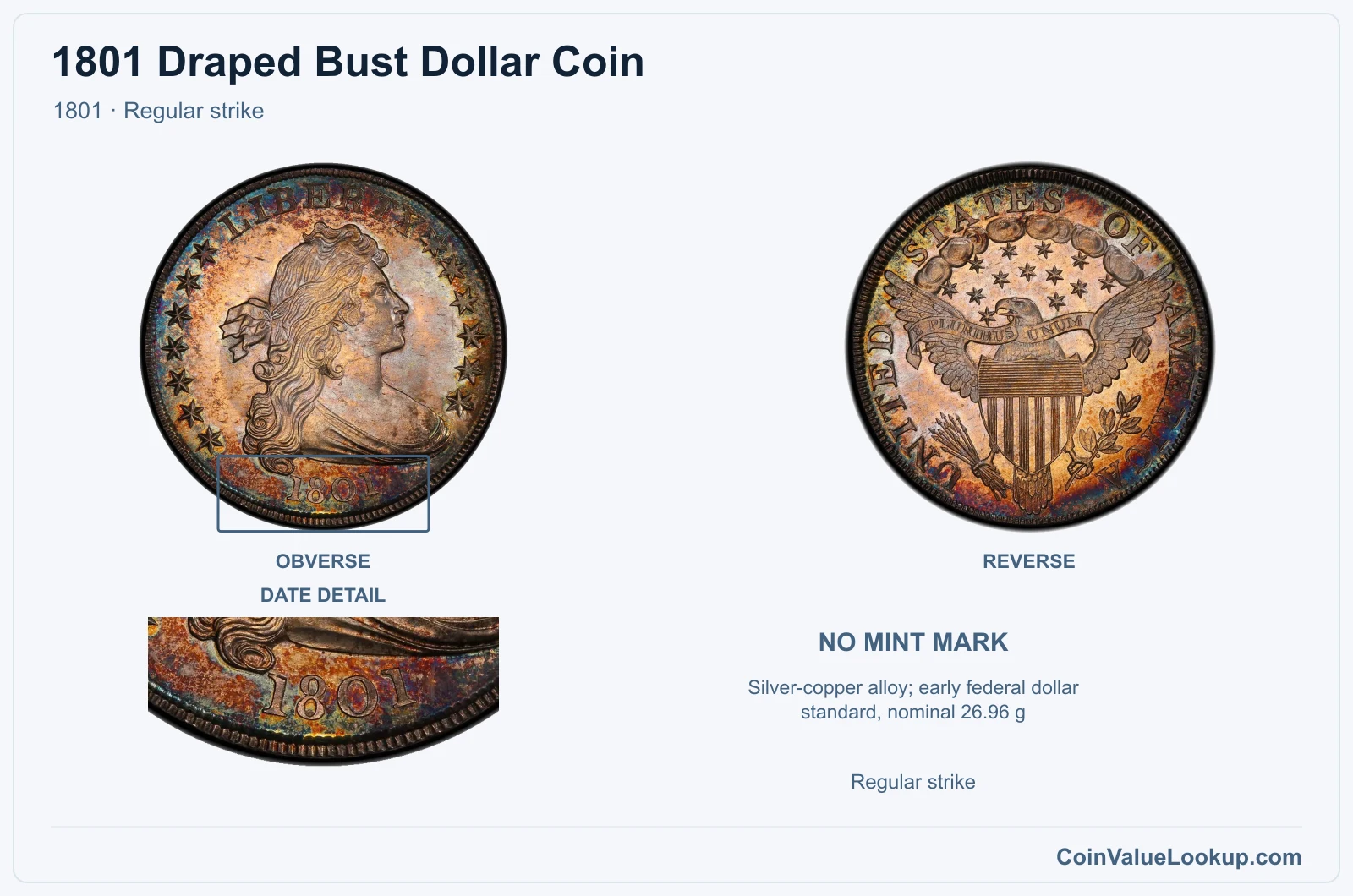
The 1801 Draped Bust Dollar was struck only at Philadelphia with a Heraldic Eagle reverse and lettered edge. The silver-copper alloy weighs approximately 26.96 grams at full weight.
Before comparing your coin to any guide, confirm the date, the eagle design and the absence of a mintmark.
No single numeric price range has been adopted for this date because value varies dramatically with authenticated grade and surface quality. A heavily worn example and an original Mint State survivor are worlds apart.
Coins that have been cleaned, polished or otherwise altered lose much of their collector appeal compared to pieces with honest, original toning and luster. For a meaningful assessment, have your coin authenticated and graded by a recognized third-party service, then compare it to recent results for that specific grade.
Range Grade
Price Auction Records Appraisal PO PO 1
Coin Identifier FR FR 2
—
Coin Identifier AG AG 3
—
Coin Identifier G G 4
Coin Identifier
G 6
Coin Identifier VG VG 8
Coin Identifier
VG 10
Coin Identifier F F 12
Coin Identifier
F 15
Coin Identifier VF VF 20
Coin Identifier
VF 25
Coin Identifier
VF 30
Coin Identifier
VF 35
Coin Identifier XF XF 40
Coin Identifier
XF 45
Coin Identifier AU AU 50
Coin Identifier
AU 53
Coin Identifier
AU 55
Coin Identifier
AU 58
Coin Identifier MS MS 60
Coin Identifier
MS 61
Coin Identifier
MS 62
Coin Identifier
MS 63
Coin Identifier
MS 64
Coin Identifier
MS 65
Coin Identifier
MS 66
—
—
—
MS 67
—
—
—
MS 68
—
—
—
MS 69
—
—
—
MS 70
—
—
—