1821 Capped Bust Half Dollar Coin Value: How Much Is It Worth?
The 1821 Capped Bust Half Dollar is a coin that rewards a close look. Ordinary circulated examples carry guide estimates from around $106 in Good-4 condition up to roughly $809 near About Uncirculated-50, though the actual value depends heavily on condition and variety.
Early Proof strikes exist as separate, rare collector issues and should never be assumed just because a coin looks shiny or reflective.
Fast Way to Identify Your 1821 Capped Bust Half Dollar
If you have an 1821 half dollar and want a quick read on what you are holding, snap clear photos of the front and back and upload them here. Our identifier can provide a preliminary identification of the coin's type and general condition from those images.
It is not a substitute for professional grading or authentication, but it is a solid starting point.
1821 Capped Bust Half Dollar Value
Upload both sides of your 1821 Capped Bust Half Dollar.
Front Obverse
Upload photo
Back Reverse
Upload photo
Which 1821 Capped Bust Half Dollar Versions Are Worth Money?
- Philadelphia Regular Strike examples range from about $106 at Good-4 to $809 at About Uncirculated-50 per guide estimates, making condition the primary value driver for most collectors.
- Early Proof strikes are rare specialist issues; a single PR67-star example sold for $82,250 at Heritage in January 2013, illustrating the premium that confirmed Proof manufacture commands.
Step 1: Identify Your 1821 Capped Bust Half Dollar Mint Mark and Version
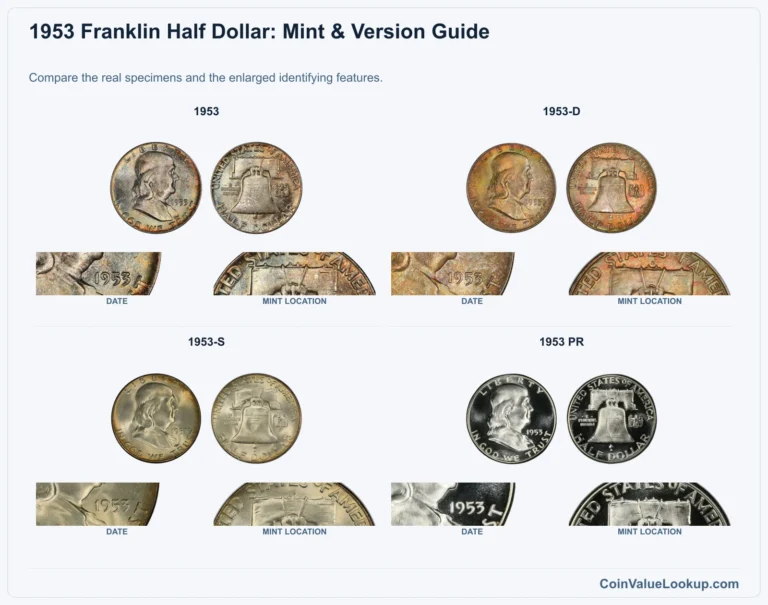
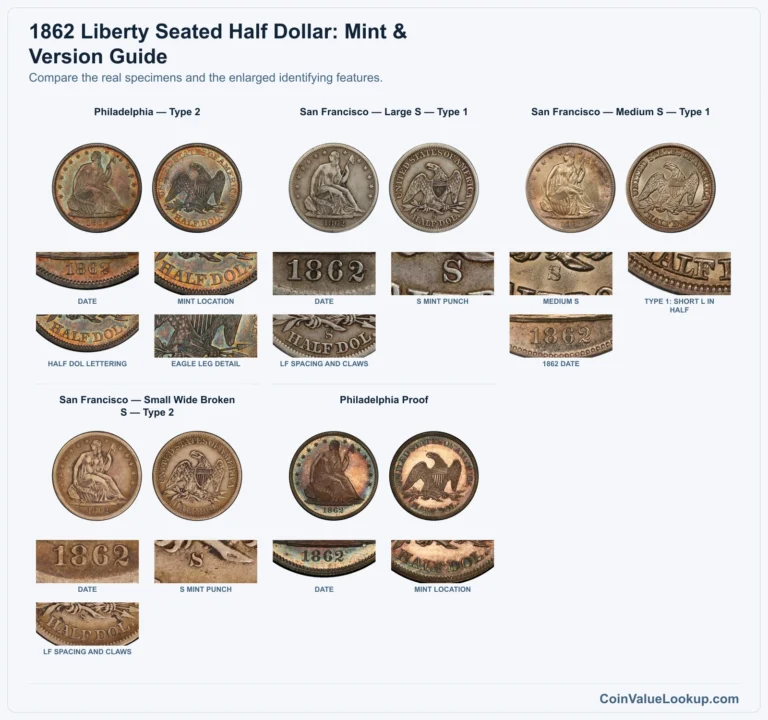
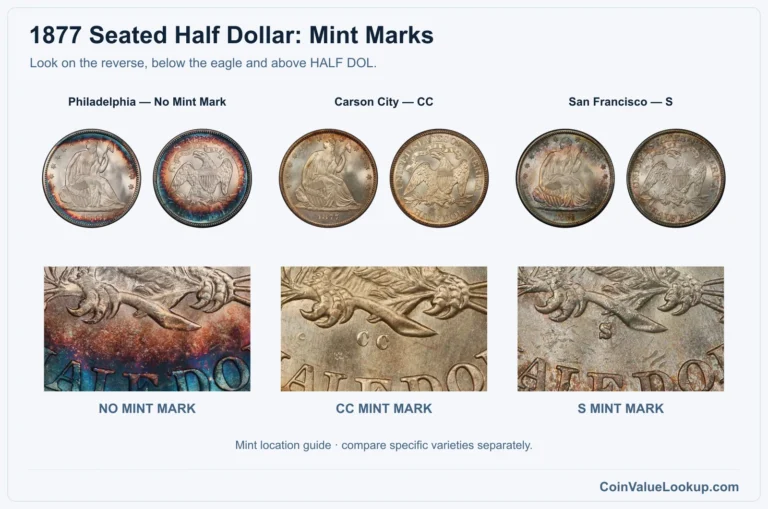
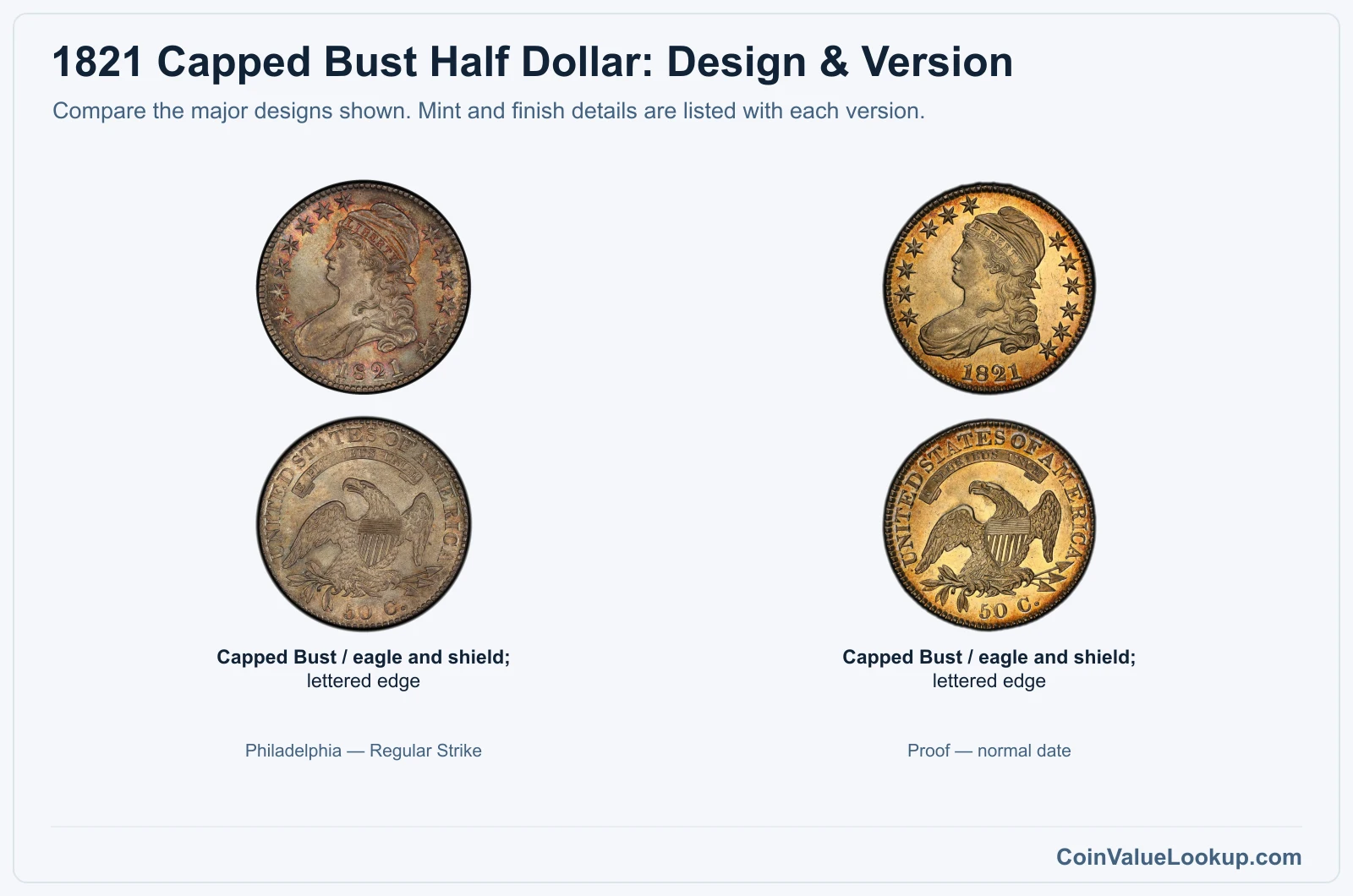
Every 1821 Capped Bust Half Dollar was struck at Philadelphia. There is no mintmark to look for, and finding one would be a red flag.
The obverse shows a left-facing Liberty wearing a cloth cap, surrounded by stars. The reverse features an eagle clutching arrows and an olive branch behind a shield, with 50C below.
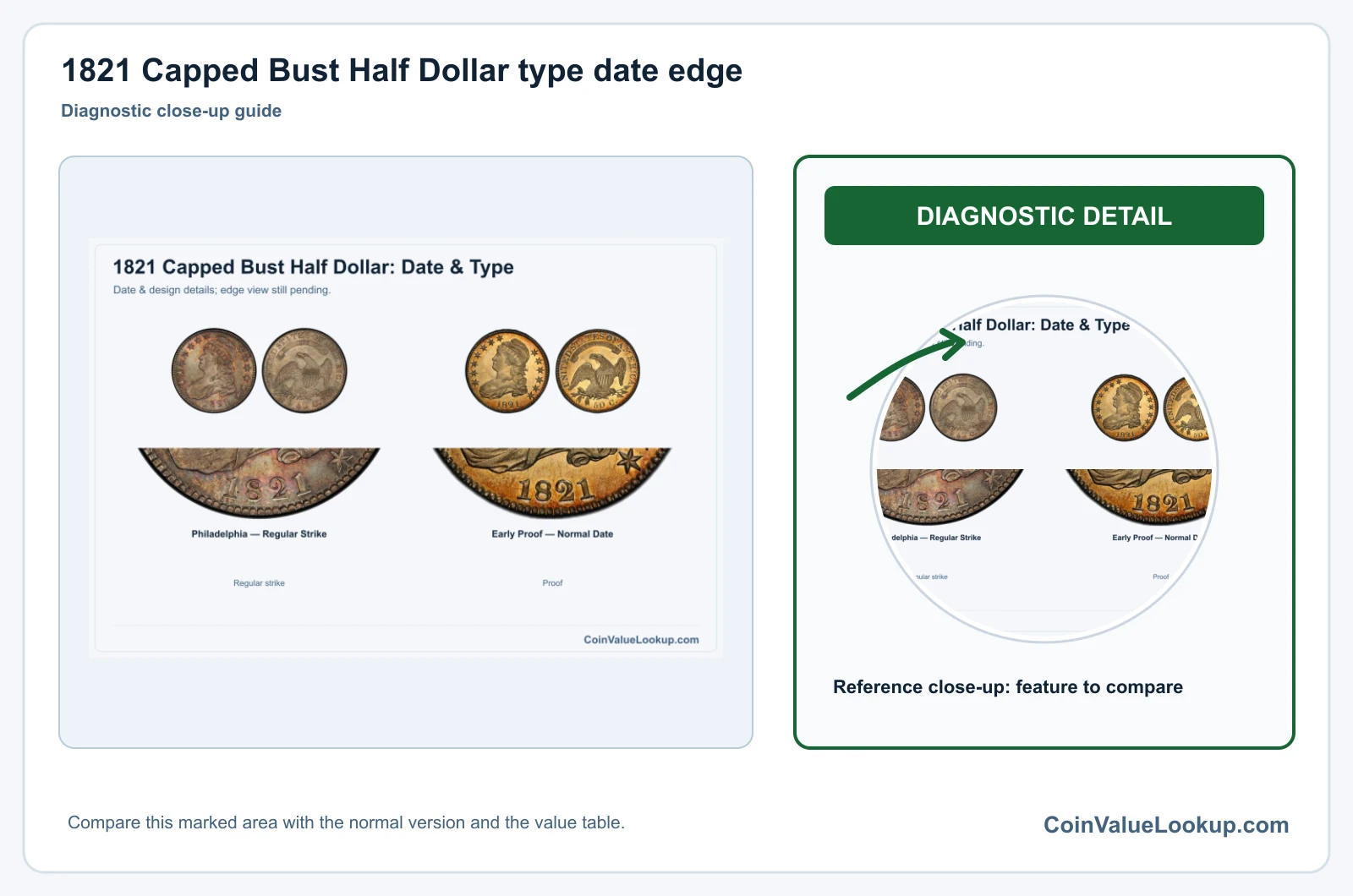
The edge is lettered: FIFTY CENTS OR HALF A DOLLAR. That lettered edge is a key identifier for Capped Bust halves of this era and distinguishes them from later reeded-edge issues.
Nominal specifications are 13.48 grams and 32.5 mm, struck in a silver-copper alloy of approximately 89.24% silver. Weight alone cannot authenticate a coin, but a piece that is significantly off should raise suspicion.
The main branch most collectors encounter is the Philadelphia Regular Strike. Early Proof examples also exist, but attributing one requires specialist die and surface analysis plus provenance support.
A bright, polished, or prooflike regular strike is not automatically a Proof.
Step 2: Check Your 1821 Capped Bust Half Dollar Grade
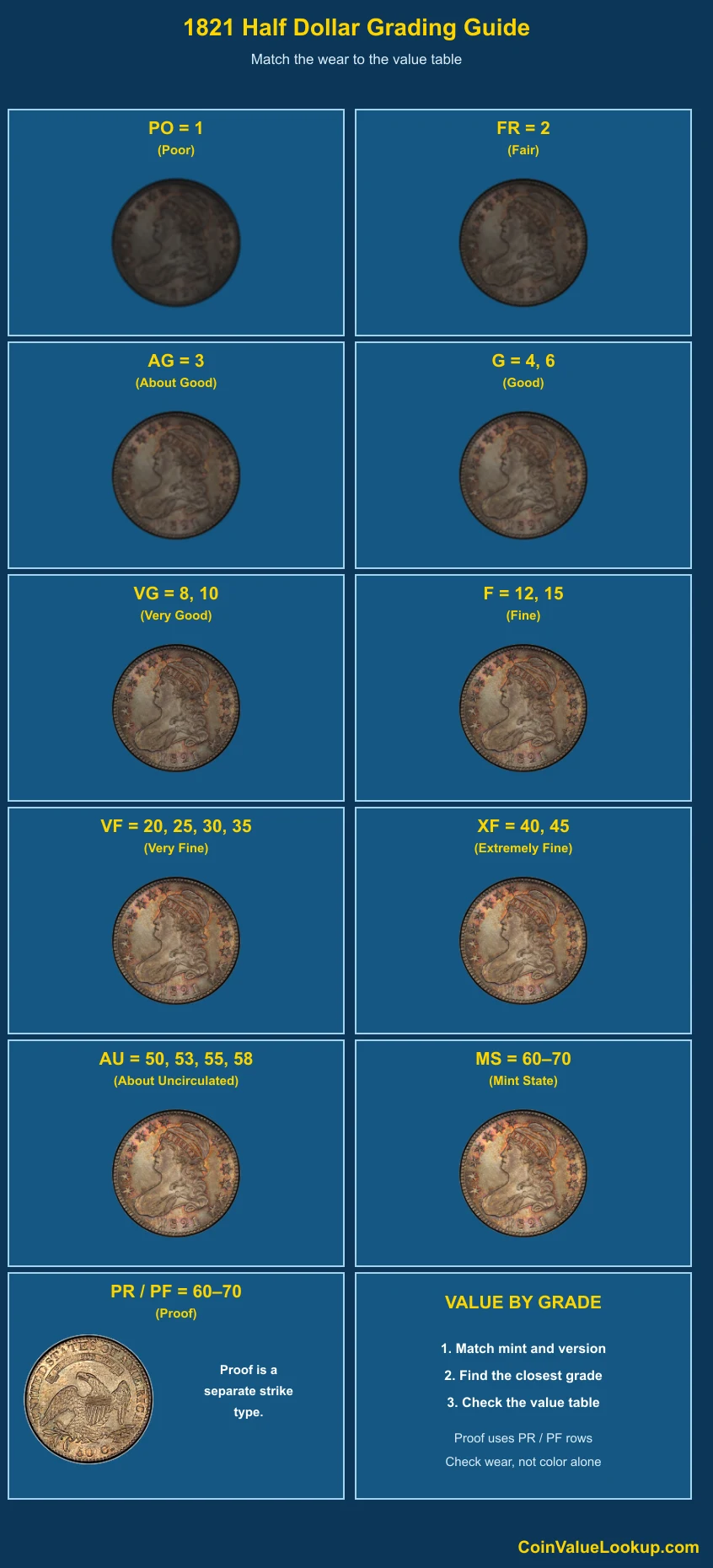
Start at the obverse. The first places to lose detail are the hair above Liberty's forehead and around her ear, then her cheek and the drapery at her shoulder.
A coin grading Good will show a clear outline but most interior detail will be worn smooth.
Flip it over. Check the eagle's breast feathers and wing tips.
These coins sometimes came weakly struck from the mint, so soft feather detail does not always mean heavy wear. Look for breaks in the original luster before calling it lightly circulated.
Use the comparison image to match your coin's wear against known grade benchmarks. The jump from VF to AU on these halves is often subtle, hinging on tiny patches of remaining luster in protected areas.
Coins that have been cleaned, holed, tooled, or scratched typically receive a "Details" designation from grading services. These trade at steep discounts compared to straight-graded examples.
Whatever you do, do not clean the coin yourself.
Step 3: Check 1821 Capped Bust Half Dollar Value by Mint and Version
1821 Capped Bust Half Dollar — Philadelphia — Regular Strike
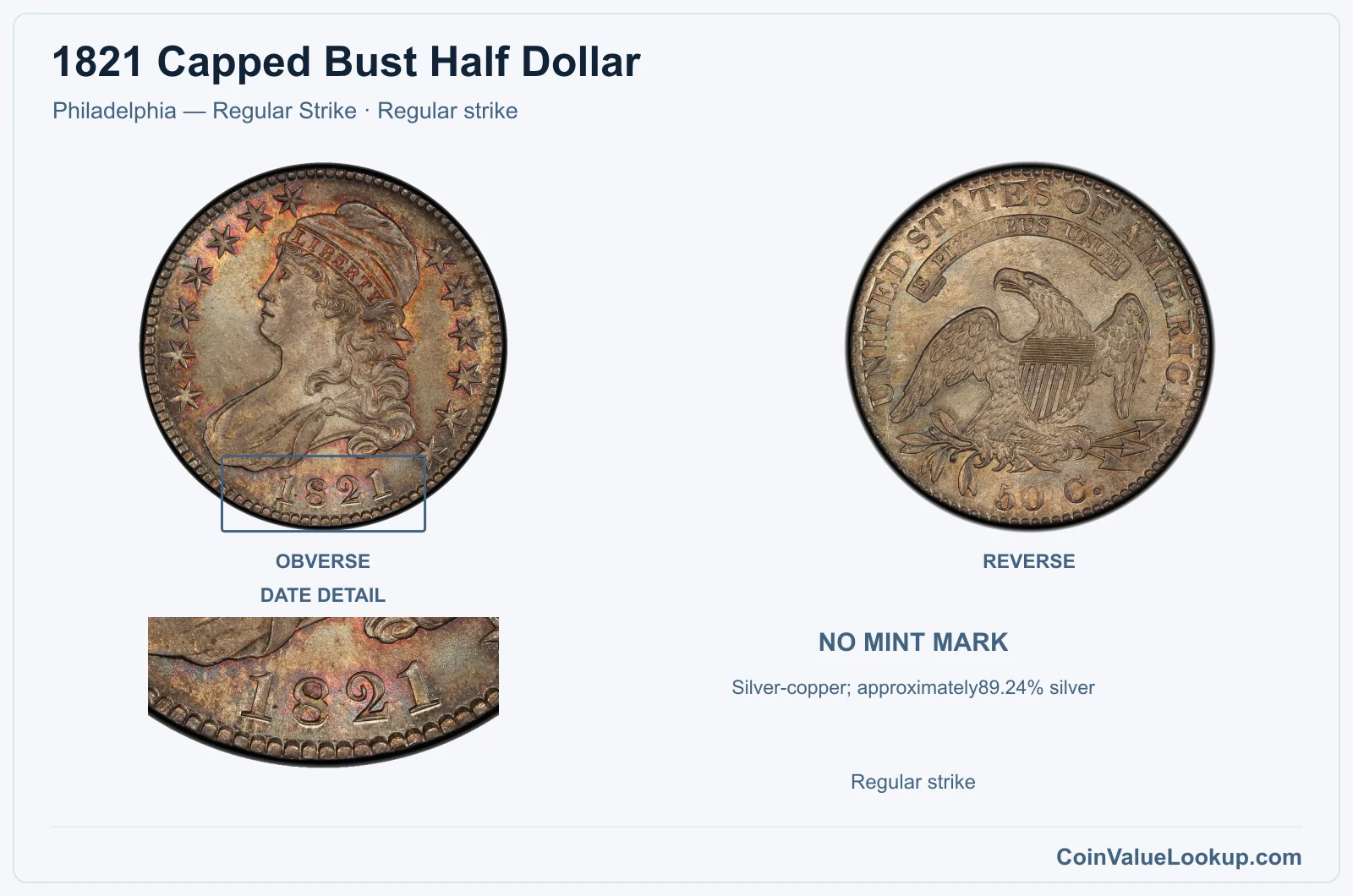
The Philadelphia Regular Strike is the coin most people will encounter. It was produced for everyday commerce in a silver-copper alloy of roughly 89.24% silver, weighing about 13.48 grams with a 32.5 mm diameter and a lettered edge.
Guide estimates from USA Coin Book place this version at approximately $106 in Good-4, $197 in Very Fine-20, and $809 in About Uncirculated-50. These are retail guide figures, not guaranteed sale prices.
Minor die marriages and crack stages exist across the 1821 date but stay within this same branch for pricing purposes unless a separately named error is being evaluated.
Coin Value Lookup is a useful place to check guide values for coins like this across different dates and denominations. If you are working through a batch of early half dollars, it can save you a lot of page-flipping.
Range Grade
Price Auction Records Appraisal PO PO 1
—
Coin Identifier FR FR 2
Coin Identifier AG AG 3
—
Coin Identifier G G 4
—
Coin Identifier
G 6
Coin Identifier VG VG 8
Coin Identifier
VG 10
Coin Identifier F F 12
Coin Identifier
F 15
Coin Identifier VF VF 20
Coin Identifier
VF 25
Coin Identifier
VF 30
Coin Identifier
VF 35
Coin Identifier XF XF 40
Coin Identifier
XF 45
Coin Identifier AU AU 50
Coin Identifier
AU 53
Coin Identifier
AU 55
Coin Identifier
AU 58
Coin Identifier MS MS 60
Coin Identifier
MS 61
Coin Identifier
MS 62
Coin Identifier
MS 63
Coin Identifier
MS 64
Coin Identifier
MS 65
Coin Identifier
MS 66
Coin Identifier
MS 67
—
—
—
MS 68
—
—
—
MS 69
—
—
—
MS 70
—
—
—
1821 Capped Bust Half Dollar — Early Proof — Normal Date
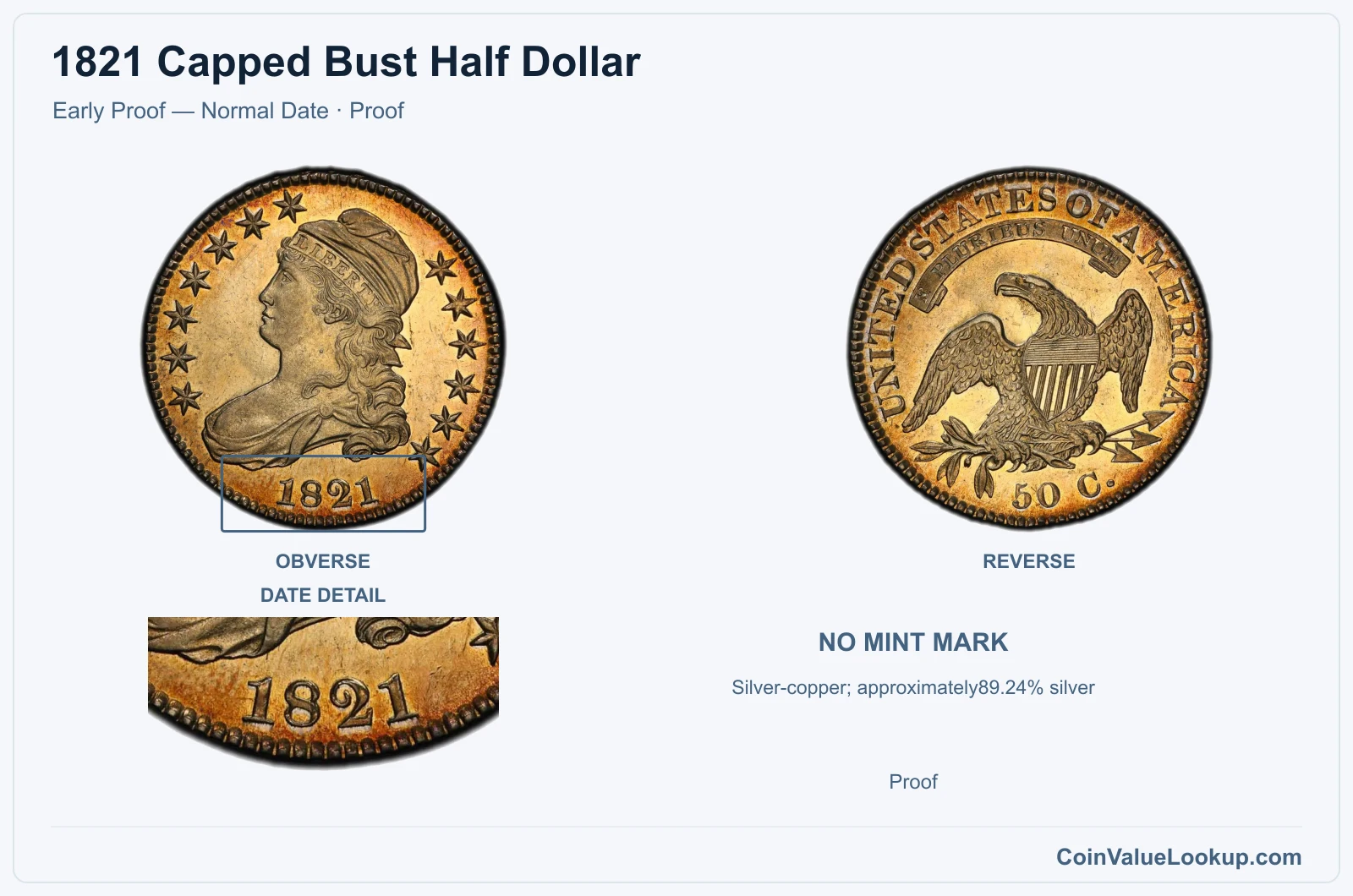
The 1821 Early Proof is a genuinely rare coin struck with a different manufacturing process than the regular issue. It shares the same silver-copper composition, Philadelphia origin, and lettered edge, but the surfaces, die characteristics, and strike quality set it apart under professional examination.
Do not call a coin Proof simply because it is reflective or well-preserved. Proof attribution for Capped Bust halves requires matching die identity, surface character on both faces, and rim evidence, often backed by provenance.
PCGS catalogs this as a separate issue from the regular strike.
The only historical sale anchor reported is a PR67-star example that brought $82,250 at a Heritage auction in January 2013. That is a single data point for one superb grade, not a current market range or a price curve you can extrapolate downward.
If you believe you have one, professional certification is essential before drawing any value conclusion.
Range Grade
Price Auction Records Appraisal PR PR 1
—
Coin Identifier
PR 2
—
Coin Identifier
PR 3
—
Coin Identifier
PR 4
—
Coin Identifier
PR 6
—
Coin Identifier
PR 8
—
Coin Identifier
PR 10
—
Coin Identifier
PR 12
—
Coin Identifier
PR 15
—
Coin Identifier
PR 20
—
Coin Identifier
PR 25
—
Coin Identifier
PR 30
—
Coin Identifier
PR 35
—
Coin Identifier
PR 40
—
Coin Identifier
PR 45
—
Coin Identifier
PR 50
—
Coin Identifier
PR 53
—
Coin Identifier
PR 55
—
Coin Identifier
PR 58
—
Coin Identifier
PR 60
—
Coin Identifier
PR 61
—
Coin Identifier
PR 62
—
Coin Identifier
PR 63
—
Coin Identifier
PR 64
—
Coin Identifier
PR 65
—
—
—
PR 66
—
—
—
PR 67
—
—
—
PR 68
—
—
—
PR 69
—
—
—
PR 70
—
—
—
1821 Capped Bust Half Dollar Error List
1. 1821 Capped Bust Half Dollar — Die Crack / Die Chip
A documented die crack on the 1821 Half Dollar shows as a raised line running from below the 8 in the date, through the serif of the 1, then curving toward the back of Liberty's cap. A branch from this line extends toward star 10.
Because it is raised above the field, the line represents metal forced into a crack in the die during striking.
Look carefully under good light and magnification. Incuse scratches, surface corrosion, or foreign material sitting on the coin can mimic the appearance of a die crack but will feel or look recessed rather than raised.
A true die crack is part of the coin's surface and cannot be scraped away.
No specific price range has been adopted for this variety. Value depends on the crack's visibility, the coin's overall condition, and collector demand for that particular die state.
2. 1821 Capped Bust Half Dollar — Doubled Edge Lettering
Doubled edge lettering has been reported on 1821 Half Dollar specimens. Because these coins carry their denomination text on the edge rather than the flat faces, the lettering was applied in a separate step, and misalignment or double impressions could occur.
To check, rotate the coin slowly under a light and examine the full edge inscription, FIFTY CENTS OR HALF A DOLLAR, for any sign of overlapping or repeated letter impressions. One dealer listing described such a coin, though the seller's designation included what appears to be a problem-code label rather than a standard numerical mint-state grade, so no listing price has been adopted here.
Post-mint damage, ordinary edge wear, and design features from different years can all mimic doubling. Compare your coin against an attributed same-year example before drawing conclusions.
The value of a genuine doubled-edge piece depends on its condition and the clarity of the doubling.