1995 Kennedy Half Dollar Coin Value: How Much Is It Worth?
The 1995 Kennedy half dollar carries a 50-cent face value, and most circulated clad examples are worth exactly that. Collector guide estimates for this date range from about $3.62 for a high-grade business strike up to $63.00 for a silver proof in PR65, depending on mint, finish and condition.
Before you check a price chart, you need to figure out whether your coin is an ordinary clad strike, a clad proof or the heavier silver proof.
Fast Way to Identify Your 1995 Kennedy Half Dollar
The quickest way to start is by uploading clear photos of the front and back of your 1995 Kennedy half. That lets us help with a preliminary identification of the mint, finish and general condition.
Snap the pictures under even lighting, avoid glare, and try to keep the coin in focus edge to edge.
1995 Kennedy Half Dollar Value
Upload both sides of your 1995 Kennedy Half Dollar.
Front Obverse
Upload photo
Back Reverse
Upload photo
Which 1995 Kennedy Half Dollar Versions Are Worth Money?
- The 1995-S silver proof (90% silver, ~12.50 g) carries the highest guide estimate at $63.00 in PR65, so confirming silver content is the first thing to do.
- The 1995-S clad proof lists around $19.00 in PR65, well above face value but far less than the silver version — weight and edge inspection separate the two.
- High-grade uncirculated P and D business strikes at MS65 list around $3.62 each; most circulated examples remain face-value coins.
- Mint-made errors such as doubled dies, off-center strikes and die breaks have been reported for this date and can carry premiums depending on visibility and type.
Step 1: Identify Your 1995 Kennedy Half Dollar Mint Mark and Version
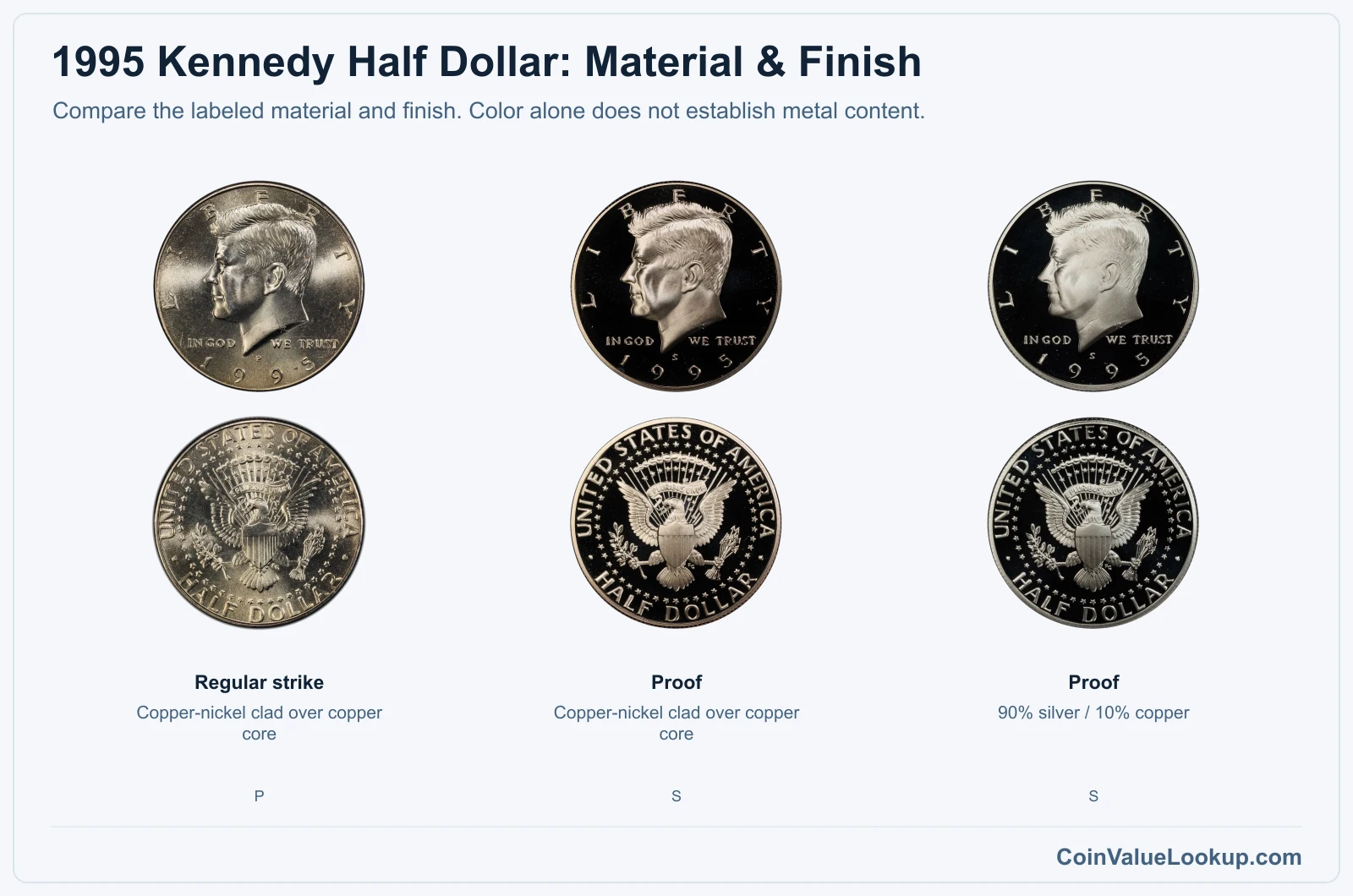
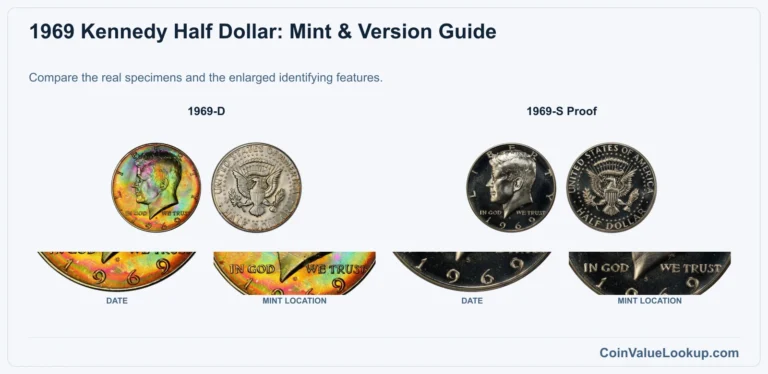
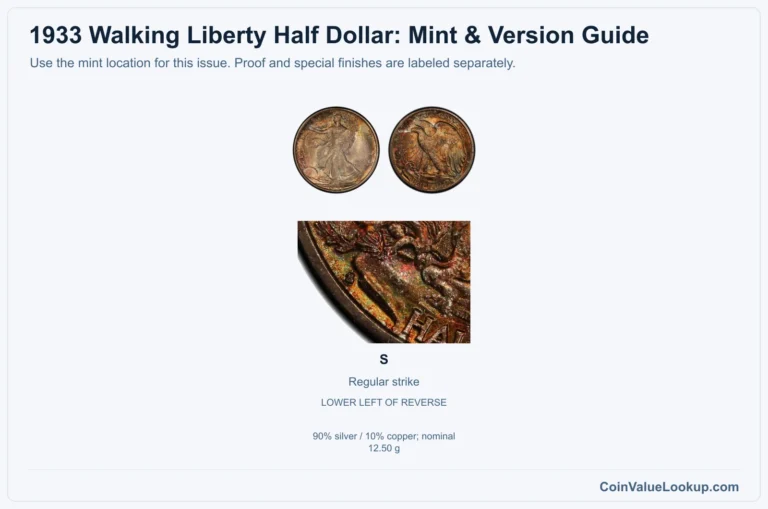
Flip the coin to the obverse and look directly beneath Kennedy's portrait, just above the date. That is where the mintmark lives.
A "P" means Philadelphia, "D" means Denver, and "S" means San Francisco. Philadelphia business strikes carry a P mintmark for this year.
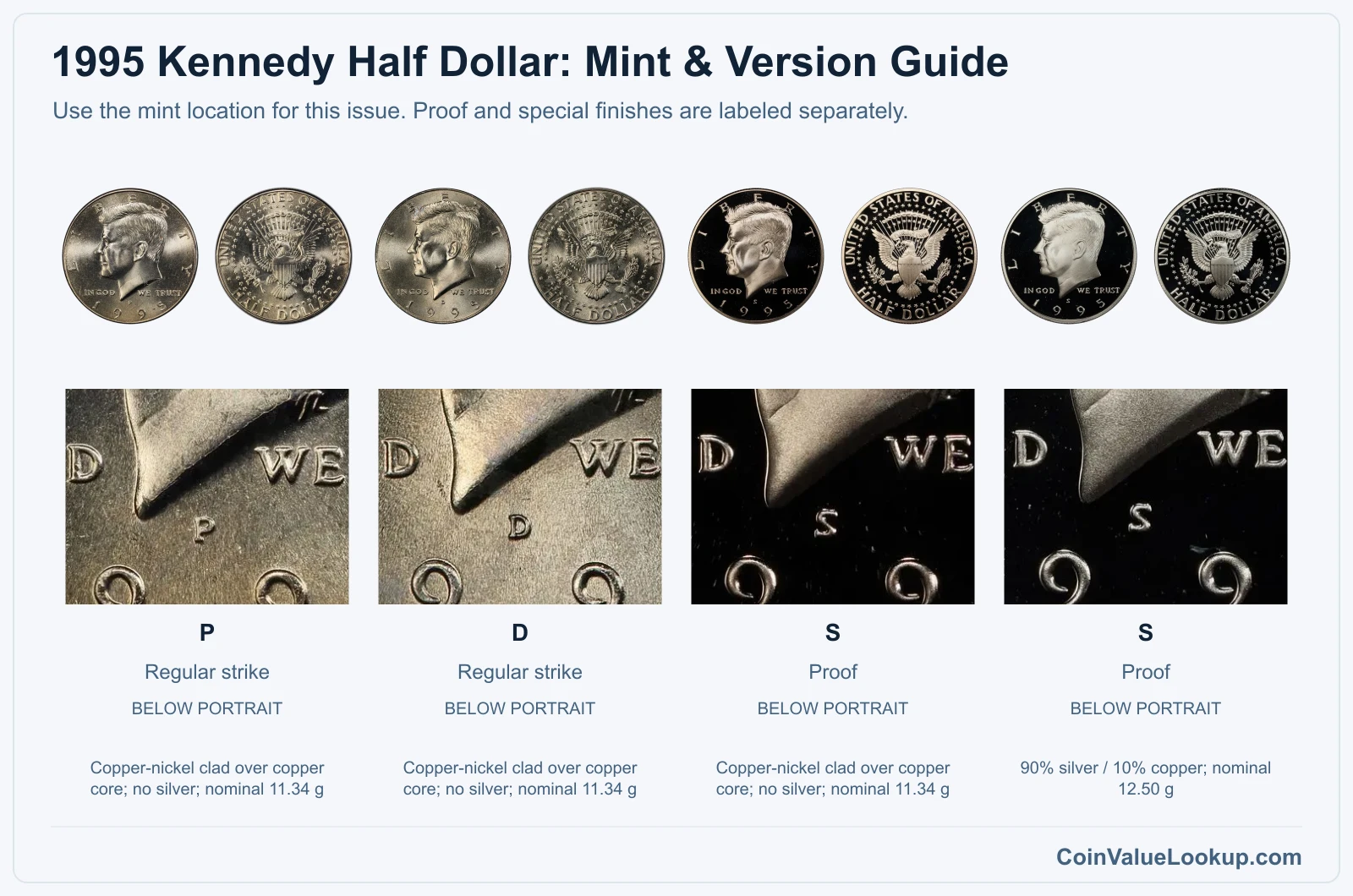
All P and D coins plus one of the two S proof versions are copper-nickel clad with no silver content. The silver proof is a separate San Francisco issue struck in 90% silver and 10% copper, weighing roughly 12.50 grams versus about 11.34 grams for clad versions.
An S mintmark alone does not guarantee silver. Both a clad proof and a silver proof were produced at San Francisco in 1995.
Compare the edge of the coin: a clad coin shows visible layering, while silver appears uniform. Weight is more reliable than eye color, since toning and lighting can fool you.
Original government packaging also helps. Silver proofs were sold in distinct sets.
If the coin is loose, weigh it on a gram scale before drawing conclusions.
Step 2: Check Your 1995 Kennedy Half Dollar Grade
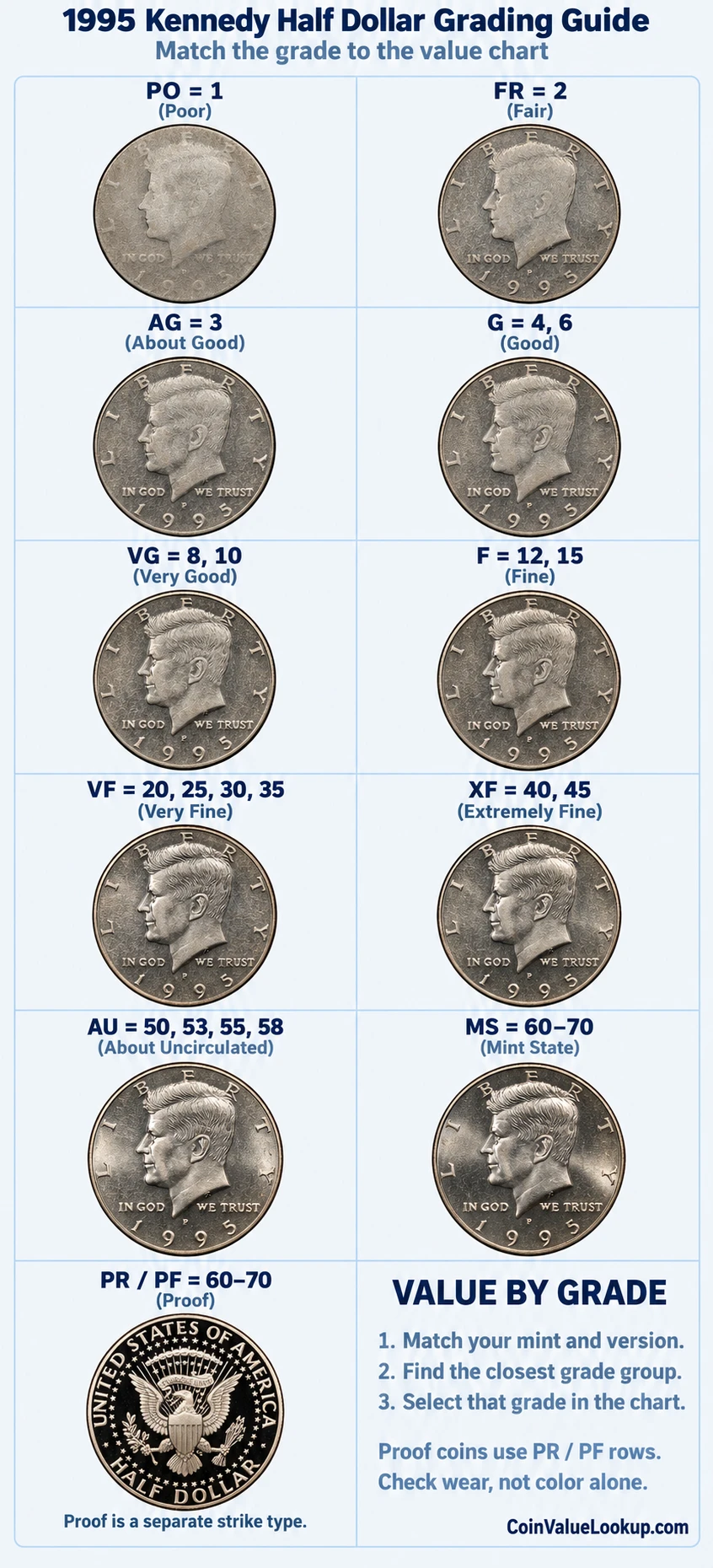
Start with Kennedy's cheek and the hair just above his ear. On a lightly worn coin, these high points lose their fine texture first and develop a smooth, flat look.
A coin that still shows full hair detail and no rub on the cheek may qualify as Mint State.
The eagle on the reverse wears at the breast feathers and wing tips. Check those areas next.
Bag marks, which are small nicks from coins banging together during production and storage, can lower a Mint State coin's grade even though they are not from circulation. Compare your coin against the reference image to see how contact marks differ from actual wear.
Proofs get graded on a separate scale. Look for hairlines, haze and contact marks on the mirrored fields.
A proof with clean, reflective surfaces and sharp frosted devices grades higher than one clouded by fingerprints or light scratches.
Step 3: Check 1995 Kennedy Half Dollar Value by Mint and Version
1995 Kennedy Half Dollar — P — clad business
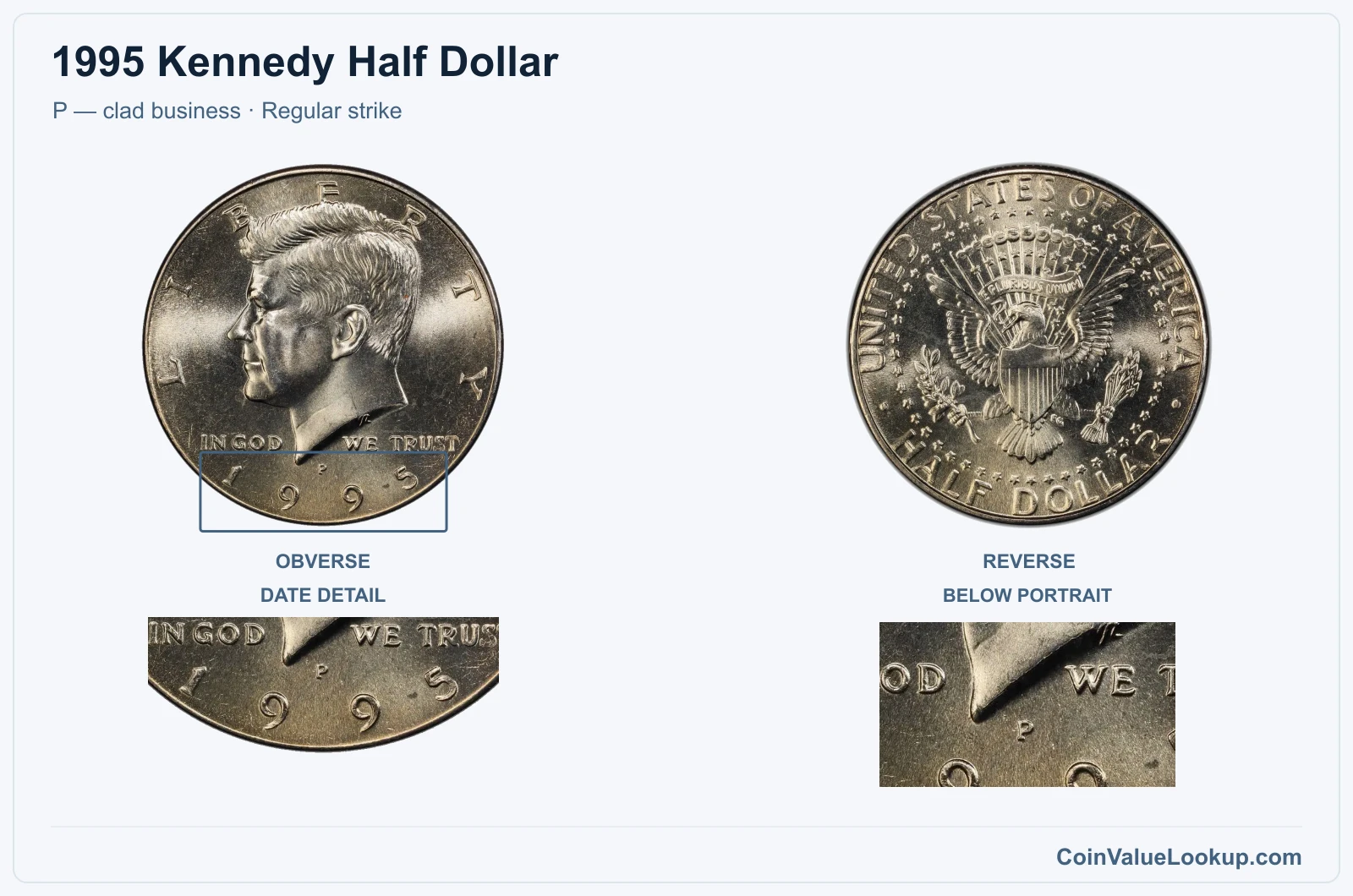
The 1995-P half dollar is the Philadelphia business strike, made in copper-nickel clad and weighing about 11.34 grams. Look for the "P" mintmark beneath Kennedy's portrait on the obverse.
Circulated examples are face-value coins. In gem uncirculated condition, a USA Coin Book guide estimate places the MS65 value at roughly $3.62.
That is modest, so the main thing worth checking is whether your coin might qualify as a high Mint State grade with minimal bag marks and strong luster.
Range Grade
Price Auction Records Appraisal PO PO 1
—
Coin Identifier FR FR 2
—
Coin Identifier AG AG 3
—
Coin Identifier G G 4
—
Coin Identifier
G 6
—
Coin Identifier VG VG 8
—
Coin Identifier
VG 10
—
Coin Identifier F F 12
—
Coin Identifier
F 15
—
Coin Identifier VF VF 20
—
Coin Identifier
VF 25
—
Coin Identifier
VF 30
—
Coin Identifier
VF 35
—
Coin Identifier XF XF 40
—
Coin Identifier
XF 45
—
Coin Identifier AU AU 50
—
Coin Identifier
AU 53
—
Coin Identifier
AU 55
—
Coin Identifier
AU 58
—
Coin Identifier MS MS 60
—
Coin Identifier
MS 61
—
Coin Identifier
MS 62
—
Coin Identifier
MS 63
—
Coin Identifier
MS 64
Coin Identifier
MS 65
Coin Identifier
MS 66
Coin Identifier
MS 67
Coin Identifier
MS 68
Coin Identifier
MS 69
—
—
—
MS 70
—
—
—
1995 Kennedy Half Dollar — D — clad business
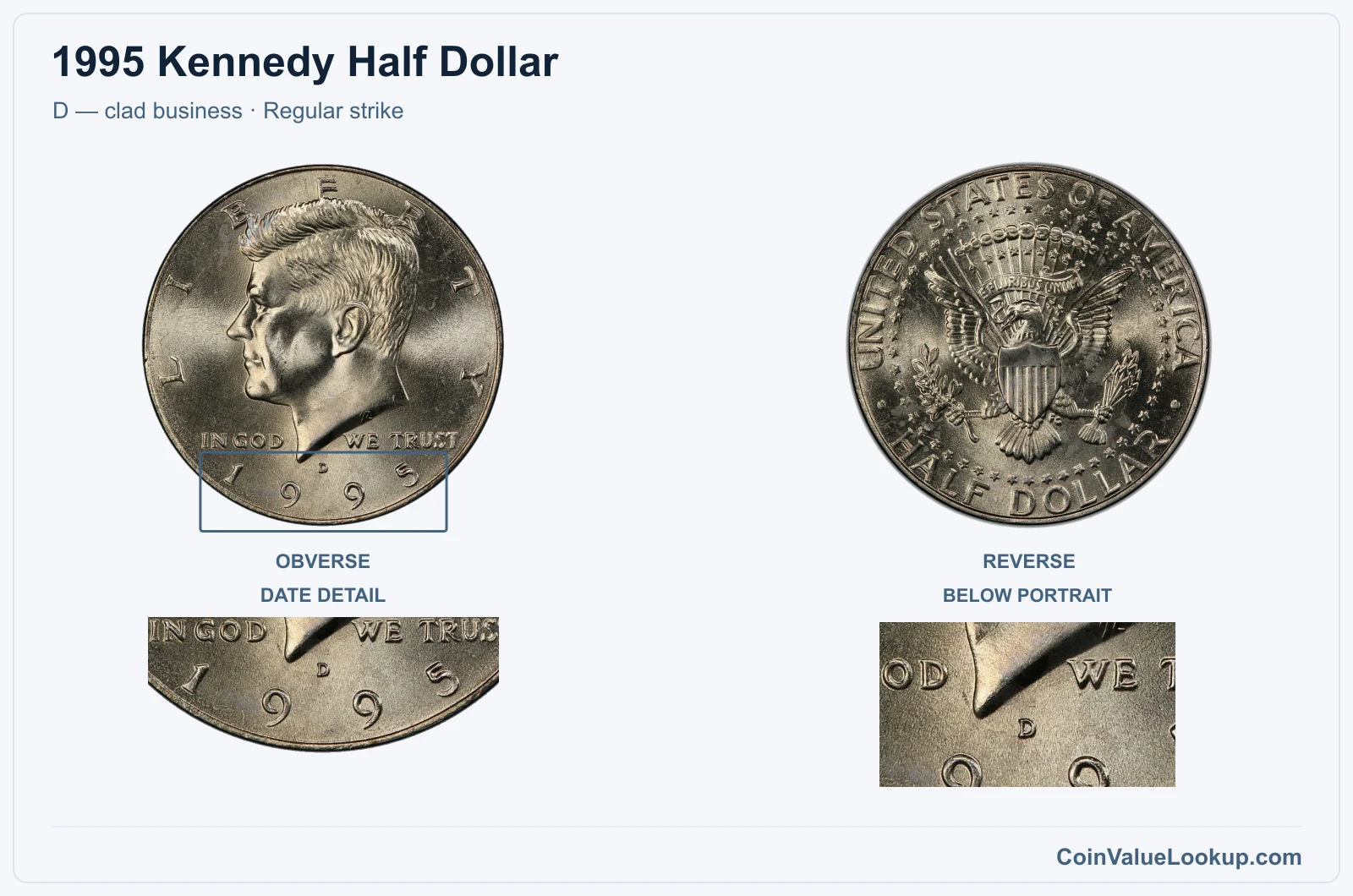
Denver's 1995-D Kennedy half is the same copper-nickel clad composition and weight as the Philadelphia version. The "D" mintmark sits in the usual spot beneath the portrait.
Like the P issue, worn 1995-D halves trade at face value. The USA Coin Book guide estimate for MS65 is about $3.62.
Unless your coin is essentially untouched from a mint roll or set, it is a spender. Still worth a close look for errors, though.
Range Grade
Price Auction Records Appraisal PO PO 1
—
Coin Identifier FR FR 2
—
Coin Identifier AG AG 3
—
Coin Identifier G G 4
—
Coin Identifier
G 6
—
Coin Identifier VG VG 8
—
Coin Identifier
VG 10
—
Coin Identifier F F 12
—
Coin Identifier
F 15
—
Coin Identifier VF VF 20
—
Coin Identifier
VF 25
—
Coin Identifier
VF 30
—
Coin Identifier
VF 35
—
Coin Identifier XF XF 40
—
Coin Identifier
XF 45
—
Coin Identifier AU AU 50
—
Coin Identifier
AU 53
—
Coin Identifier
AU 55
—
Coin Identifier
AU 58
—
Coin Identifier MS MS 60
—
Coin Identifier
MS 61
—
Coin Identifier
MS 62
—
Coin Identifier
MS 63
—
Coin Identifier
MS 64
Coin Identifier
MS 65
Coin Identifier
MS 66
Coin Identifier
MS 67
Coin Identifier
MS 68
Coin Identifier
MS 69
—
—
—
MS 70
—
—
—
1995 Kennedy Half Dollar — S — clad proof
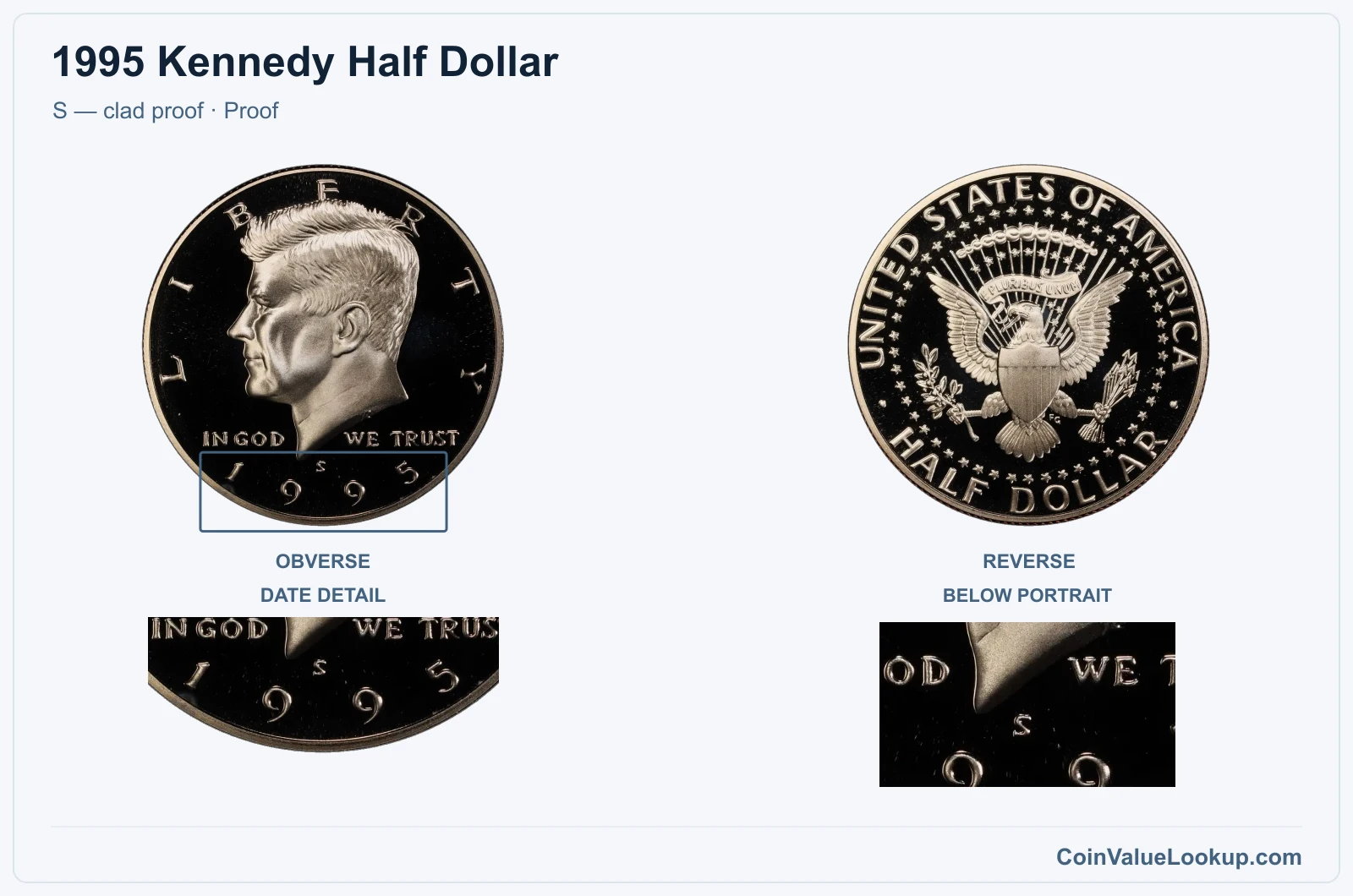
San Francisco produced a clad proof version of the 1995 Kennedy half. It uses the same copper-nickel clad composition as the business strikes, not silver.
Mirror-like fields and frosted raised devices distinguish it from a regular strike.
Coin Value Lookup is a good starting point if you want to compare this coin against other Kennedy half dollar dates and mints.
The USA Coin Book guide estimate for PR65 is about $19.00. Because both a clad and a silver proof share the S mintmark this year, you must verify the edge and weight before assuming you hold the more valuable silver version.
Range Grade
Price Auction Records Appraisal PR PR 1
—
Coin Identifier
PR 2
—
Coin Identifier
PR 3
—
Coin Identifier
PR 4
—
Coin Identifier
PR 6
—
Coin Identifier
PR 8
—
Coin Identifier
PR 10
—
Coin Identifier
PR 12
—
Coin Identifier
PR 15
—
Coin Identifier
PR 20
—
Coin Identifier
PR 25
—
Coin Identifier
PR 30
—
Coin Identifier
PR 35
—
Coin Identifier
PR 40
—
Coin Identifier
PR 45
—
Coin Identifier
PR 50
—
Coin Identifier
PR 53
—
Coin Identifier
PR 55
—
Coin Identifier
PR 58
—
Coin Identifier
PR 60
—
Coin Identifier
PR 61
—
Coin Identifier
PR 62
—
Coin Identifier
PR 63
—
Coin Identifier
PR 64
—
Coin Identifier
PR 65
—
Coin Identifier
PR 66
Coin Identifier
PR 67
—
Coin Identifier
PR 68
Coin Identifier
PR 69
Coin Identifier
PR 70
Coin Identifier
1995 Kennedy Half Dollar — S — silver proof
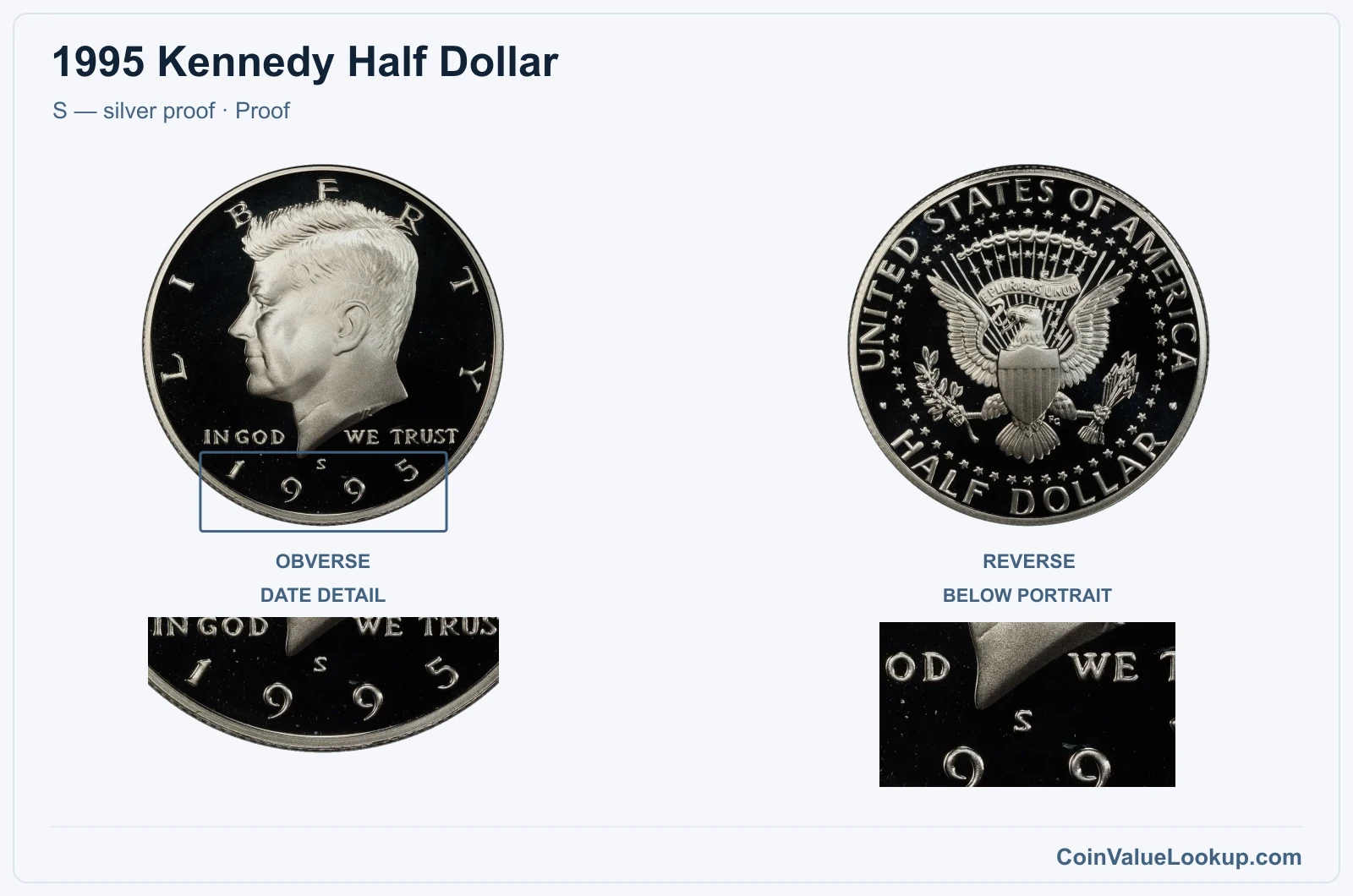
This is the one worth hunting for. The 1995-S silver proof is struck in 90% silver and 10% copper, weighing approximately 12.50 grams — noticeably heavier than the 11.34-gram clad proof.
The USA Coin Book guide estimate places this coin at about $63.00 in PR65. That makes it the most valuable standard-issue branch of the 1995 Kennedy half by a wide margin compared to the other listed versions at the same source.
Confirm the composition before celebrating. Weigh the coin, inspect the edge for a uniform silver-gray appearance, and check for original mint packaging.
Lighting and toning can make a clad coin look silvery, so do not rely on color alone.
Range Grade
Price Auction Records Appraisal PR PR 1
—
Coin Identifier
PR 2
—
Coin Identifier
PR 3
—
Coin Identifier
PR 4
—
Coin Identifier
PR 6
—
Coin Identifier
PR 8
—
Coin Identifier
PR 10
—
Coin Identifier
PR 12
—
Coin Identifier
PR 15
—
Coin Identifier
PR 20
—
Coin Identifier
PR 25
—
Coin Identifier
PR 30
—
Coin Identifier
PR 35
—
Coin Identifier
PR 40
—
Coin Identifier
PR 45
—
Coin Identifier
PR 50
—
Coin Identifier
PR 53
—
Coin Identifier
PR 55
—
Coin Identifier
PR 58
—
Coin Identifier
PR 60
—
Coin Identifier
PR 61
—
Coin Identifier
PR 62
—
Coin Identifier
PR 63
—
Coin Identifier
PR 64
—
Coin Identifier
PR 65
—
Coin Identifier
PR 66
Coin Identifier
PR 67
—
Coin Identifier
PR 68
Coin Identifier
PR 69
Coin Identifier
PR 70
Coin Identifier
1995 Kennedy Half Dollar Error List
1. 1995 Kennedy Half Dollar — Die Crack / Die Chip
A die crack shows up as a thin raised line running across the coin's surface, created when the steel die develops a fracture during use. A die chip is a small raised blob where a tiny piece of the die broke away.
Both are mint-made and part of the coin from the moment it was struck.
Look carefully under magnification. The raised nature of the line or blob is key — scratches and corrosion are incuse (sunk into the surface), not raised.
Foreign material stuck to the coin can mimic a chip but usually wipes away or sits loosely.
Value depends on the size, location and visibility of the crack or chip, plus the coin's overall condition. No specific price range is established here, so individual assessment is the way to go.
2. 1995 Kennedy Half Dollar — Die Break / Cud
A cud is a major die break that connects to the rim, leaving a raised, featureless lump of metal where part of the design should be. It happens when a chunk of the die edge breaks off entirely.
To identify one, look for a smooth raised area touching the rim with displaced or missing design elements next to it. Compare it to an interior die chip, which sits away from the rim and is usually much smaller.
Rim dents from post-mint damage can look similar, but a dent pushes metal inward rather than raising it. Corrosion buildup near the rim is another common lookalike.
The value of a cud depends on its size, location and the coin's condition, and no specific price range is adopted for this date.
3. 1995 Kennedy Half Dollar — Lamination / Split Planchet
Lamination errors occur when layers within the planchet separate, producing peeling metal, a retained flap or a visible crack that exposes the interior of the coin. On clad Kennedy halves, this can appear as a lifted section of the outer layer.
Photograph the edge alongside the affected face — that edge view is what confirms the separation is internal rather than surface damage. A retained flap that is still attached to the coin is generally more collectible than a missing-layer spot.
Do not confuse lamination with scraping, corrosion pitting or a coin that has been deliberately cut or filed. Genuine lamination has a natural, irregular boundary.
Value varies with the size and visual impact of the flaw, and no numerical price range is established for 1995 half dollar lamination errors.
4. 1995 Kennedy Half Dollar — Struck-Through Error
A struck-through error happens when foreign material — grease, a thread, a metal fragment — gets between the die and the planchet during striking. The result is a localized depression or incomplete design area on the finished coin.
Grease-filled dies leave soft, mushy spots where detail should be sharp. A retained foreign object, like a staple or wire fragment, may leave a distinct impression or even remain embedded in the coin.
These are different categories and carry different collector interest.
Ordinary wear, cleaning and weak strikes can mimic a struck-through. The difference is that a struck-through area is sharply bounded, while wear fades gradually.
No specific price range is adopted, so value depends on what caused the obstruction, where it landed and overall coin condition.
5. 1995 Kennedy Half Dollar — Doubled Die
A doubled die results from a misalignment during die manufacture, producing consistent doubling of design elements across every coin struck by that die. Look for clear separation or notching on lettering, the date or Kennedy's profile — the doubling should repeat in the same direction on every affected element.
The critical distinction is between a true doubled die and machine doubling (also called strike doubling). Machine doubling produces flat, shelf-like distortion and is extremely common with minimal added value.
A genuine doubled die shows raised, rounded separation.
Reflections under certain lighting and post-mint impressions from contact can also mimic doubling. Compare your coin to a normal 1995 Kennedy half under magnification.
No numerical price range is established for doubled die examples of this date.
6. 1995 Kennedy Half Dollar — Off-Center Strike
An off-center strike occurs when the planchet is not seated properly between the dies, shifting the entire design to one side and leaving an unstruck crescent of blank metal.
The percentage matters. A 5% off-center coin is mildly interesting; 50% with the date still visible is far more desirable.
Check that the date is readable — without it, attribution to 1995 becomes difficult and collector interest drops.
Do not confuse an off-center strike with a clipped planchet, which removes a curved section but keeps the design centered. One-sided die misalignment (where only obverse or reverse shifts) and post-mint flattening are other lookalikes.
No specific price range is adopted for off-center 1995 Kennedy halves, so value depends on the degree of offset and overall condition.