1952 Jefferson Nickel Coin Value: How Much Is It Worth?
A 1952 Jefferson Nickel in typical circulated condition carries modest collector value above face. Uncirculated examples are where things get more interesting: USA Coin Book guide estimates range from about $1.88 at MS60 up to $25 at MS65, depending on the mint.
Proofs, Full Steps designations, and authenticated mint errors each occupy their own pricing tier.
Fast Way to Identify Your 1952 Jefferson Nickel
Snap clear photos of the front and back of your 1952 nickel and upload them here for a preliminary identification. This helps sort out the mint, finish, and general condition so you know which version you actually have.
Good lighting and a steady hand make a real difference.
1952 Jefferson Nickel Value
Upload both sides of your 1952 Jefferson Nickel.
Front Obverse
Upload photo
Back Reverse
Upload photo
Which 1952 Jefferson Nickel Versions Are Worth Money?
- Uncirculated 1952 nickels with original luster and uninterrupted Monticello steps can significantly outperform ordinary circulated examples, with guide values reaching $25 at MS65.
- Philadelphia proofs from 1952 deserve separate evaluation — look for mirrored fields, and note that cameo contrast may add further premium beyond the standard proof grade.
Step 1: Identify Your 1952 Jefferson Nickel Mint Mark and Version
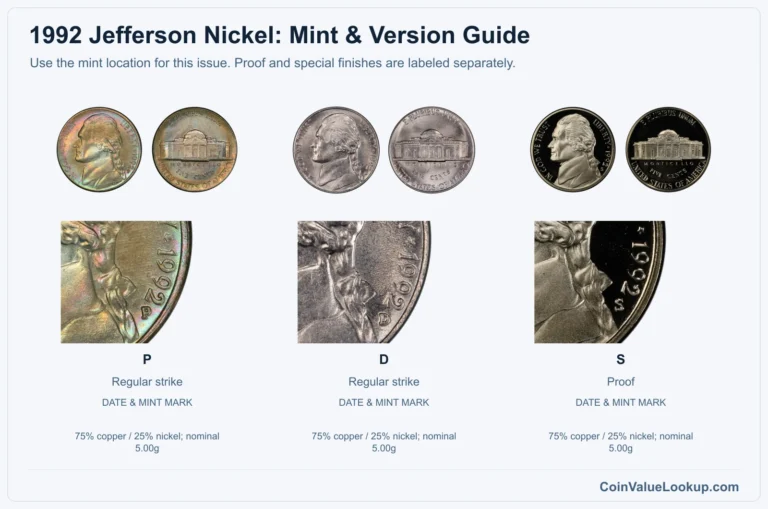
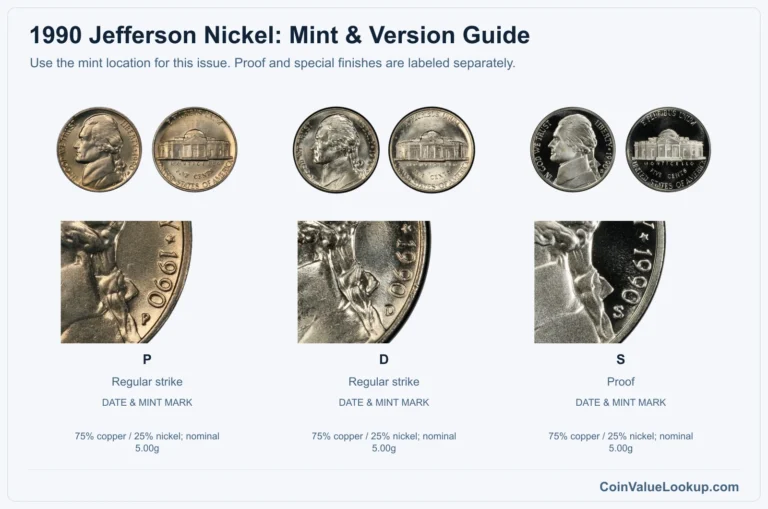
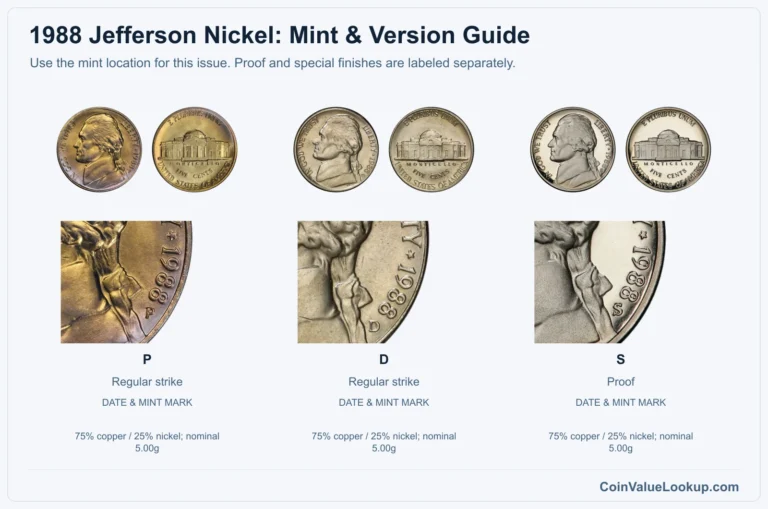
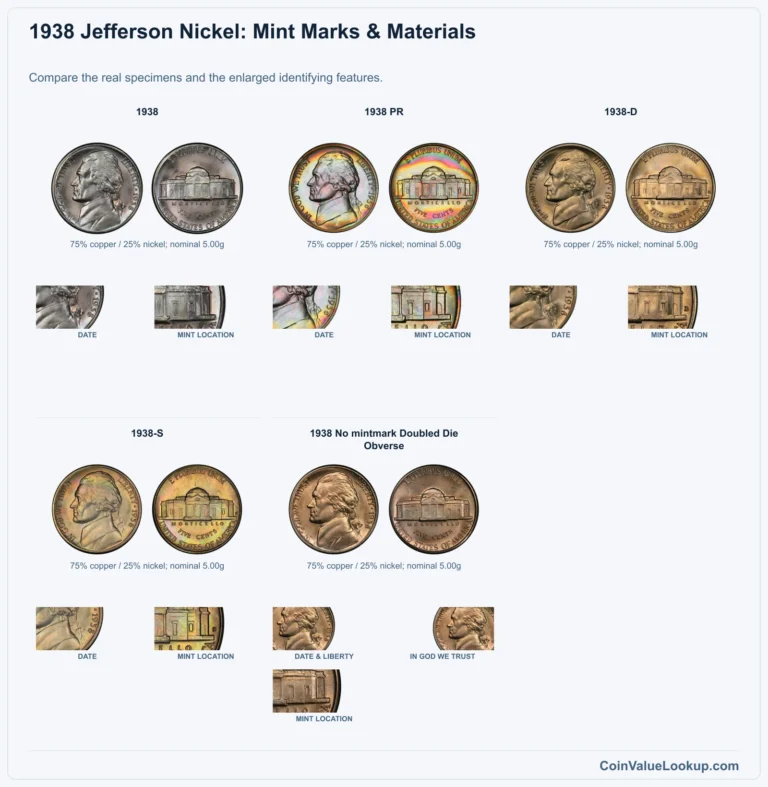
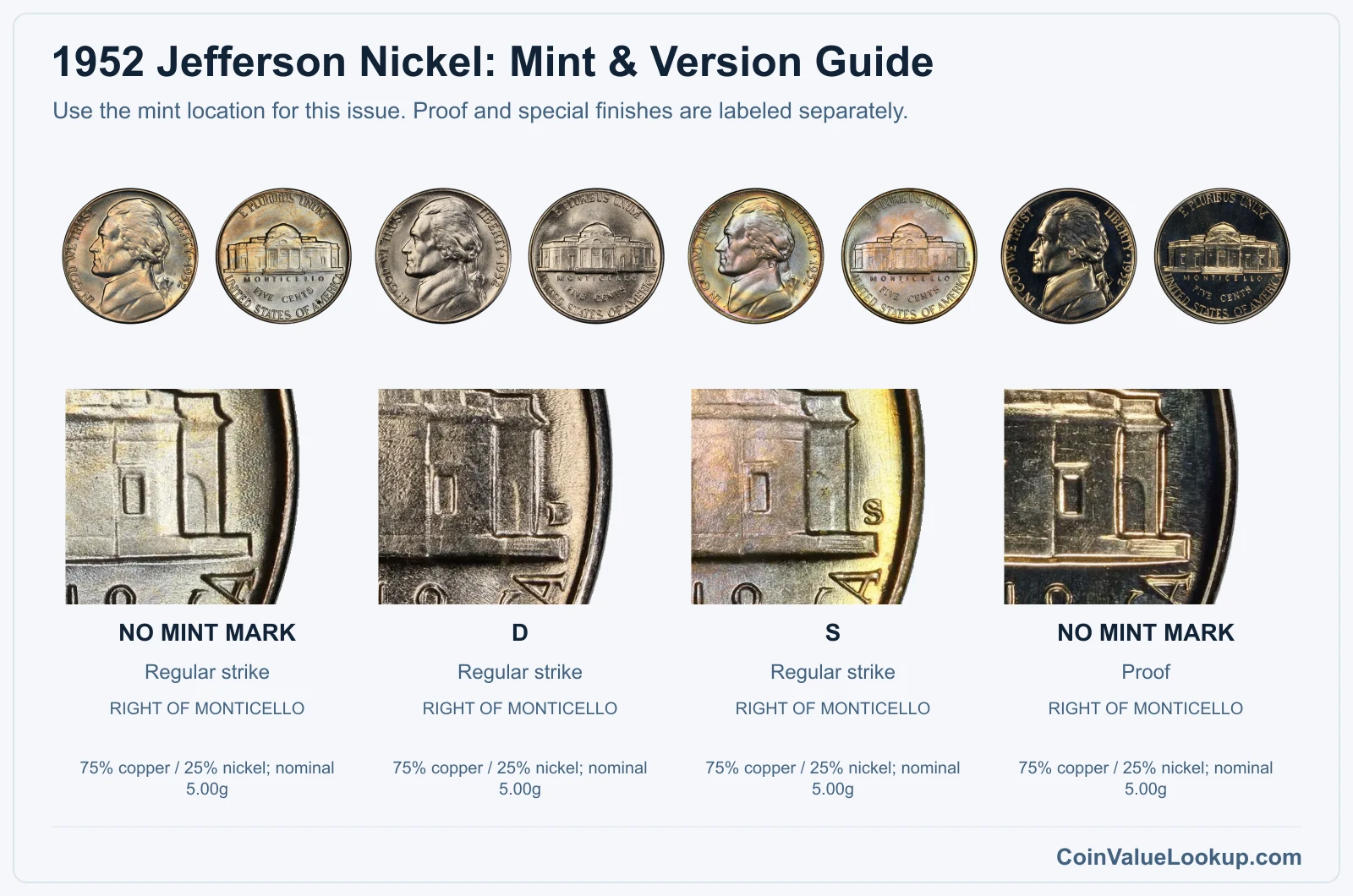
Start with the date on the obverse — you already know it says 1952. The mintmark is what matters next: look on the reverse, to the right of Monticello.
A small "D" means Denver, a small "S" means San Francisco, and no mintmark at all means Philadelphia.
All standard 1952 nickels are 75% copper and 25% nickel, weigh 5.00 grams, and measure 21.2 mm with a plain edge. Philadelphia also produced collector proofs this year, which have mirror-like fields and sharp device edges — completely different from a polished business strike.
Do not confuse a shiny, cleaned coin with a proof. Proofs were struck with special dies on prepared planchets.
If you hold the coin at an angle and the fields reflect like a mirror while the devices are razor-sharp, you might have a proof. If it just looks shiny from being rubbed on a cloth, you don't.
Step 2: Check Your 1952 Jefferson Nickel Grade
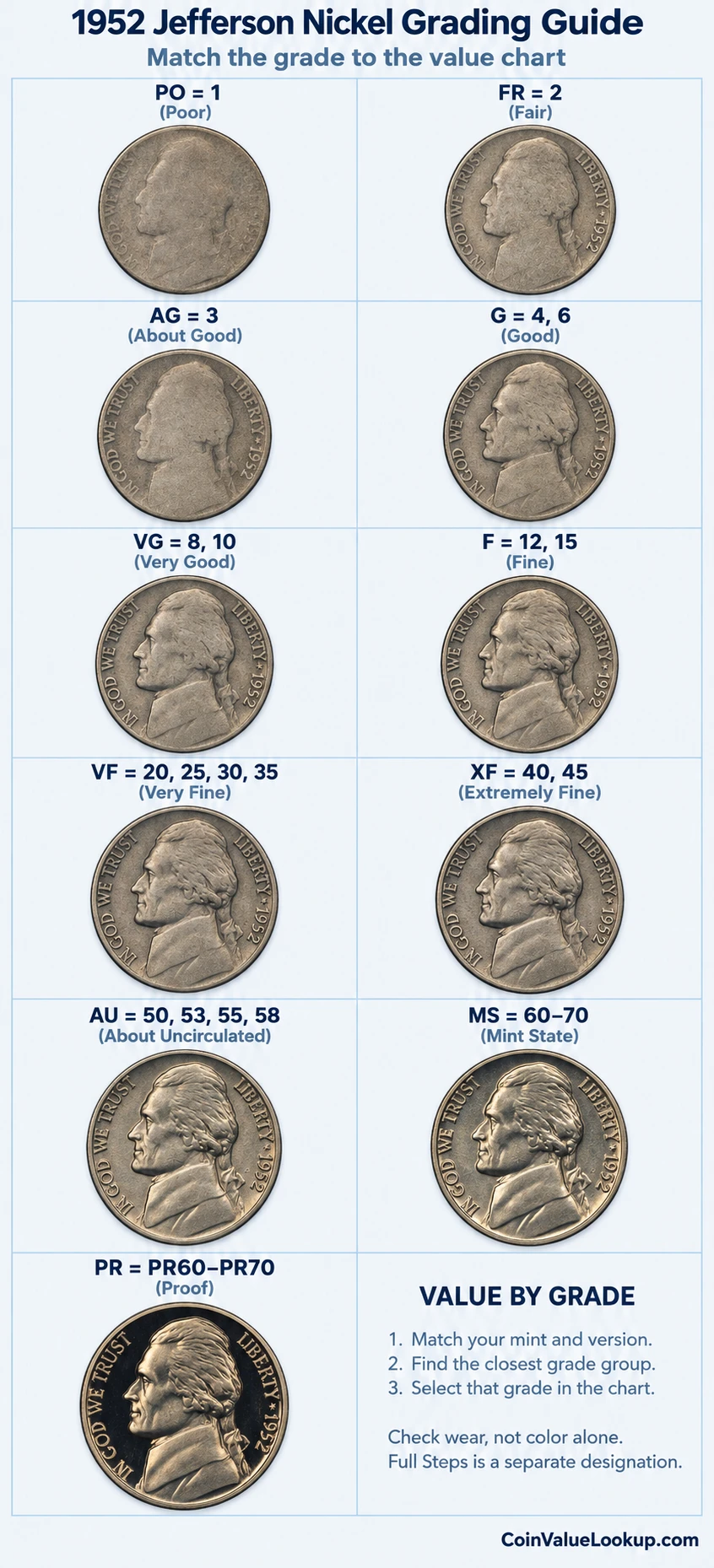
Check Jefferson's cheek first — it is the highest point on the obverse and the first place to show wear. Then look at the hair detail above his ear.
On the reverse, examine the roof and pillars of Monticello.
Luster matters as much as detail. A coin can have full hair lines but no original mint sheen, which limits its grade.
Use the comparison image to see how these wear points change across grade levels.
The steps at the base of Monticello are a strike-quality indicator, not a wear feature. PCGS awards a Full Steps designation when at least five steps are clearly separated on a Mint State coin.
A weakly struck coin may look uncirculated but still lack Full Steps — that is a die-pressure issue, not damage.
Step 3: Check 1952 Jefferson Nickel Value by Mint and Version
1952 Jefferson Nickel — No mintmark (Philadelphia)
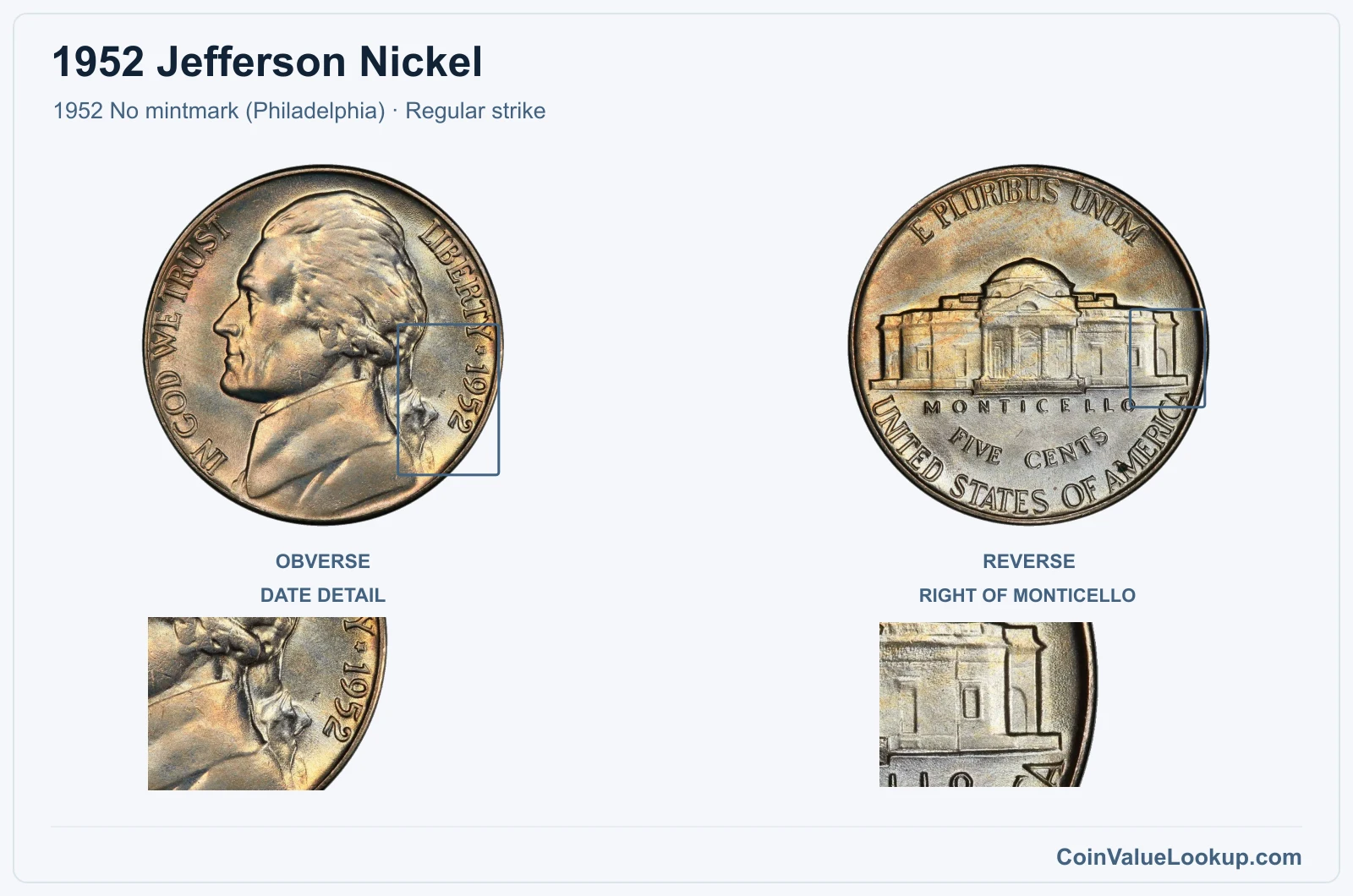
The 1952 Philadelphia nickel has no mintmark. Look on the reverse beside Monticello — if nothing is there, this is your coin.
It is a 75% copper, 25% nickel business strike weighing 5.00 grams.
USA Coin Book estimates about $1.88 at MS60 and $25 at MS65. Those are uncirculated guide values; worn examples sit well below and are not priced from the MS65 column.
Coins with fully separated Monticello steps qualify for the Full Steps designation, which commands its own premium separate from ordinary Mint State pricing.
| Range | Grade | Price | Auction Records | Appraisal |
|---|---|---|---|---|
| PO | PO 1 | — | Coin Identifier | |
| FR | FR 2 | — | Coin Identifier | |
| AG | AG 3 | — | Coin Identifier | |
| G | G 4 | — | Coin Identifier | |
| G 6 | — | Coin Identifier | ||
| VG | VG 8 | — | Coin Identifier | |
| VG 10 | — | Coin Identifier | ||
| F | F 12 | — | Coin Identifier | |
| F 15 | — | Coin Identifier | ||
| VF | VF 20 | — | Coin Identifier | |
| VF 25 | — | Coin Identifier | ||
| VF 30 | — | Coin Identifier | ||
| VF 35 | — | Coin Identifier | ||
| XF | XF 40 | Coin Identifier | ||
| XF 45 | — | Coin Identifier | ||
| AU | AU 50 | — | Coin Identifier | |
| AU 53 | — | Coin Identifier | ||
| AU 55 | Coin Identifier | |||
| AU 58 | Coin Identifier | |||
| MS | MS 60 | — | Coin Identifier | |
| MS 61 | — | Coin Identifier | ||
| MS 62 | — | Coin Identifier | ||
| MS 63 | Coin Identifier | |||
| MS 64 | Coin Identifier | |||
| MS 65 | Coin Identifier | |||
| MS 66 | Coin Identifier | |||
| MS 67 | Coin Identifier | |||
| MS 68 | — | — | — | |
| MS 69 | — | — | — | |
| MS 70 | — | — | — |
1952 Jefferson Nickel — No mintmark (Philadelphia) Proof
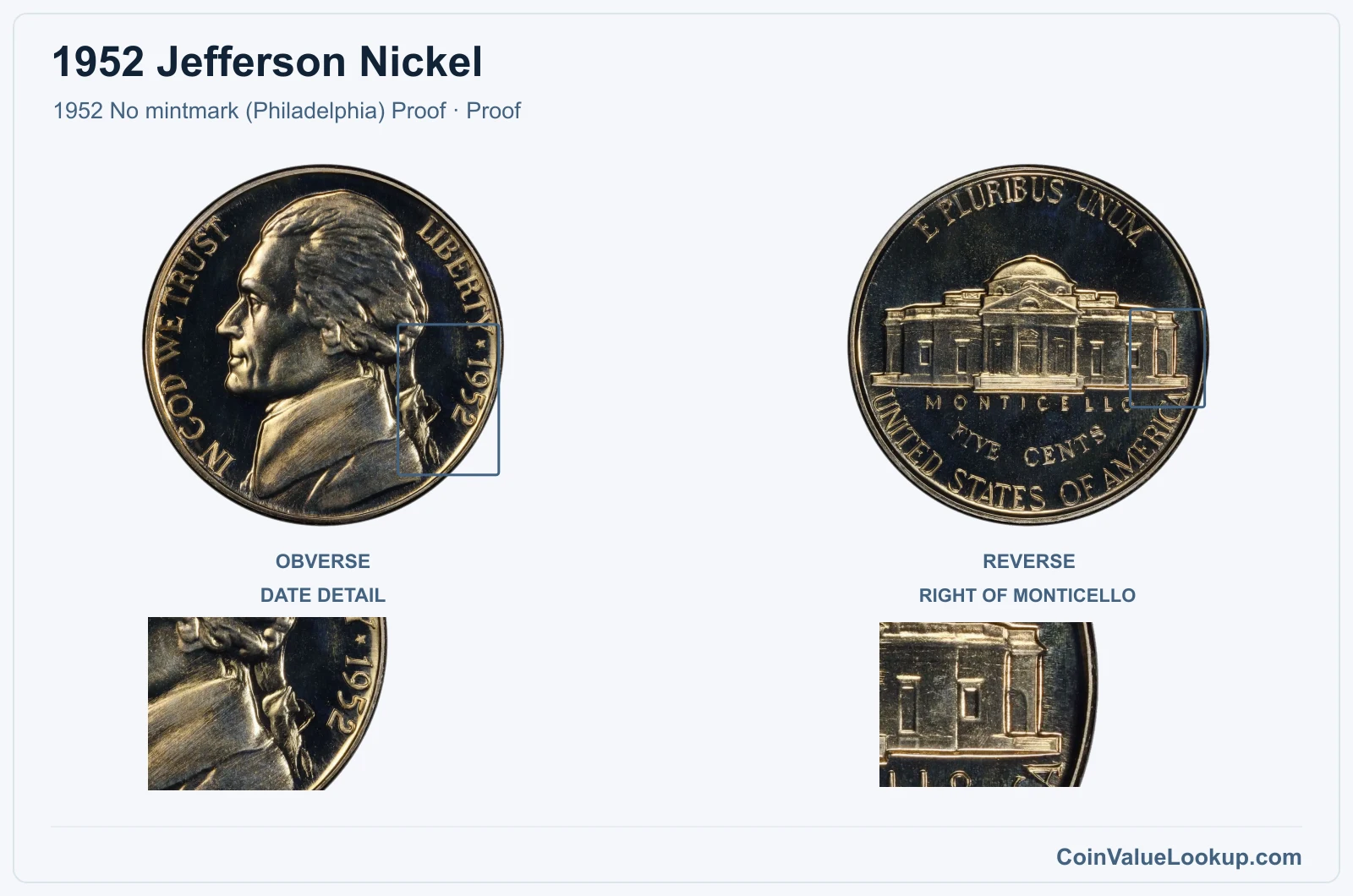
Philadelphia also struck proofs in 1952, identifiable by deeply mirrored fields and crisp, fully formed devices. There is no mintmark.
These are collector coins made on specially prepared planchets — not business strikes that happen to look nice.
A USA Coin Book guide estimate places the PR65 value at about $56. Cameo and Deep Cameo designations, which reflect frosted devices against mirror fields, carry additional premiums beyond this base proof figure.
Hairlines from improper handling will lower the grade, so inspect both sides under good light before assuming a high proof grade.
Coin Value Lookup is a useful starting point if you want to compare this proof against other Jefferson Nickel years and mints.
| Range | Grade | Price | Auction Records | Appraisal |
|---|---|---|---|---|
| PR | PR 1 | — | Coin Identifier | |
| PR 2 | — | Coin Identifier | ||
| PR 3 | — | Coin Identifier | ||
| PR 4 | — | Coin Identifier | ||
| PR 6 | — | Coin Identifier | ||
| PR 8 | — | Coin Identifier | ||
| PR 10 | — | Coin Identifier | ||
| PR 12 | — | Coin Identifier | ||
| PR 15 | — | Coin Identifier | ||
| PR 20 | — | Coin Identifier | ||
| PR 25 | — | Coin Identifier | ||
| PR 30 | — | Coin Identifier | ||
| PR 35 | — | Coin Identifier | ||
| PR 40 | — | Coin Identifier | ||
| PR 45 | — | Coin Identifier | ||
| PR 50 | — | Coin Identifier | ||
| PR 53 | — | Coin Identifier | ||
| PR 55 | — | Coin Identifier | ||
| PR 58 | — | Coin Identifier | ||
| PR 60 | — | Coin Identifier | ||
| PR 61 | — | Coin Identifier | ||
| PR 62 | — | Coin Identifier | ||
| PR 63 | — | Coin Identifier | ||
| PR 64 | Coin Identifier | |||
| PR 65 | Coin Identifier | |||
| PR 66 | Coin Identifier | |||
| PR 67 | Coin Identifier | |||
| PR 68 | Coin Identifier | |||
| PR 69 | Coin Identifier | |||
| PR 70 | — | — | — |
1952 Jefferson Nickel — D
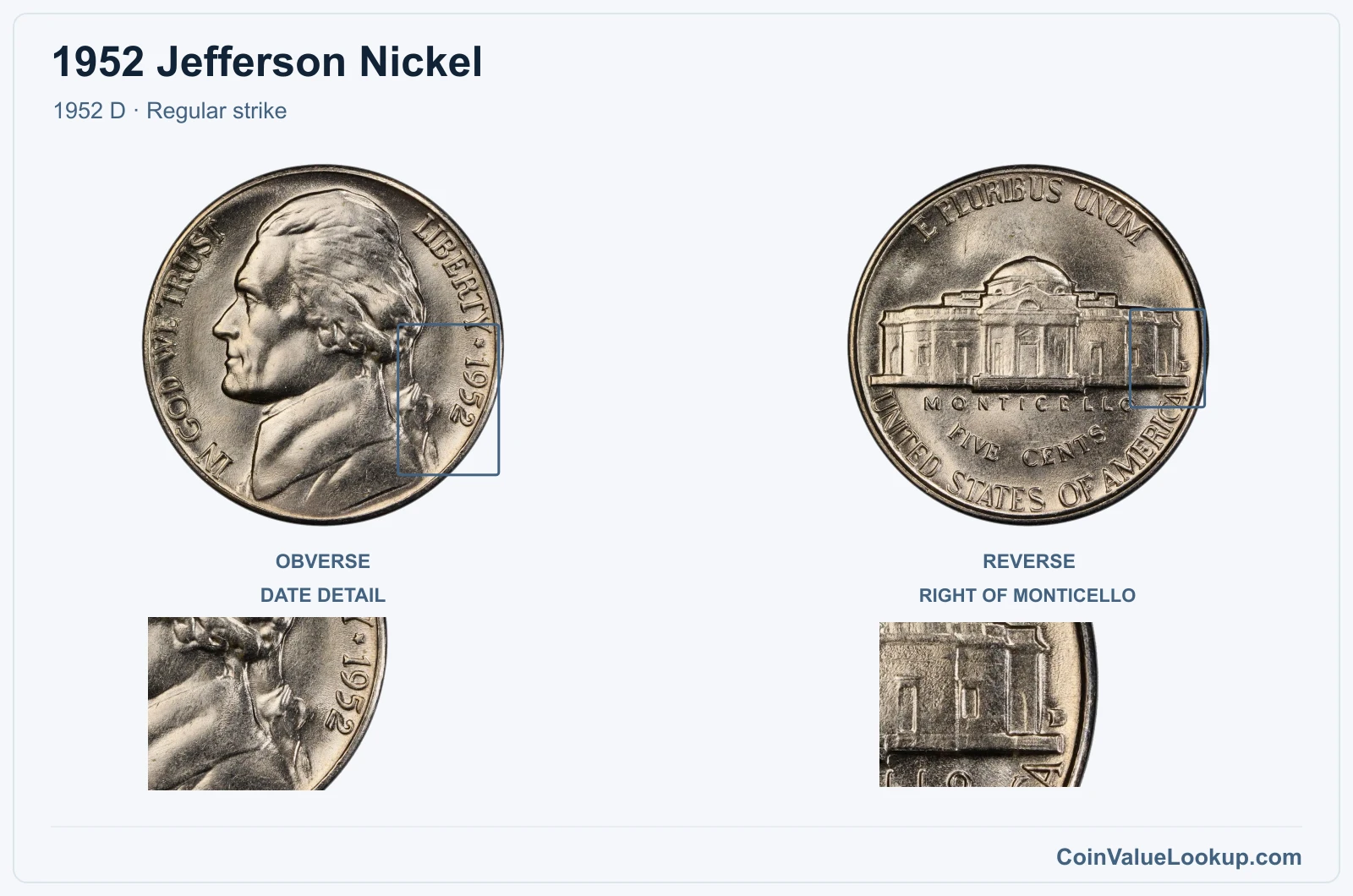
The 1952-D was struck in Denver and carries a small "D" mintmark to the right of Monticello on the reverse. Same 75% copper, 25% nickel composition at 5.00 grams.
Guide estimates from USA Coin Book put it at about $5.30 at MS60 and $25 at MS65 — that higher MS60 entry versus the Philadelphia issue reflects slightly different supply dynamics. Circulated pieces remain common and are not priced from the uncirculated columns.
As with all Jefferson nickels, a Full Steps designation is evaluated separately and carries its own premium.
| Range | Grade | Price | Auction Records | Appraisal |
|---|---|---|---|---|
| PO | PO 1 | — | Coin Identifier | |
| FR | FR 2 | — | Coin Identifier | |
| AG | AG 3 | — | Coin Identifier | |
| G | G 4 | — | Coin Identifier | |
| G 6 | — | Coin Identifier | ||
| VG | VG 8 | — | Coin Identifier | |
| VG 10 | — | Coin Identifier | ||
| F | F 12 | — | Coin Identifier | |
| F 15 | — | Coin Identifier | ||
| VF | VF 20 | — | Coin Identifier | |
| VF 25 | — | Coin Identifier | ||
| VF 30 | — | Coin Identifier | ||
| VF 35 | — | Coin Identifier | ||
| XF | XF 40 | — | Coin Identifier | |
| XF 45 | — | Coin Identifier | ||
| AU | AU 50 | — | Coin Identifier | |
| AU 53 | — | Coin Identifier | ||
| AU 55 | — | Coin Identifier | ||
| AU 58 | — | Coin Identifier | ||
| MS | MS 60 | — | Coin Identifier | |
| MS 61 | — | Coin Identifier | ||
| MS 62 | — | Coin Identifier | ||
| MS 63 | — | Coin Identifier | ||
| MS 64 | — | Coin Identifier | ||
| MS 65 | Coin Identifier | |||
| MS 66 | Coin Identifier | |||
| MS 67 | Coin Identifier | |||
| MS 68 | — | — | — | |
| MS 69 | — | — | — | |
| MS 70 | — | — | — |
1952 Jefferson Nickel — S
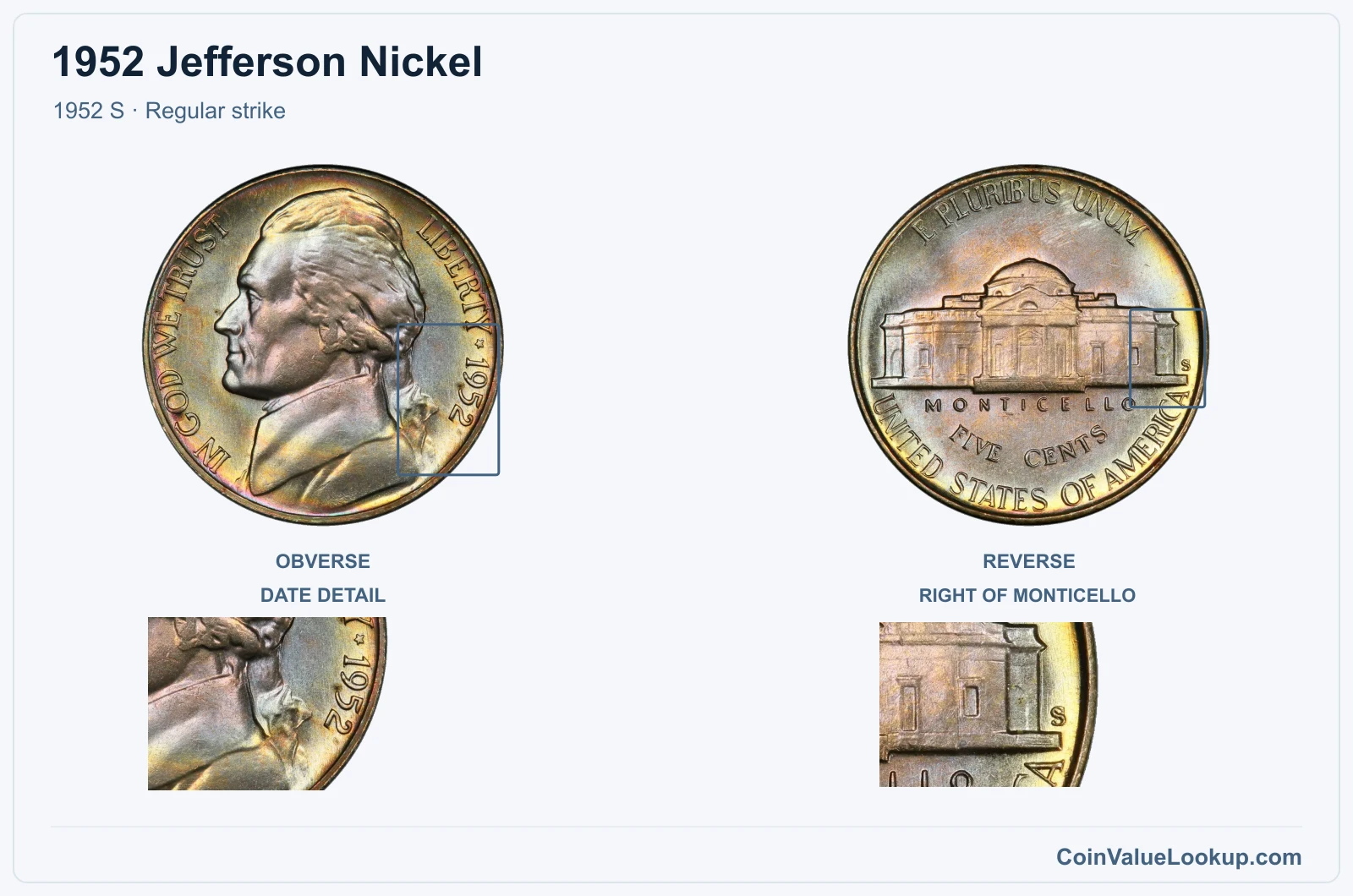
The 1952-S bears a small "S" mintmark to the right of Monticello, marking San Francisco production. It shares the standard 75% copper, 25% nickel composition and 5.00-gram weight.
USA Coin Book guide estimates land at about $1.88 for MS60 and $25 for MS65. Well-worn examples are common in circulation finds and are not valued using uncirculated columns.
Full Steps pieces, where all five Monticello steps are sharply separated, are assessed on their own scale above standard Mint State pricing.
| Range | Grade | Price | Auction Records | Appraisal |
|---|---|---|---|---|
| PO | PO 1 | — | Coin Identifier | |
| FR | FR 2 | — | — | — |
| AG | AG 3 | — | — | — |
| G | G 4 | — | — | — |
| G 6 | — | — | — | |
| VG | VG 8 | — | — | — |
| VG 10 | — | — | — | |
| F | F 12 | — | — | — |
| F 15 | — | — | — | |
| VF | VF 20 | — | — | — |
| VF 25 | — | — | — | |
| VF 30 | — | — | — | |
| VF 35 | — | — | — | |
| XF | XF 40 | — | Coin Identifier | |
| XF 45 | — | Coin Identifier | ||
| AU | AU 50 | — | Coin Identifier | |
| AU 53 | — | Coin Identifier | ||
| AU 55 | — | Coin Identifier | ||
| AU 58 | — | Coin Identifier | ||
| MS | MS 60 | — | Coin Identifier | |
| MS 61 | — | Coin Identifier | ||
| MS 62 | — | Coin Identifier | ||
| MS 63 | — | Coin Identifier | ||
| MS 64 | Coin Identifier | |||
| MS 65 | Coin Identifier | |||
| MS 66 | Coin Identifier | |||
| MS 67 | Coin Identifier | |||
| MS 68 | — | — | — | |
| MS 69 | — | — | — | |
| MS 70 | — | — | — |
1952 Jefferson Nickel Error List
1. 1952 Jefferson Nickel — Struck on a cent planchet
A 1952 nickel struck on a cent planchet is a legitimate wrong-planchet error. The coin weighs roughly 3.1 grams instead of the normal 5.00 grams, feels lighter in hand, and typically shows a copper-red color because it was struck on a copper cent blank.
Peripheral lettering may be cropped or stretched due to the smaller planchet diameter.
Color alone is not diagnostic — copper plating, chemical toning, or a mechanically reduced normal nickel can mimic the look. You need the correct weight and confirmed alloy to verify this error.
A Philadelphia example graded NGC MS63 Red at 3.1 grams sold through Heritage Auctions in March 2025 for $504. That is one auction result, not a guaranteed market price for every example.
2. 1952 Jefferson Nickel — Wrong alloy planchet
This error involves a 1952 nickel struck on a planchet made from the wrong alloy entirely. One cataloged example weighed 4.66 grams and tested at 63% copper, 26% zinc, and 11% nickel — a composition that does not match any standard U.S. nickel planchet of that era.
Do not assume a coin is wrong-alloy based on unusual color or weight alone. Professional alloy testing is essential.
Surface plating or a slightly heavy normal nickel can create false leads. A Heritage Auctions example from January 2019, graded NGC AU Details with scratches, sold for $288.
Condition and authentication both play a role in what these bring at sale.
3. 1952 Jefferson Nickel — Struck on a silver dime planchet
A 1952 nickel struck on a silver dime planchet produces a noticeably undersized coin with a cropped perimeter where the nickel design extends beyond the smaller blank. The result is a Jefferson portrait and Monticello rendered on a coin that is the wrong diameter and composition.
Professional composition and planchet attribution is critical. A normal toned nickel can sometimes appear silvery, which is not the same thing.
One example graded PCGS AU58 appeared in a Heritage Auctions combined lot. Individual value depends on authenticated identity, condition, and how dramatic the error appears — there is no adopted price range for this variety.
4. 1952 Jefferson Nickel — Doubled Die Obverse
Doubled die obverse varieties have been reported for the 1952 nickel. The doubling appears on obverse lettering or design elements as consistent separation or notching — not a flat, shelf-like displacement.
To check your coin, compare the obverse legends and portrait details against a known normal 1952 nickel under the same lighting and magnification. Machine doubling, which is flat and shelf-like, is the most common lookalike and does not carry the same premium.
Reflections and worn die contours can also mislead. Value for a genuine doubled die depends on the specific variety, the visibility of the doubling, and the coin's overall condition.
5. 1952 Jefferson Nickel — Doubled Die Reverse
Doubled die reverse varieties have also been cataloged for the 1952 nickel. These show doubling on reverse legends or design contours — the lettering around Monticello or the building details themselves may exhibit consistent separation.
Examine your coin's reverse closely with magnification and compare against a normal example. Machine doubling produces a different, flatter appearance and is far more common.
Random post-mint damage can also create marks that mimic doubling. Value depends on the specific doubled die variety, how visible the doubling is, and the coin's grade.
No adopted price range is available for this category.
6. 1952 Jefferson Nickel — Repunched Mintmark
Repunched mintmark varieties exist for the 1952 nickel on mintmarked issues. The diagnostic is a remnant of a separately positioned mintmark punch visible beneath or beside the final mintmark, located to the right of Monticello on the reverse.
Use magnification and compare your mintmark directly against a normal D or S under matching light. A die chip near the mintmark, corrosion, or machine doubling of the mintmark can all mimic a repunched mark.
Genuine RPMs show a clearly offset second impression that aligns with how a hand-punched mintmark would appear if repositioned. Value varies with the visibility of the repunching and the coin's condition.
7. 1952 Jefferson Nickel — Off-Center Strike
Off-center strikes occur when the planchet is not properly seated between the dies. The result is a displaced design with an unstruck crescent along one edge.
On a 1952 nickel, the key question is whether the date remains visible — collectors strongly prefer off-center errors where the year can still be read.
Do not confuse an off-center strike with a clipped planchet, a one-sided die misalignment, or post-mint flattening. A true off-center error shows the entire design shifted in one direction with a blank, unstruck area.
Value depends on the percentage off-center, date visibility, and overall condition, with no adopted price range available.
8. 1952 Jefferson Nickel — Lamination / Split Planchet
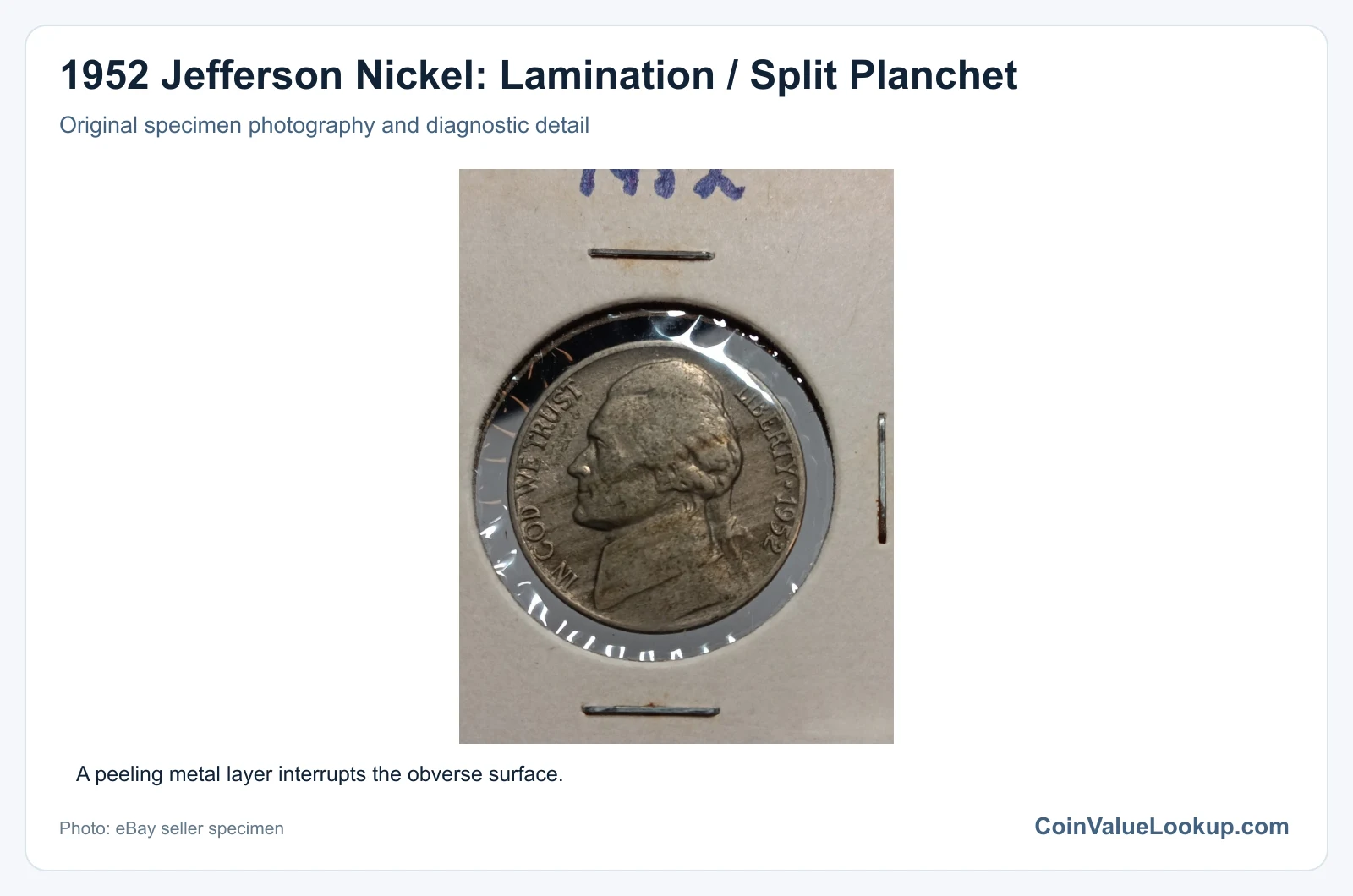
Lamination errors on 1952 nickels show as peeling metal, a retained flap, or visible separation within the alloy layers of the planchet. These happen during the planchet preparation stage when impurities or gas pockets create weak spots in the metal.
Photograph both the affected face and the edge together to document the error. Scraping, corrosion pitting, or a deliberately cut coin can imitate a lamination.
Genuine laminations follow the metal's internal structure and typically have a natural, irregular appearance. Value depends on the size and drama of the flaw, plus the coin's condition.
No adopted price range is available for this variety.
9. 1952 Jefferson Nickel — Double / Multiple Strike
A double-struck 1952 nickel shows two separate, displaced design impressions from being struck more than once by the dies. You will typically see a second, offset or rotated image overlapping the first — this is distinct from a doubled die, which is a single impression from a defective die.
Look for clearly separate design impressions rather than merely enlarged or thickened letters. Post-mint impressions or vise damage can fake a similar look, but those lack the sharp, die-struck quality of a genuine second strike.
Value depends on the degree of offset, whether both strikes are clearly visible, and overall condition. No adopted price range is available.
10. 1952 Jefferson Nickel — Broadstrike
A broadstruck 1952 nickel — reported specifically on a 1952-D — results from striking without the normal collar die that confines the planchet to its proper diameter. The coin spreads outward, producing a wider-than-normal piece with a complete design but a flattened or irregular rim.
Check the edge profile: a broadstrike will lack the sharp, raised rim of a normal coin, and the metal will have flowed outward evenly. Do not confuse this with off-center strikes, which shift the design to one side, or with a coin flattened after minting by mechanical force.
Value depends on the error's severity and the coin's condition. No adopted price range is available for this variety.