1913 Liberty Nickel Coin Value: How Much Is It Worth?
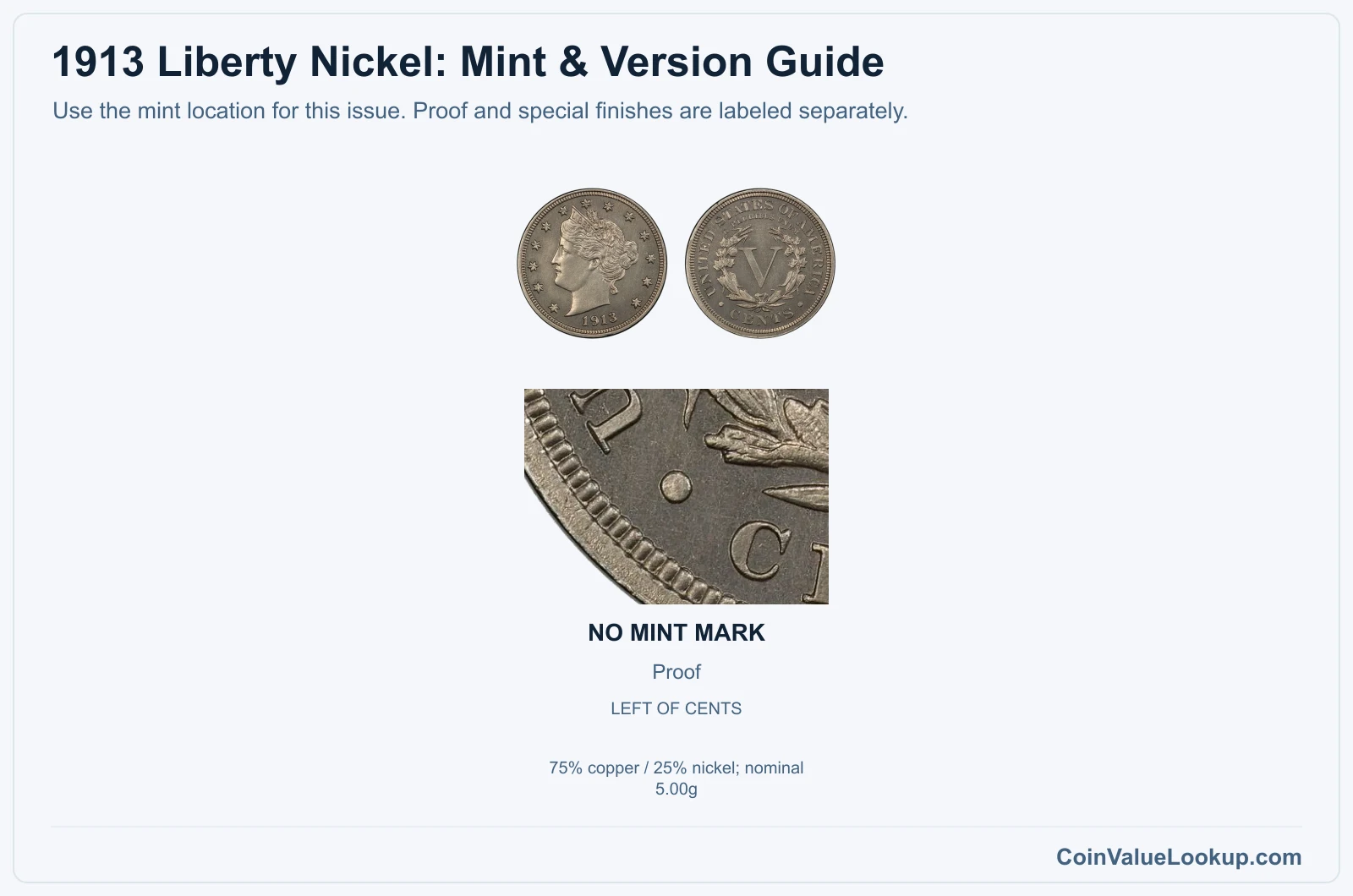
The 1913 Liberty Nickel is one of the most famous coins in American numismatics, and for good reason: only five genuine specimens are known to exist. These are not coins you stumble across in a jar of old nickels.
Each one carries an individual pedigree and history. The Walton specimen alone was reported by PCGS as a $4.2 million transaction.
There is no standard price range from worn to mint state here — every genuine example is an individually assessed rarity.
Fast Way to Identify Your 1913 Liberty Nickel
If you believe you have a 1913 Liberty Head nickel, upload clear photos of the front and back for a preliminary identification. This step helps distinguish the Liberty Head design from the much more common 1913 Buffalo nickel, which is an entirely different coin on its own page.
Sharp images of the date and overall surfaces are essential.
1913 Liberty Nickel Value
Upload both sides of your 1913 Liberty Nickel.
Front Obverse
Upload photo
Back Reverse
Upload photo
Which 1913 Liberty Nickel Versions Are Worth Money?
- Only five genuine 1913 Liberty Head nickels exist, each individually pedigreed — the Walton specimen transacted at a reported $4.2 million.
- These are proof coins, not regular circulation strikes, making provenance and surface quality critical to each specimen's individual value.
- A 1913 nickel with the Buffalo design is a different coin entirely and far more common — confirm you have the Liberty Head obverse before drawing any conclusions.
Step 1: Identify Your 1913 Liberty Nickel Mint Mark and Version
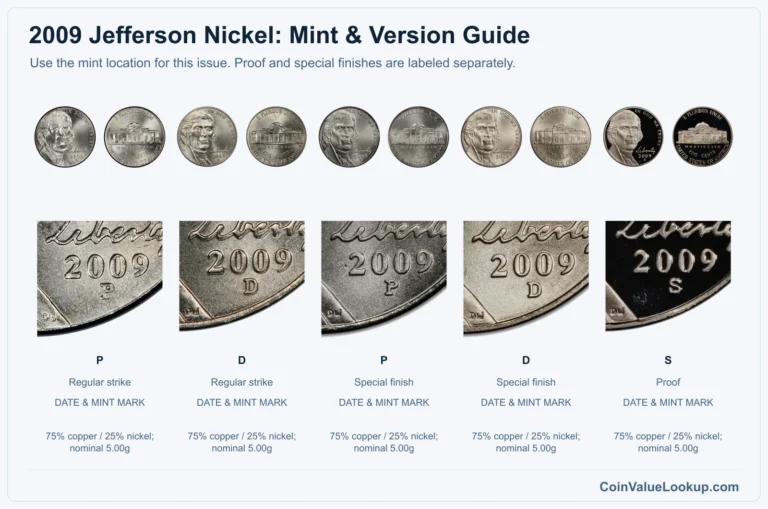
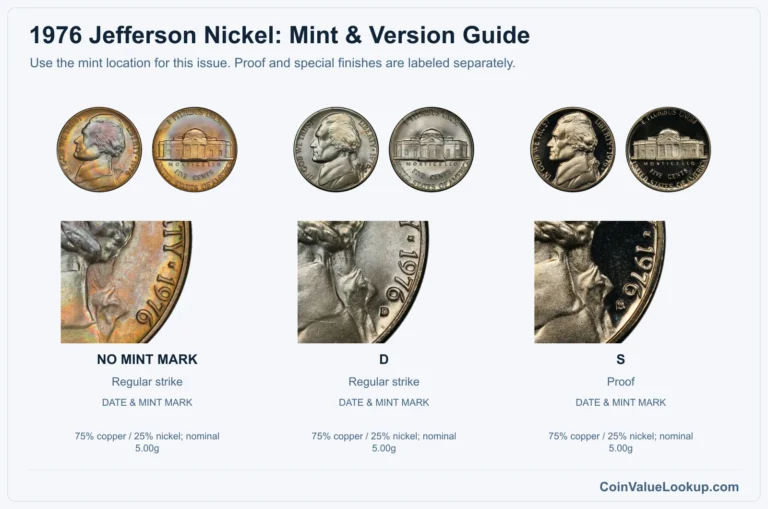
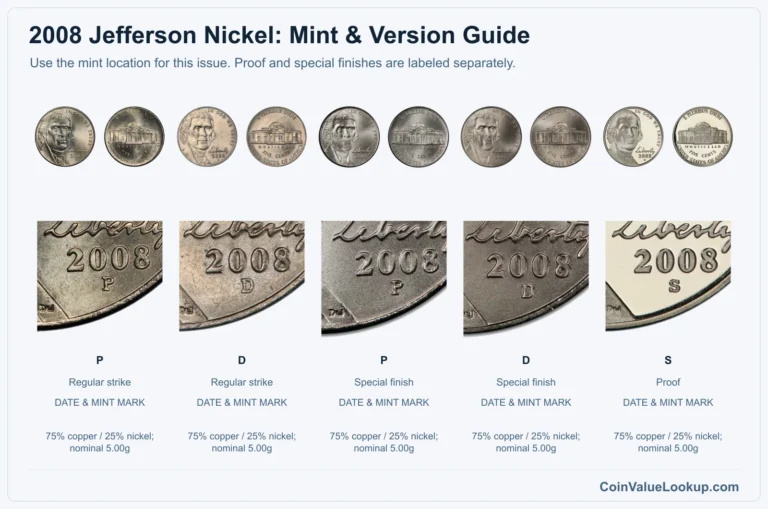
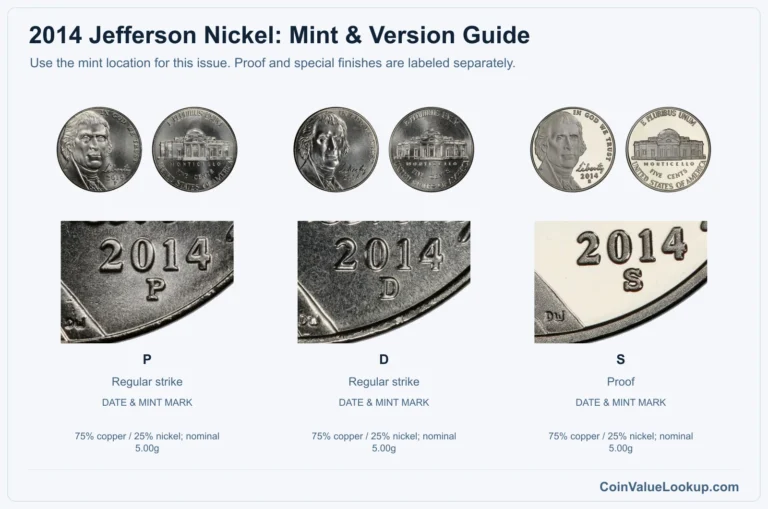
The 1913 Liberty Nickel was struck at Philadelphia with no mintmark. It is composed of 75% copper and 25% nickel, weighs about 5 grams, measures 21.2 mm across, and has a plain edge.
There is no Denver or San Francisco version for this year.
Only five genuine Liberty Head specimens from 1913 are confirmed to exist, each with its own documented history. These are proof coins, not ordinary circulation strikes.
If you have a 1913 nickel with the Buffalo design on it, that is a completely different series and belongs on its own reference page.
Be aware that the 1913 Liberty Head nickel is one of the most counterfeited coins in the hobby. Altered dates from other years, cast copies, and outright fakes are extremely common.
Any claimed example requires rigorous third-party authentication — photographs alone cannot confirm a coin this rare.
Coin Value Lookup can help you look up values for other dates in the Liberty Nickel series and thousands of other U.S. coins. It is a good starting point for identifying what you actually have before pursuing expert evaluation.
Step 2: Check Your 1913 Liberty Nickel Grade
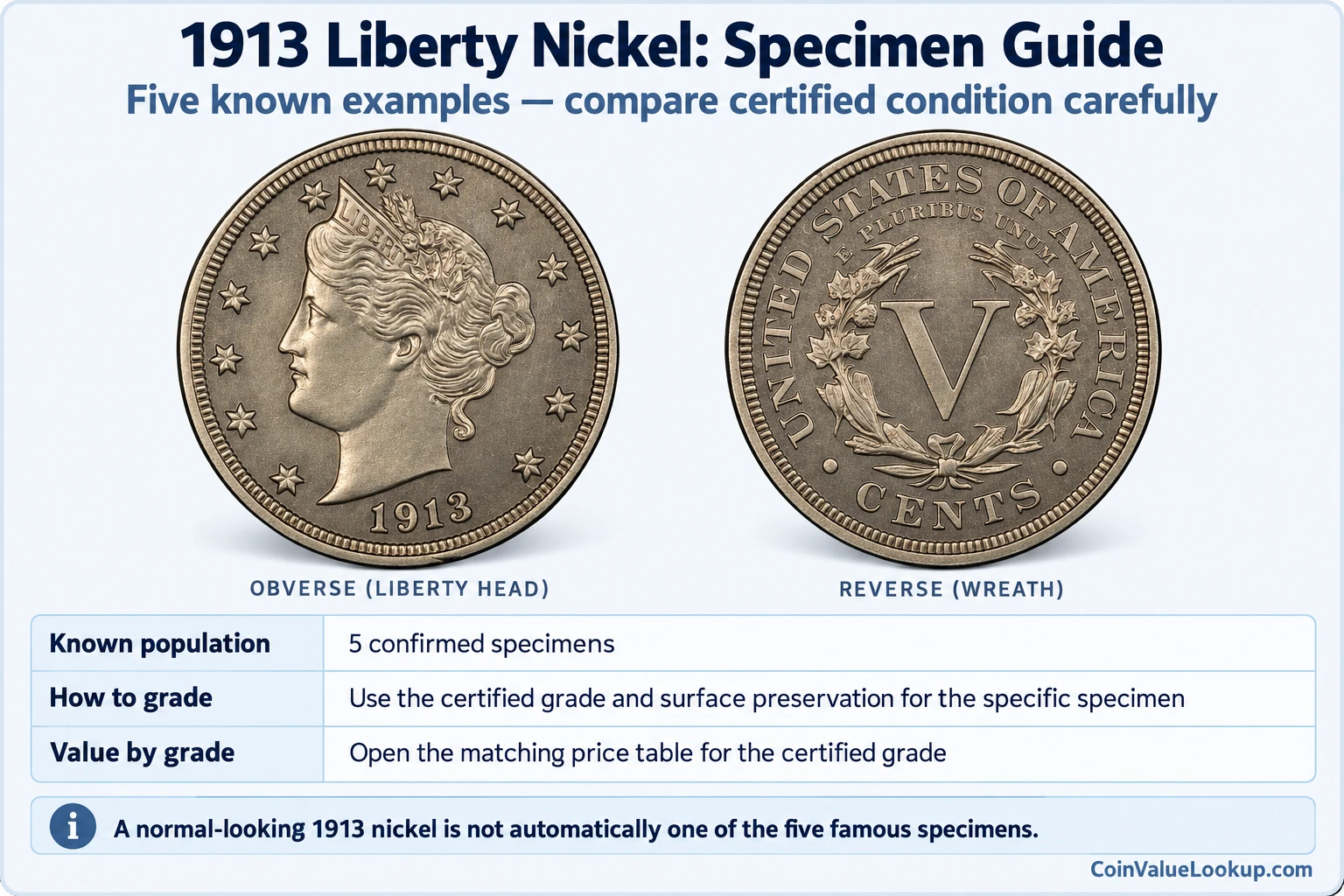
Because no regular-issue 1913 Liberty Head nickels were produced for circulation, there is no normal wear scale to walk through here. The five known specimens are proofs, and their condition varies — some show original proof surfaces, while others have been impaired over the decades.
When evaluating any Liberty Nickel for wear, NGC notes that strike weakness in the hair detail and the corn ears on the reverse should not be mistaken for circulation wear. Instead, look at the fields, the cheek, and overall luster to judge a coin's condition.
For the 1913 specifically, each specimen is assessed individually based on its provenance and surface quality. Do not assume a raw, unattributed coin claiming to be a 1913 Liberty Head nickel is genuine based on visual comparison alone.
Step 3: Check 1913 Liberty Nickel Value by Mint and Version
1913 Liberty Nickel — No Mint Mark — Known1913 Liberty Specimens
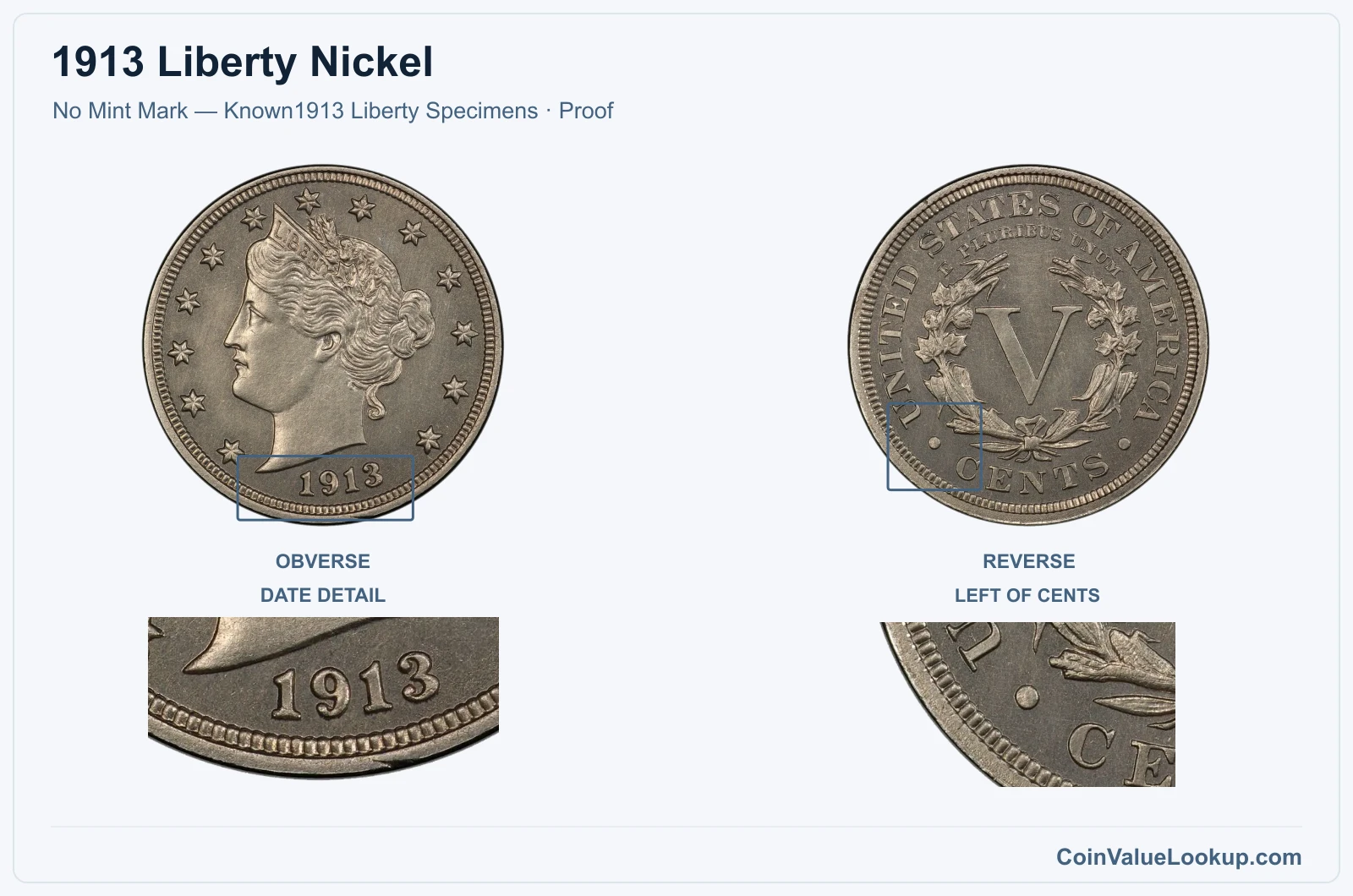
All five confirmed 1913 Liberty Head nickels are proofs struck at Philadelphia with no mintmark. They are 75% copper and 25% nickel, weighing about 5 grams.
No business strikes were officially produced.
Each specimen is tracked by its own pedigree name and ownership history. The Walton specimen, for example, was reported by PCGS as transacting at $4.2 million.
That figure reflects one specific coin's sale, not a general market price for the date.
There is no generic grade-price curve for this coin. Condition, provenance, and the individual history of each piece determine its value independently.
Any example encountered outside the five documented specimens demands thorough third-party authentication before it can be taken seriously.
Range Grade
Price Auction Records Appraisal PR PR 1
—
Coin Identifier
PR 2
—
Coin Identifier
PR 3
—
Coin Identifier
PR 4
—
Coin Identifier
PR 6
—
Coin Identifier
PR 8
—
Coin Identifier
PR 10
—
Coin Identifier
PR 12
—
Coin Identifier
PR 15
—
Coin Identifier
PR 20
—
Coin Identifier
PR 25
—
Coin Identifier
PR 30
—
Coin Identifier
PR 35
—
Coin Identifier
PR 40
—
Coin Identifier
PR 45
—
Coin Identifier
PR 50
—
Coin Identifier
PR 53
—
Coin Identifier
PR 55
—
Coin Identifier
PR 60
—
—
—
PR 61
—
—
—
PR 62
—
Coin Identifier
PR 63
Coin Identifier
PR 64
Coin Identifier
PR 65
—
Coin Identifier
PR 66
Coin Identifier
PR 67
—
—
—
PR 68
—
—
—
PR 69
—
—
—
PR 70
—
—
—