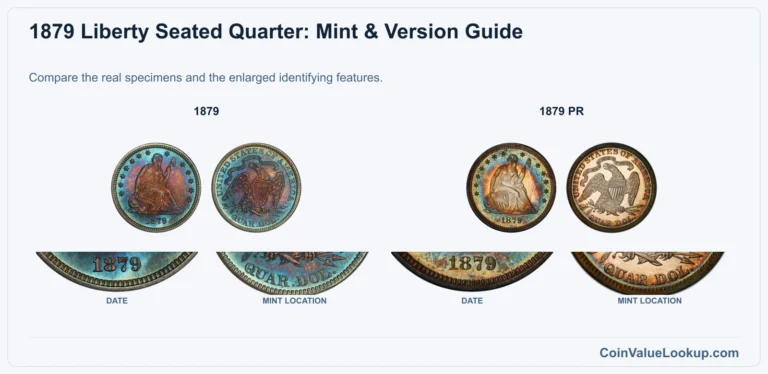
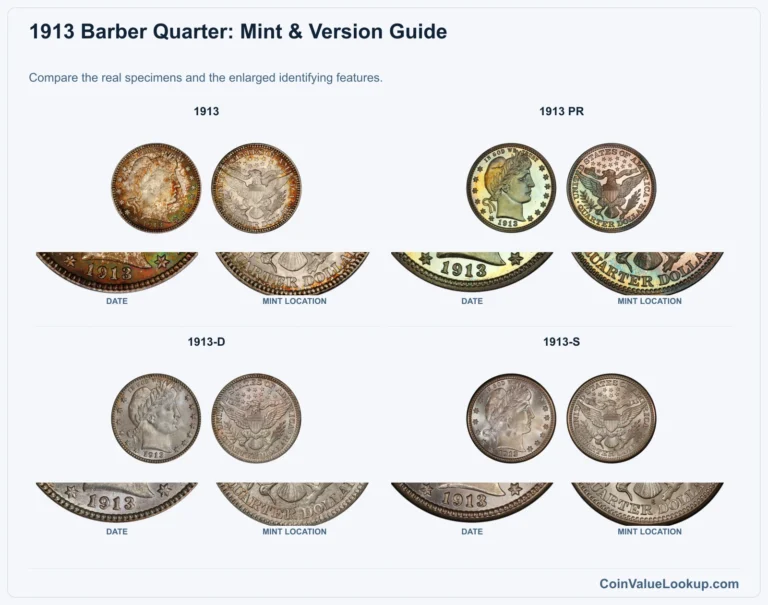
1992 Washington Quarter Coin Value: How Much Is It Worth?
Most 1992 Washington quarters you find in circulation are worth face value — 25 cents. That changes when a coin is in top uncirculated condition; a USA Coin Book guide estimate places the 1992-P and 1992-D at around $19 each in MS65.
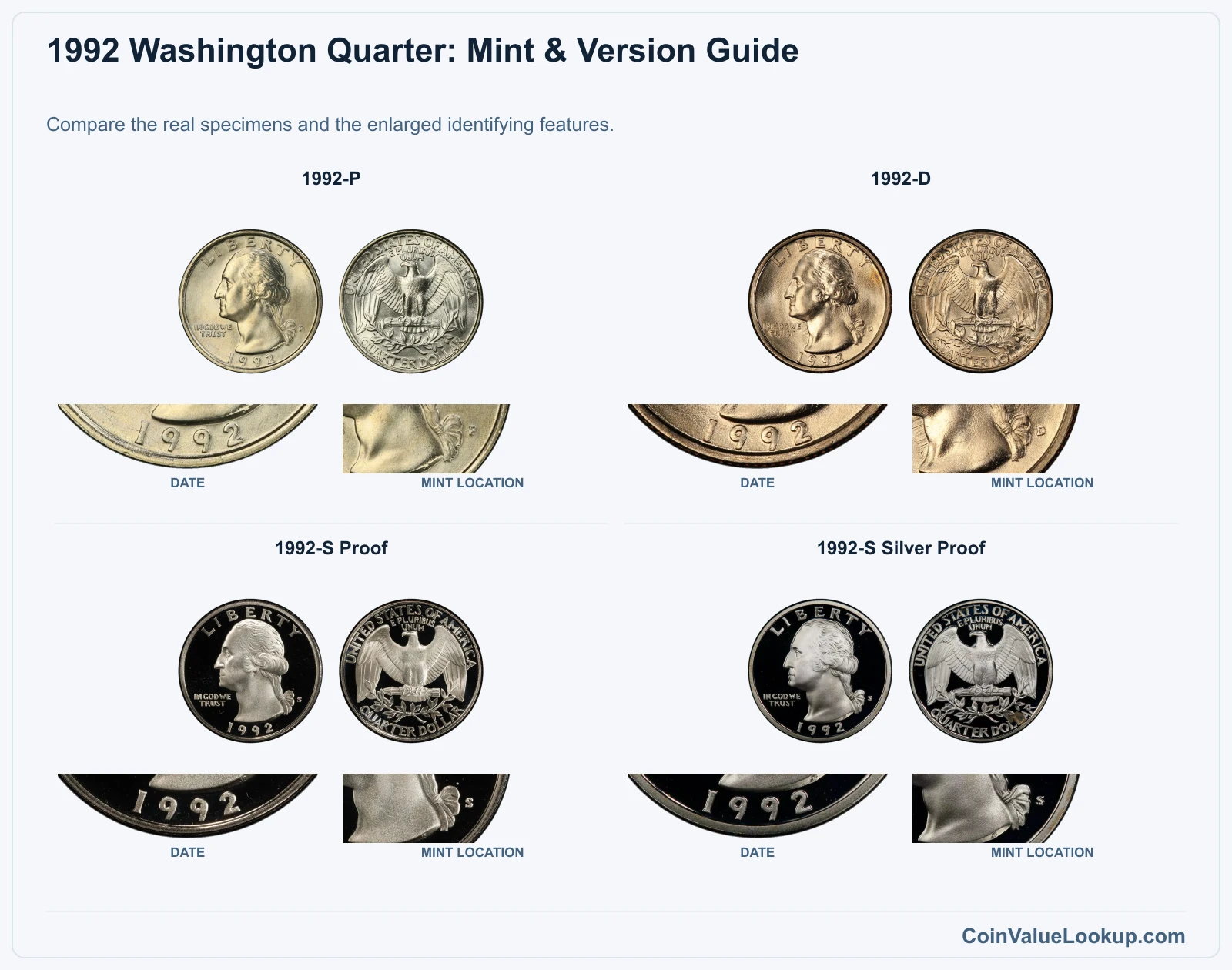
The 1992-S silver proof, a separate collector issue struck in 90% silver, carries a guide estimate near $21 in PR65. Four distinct versions exist for this date: P and D business strikes in copper-nickel clad, an S clad proof, and an S silver proof.
Fast Way to Identify Your 1992 Washington Quarter
Want a quick read on what you have? Upload clear photos of the front and back of your 1992 quarter and our identifier will give you a preliminary identification.
It can help sort out the mintmark, finish type, and general condition so you know which version you are holding before diving deeper.
1992 Washington Quarter Value
Upload both sides of your 1992 Washington Quarter.
Front Obverse
Upload photo
Back Reverse
Upload photo
Which 1992 Washington Quarter Versions Are Worth Money?
- The 1992-S silver proof in PR65 carries a guide estimate around $21 — check the edge and weight to confirm it is silver, not clad.
- High-grade 1992-P and 1992-D quarters in MS65 each have a guide estimate near $19, well above face value.
- A 1992-D broadstrike error sold for $11 in MS63 at auction, and a 1992-P struck on dime-thickness stock brought $51 in MS64 — genuine mint errors add a premium.
- Both S-mint proofs exist, but the clad version in PR65 is estimated around $5, far less than its silver counterpart — confirm the metal before assuming top value.
Step 1: Identify Your 1992 Washington Quarter Mint Mark and Version
Look just to the right of the ribbon tying Washington's ponytail for the mintmark. A "P" means Philadelphia, "D" means Denver, and "S" means San Francisco.
There is no blank-mintmark Philadelphia variety for 1992.
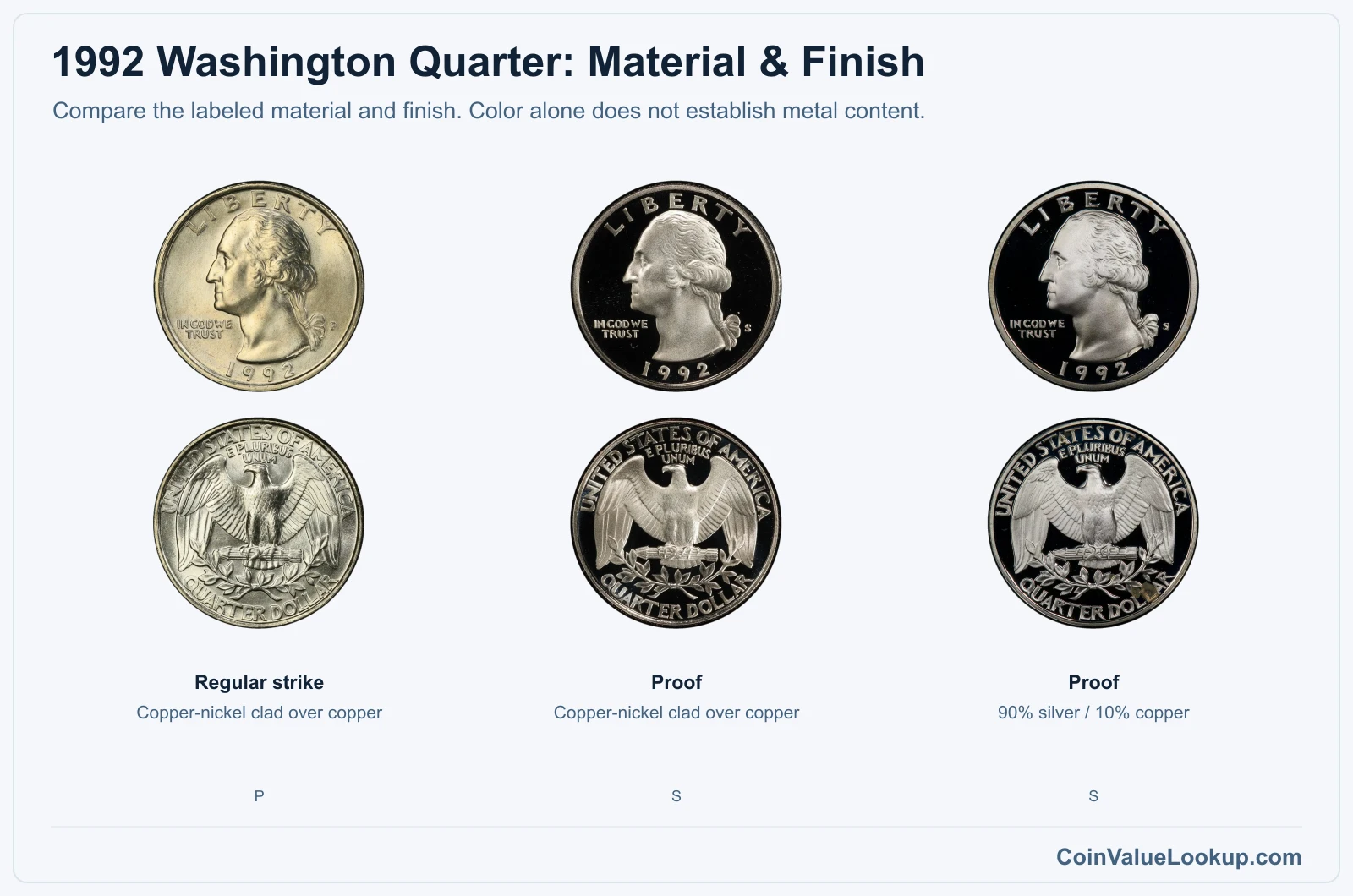
The P and D coins are copper-nickel clad business strikes, weighing a nominal 5.67 grams. Both S-mint coins are proofs, but one is clad and the other is 90% silver.
The S mintmark alone does not tell you which metal you have.
To separate the two S proofs, check the edge. A clad coin shows a visible copper-colored stripe along the edge; a silver coin does not.
Weight helps too: the silver proof runs about 6.25 grams versus 5.67 grams for clad. Original government packaging also distinguishes them — the silver proof came in a separate Silver Proof Set.
If you are uncertain, authenticated third-party holders will specify the metal.
The 1992-S silver proof was the first silver-composition proof quarter since 1964. It is a normal collector issue, not a wrong-planchet error.
Step 2: Check Your 1992 Washington Quarter Grade
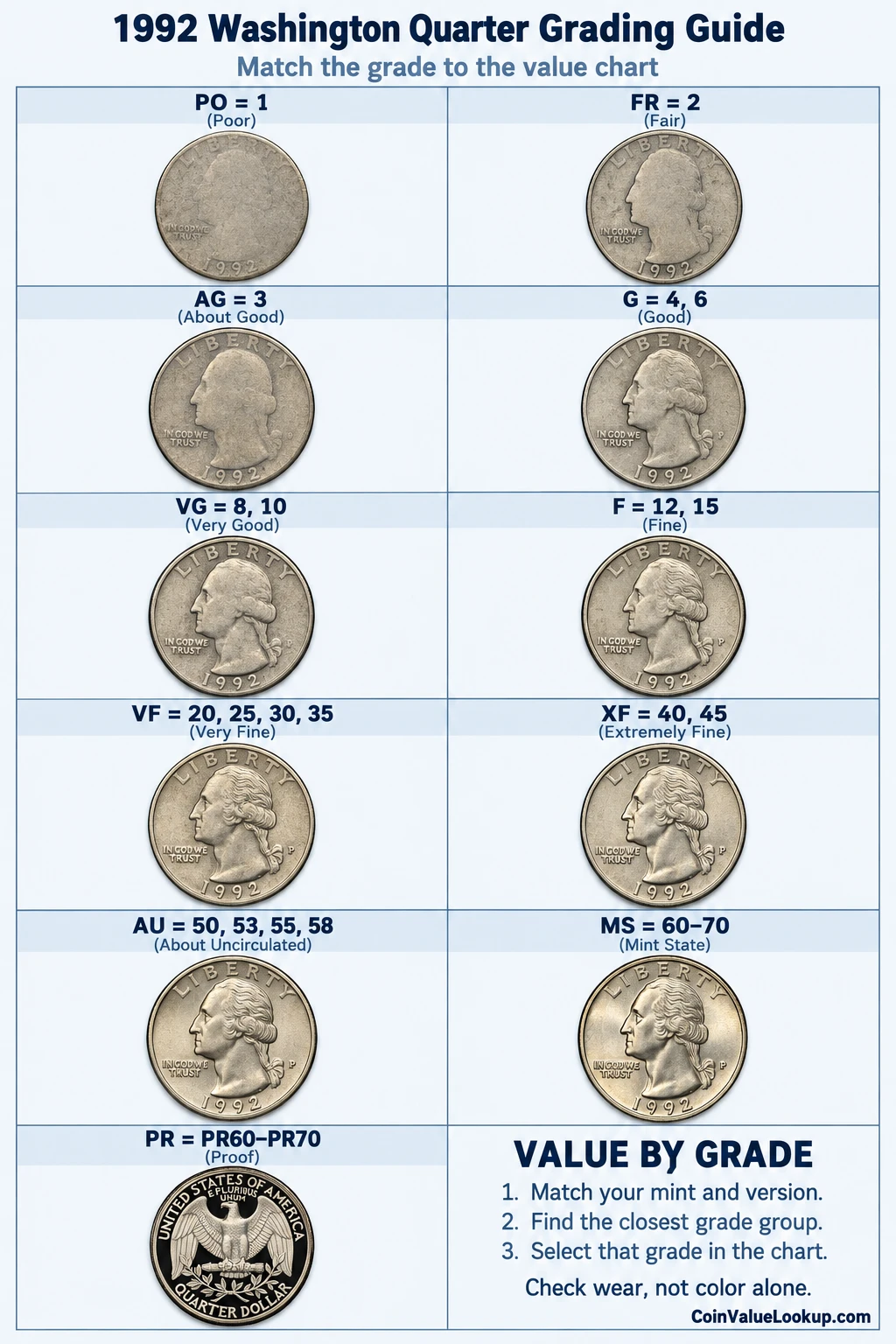
The key wear points on a Washington quarter are the hair above the ear, the cheek and jawline on the obverse, and the eagle's breast feathers on the reverse. On a high-grade coin, full original luster covers those areas with no rub or dull spots.
Compare your coin to the reference image to gauge where it falls.
Contact marks and hairlines count against the grade even when luster is strong. A coin that has been cleaned or polished will show unnatural brightness and fine scratches under magnification — that hurts value significantly.
For proofs, remember that "proof" describes how the coin was made, not how well it has survived. Deep Cameo (DCAM) refers to the contrast between frosted devices and mirror fields; it is a separate designation from the metal composition.
Step 3: Check 1992 Washington Quarter Value by Mint and Version
1992 Washington Quarter — P
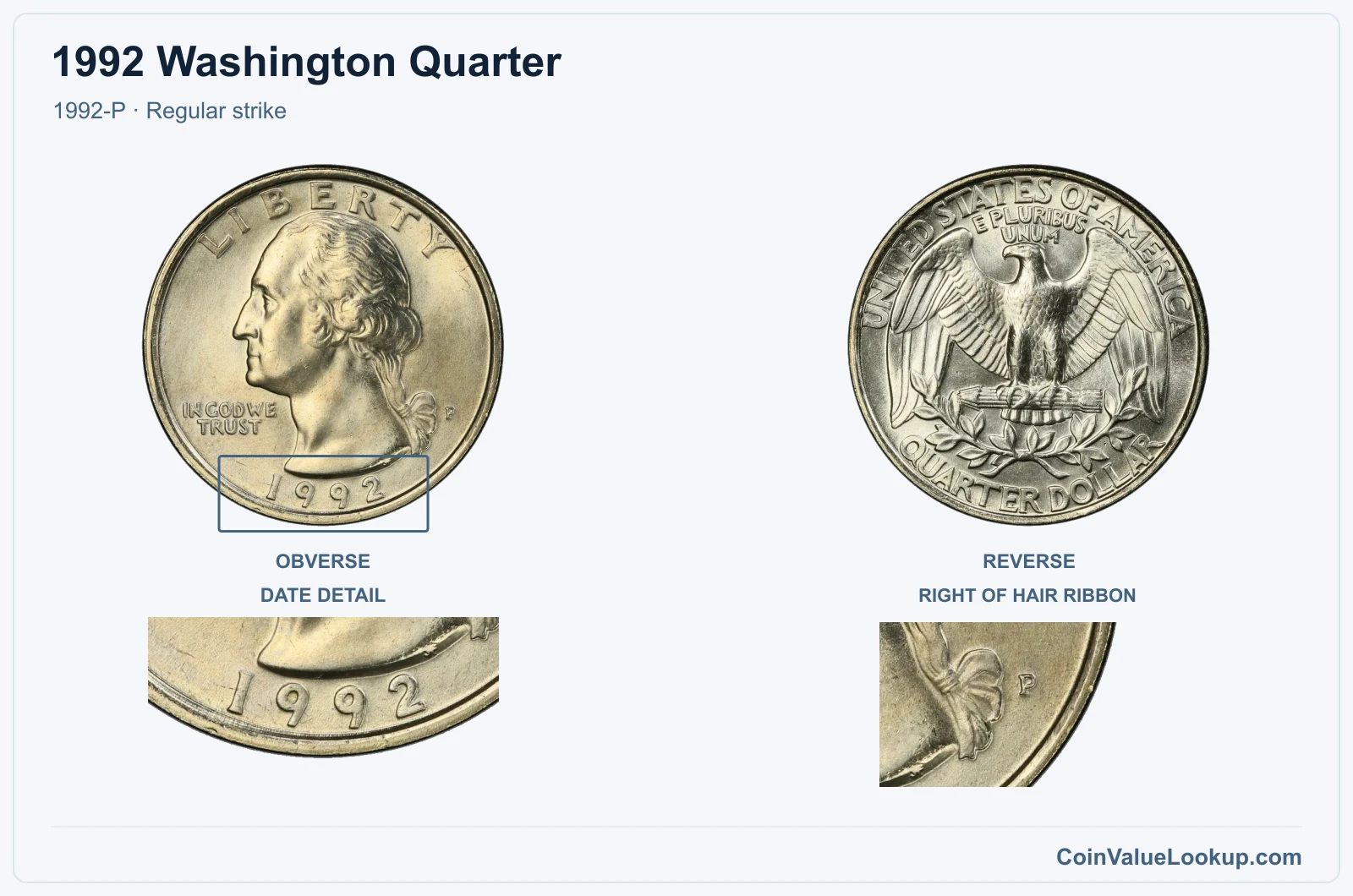
The 1992-P Washington quarter is a copper-nickel clad business strike from Philadelphia. It carries a small "P" mintmark to the right of the ponytail ribbon.
These were made in large numbers for everyday commerce, so circulated examples trade at face value.
Condition is what moves the needle. A USA Coin Book guide estimate puts the 1992-P at about $19 in MS65.
To reach that level, the coin needs full original luster with minimal bag marks, especially across the cheek and hair above the ear.
| Range | Grade | Price | Auction Records | Appraisal |
|---|---|---|---|---|
| PO | PO 1 | — | Coin Identifier | |
| FR | FR 2 | — | Coin Identifier | |
| AG | AG 3 | — | Coin Identifier | |
| G | G 4 | — | Coin Identifier | |
| G 6 | — | Coin Identifier | ||
| VG | VG 8 | — | Coin Identifier | |
| VG 10 | — | Coin Identifier | ||
| F | F 12 | — | Coin Identifier | |
| F 15 | — | Coin Identifier | ||
| VF | VF 20 | — | Coin Identifier | |
| VF 25 | — | Coin Identifier | ||
| VF 30 | — | Coin Identifier | ||
| VF 35 | — | Coin Identifier | ||
| XF | XF 40 | — | Coin Identifier | |
| XF 45 | — | Coin Identifier | ||
| AU | AU 50 | — | Coin Identifier | |
| AU 53 | — | Coin Identifier | ||
| AU 55 | — | Coin Identifier | ||
| AU 58 | — | Coin Identifier | ||
| MS | MS 60 | — | Coin Identifier | |
| MS 61 | — | Coin Identifier | ||
| MS 62 | — | Coin Identifier | ||
| MS 63 | — | Coin Identifier | ||
| MS 64 | Coin Identifier | |||
| MS 65 | Coin Identifier | |||
| MS 66 | Coin Identifier | |||
| MS 67 | Coin Identifier | |||
| MS 68 | — | Coin Identifier | ||
| MS 69 | — | — | — | |
| MS 70 | — | — | — |
1992 Washington Quarter — D
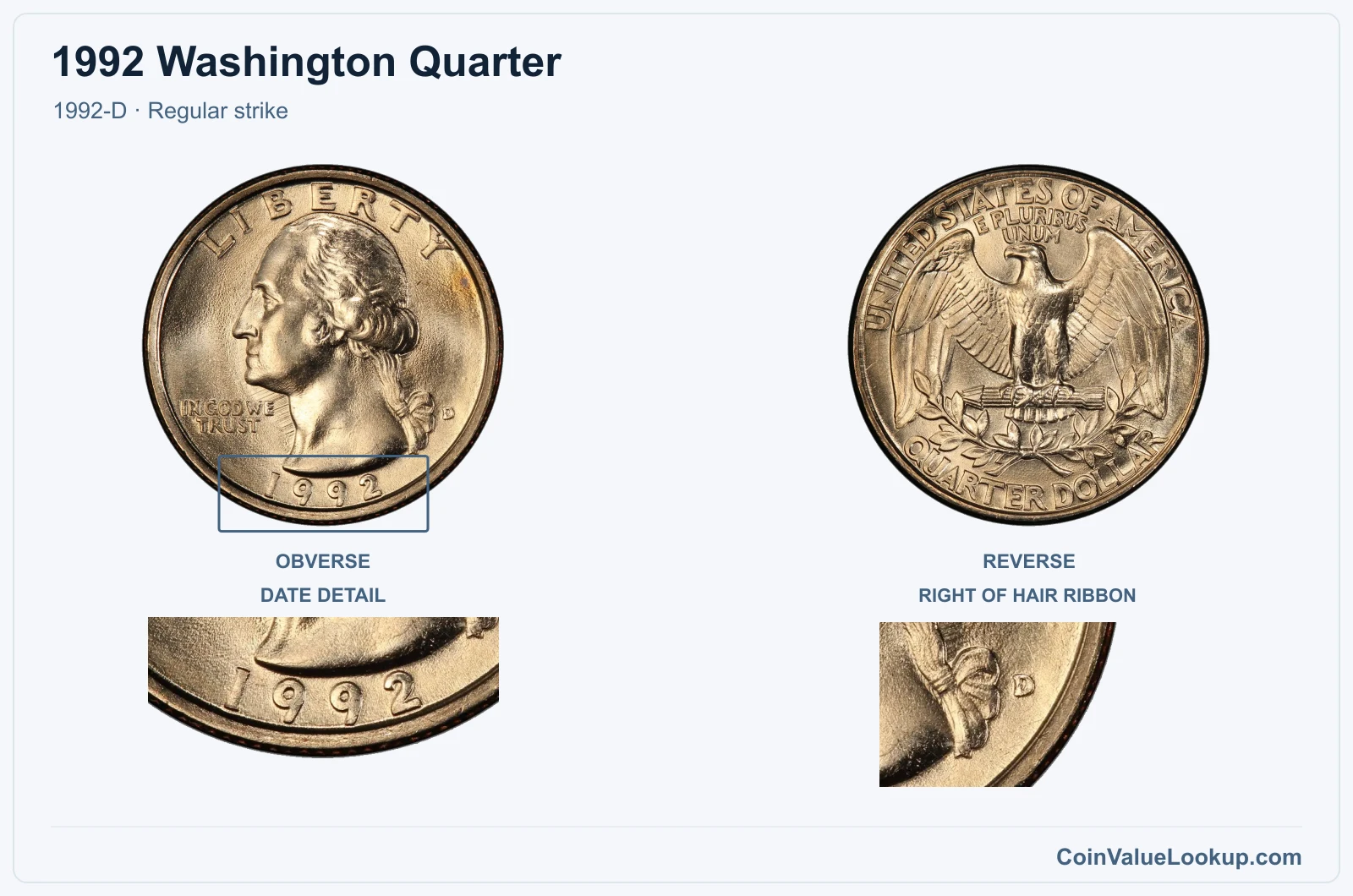
Denver's 1992-D quarter is the same copper-nickel clad composition as the P, identified by the "D" mintmark beside the ponytail ribbon. Like the Philadelphia issue, circulated pieces are worth 25 cents.
In MS65, the USA Coin Book guide estimate is approximately $19. Finding one that clean from pocket change is a long shot, but rolls and mint sets from the era sometimes yield gems.
Look for undisturbed luster and minimal contact marks on Washington's cheek and the eagle's breast.
Coin Value Lookup is a handy starting point if you want to check guide values for other dates and denominations in the Washington quarter series.
| Range | Grade | Price | Auction Records | Appraisal |
|---|---|---|---|---|
| PO | PO 1 | — | Coin Identifier | |
| FR | FR 2 | — | Coin Identifier | |
| AG | AG 3 | — | Coin Identifier | |
| G | G 4 | — | Coin Identifier | |
| G 6 | — | Coin Identifier | ||
| VG | VG 8 | — | Coin Identifier | |
| VG 10 | — | Coin Identifier | ||
| F | F 12 | — | Coin Identifier | |
| F 15 | — | Coin Identifier | ||
| VF | VF 20 | — | Coin Identifier | |
| VF 25 | — | Coin Identifier | ||
| VF 30 | — | Coin Identifier | ||
| VF 35 | — | Coin Identifier | ||
| XF | XF 40 | — | Coin Identifier | |
| XF 45 | — | Coin Identifier | ||
| AU | AU 50 | — | Coin Identifier | |
| AU 53 | — | Coin Identifier | ||
| AU 55 | — | Coin Identifier | ||
| AU 58 | — | Coin Identifier | ||
| MS | MS 60 | — | Coin Identifier | |
| MS 61 | — | Coin Identifier | ||
| MS 62 | — | Coin Identifier | ||
| MS 63 | Coin Identifier | |||
| MS 64 | Coin Identifier | |||
| MS 65 | Coin Identifier | |||
| MS 66 | Coin Identifier | |||
| MS 67 | Coin Identifier | |||
| MS 68 | — | Coin Identifier | ||
| MS 69 | — | — | — | |
| MS 70 | — | — | — |
1992 Washington Quarter — S Proof
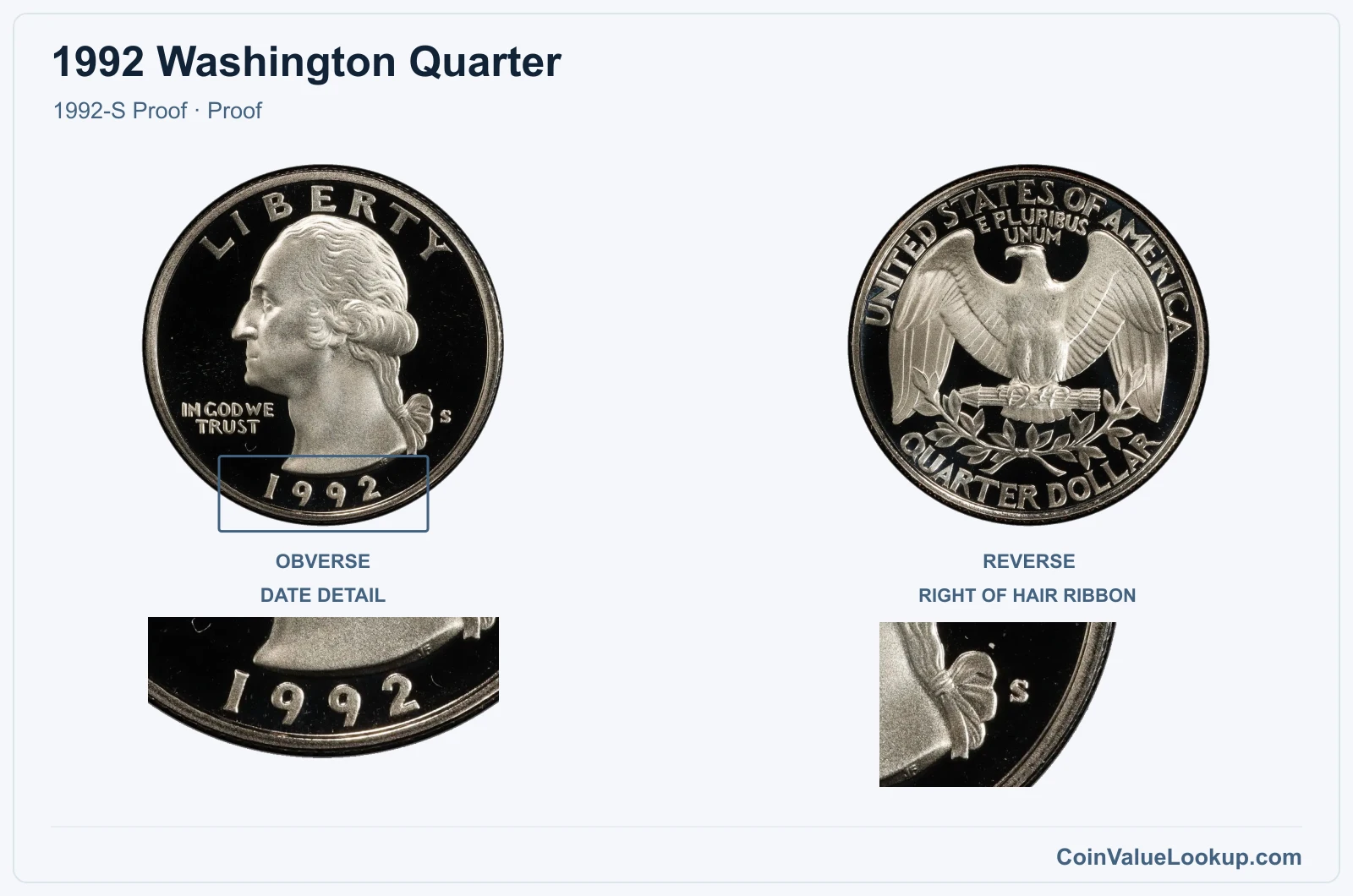
The 1992-S clad proof is a copper-nickel clad coin struck at San Francisco for collector sets. It has the "S" mintmark and mirror-finish fields.
A USA Coin Book guide estimate places it around $4.96 in PR65.
This is the less expensive of the two S-mint proofs. Because the mintmark alone does not reveal the metal, you need to check the edge for a copper stripe or weigh the coin.
The clad proof weighs about 5.67 grams. Original proof-set packaging confirms the clad identity.
Deep Cameo contrast, if present, is a separate attribute from the metal type and can affect desirability.
| Range | Grade | Price | Auction Records | Appraisal |
|---|---|---|---|---|
| PR | PR 1 | — | Coin Identifier | |
| PR 2 | — | Coin Identifier | ||
| PR 3 | — | Coin Identifier | ||
| PR 4 | — | Coin Identifier | ||
| PR 6 | — | Coin Identifier | ||
| PR 8 | — | Coin Identifier | ||
| PR 10 | — | Coin Identifier | ||
| PR 12 | — | Coin Identifier | ||
| PR 15 | — | Coin Identifier | ||
| PR 20 | — | Coin Identifier | ||
| PR 25 | — | Coin Identifier | ||
| PR 30 | — | Coin Identifier | ||
| PR 35 | — | Coin Identifier | ||
| PR 40 | — | Coin Identifier | ||
| PR 45 | — | Coin Identifier | ||
| PR 50 | — | Coin Identifier | ||
| PR 53 | — | Coin Identifier | ||
| PR 55 | — | Coin Identifier | ||
| PR 58 | — | Coin Identifier | ||
| PR 60 | — | Coin Identifier | ||
| PR 61 | — | Coin Identifier | ||
| PR 62 | — | Coin Identifier | ||
| PR 63 | — | Coin Identifier | ||
| PR 64 | — | Coin Identifier | ||
| PR 65 | — | Coin Identifier | ||
| PR 66 | — | Coin Identifier | ||
| PR 67 | — | Coin Identifier | ||
| PR 68 | Coin Identifier | |||
| PR 69 | Coin Identifier | |||
| PR 70 | Coin Identifier |
1992 Washington Quarter — S Silver Proof
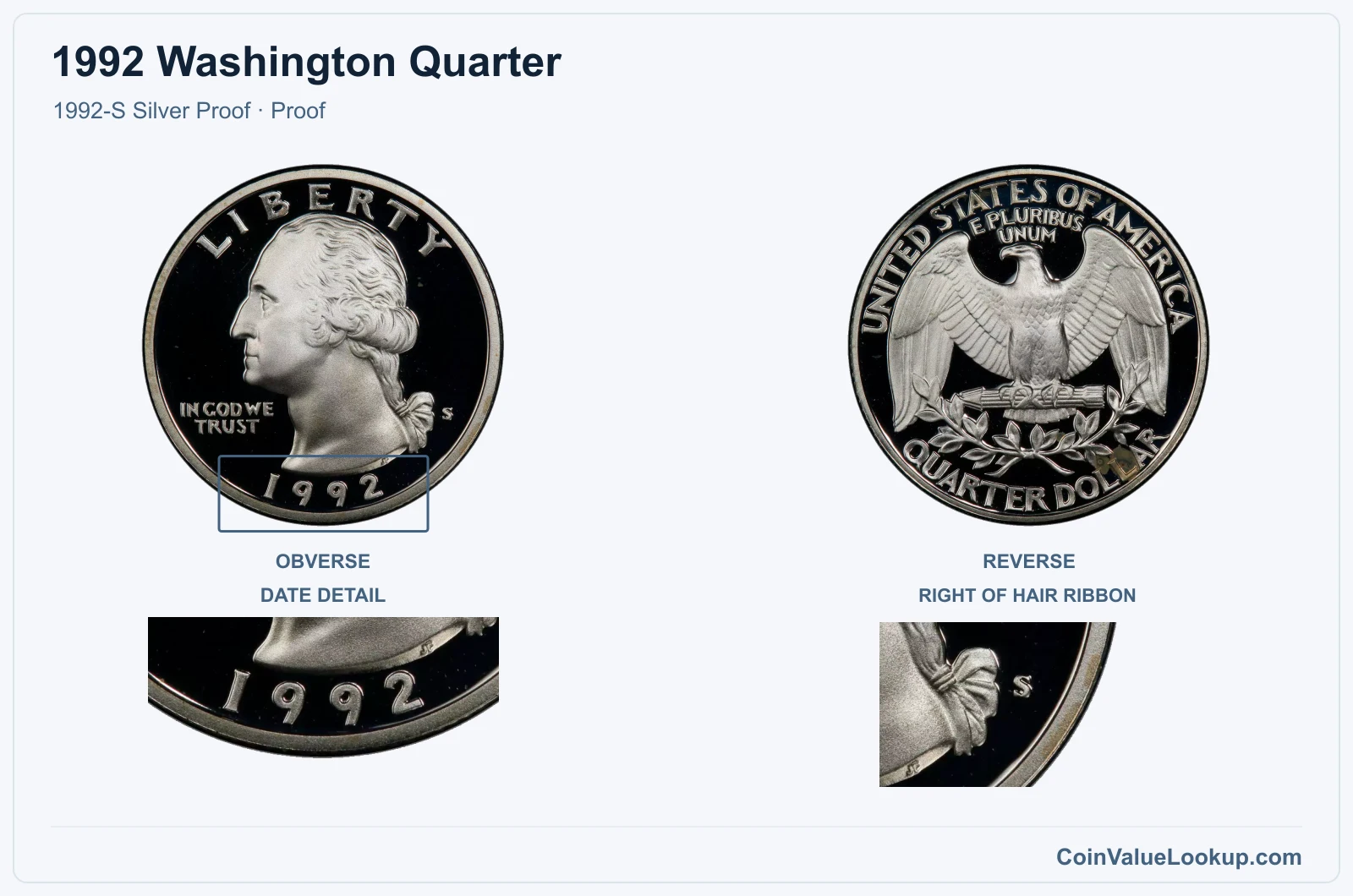
The 1992-S silver proof brought back 90% silver composition for the first time since 1964. It weighs approximately 6.25 grams — PCGS rounds the catalog weight to 6.30 grams — and has no copper stripe visible on the edge.
This is a normal collector issue sold in the 1992 Silver Proof Set, not a wrong-planchet error. A USA Coin Book guide estimate is about $21 in PR65, and that figure can shift with the silver market.
Packaging, authenticated slabs, weight, and edge inspection are the reliable ways to confirm you have the silver version rather than the clad proof. Do not assume silver based on the S mintmark alone.
| Range | Grade | Price | Auction Records | Appraisal |
|---|---|---|---|---|
| PR | PR 1 | — | Coin Identifier | |
| PR 2 | — | Coin Identifier | ||
| PR 3 | — | Coin Identifier | ||
| PR 4 | — | Coin Identifier | ||
| PR 6 | — | Coin Identifier | ||
| PR 8 | — | Coin Identifier | ||
| PR 10 | — | Coin Identifier | ||
| PR 12 | — | Coin Identifier | ||
| PR 15 | — | Coin Identifier | ||
| PR 20 | — | Coin Identifier | ||
| PR 25 | — | Coin Identifier | ||
| PR 30 | — | Coin Identifier | ||
| PR 35 | — | Coin Identifier | ||
| PR 40 | — | Coin Identifier | ||
| PR 45 | — | Coin Identifier | ||
| PR 50 | — | Coin Identifier | ||
| PR 53 | — | Coin Identifier | ||
| PR 55 | — | Coin Identifier | ||
| PR 58 | — | Coin Identifier | ||
| PR 60 | — | Coin Identifier | ||
| PR 61 | — | Coin Identifier | ||
| PR 62 | — | Coin Identifier | ||
| PR 63 | — | Coin Identifier | ||
| PR 64 | — | Coin Identifier | ||
| PR 65 | — | Coin Identifier | ||
| PR 66 | — | Coin Identifier | ||
| PR 67 | — | Coin Identifier | ||
| PR 68 | — | Coin Identifier | ||
| PR 69 | Coin Identifier | |||
| PR 70 | Coin Identifier |
1992 Washington Quarter Error List
1. 1992 Washington Quarter — Broadstrike
A broadstrike happens when the collar die — the ring that constrains the coin's edge — fails to engage during striking. The result is a coin with a wider-than-normal outline, a distorted or missing rim, and an edge that looks nothing like a standard quarter.
This error has been documented on the 1992-D quarter. A Heritage auction in December 2008 sold an ICG-graded MS63 example for $11.
To verify one, compare its outline and edge side-by-side with a normal 1992 quarter. The design should still be centered and fully struck, just expanded.
Watch out for coins that have been filed, hammered, or chemically altered after leaving the mint. Odd color, a rough rim, or a misshapen edge alone is not enough.
Original strike surfaces, a matching date, and proper attribution are all necessary.
2. 1992 Washington Quarter — Struck on Dime-Thickness Stock
This unusual error involves a 1992-P quarter struck on planchet stock that has quarter diameter but only dime thickness, weighing a reported 4.3 grams versus the normal 5.67 grams. It is not the same as a quarter struck on a small dime-sized blank.
The coin shows a soft strike because the thinner stock could not fill the dies completely, and the mintmark is not readily visible.
A Heritage auction in February 2005 sold an NGC MS64 example for $51; the catalog noted a pinscratch on the coin. If you suspect you have one, photograph the edge thickness next to a normal quarter and weigh it carefully.
An underweight coin alone does not prove this error — heavy wear, chemical thinning, or a simple weak strike can mimic it. Third-party authentication is the practical way to confirm the stock type.
3. 1992 Washington Quarter — Doubled Die
Doubled die errors on 1992 quarters have been reported. This type of error shows consistent doubling in the design elements — look for separation, notching, or shelf-like doubling on lettering or design features when you compare against a normal coin.
The specific mint and die position can vary, so examine your coin carefully under magnification. Condition, the strength of visible doubling, and the particular die involved all affect value.
No specific price range is adopted here because those factors vary widely.
Do not confuse a doubled die with machine doubling, which produces flat, shelf-like distortion without the raised separation of a true hub-doubling error. Light reflections and post-mint impressions can also fool you at first glance.
4. 1992 Washington Quarter — Off-Center Strike
Off-center strikes on 1992 quarters occur when the planchet is not properly seated between the dies. The result is a displaced design with an unstruck crescent along part of the rim.
The most collectible examples still show the full date.
Value depends on how far off center the strike landed, whether the date is visible, and the coin's overall condition. No specific price range is adopted for this error because those variables swing widely.
Do not confuse an off-center strike with a clipped planchet, a one-sided die misalignment, or post-mint damage from flattening. A genuine off-center coin will have an unstruck blank area that follows a smooth crescent and original planchet surface texture, not tool marks or deformation.
5. 1992 Washington Quarter — Die Crack / Die Chip
Die cracks and die chips on 1992 quarters show up as raised lines or small raised blobs on the coin's surface. These come from fractures in the steel die itself — every coin struck by that damaged die carries the same mark in the same place.
A crack that connects to the rim can produce a raised blob called a cud. Interior cracks appear as thin raised lines crossing the design.
The size, location, and prominence all influence collector interest, and no specific price range is adopted here because the variety matters.
Look carefully: incuse scratches, corrosion spots, or foreign material stuck to the surface can mimic a die crack. A genuine crack is raised above the field, consistent in profile, and repeatable across multiple coins struck from the same die.
6. 1992 Washington Quarter — Missing Clad Layer
A missing clad layer error means one of the outer nickel-alloy layers was absent from the planchet before striking. On a 1992 quarter, this can expose a copper-colored surface on the affected side.
Compare the suspect face, the edge, and the weight against a normal clad quarter. A coin missing one clad layer will be noticeably lighter than the standard 5.67 grams, and the edge will look different where the layer is absent.
Condition, which side is affected, and the degree of the missing layer all influence value. No specific price is adopted here.
Be cautious: toning, amateur plating, corrosion, and post-mint surface removal can all produce a coppery look. The key distinction is that a genuine missing-clad error shows a consistent surface with proper strike detail, not chemical damage or uneven discoloration.
7. 1992 Washington Quarter — Struck-Through Error
A struck-through error happens when foreign material — often grease or a small object — gets between the die and the planchet during striking. On 1992 quarters, grease-filled dies are the most commonly reported version, producing a localized area of missing or softened design detail.
Look for a smooth depression or blank patch where design elements should appear. A retained struck-through, where the object stayed embedded, leaves a distinct impression.
These are different things and worth describing separately if you spot one.
Value depends on the size, location, and visibility of the affected area. No specific price is adopted because the range is wide.
Ordinary wear, scratches, cleaning, and typical weak strikes can all mimic a struck-through at first glance. A genuine example has a clearly defined area of missing detail surrounded by normal, fully struck surfaces.