1926 Wheat Penny Coin Value: How Much Is It Worth?
A 1926 Wheat Penny can range from around $0.30 in well-worn Good-4 condition up to roughly $612 at MS63, depending on which mint struck it. Those anchors span the three mint branches — Philadelphia, Denver and San Francisco — so your specific coin's value depends on its mintmark, grade and surface quality.
Proofs were not produced this year, and major varieties or errors are priced separately from these ordinary guide figures. Original surfaces, color and the absence of cleaning or corrosion all affect what a buyer will actually pay.
Fast Way to Identify Your 1926 Wheat Penny
The quickest way to start figuring out what you have is to upload clear photos of both the front and back of your coin. A close-up of the area below the date is especially helpful for reading (or confirming the absence of) a mintmark.
These images allow for a preliminary identification of your coin's mint, general condition and any obvious features worth investigating further.
1926 Wheat Penny Value
Upload both sides of your 1926 Wheat Penny.
Front Obverse
Upload photo
Back Reverse
Upload photo
Which 1926 Wheat Penny Versions Are Worth Money?
- The 1926-S (San Francisco) carries the highest ordinary guide values, listed at about $12 in Good-4 and $612 at MS63, because of its lower survival rate in higher grades.
- The 1926-D (Denver) sits in the middle, with guide values of roughly $1.88 in Good-4 and $207 at MS63, making it worth separating from the more common Philadelphia issue.
- A 1926 Philadelphia cent in MS63 condition lists around $15, far below its branch-mates, so mintmark identification is the first step to knowing what you have.
- Collectible errors such as doubled die obverse, off-center strikes or die breaks can add value beyond ordinary guide figures, but each requires individual assessment based on severity and authentication.
Step 1: Identify Your 1926 Wheat Penny Mint Mark and Version
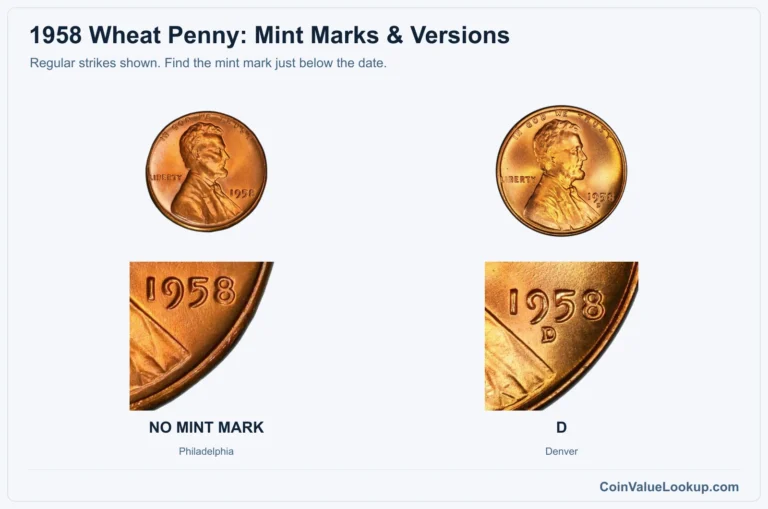
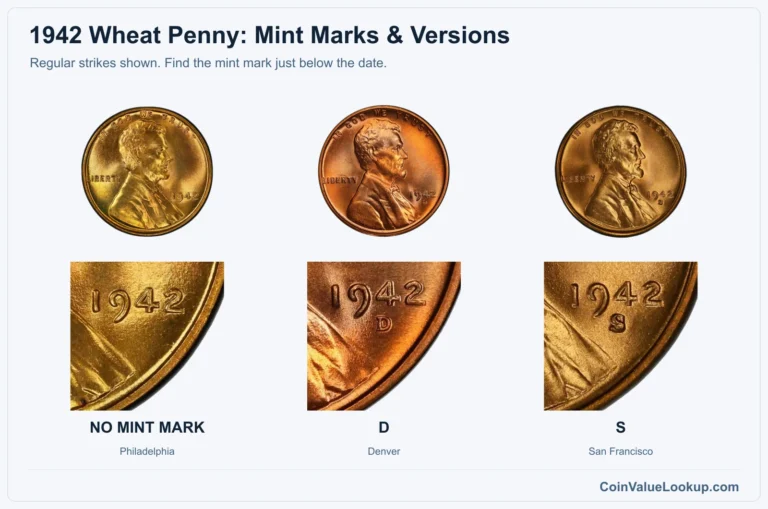
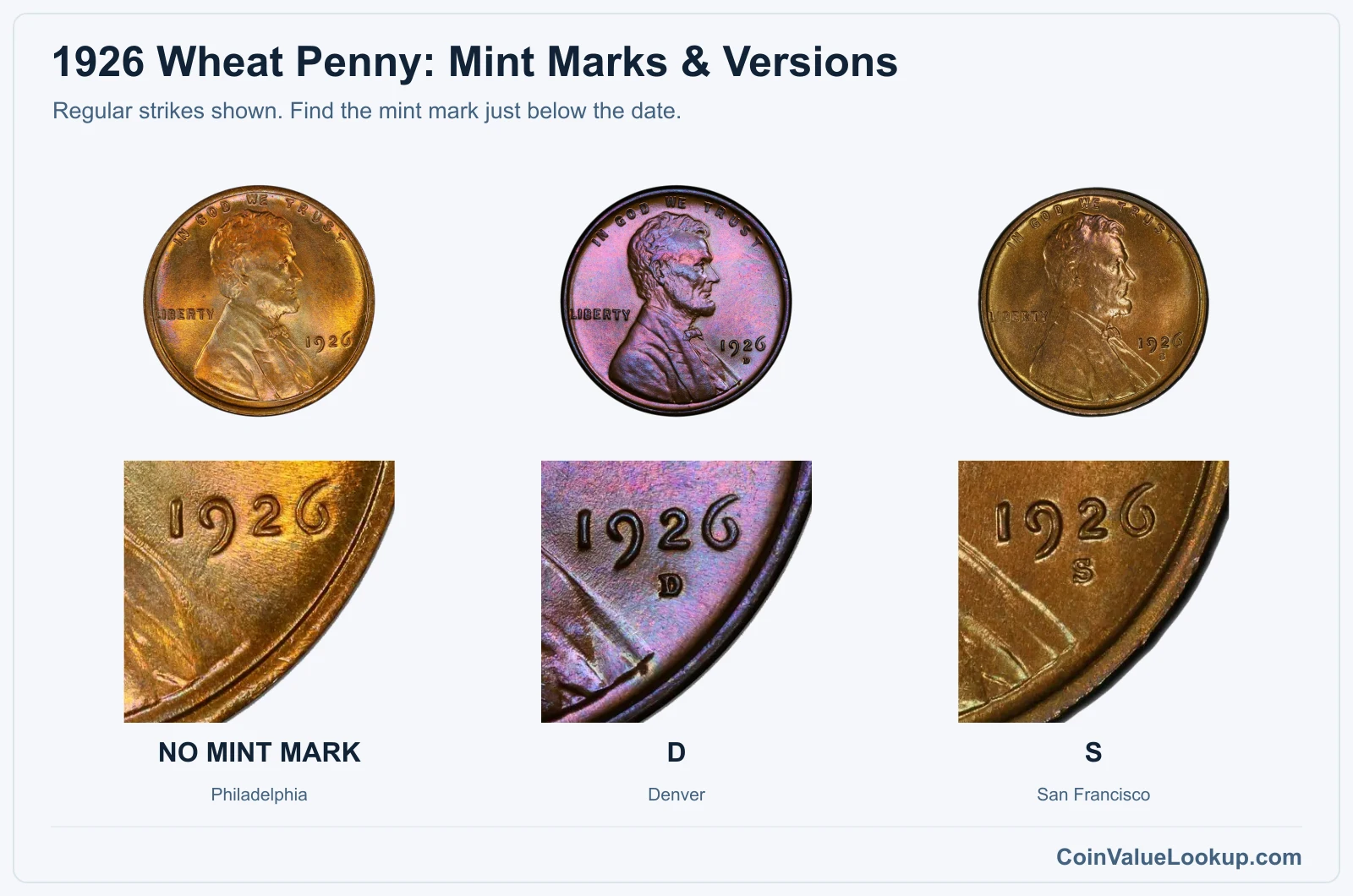
Flip the coin so Lincoln faces you and look just below the date on the obverse. If there is no small letter, you have a Philadelphia strike.
A tiny "D" means Denver, and an "S" means San Francisco. All three mints produced business strikes in 1926; no proof cents were made this year.
Every 1926 cent shares the same design — Lincoln's portrait on the front, two wheat ears framing "ONE CENT" on the back. The composition is 95% copper with 5% tin and zinc, and the coin should weigh about 3.11 grams on a plain (smooth) edge.
A noticeably lighter coin or one with a reeded edge is something else entirely.
The San Francisco issue carries the strongest ordinary guide premium of the three mints. A sharp strike and original copper color matter most on that branch, so look carefully at both the mintmark and the overall surface before assuming your coin matches any particular value.
Step 2: Check Your 1926 Wheat Penny Grade
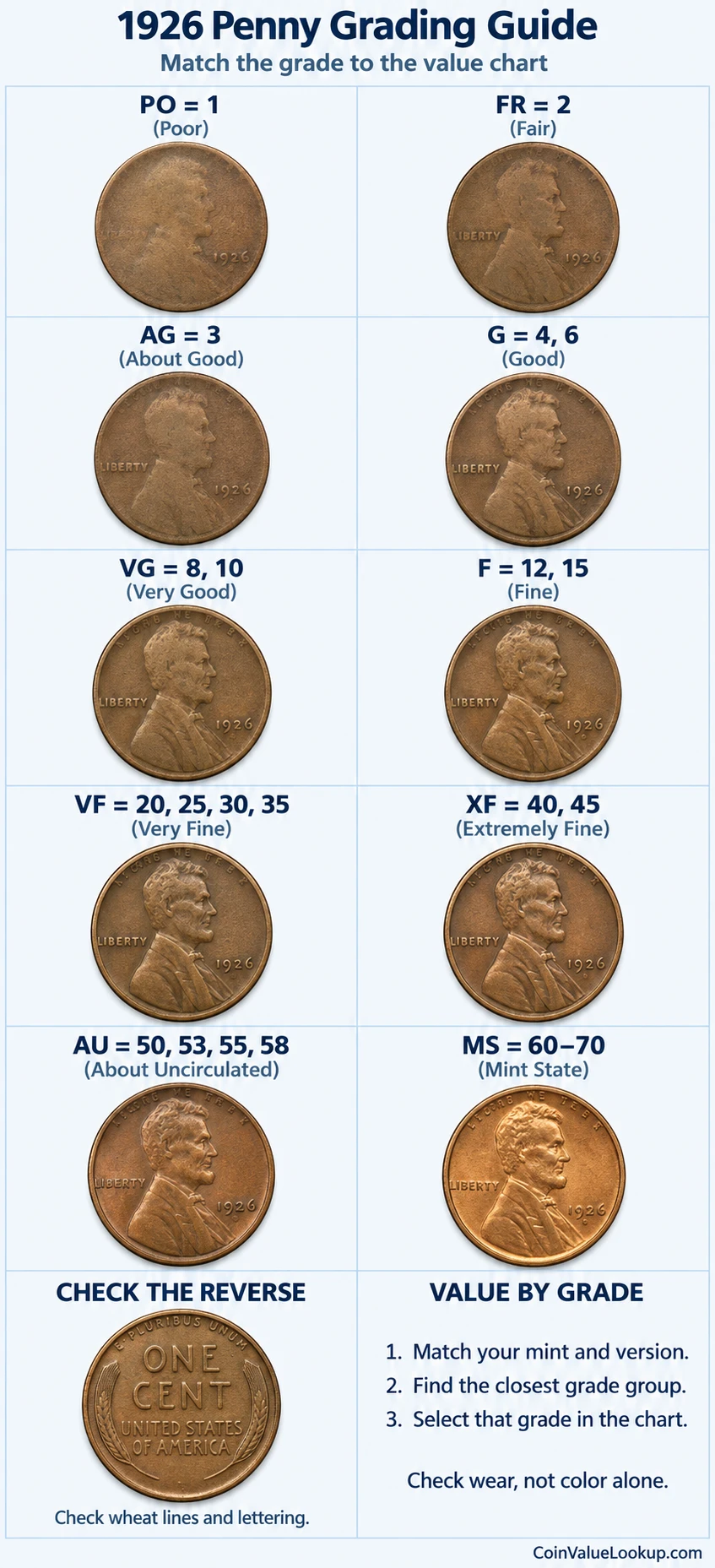
Start with Lincoln's cheekbone and jaw. On a high-grade coin those areas show full, rounded contour with unbroken luster.
As wear progresses, the cheek flattens first, then the jawline softens, and finally the hair detail behind the ear fades. Compare your coin to the grading reference image to see where it falls.
On the reverse, check the individual wheat grain lines and the horizontal lines between the stalks. Crisp separation means minimal wear; mushy, blended lines suggest heavier circulation.
A coin can look "flat" even without wear if the original strike was weak, so compare both sides before deciding.
Color and surface quality are separate from wear. A coin graded the same numeric level can be brown, red-brown, or red, and that color distinction affects desirability.
Spots, corrosion, old cleaning or retoning each lower a coin's appeal independently of its technical grade. Do not assume a bright copper surface is original — sometimes it is the opposite.
Step 3: Check 1926 Wheat Penny Value by Mint and Version
1926 Wheat Penny
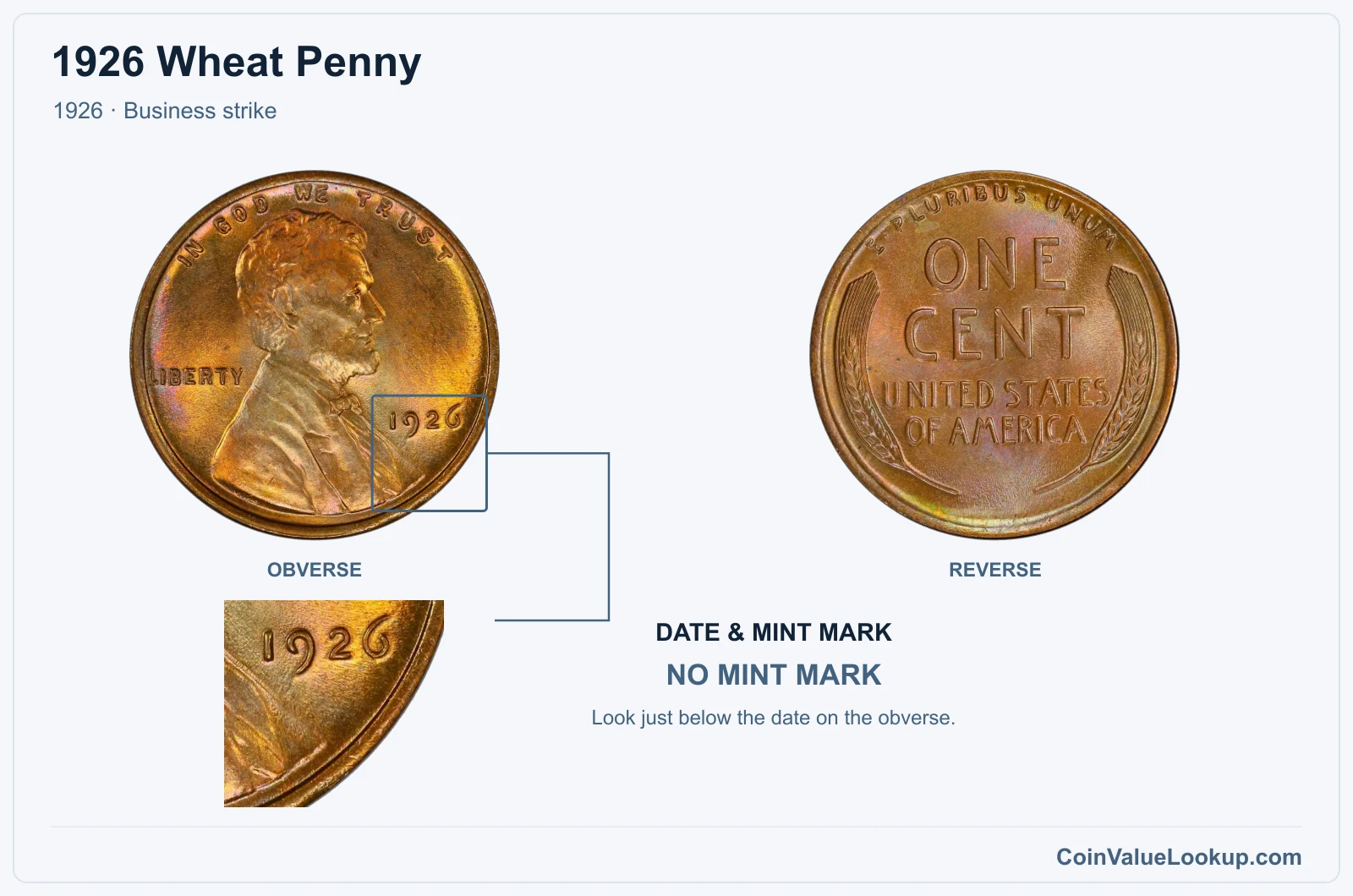
The 1926 Philadelphia cent has no mintmark — the space below the date is blank. This is the most common branch of the three and carries the lowest guide premiums.
In well-circulated Good-4 condition a guide lists it at about $0.30, climbing to around $15 at the MS63 uncirculated level. Because Philadelphia struck the largest quantity, even lightly worn examples are easy to find.
The jump in value really comes with full mint luster and original color; a dull brown uncirculated piece and a blazing original-red piece are different animals even at the same numeric grade.
Coin Value Lookup is a handy starting point if you want to compare this coin with other dates and mints in the Wheat cent series.
| Range | Grade | Price | Auction Records | Appraisal |
|---|---|---|---|---|
| PO | PO 1 | — | Coin Identifier | |
| FR | FR 2 | — | Coin Identifier | |
| AG | AG 3 | — | Coin Identifier | |
| G | G 4 | — | Coin Identifier | |
| G 6 | — | Coin Identifier | ||
| VG | VG 8 | — | Coin Identifier | |
| VG 10 | — | Coin Identifier | ||
| F | F 12 | — | Coin Identifier | |
| F 15 | — | Coin Identifier | ||
| VF | VF 20 | — | Coin Identifier | |
| VF 25 | — | Coin Identifier | ||
| VF 30 | — | Coin Identifier | ||
| VF 35 | — | Coin Identifier | ||
| XF | XF 40 | — | Coin Identifier | |
| XF 45 | — | Coin Identifier | ||
| AU | AU 50 | — | Coin Identifier | |
| AU 53 | Coin Identifier | |||
| AU 55 | — | Coin Identifier | ||
| AU 58 | Coin Identifier | |||
| MS | MS 60 | — | Coin Identifier | |
| MS 61 | — | Coin Identifier | ||
| MS 62 | — | Coin Identifier | ||
| MS 63 | Coin Identifier | |||
| MS 64 | Coin Identifier | |||
| MS 65 | Coin Identifier | |||
| MS 66 | — | — | — | |
| MS 67 | — | — | — | |
| MS 68 | — | — | — | |
| MS 69 | — | — | — | |
| MS 70 | — | — | — |
1926 Wheat Penny — D
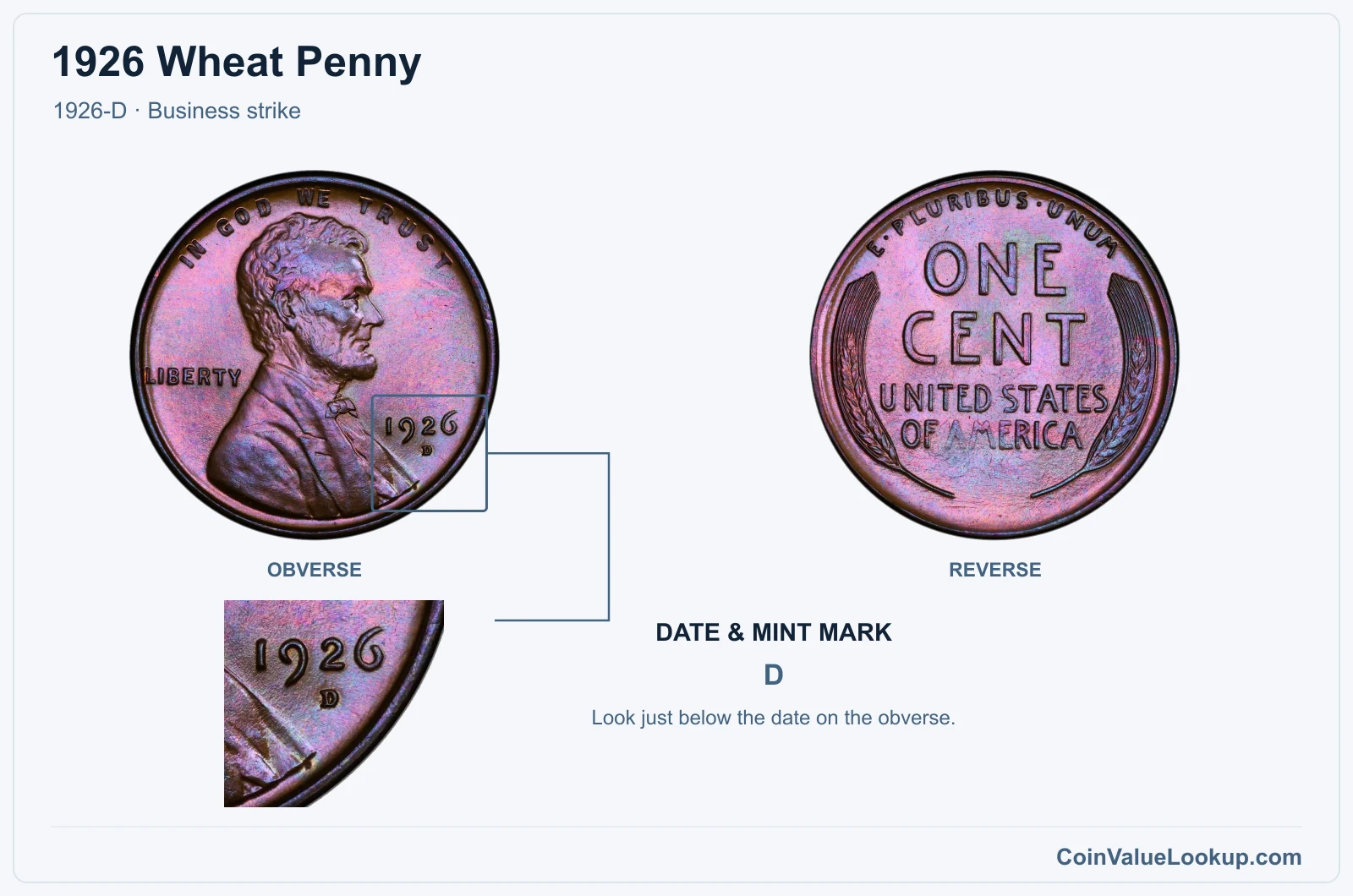
Look for a small "D" mintmark below the date to confirm a Denver strike. The 1926-D lists at roughly $1.88 in Good-4 and around $207 at MS63 — a big step up from the Philadelphia issue, especially in uncirculated grades.
That gap reflects fewer surviving high-grade pieces rather than any design difference.
Strike quality varies on Denver cents of this era. Some came off the press a bit soft in the hair detail, so don't confuse a weak strike for heavy wear.
Check the wheat lines on the reverse for confirmation. Original surfaces with no signs of cleaning will always command stronger offers than a coin that has been scrubbed back to brightness.
| Range | Grade | Price | Auction Records | Appraisal |
|---|---|---|---|---|
| PO | PO 1 | — | Coin Identifier | |
| FR | FR 2 | — | Coin Identifier | |
| AG | AG 3 | — | Coin Identifier | |
| G | G 4 | — | Coin Identifier | |
| G 6 | — | Coin Identifier | ||
| VG | VG 8 | — | Coin Identifier | |
| VG 10 | — | Coin Identifier | ||
| F | F 12 | — | Coin Identifier | |
| F 15 | Coin Identifier | |||
| VF | VF 20 | — | Coin Identifier | |
| VF 25 | — | Coin Identifier | ||
| VF 30 | — | Coin Identifier | ||
| VF 35 | Coin Identifier | |||
| XF | XF 40 | Coin Identifier | ||
| XF 45 | Coin Identifier | |||
| AU | AU 50 | Coin Identifier | ||
| AU 53 | Coin Identifier | |||
| AU 55 | Coin Identifier | |||
| AU 58 | Coin Identifier | |||
| MS | MS 60 | — | Coin Identifier | |
| MS 61 | Coin Identifier | |||
| MS 62 | Coin Identifier | |||
| MS 63 | Coin Identifier | |||
| MS 64 | Coin Identifier | |||
| MS 65 | Coin Identifier | |||
| MS 66 | — | — | — | |
| MS 67 | — | — | — | |
| MS 68 | — | — | — | |
| MS 69 | — | — | — | |
| MS 70 | — | — | — |
1926 Wheat Penny — S
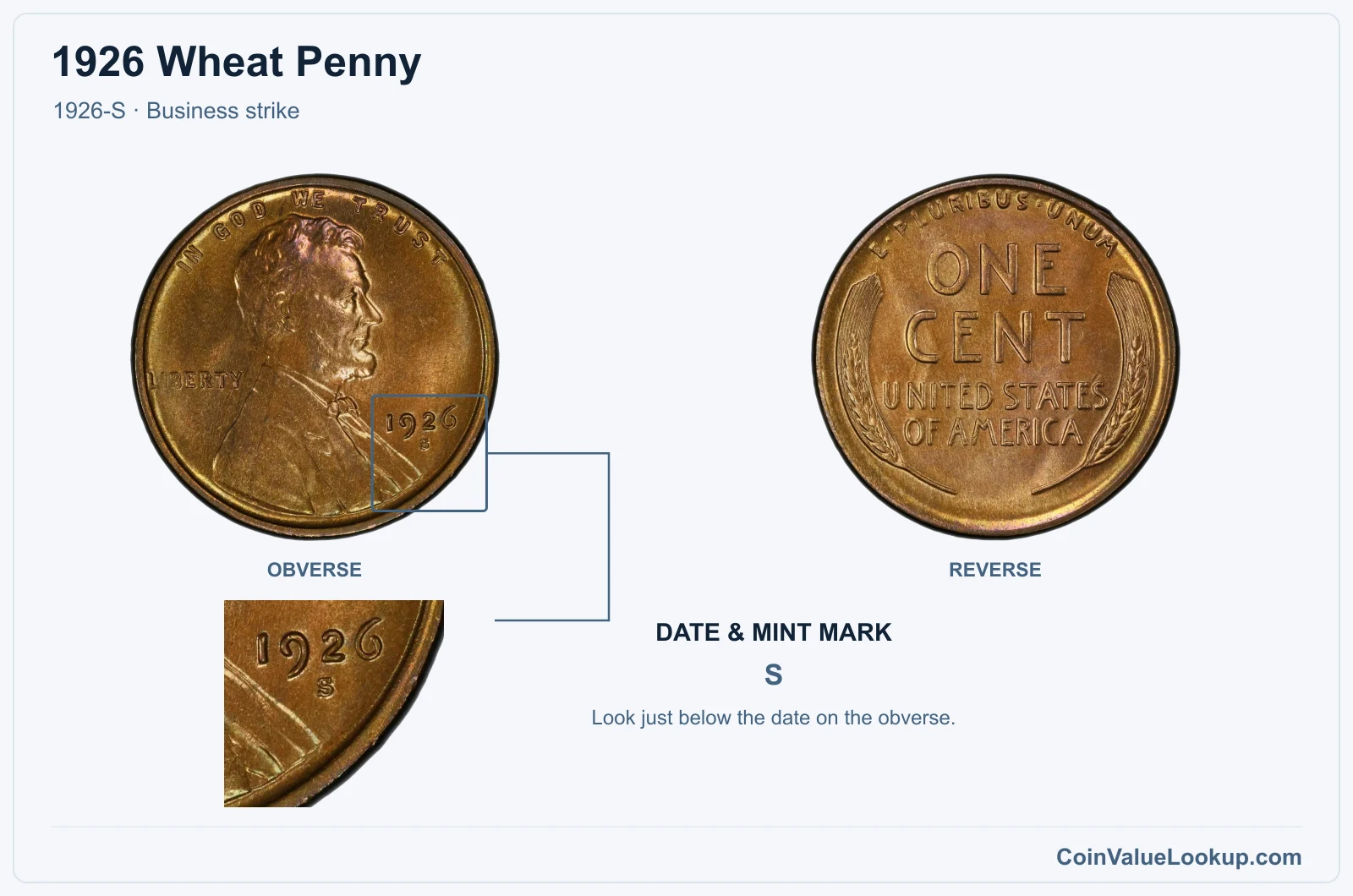
The 1926-S is the key coin of this year. An "S" mintmark below the date identifies it, and guide values reflect the scarcity: about $12 in Good-4 and roughly $612 at MS63.
That MS63 figure is the highest ordinary guide anchor among the three 1926 mints by a wide margin.
San Francisco cents from the mid-1920s are notorious for soft strikes, so finding one with a sharp portrait and fully separated wheat lines is genuinely difficult. Original color matters here more than almost anywhere else in the series at this price level.
A red or red-brown example will draw far more attention than a dark brown piece at the same wear grade. If you think you have one, handle it carefully — fingerprints on original copper surfaces are permanent.
| Range | Grade | Price | Auction Records | Appraisal |
|---|---|---|---|---|
| PO | PO 1 | — | Coin Identifier | |
| FR | FR 2 | — | Coin Identifier | |
| AG | AG 3 | — | Coin Identifier | |
| G | G 4 | — | Coin Identifier | |
| G 6 | — | Coin Identifier | ||
| VG | VG 8 | — | Coin Identifier | |
| VG 10 | — | Coin Identifier | ||
| F | F 12 | — | Coin Identifier | |
| F 15 | — | Coin Identifier | ||
| VF | VF 20 | Coin Identifier | ||
| VF 25 | — | Coin Identifier | ||
| VF 30 | Coin Identifier | |||
| VF 35 | Coin Identifier | |||
| XF | XF 40 | Coin Identifier | ||
| XF 45 | Coin Identifier | |||
| AU | AU 50 | Coin Identifier | ||
| AU 53 | Coin Identifier | |||
| AU 55 | Coin Identifier | |||
| AU 58 | Coin Identifier | |||
| MS | MS 60 | Coin Identifier | ||
| MS 61 | Coin Identifier | |||
| MS 62 | Coin Identifier | |||
| MS 63 | Coin Identifier | |||
| MS 64 | Coin Identifier | |||
| MS 65 | Coin Identifier | |||
| MS 66 | — | — | — | |
| MS 67 | — | — | — | |
| MS 68 | — | — | — | |
| MS 69 | — | — | — | |
| MS 70 | — | — | — |
1926 Wheat Penny Error List
1. 1926 Wheat Penny — Doubled Die Obverse
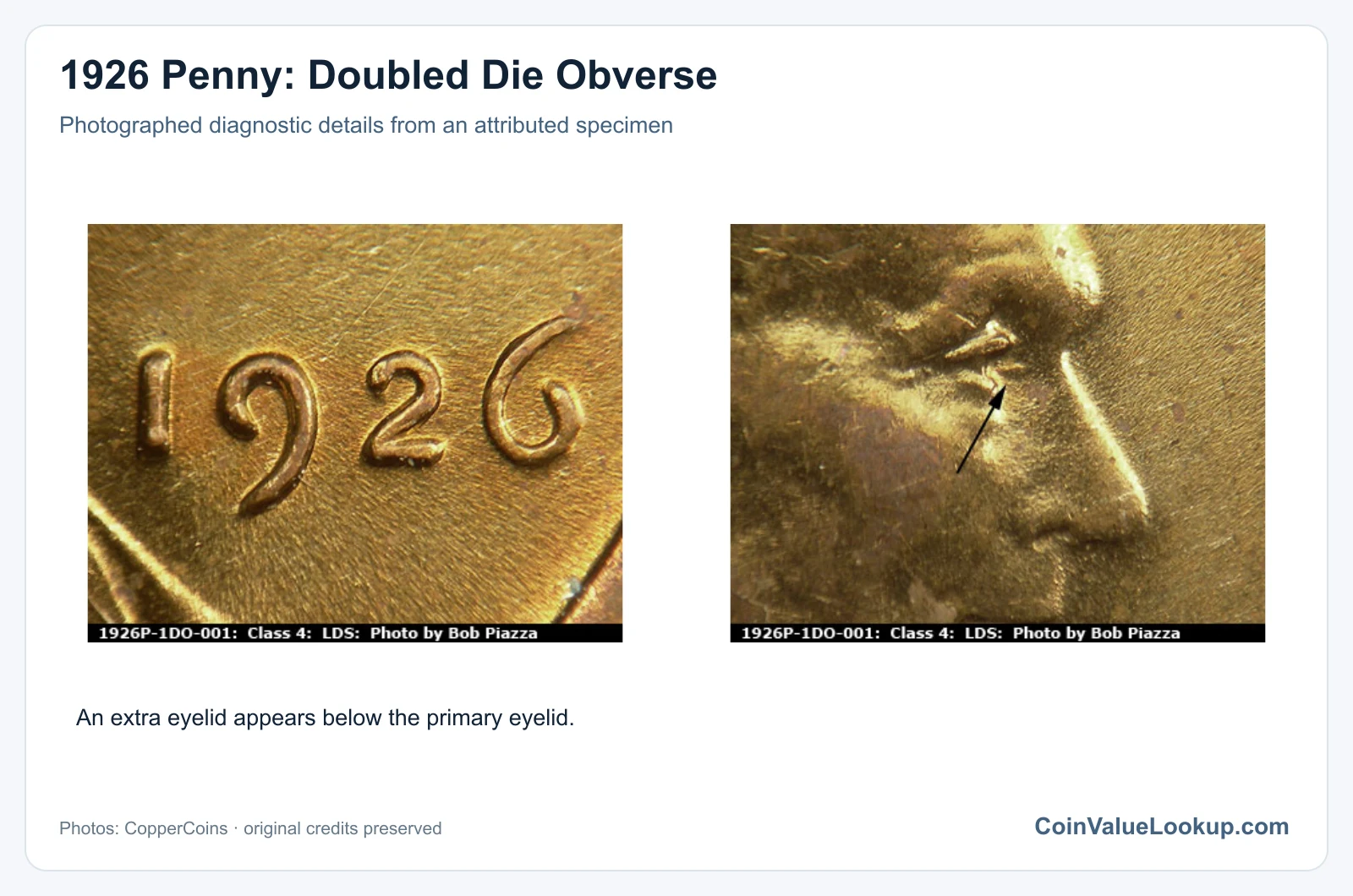
A doubled die obverse on a 1926 Wheat cent shows consistent separation or notching on obverse design elements — typically the lettering in LIBERTY or IN GOD WE TRUST, or the digits of the date. The doubling should look the same on every affected letter and appear as a distinct second image rather than a flat shelf.
The main lookalike is machine doubling, which produces a flat, shelf-like distortion that lacks the rounded separation of a true doubled die. Reflections under certain lighting and worn die contours can also mimic doubling to the untrained eye.
Examine the coin under steady, angled light and compare suspicious letters to the same letters on a normal 1926 cent.
No specific price range is adopted for this variety. Value depends on the authenticated identity of the doubling, its severity and the coin's overall condition, so individual assessment by a grading service is the practical route.
2. 1926 Wheat Penny — BIE Die Break
A BIE die break shows up as a small raised vertical line or blob between the letters B and E in LIBERTY on the obverse. It is caused by a crack or chip in the die that fills with metal during striking, leaving a bump that can loosely resemble the letter "I" — hence the name.
Dirt lodged between the letters, a fine scratch, or a tiny bit of foreign material stuck to the surface can all look similar at first glance. The real thing is raised above the field and has the same metal tone as the surrounding letters.
Tilt the coin under a light: a genuine die break will cast a consistent shadow like any other raised element.
No specific price range is adopted for BIE errors on this date. Each piece is assessed individually based on the size and clarity of the break, the coin's grade and its overall eye appeal.
3. 1926 Wheat Penny — Clipped Planchet
A clipped planchet error means part of the blank was missing before the coin was struck. On a 1926 cent, look for a curved, straight or irregularly shaped absence along the rim where metal is simply gone.
The edge at the clip will usually show a different texture from the rest of the rim — smoother or with subtle flow lines.
A useful confirmation is the Blakesley effect: the area of the rim directly opposite the clip often shows weakness because the blank did not seat properly against the collar. That weakness is hard to fake.
Don't confuse a clip with a filed notch, a deliberate edge cut or corrosion eating into the rim. Post-mint damage tends to leave rough, irregular tool marks and no corresponding weakness on the opposite side.
Value depends on the size of the clip, the coin's grade and authenticated confirmation, so no fixed price range is adopted here.
4. 1926 Wheat Penny — Off-Center Strike
An off-center strike happens when the planchet is not properly seated between the dies, so part of the design is missing and a blank crescent of unstruck metal appears on one side. On a 1926 cent, the key detail collectors want is a visible date — without the date, the coin cannot be attributed to this year and loses most of its premium.
The percentage of off-center displacement matters. A 5% shift is subtle and adds modest interest; a 50% shift with a full date is a dramatic piece that draws serious attention.
Look at the blank crescent: it should have the original planchet edge, not signs of post-mint flattening or a clipped section.
Lookalikes include coins that were simply struck through debris on one side, or pieces that were flattened after leaving the mint. No numerical price range is adopted; each off-center cent is evaluated on its displacement percentage, date visibility, mint attribution and condition.
5. 1926 Wheat Penny — Die Crack / Die Chip
Die cracks appear as thin, raised lines running across part of the coin's surface, while die chips show up as small raised blobs. Both result from fractures in the steel die transferring their shape onto every coin struck afterward.
On a 1926 cent, cracks can run in any direction and may connect the rim to an interior design element or stay entirely within the field.
A crack that reaches the rim and lifts a section of the design is sometimes called a cud — a more dramatic form worth distinguishing from a hairline interior crack. Incuse scratches (pressed into the surface rather than raised), corrosion trails and bits of foreign material stuck to the coin are the usual lookalikes.
The simple test: a genuine die crack or chip is raised, not sunken.
No specific price range is adopted. The value of a cracked-die 1926 cent depends on the size, location and visual impact of the crack, plus the coin's overall grade and authentication status.