2009 Sacagawea Dollar Coin Value: How Much Is It Worth?
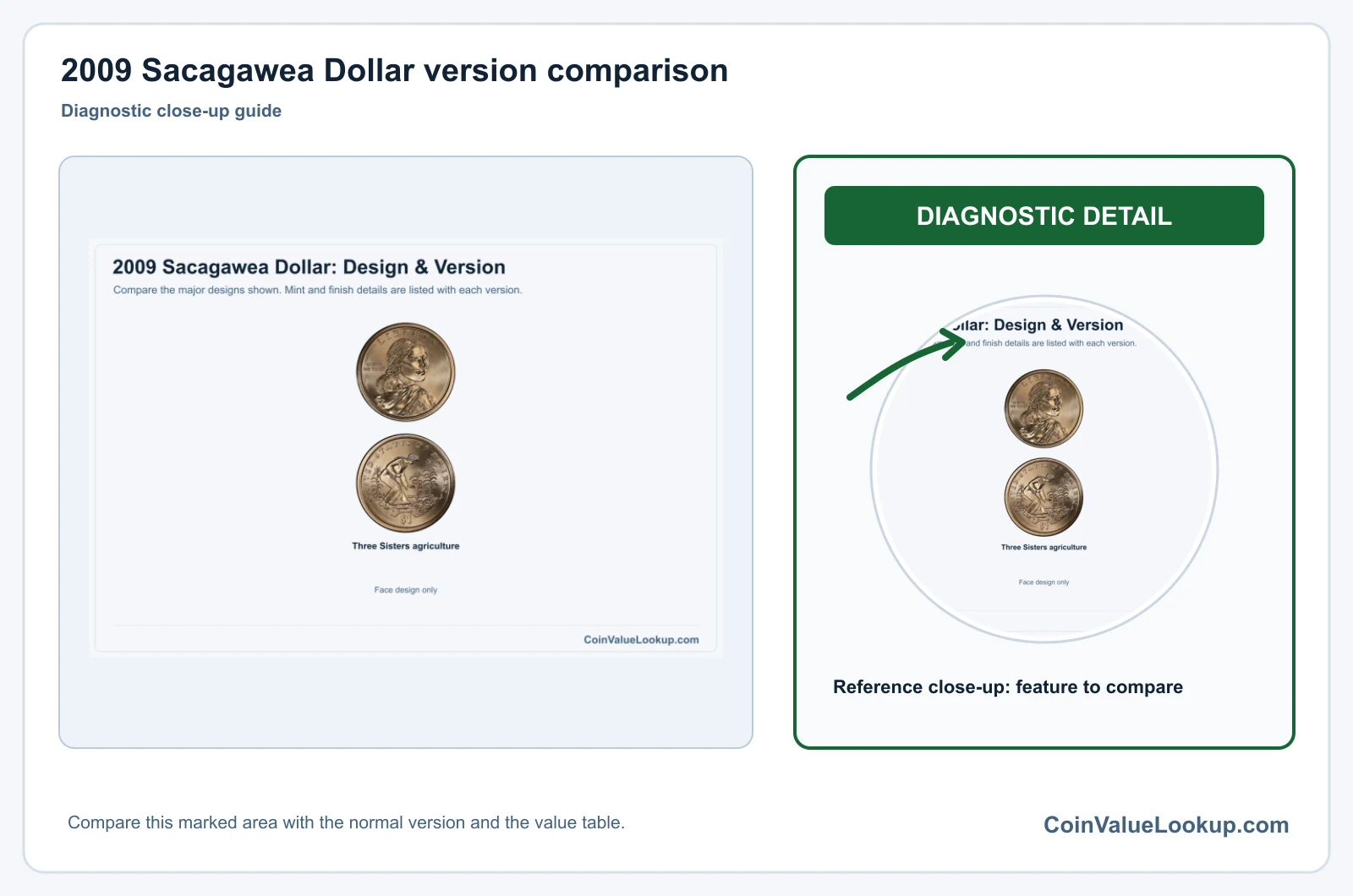
The 2009 Sacagawea Dollar carries the Three Sisters agriculture reverse, and guide estimates for explicitly listed versions range from about $6.25 in MS65 to $10.00 for a proof in PR65 according to USA Coin Book. That is not a guaranteed offer for every coin.
Before assuming value, identify the mint, finish and edge-lettering position, because ordinary circulated examples are still worth face value.
Fast Way to Identify Your 2009 Sacagawea Dollar
Upload clear photos of the front and back of your 2009 Sacagawea Dollar for a preliminary identification. This helps narrow down the mint, finish type and edge-lettering position so you can compare your coin against the right version.
It is not a substitute for professional authentication or grading, but it is a solid starting point.
2009 Sacagawea Dollar Value
Upload both sides of your 2009 Sacagawea Dollar.
Front Obverse
Upload photo
Back Reverse
Upload photo
Which 2009 Sacagawea Dollar Versions Are Worth Money?
- Satin-finish P and D coins (Position A or B) came only in 2009 Mint Sets and are a separate collectible category from standard business strikes.
- The S-mint proof in PR65 carries a guide estimate around $10.00 from USA Coin Book, the highest listed anchor for this year.
- Missing or partial edge lettering errors have been reported for 2009 and can add collector interest; value depends on the specific coin's condition and error visibility.
- Doubled die errors have been reported and are worth checking with magnification against a known normal example.
Step 1: Identify Your 2009 Sacagawea Dollar Mint Mark and Version
Starting in 2009, the date and mintmark moved to the incuse edge lettering, so flip the coin on its side to read them. The mint is either P (Philadelphia), D (Denver) or S (San Francisco proof).
The golden color comes from manganese-brass cladding, not gold content; the composition is 88.5% copper, 6% zinc, 3.5% manganese and 2% nickel, weighing 8.10 grams.
The reverse shows the Three Sisters agriculture design. Every 2009 dollar also has an edge-lettering "position" that matters for collectors: Position A means the obverse faces you when the edge text reads normally from left to right, while Position B means the reverse faces you instead.
Both positions exist for P and D business strikes and their satin counterparts.
Satin-finish coins came only in 2009 Mint Sets. They have a distinctive matte luster that looks different from the slightly shinier business strikes and the mirror-field proofs.
Do not confuse a satin coin with a cleaned or lightly circulated business strike. The S-mint proof has sharp contrasting fields and devices and was sold in proof sets; owning a silver proof set does not make this manganese-brass dollar silver.
Step 2: Check Your 2009 Sacagawea Dollar Grade
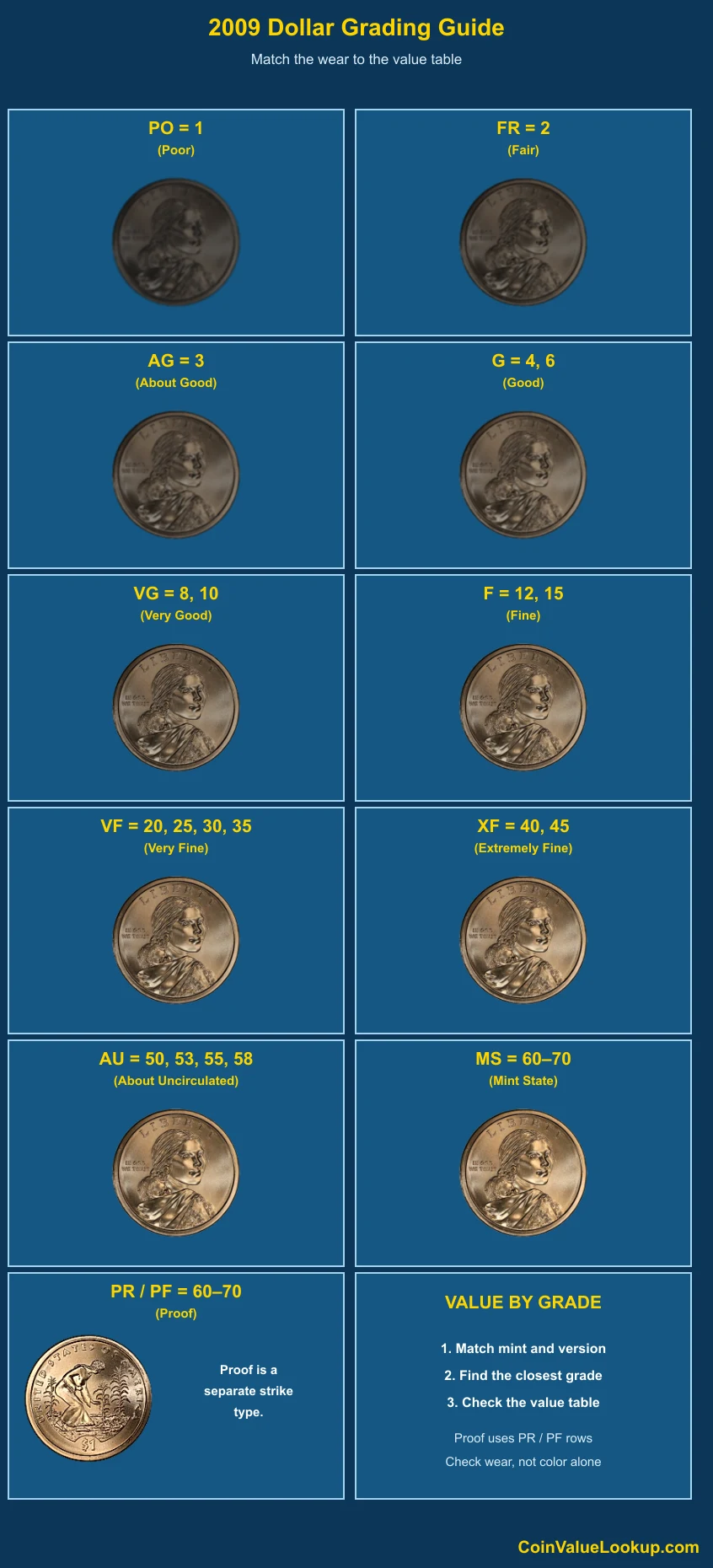
Focus on Sacagawea's cheek, the fine lines in her hair, and the child on her back. Those high points show wear first.
On the reverse, check the raised corn, beans and squash for flattening. A coin with full original detail and no contact marks can reach MS65 or higher.
For satin-finish coins, compare them against other satin specimens, not business strikes. The softer luster is by design, not damage.
Proof coins should show no haze or hairlines in the mirror fields. Use the comparison image to see how circulated, AU and Mint State examples differ from proof and satin finishes.
Cleaned coins, ones with scratches from pocket carry, or pieces with dark spots all grade lower. If the cheek is smooth and featureless, you are likely looking at heavy circulation wear.
Step 3: Check 2009 Sacagawea Dollar Value by Mint and Version
2009 Sacagawea Dollar — P — Three Sisters agriculture — Position A
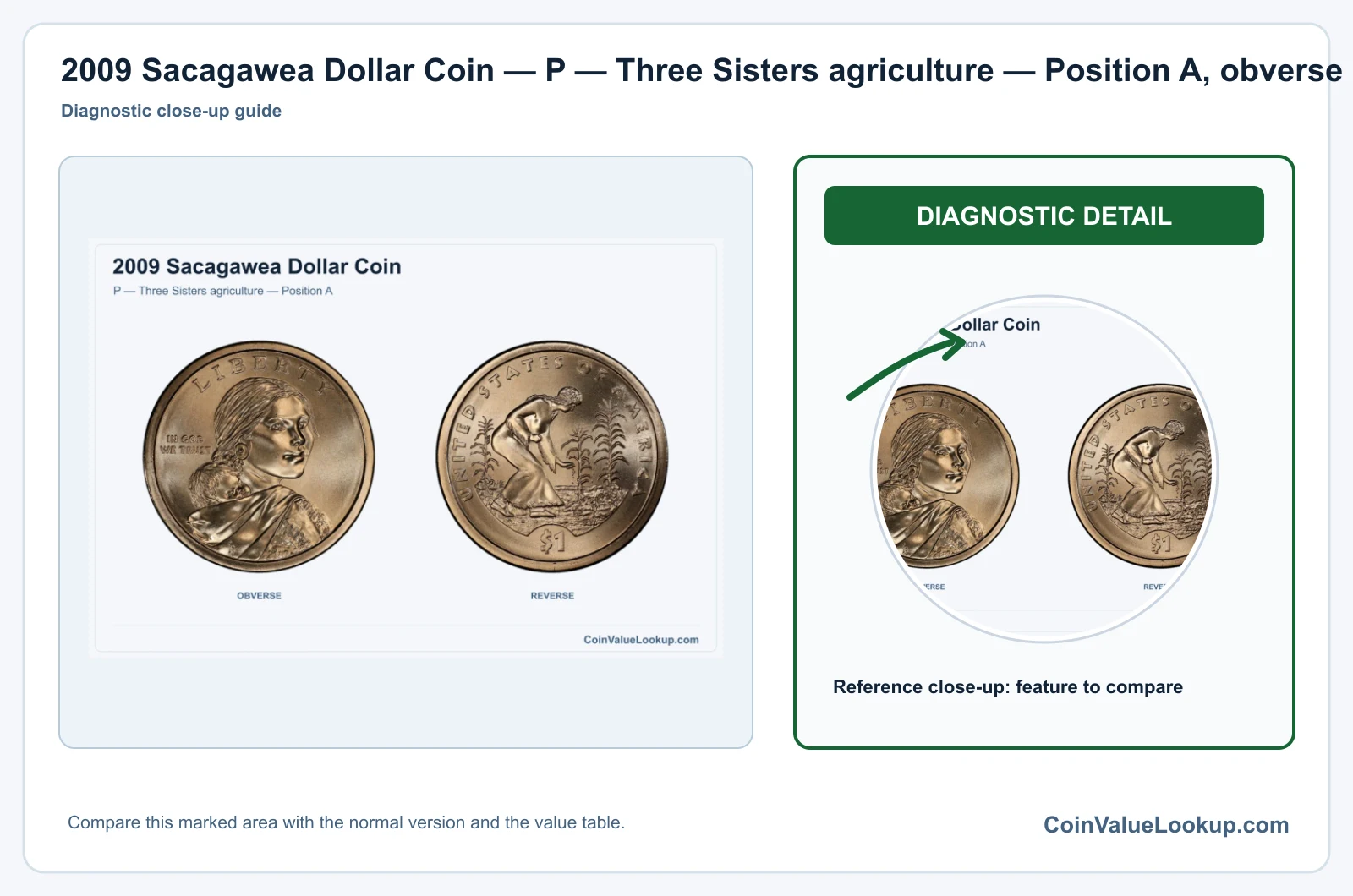
This is the standard Philadelphia business strike with Position A edge lettering. Position A means the incuse text reads normally when Sacagawea's portrait faces you.
It is manganese-brass clad, 8.10 grams, with the Three Sisters agriculture reverse. A guide estimate from USA Coin Book places an MS65 example around $6.25.
Most circulated pieces trade at face value, so condition matters.
Range Grade
Price Auction Records Appraisal PO PO 1
—
Coin Identifier FR FR 2
—
Coin Identifier AG AG 3
—
Coin Identifier G G 4
—
Coin Identifier
G 6
—
Coin Identifier VG VG 8
—
Coin Identifier
VG 10
—
Coin Identifier F F 12
—
Coin Identifier
F 15
—
Coin Identifier VF VF 20
—
Coin Identifier
VF 25
—
Coin Identifier
VF 30
—
Coin Identifier
VF 35
—
Coin Identifier XF XF 40
—
Coin Identifier
XF 45
—
Coin Identifier AU AU 50
—
Coin Identifier
AU 53
—
Coin Identifier
AU 55
—
Coin Identifier
AU 58
—
Coin Identifier MS MS 60
—
Coin Identifier
MS 61
—
Coin Identifier
MS 62
—
Coin Identifier
MS 63
—
Coin Identifier
MS 64
—
Coin Identifier
MS 65
—
Coin Identifier
MS 66
Coin Identifier
MS 67
Coin Identifier
MS 68
Coin Identifier
MS 69
—
—
—
MS 70
—
—
—
2009 Sacagawea Dollar — P — Three Sisters agriculture — satin — Position A
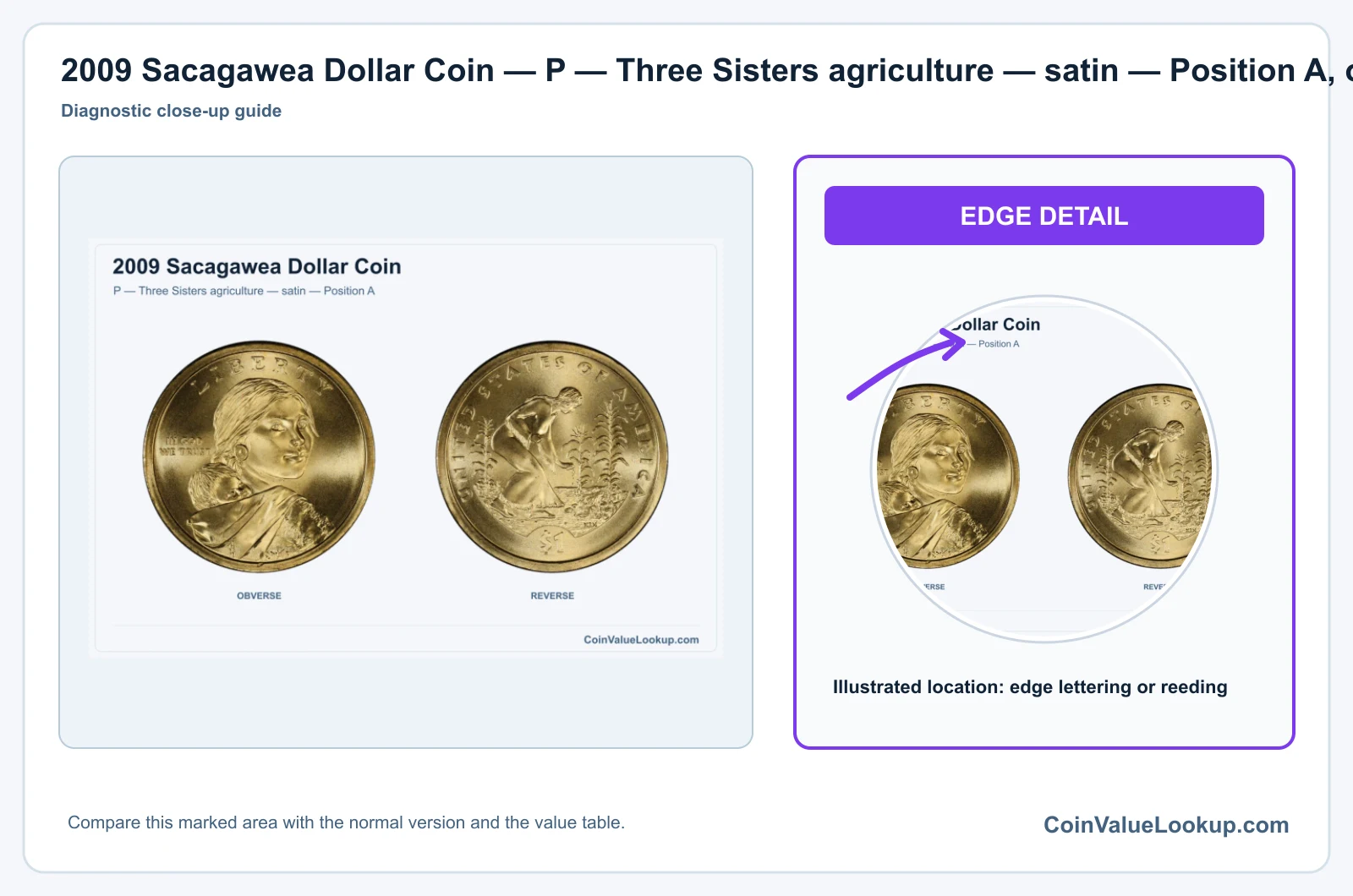
The satin-finish Philadelphia coin with Position A edge lettering was distributed exclusively in 2009 Mint Sets. Its surface has a soft, granular luster that sits between a business strike's cartwheel shine and a proof's mirror fields.
Do not mistake this texture for wear or cleaning.
No specific guide price is adopted for this version, so value depends on the individual coin's authenticated identity, condition and any verified errors. If you believe you have one, compare it side by side with a known business strike to confirm the finish difference.
Range Grade
Price Auction Records Appraisal SP SP 1
—
Coin Identifier
SP 2
—
Coin Identifier
SP 3
—
Coin Identifier
SP 4
—
Coin Identifier
SP 6
—
Coin Identifier
SP 8
—
Coin Identifier
SP 10
—
Coin Identifier
SP 12
—
Coin Identifier
SP 15
—
Coin Identifier
SP 20
—
Coin Identifier
SP 25
—
Coin Identifier
SP 30
—
Coin Identifier
SP 35
—
Coin Identifier
SP 40
—
Coin Identifier
SP 45
—
Coin Identifier
SP 50
—
Coin Identifier
SP 53
—
Coin Identifier
SP 55
—
Coin Identifier
SP 58
—
Coin Identifier
SP 60
—
Coin Identifier
SP 61
—
Coin Identifier
SP 62
—
Coin Identifier
SP 63
—
Coin Identifier
SP 64
—
Coin Identifier
SP 65
—
Coin Identifier
SP 66
—
Coin Identifier
SP 67
—
Coin Identifier
SP 68
Coin Identifier
SP 69
Coin Identifier
SP 70
—
—
—
2009 Sacagawea Dollar — P — Three Sisters agriculture — Position B
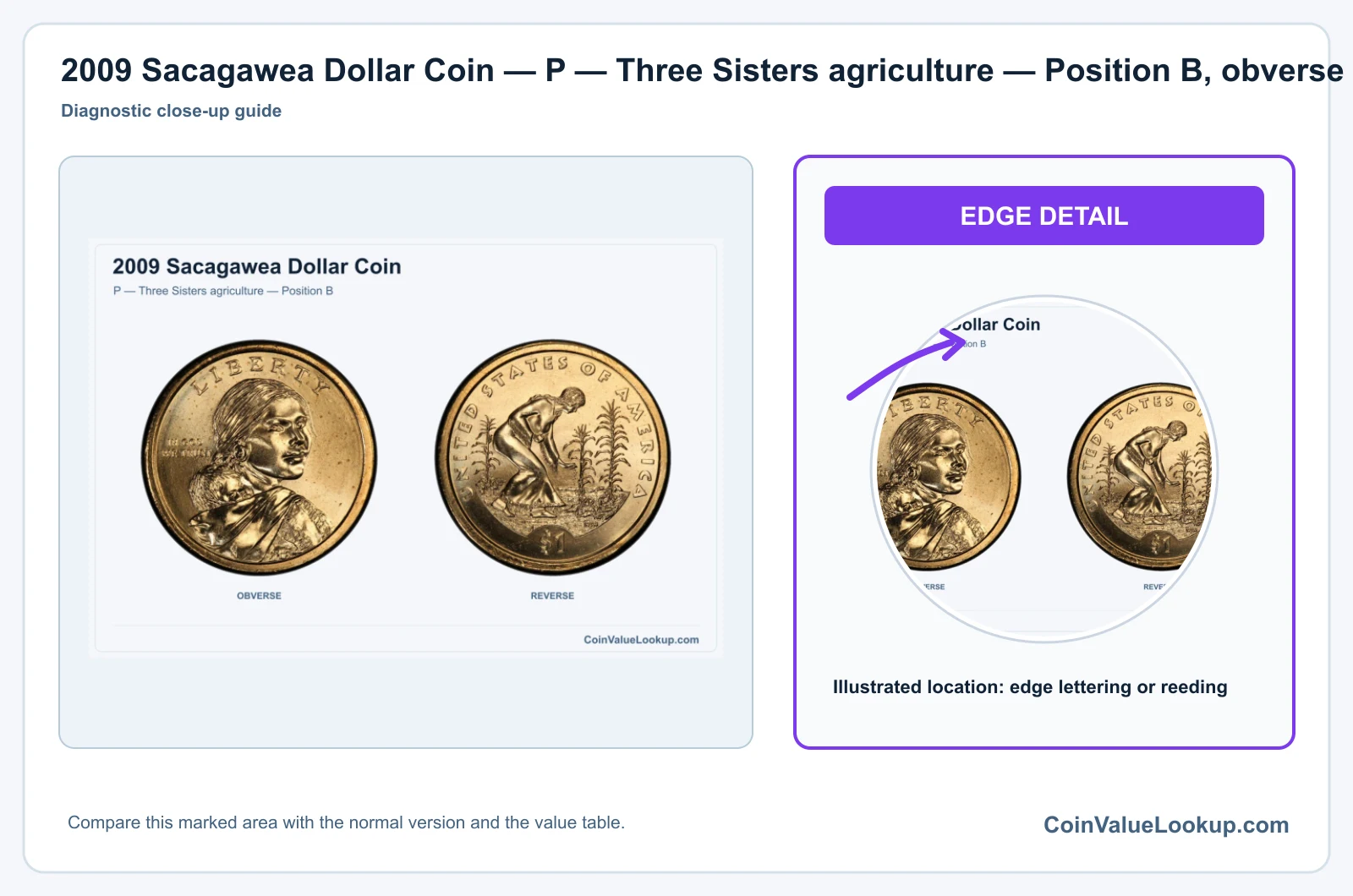
Same Philadelphia business strike as Position A, but here the edge lettering reads normally when the reverse faces you. That is Position B.
Composition, weight and design are identical. USA Coin Book estimates about $6.25 at MS65.
The position difference is a minor collectible distinction; neither position is dramatically rarer than the other for business strikes, but completists want both.
Coin Value Lookup is a good place to look up guides for other Sacagawea Dollar years and denominations while you are sorting your collection.
Range Grade
Price Auction Records Appraisal PO PO 1
—
Coin Identifier FR FR 2
—
Coin Identifier AG AG 3
—
Coin Identifier G G 4
—
Coin Identifier
G 6
—
Coin Identifier VG VG 8
—
Coin Identifier
VG 10
—
Coin Identifier F F 12
—
Coin Identifier
F 15
—
Coin Identifier VF VF 20
—
Coin Identifier
VF 25
—
Coin Identifier
VF 30
—
Coin Identifier
VF 35
—
Coin Identifier XF XF 40
—
Coin Identifier
XF 45
—
Coin Identifier AU AU 50
—
Coin Identifier
AU 53
—
Coin Identifier
AU 55
—
Coin Identifier
AU 58
—
Coin Identifier MS MS 60
—
Coin Identifier
MS 61
—
Coin Identifier
MS 62
—
Coin Identifier
MS 63
—
Coin Identifier
MS 64
—
Coin Identifier
MS 65
—
Coin Identifier
MS 66
Coin Identifier
MS 67
Coin Identifier
MS 68
Coin Identifier
MS 69
—
—
—
MS 70
—
—
—
2009 Sacagawea Dollar — P — Three Sisters agriculture — satin — Position B
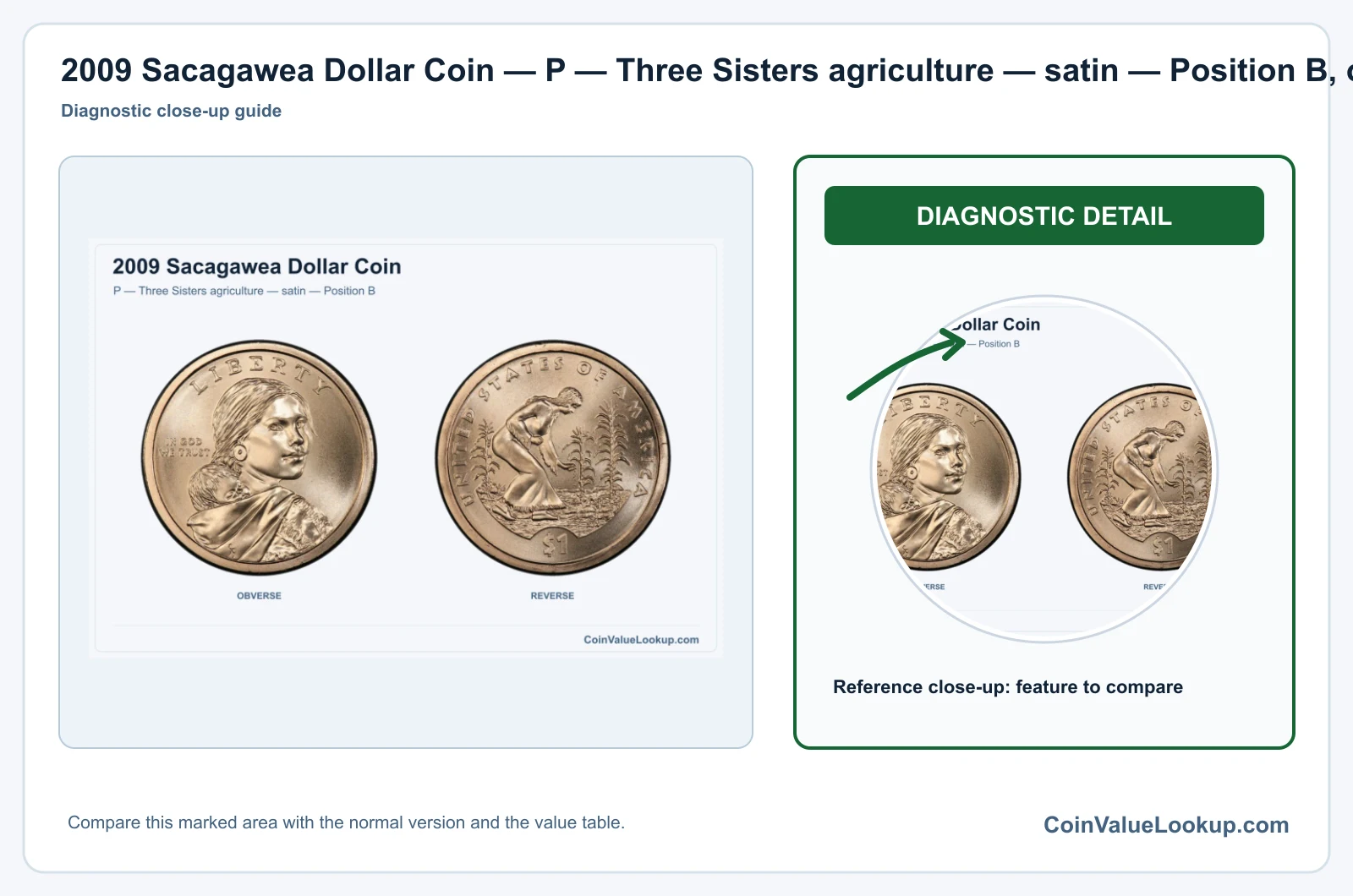
This is the satin-finish Philadelphia coin with Position B edge lettering. Like its Position A counterpart, it came only in 2009 Mint Sets.
The matte-like surface is the key identifier; hold it next to a regular business strike and the difference is obvious under any decent light.
No adopted guide price is available for this specific version. Its value is best assessed individually based on authenticated finish, grade and any confirmed errors.
Keep it in a holder that protects the soft satin surface from contact marks.
Range Grade
Price Auction Records Appraisal SP SP 1
—
Coin Identifier
SP 2
—
Coin Identifier
SP 3
—
Coin Identifier
SP 4
—
Coin Identifier
SP 6
—
Coin Identifier
SP 8
—
Coin Identifier
SP 10
—
Coin Identifier
SP 12
—
Coin Identifier
SP 15
—
Coin Identifier
SP 20
—
Coin Identifier
SP 25
—
Coin Identifier
SP 30
—
Coin Identifier
SP 35
—
Coin Identifier
SP 40
—
Coin Identifier
SP 45
—
Coin Identifier
SP 50
—
Coin Identifier
SP 53
—
Coin Identifier
SP 55
—
Coin Identifier
SP 58
—
Coin Identifier
SP 60
—
Coin Identifier
SP 61
—
Coin Identifier
SP 62
—
Coin Identifier
SP 63
—
Coin Identifier
SP 64
—
Coin Identifier
SP 65
—
Coin Identifier
SP 66
—
Coin Identifier
SP 67
Coin Identifier
SP 68
Coin Identifier
SP 69
—
Coin Identifier
SP 70
—
—
—
2009 Sacagawea Dollar — D — Three Sisters agriculture — Position A
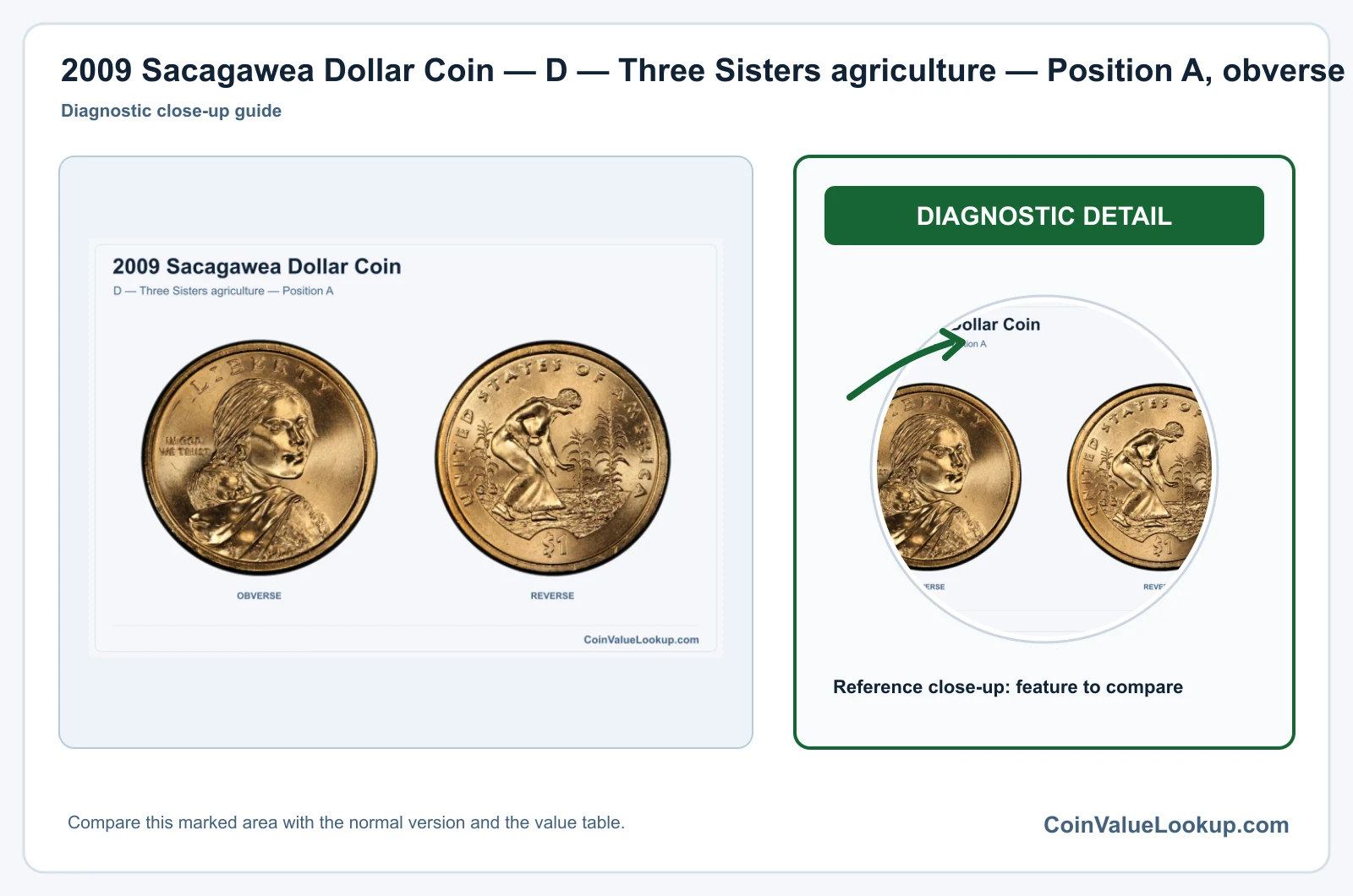
The Denver business strike with Position A edge lettering. Look for the "D" mintmark incused on the edge.
Composition is manganese-brass clad at 8.10 grams. USA Coin Book places the MS65 guide estimate at roughly $6.25.
As with the Philadelphia version, circulated examples are common and generally trade at face value.
Range Grade
Price Auction Records Appraisal PO PO 1
—
Coin Identifier FR FR 2
—
Coin Identifier AG AG 3
—
Coin Identifier G G 4
—
Coin Identifier
G 6
—
Coin Identifier VG VG 8
—
Coin Identifier
VG 10
—
Coin Identifier F F 12
—
Coin Identifier
F 15
—
Coin Identifier VF VF 20
—
Coin Identifier
VF 25
—
Coin Identifier
VF 30
—
Coin Identifier
VF 35
—
Coin Identifier XF XF 40
—
Coin Identifier
XF 45
—
Coin Identifier AU AU 50
—
Coin Identifier
AU 53
—
Coin Identifier
AU 55
—
Coin Identifier
AU 58
—
Coin Identifier MS MS 60
—
Coin Identifier
MS 61
—
Coin Identifier
MS 62
—
Coin Identifier
MS 63
—
Coin Identifier
MS 64
—
Coin Identifier
MS 65
—
Coin Identifier
MS 66
Coin Identifier
MS 67
Coin Identifier
MS 68
—
—
—
MS 69
—
—
—
MS 70
—
—
—
2009 Sacagawea Dollar — D — Three Sisters agriculture — satin — Position A
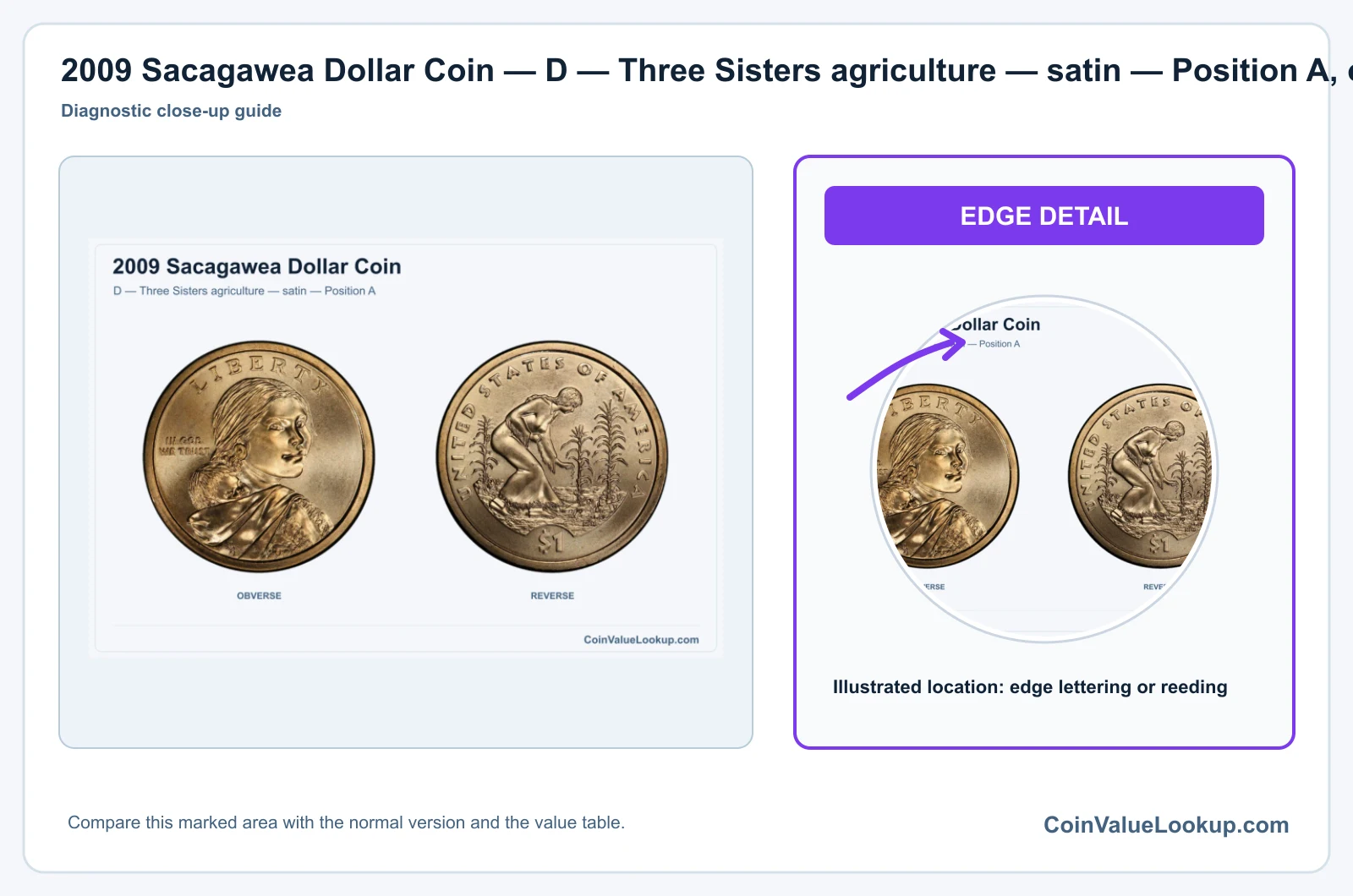
Denver's satin-finish coin with Position A edge lettering, found only in 2009 Mint Sets. The telltale soft luster separates it from a standard D-mint business strike.
No specific guide price is adopted here, so the coin's value comes down to its verified finish, condition and whether any genuine errors are present. Compare the surface texture carefully before claiming a satin finish.
Range Grade
Price Auction Records Appraisal SP SP 1
—
Coin Identifier
SP 2
—
Coin Identifier
SP 3
—
Coin Identifier
SP 4
—
Coin Identifier
SP 6
—
Coin Identifier
SP 8
—
Coin Identifier
SP 10
—
Coin Identifier
SP 12
—
Coin Identifier
SP 15
—
Coin Identifier
SP 20
—
Coin Identifier
SP 25
—
Coin Identifier
SP 30
—
Coin Identifier
SP 35
—
Coin Identifier
SP 40
—
Coin Identifier
SP 45
—
Coin Identifier
SP 50
—
Coin Identifier
SP 53
—
Coin Identifier
SP 55
—
Coin Identifier
SP 58
—
Coin Identifier
SP 60
—
Coin Identifier
SP 61
—
Coin Identifier
SP 62
—
Coin Identifier
SP 63
—
Coin Identifier
SP 64
—
Coin Identifier
SP 65
—
Coin Identifier
SP 66
—
Coin Identifier
SP 67
—
Coin Identifier
SP 68
Coin Identifier
SP 69
—
Coin Identifier
SP 70
—
—
—
2009 Sacagawea Dollar — D — Three Sisters agriculture — Position B
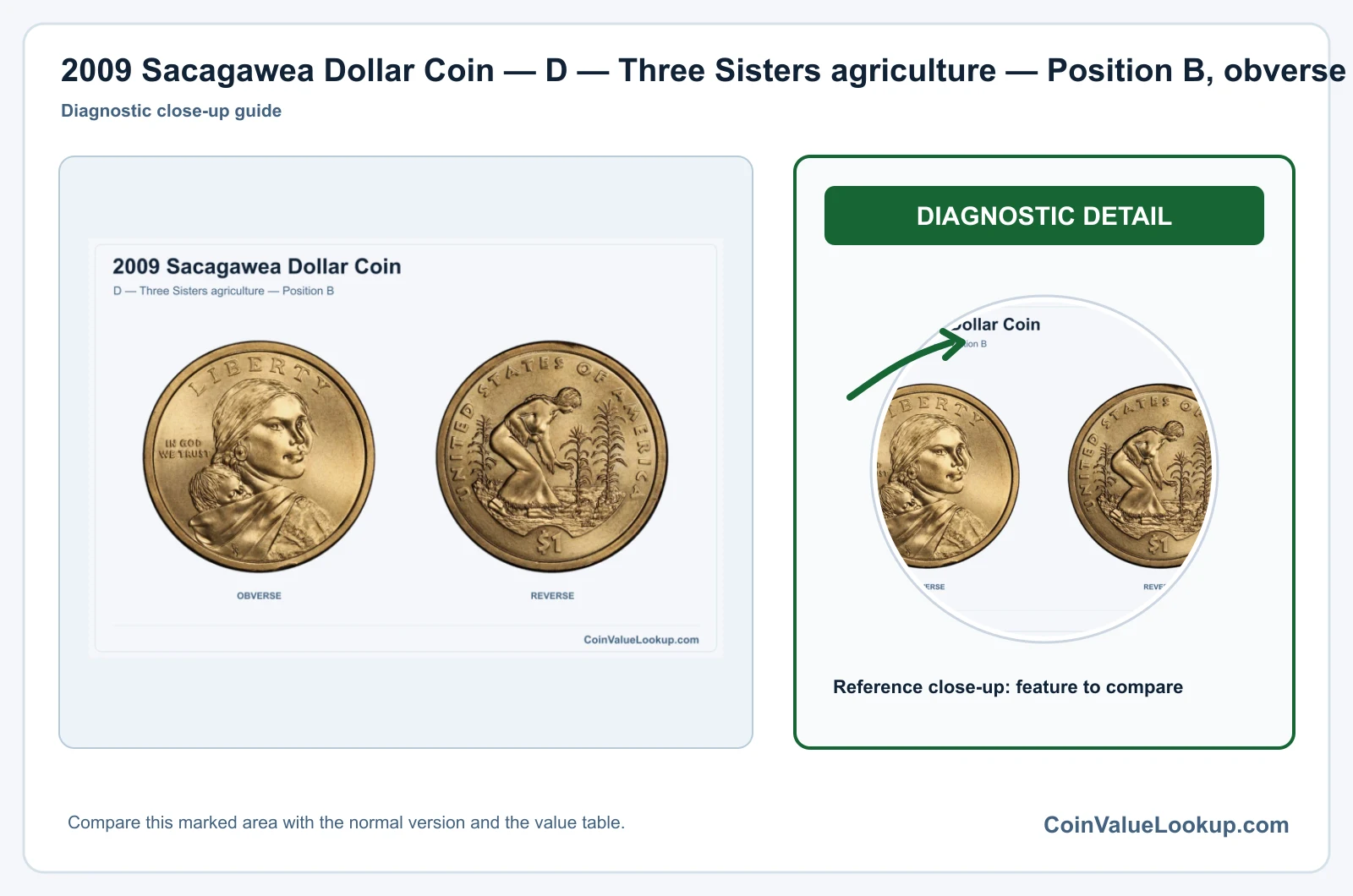
Denver business strike, Position B. The "D" mintmark sits on the edge alongside the date and motto.
At MS65, USA Coin Book estimates around $6.25. This is one of the most commonly encountered versions since both Denver positions were produced in large numbers.
Circulated examples remain at face value. Look for clean fields and full hair detail to justify a higher grade.
Range Grade
Price Auction Records Appraisal PO PO 1
—
Coin Identifier FR FR 2
—
Coin Identifier AG AG 3
—
Coin Identifier G G 4
—
Coin Identifier
G 6
—
Coin Identifier VG VG 8
—
Coin Identifier
VG 10
—
Coin Identifier F F 12
—
Coin Identifier
F 15
—
Coin Identifier VF VF 20
—
Coin Identifier
VF 25
—
Coin Identifier
VF 30
—
Coin Identifier
VF 35
—
Coin Identifier XF XF 40
—
Coin Identifier
XF 45
—
Coin Identifier AU AU 50
—
Coin Identifier
AU 53
—
Coin Identifier
AU 55
—
Coin Identifier
AU 58
—
Coin Identifier MS MS 60
—
Coin Identifier
MS 61
—
Coin Identifier
MS 62
—
Coin Identifier
MS 63
—
Coin Identifier
MS 64
—
Coin Identifier
MS 65
—
Coin Identifier
MS 66
Coin Identifier
MS 67
Coin Identifier
MS 68
—
—
—
MS 69
—
—
—
MS 70
—
—
—
2009 Sacagawea Dollar — D — Three Sisters agriculture — satin — Position B
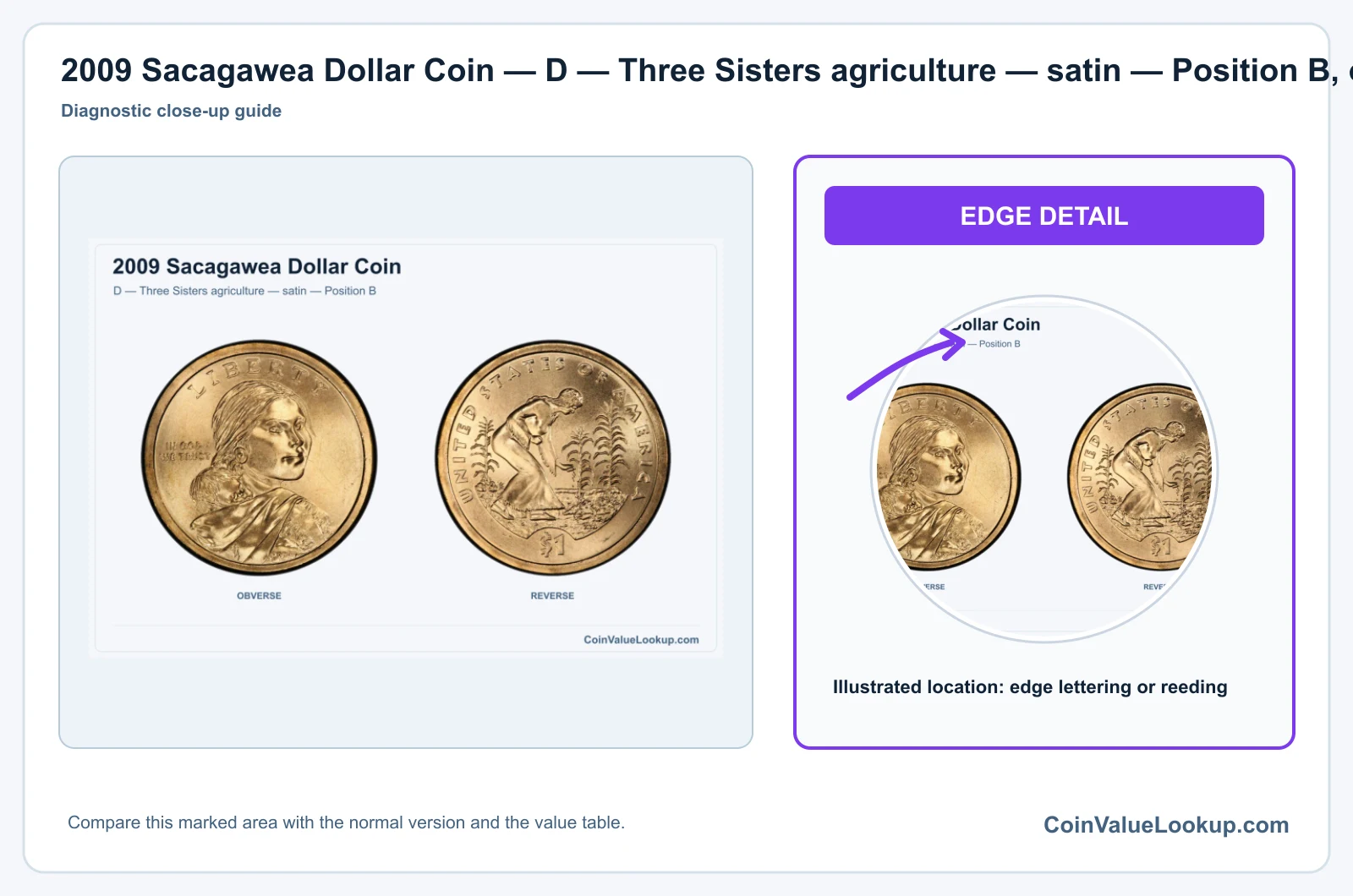
The satin-finish Denver coin with Position B edge lettering rounds out the mint-set varieties. Only available through 2009 Mint Sets, these have the characteristic matte luster that distinguishes them from ordinary strikes.
No adopted guide price exists for this version. Individual assessment based on authenticated identity and condition is the way to determine what it is worth.
Avoid confusing a lightly toned business strike for a satin coin.
Range Grade
Price Auction Records Appraisal SP SP 1
—
Coin Identifier
SP 2
—
Coin Identifier
SP 3
—
Coin Identifier
SP 4
—
Coin Identifier
SP 6
—
Coin Identifier
SP 8
—
Coin Identifier
SP 10
—
Coin Identifier
SP 12
—
Coin Identifier
SP 15
—
Coin Identifier
SP 20
—
Coin Identifier
SP 25
—
Coin Identifier
SP 30
—
Coin Identifier
SP 35
—
Coin Identifier
SP 40
—
Coin Identifier
SP 45
—
Coin Identifier
SP 50
—
Coin Identifier
SP 53
—
Coin Identifier
SP 55
—
Coin Identifier
SP 58
—
Coin Identifier
SP 60
—
Coin Identifier
SP 61
—
Coin Identifier
SP 62
—
Coin Identifier
SP 63
—
Coin Identifier
SP 64
—
Coin Identifier
SP 65
—
Coin Identifier
SP 66
—
Coin Identifier
SP 67
—
Coin Identifier
SP 68
Coin Identifier
SP 69
—
Coin Identifier
SP 70
—
—
—
2009 Sacagawea Dollar — S — Three Sisters agriculture — proof
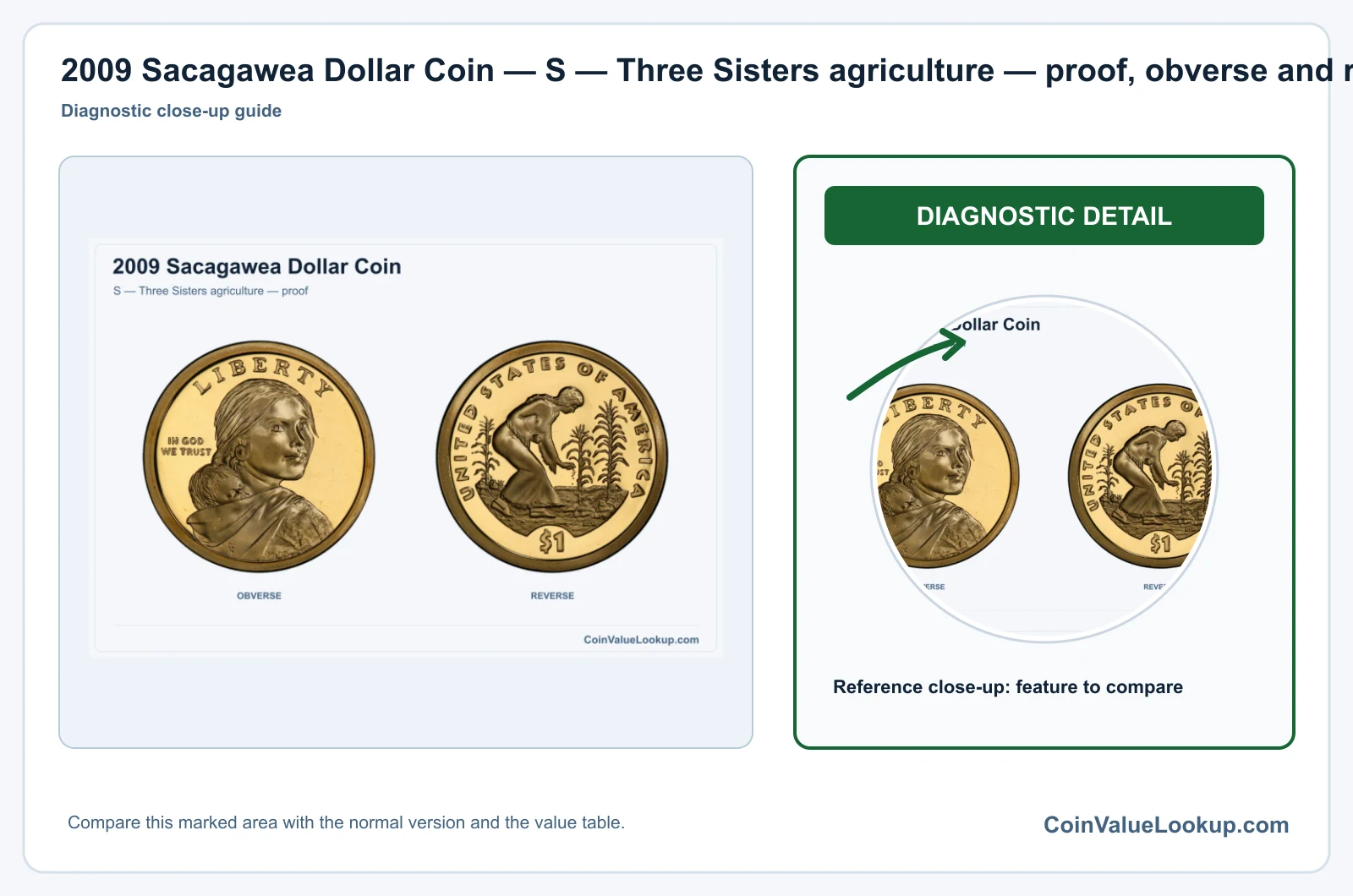
The San Francisco proof carries the Three Sisters agriculture reverse and was sold in 2009 proof sets. It features sharply struck devices against deeply mirrored fields.
USA Coin Book estimates about $10.00 at PR65, making it the highest listed guide anchor for the 2009 Sacagawea Dollar.
A proof is a manufacturing method, not a grade above Mint State. Hairlines, haze or fingerprints on the mirror surfaces lower the grade.
And despite being packaged alongside silver proof coins in some sets, this dollar is manganese-brass clad, not silver.
Range Grade
Price Auction Records Appraisal PR PR 1
—
Coin Identifier
PR 2
—
Coin Identifier
PR 3
—
Coin Identifier
PR 4
—
Coin Identifier
PR 6
—
Coin Identifier
PR 8
—
Coin Identifier
PR 10
—
Coin Identifier
PR 12
—
Coin Identifier
PR 15
—
Coin Identifier
PR 20
—
Coin Identifier
PR 25
—
Coin Identifier
PR 30
—
Coin Identifier
PR 35
—
Coin Identifier
PR 40
—
Coin Identifier
PR 45
—
Coin Identifier
PR 50
—
Coin Identifier
PR 53
—
Coin Identifier
PR 55
—
Coin Identifier
PR 58
—
Coin Identifier
PR 60
—
Coin Identifier
PR 61
—
Coin Identifier
PR 62
—
Coin Identifier
PR 63
—
Coin Identifier
PR 64
—
Coin Identifier
PR 65
—
Coin Identifier
PR 66
—
Coin Identifier
PR 67
—
Coin Identifier
PR 68
—
Coin Identifier
PR 69
Coin Identifier
PR 70
Coin Identifier
2009 Sacagawea Dollar Error List
1. 2009 Sacagawea Dollar — Missing Edge Lettering
A missing edge lettering error means all the incuse text that should appear around the rim, including the date, mintmark and motto, is completely absent. Rotate the coin slowly and compare it to a normal 2009 Sacagawea Dollar.
On a genuine example, the edge is smooth where lettering should be.
Because the date lives on the edge starting in 2009, a truly blank-edge coin may need the distinctive Three Sisters reverse design or a professionally attributed holder to confirm its year. Watch out for coins that have been filed or polished to remove the lettering; genuine errors show a uniformly plain edge without tool marks.
Condition, visibility of the error and authentication all affect value, and no specific guide price is adopted for this error.
2. 2009 Sacagawea Dollar — Weak / Partial Edge Lettering
Partial edge lettering shows some incuse characters that are unusually faint, incomplete or interrupted while others may appear normal. Examine the full circumference under good light and compare with a standard 2009 coin.
The missing portions should trail off or appear shallow in a way that looks like a strike issue, not deliberate removal.
Ordinary shallow lettering from normal die wear or light circulation is not the same thing. Deliberate abrasion leaves scratches and uneven surfaces.
A genuine partial-lettering error will show consistent weakness across a section rather than random roughness. Value depends on the specific coin's condition and how dramatic the missing lettering is; no guide price is adopted for this variety.
3. 2009 Sacagawea Dollar — Doubled Die
A doubled die error on the 2009 Sacagawea Dollar shows consistent design separation or notching on affected elements, visible under magnification. Compare your coin's features against a known normal example.
Genuine doubling repeats in the same direction on every struck coin from that die, so it appears uniform rather than smeared or shelf-like.
Machine doubling, which is far more common, tends to produce flat, shelf-like distortion and does not carry the same collector premium. Reflections and post-mint impressions from contact can also mimic doubling at first glance.
No specific guide price is adopted for this error, so value depends on condition, the strength of the doubling and professional authentication.