1808 Classic Head Cent Coin Value: How Much Is It Worth?
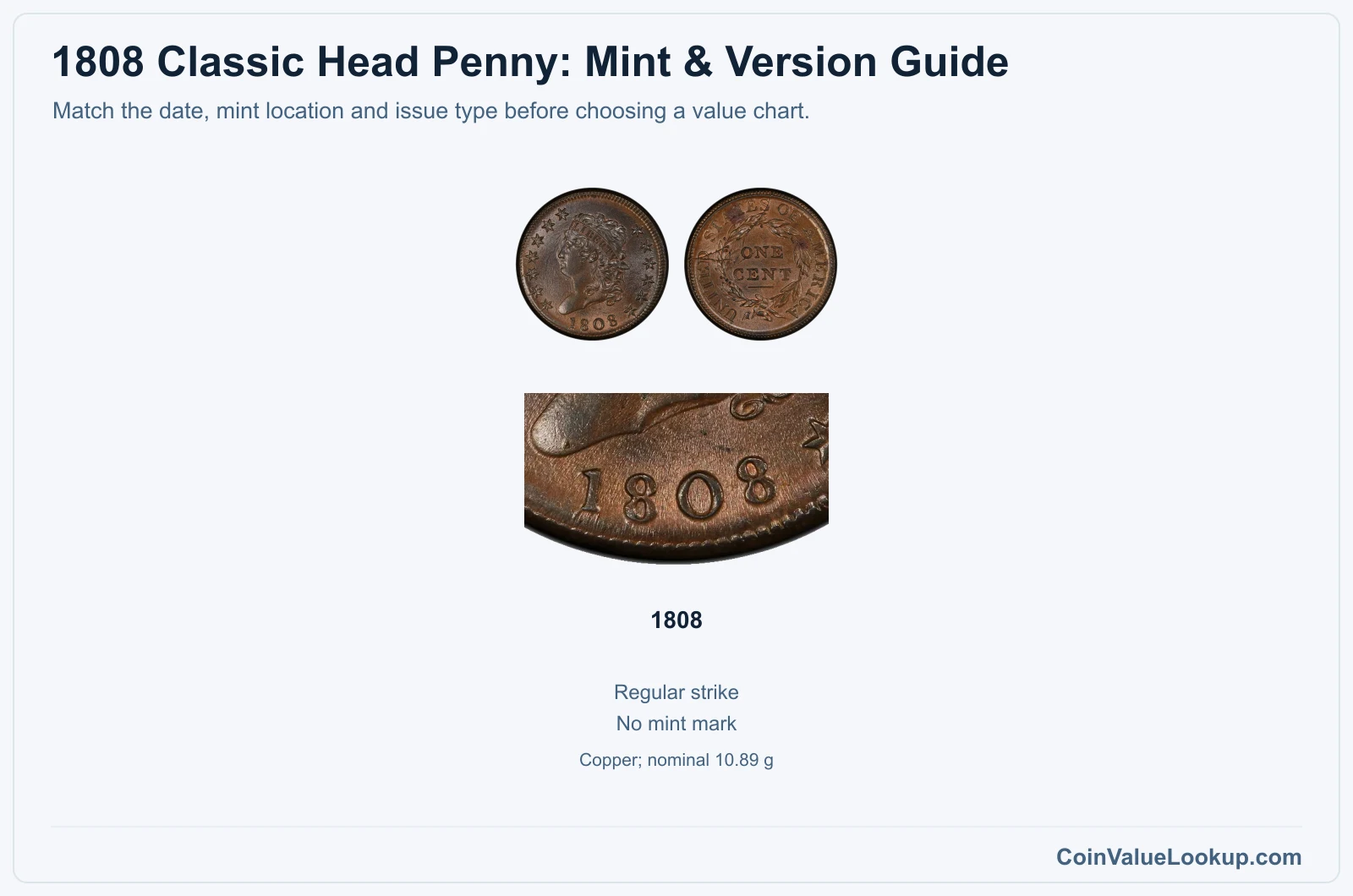
The 1808 Classic Head Cent is a copper large cent struck at Philadelphia, and even well-worn examples carry real value. Guide estimates from USA Coin Book range from about $186 in Good (G4) condition to around $3,083 in Extremely Fine (EF40).
Your coin's exact worth depends on its condition, surface quality, and whether it carries a mint error.
Fast Way to Identify Your 1808 Classic Head Cent
The quickest way to start figuring out what your 1808 cent is worth is to snap clear photos of the front and back and upload them for preliminary identification. Good lighting and a close-up of the date area help separate this issue from other Classic Head years.
That first step can point you toward the right variety and value range.
1808 Classic Head Cent Value
Upload both sides of your 1808 Classic Head Cent.
Front Obverse
Upload photo
Back Reverse
Upload photo
Which 1808 Classic Head Cent Versions Are Worth Money?
- The 1808 Philadelphia business strike in Extremely Fine (EF40) carries a guide estimate around $3,083 from USA Coin Book, reflecting sharp surviving detail on a scarce early copper cent.
- Even a well-worn Good (G4) example lists near $186, so any genuine 1808 Classic Head Cent holds meaningful value regardless of grade.
- Coins with documented mint errors such as off-center strikes or brockages may carry additional value beyond ordinary grade-based estimates, pending individual assessment.
Step 1: Identify Your 1808 Classic Head Cent Mint Mark and Version
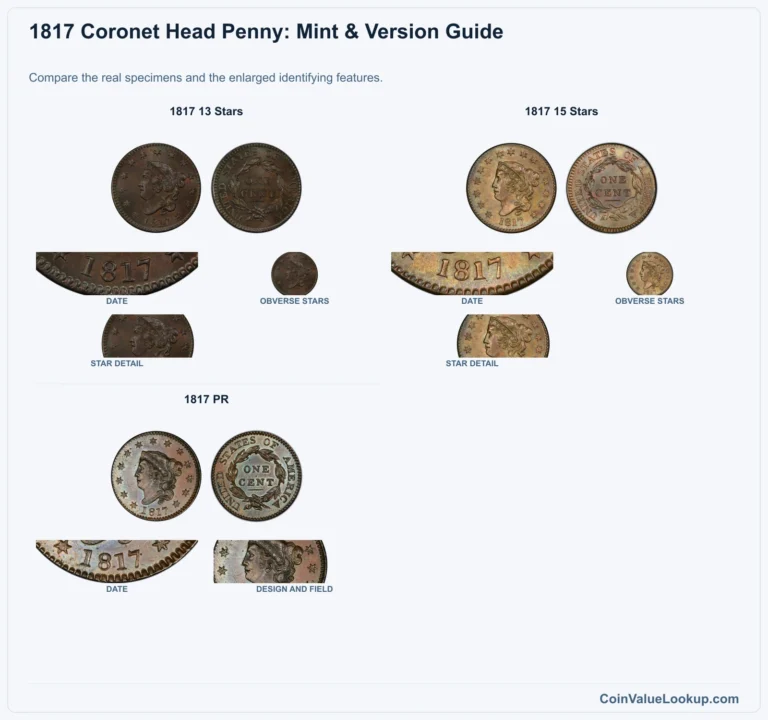
The 1808 Classic Head Cent features Liberty facing left, wearing a headband inscribed LIBERTY, surrounded by stars and the date below. The reverse shows the denomination ONE CENT inside a laurel wreath.
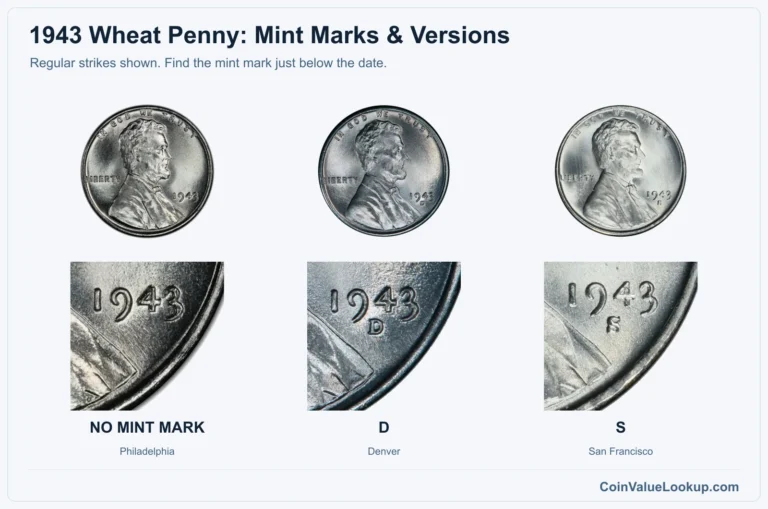
All examples were struck at Philadelphia, so there is no mintmark to look for.
Confirm the design matches the Classic Head type rather than the earlier Draped Bust or later Coronet types. The portrait style, star count, and wreath layout differ between these series, and misidentifying the type will send you to the wrong value chart entirely.
Weight can offer supporting evidence; the nominal specification is about 10.89 grams in copper. But wear, corrosion, and original production tolerances mean a slightly off weight does not automatically prove or disprove authenticity.
Check both faces and the edge carefully.
Original surfaces and legible detail matter far more than brightness. A dark, naturally toned coin with clear features is more desirable than a bright one that has been cleaned or polished.
Step 2: Check Your 1808 Classic Head Cent Grade
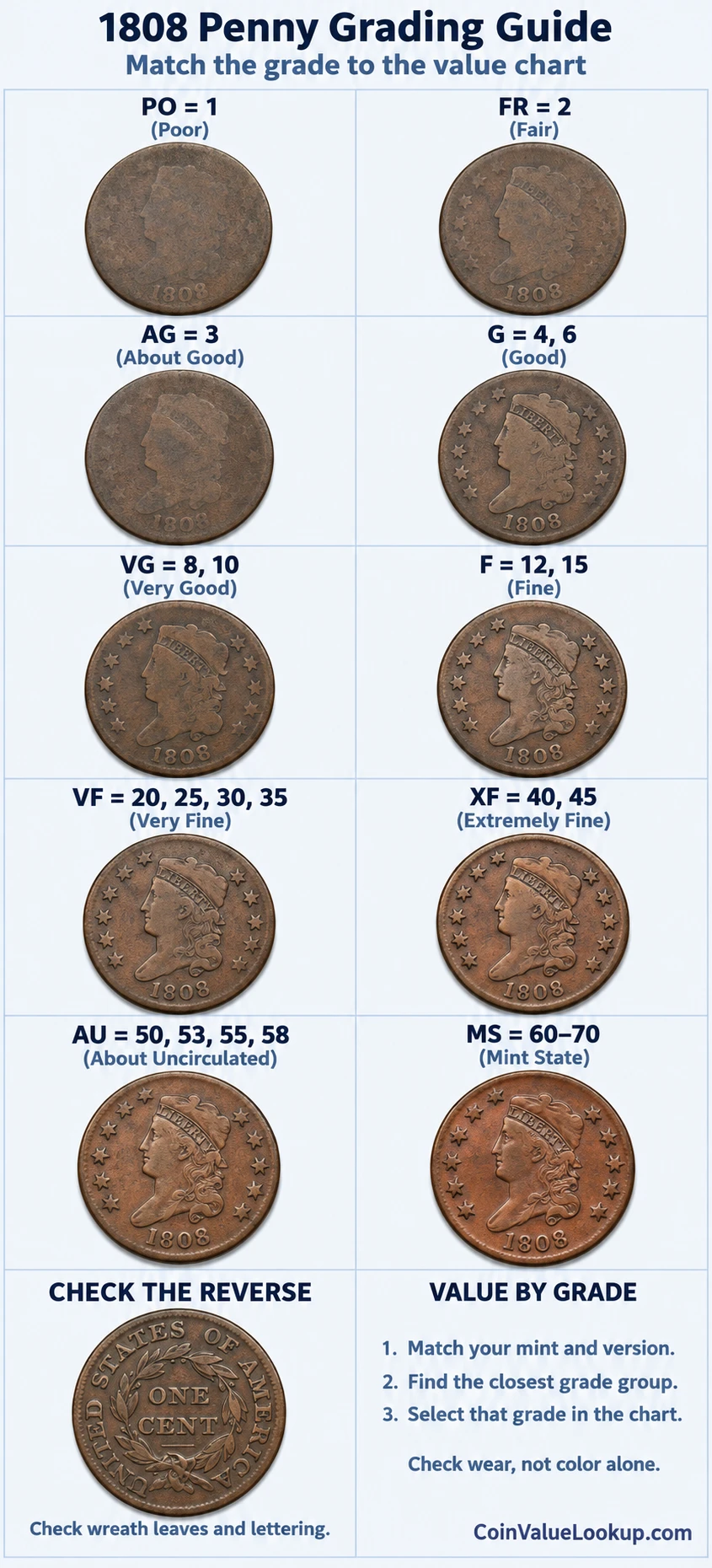
Start by examining the portrait's hair detail, especially the curls near the forehead and behind the ear. In lower grades like Good (G4), the outline of Liberty's head will be clear but nearly all hair detail is flat.
By Extremely Fine (EF40), individual curls show sharpness with only light wear on the highest points.
On the reverse, check the wreath leaves. Circulated coins lose leaf veins first, then the overall relief flattens.
Compare your coin against the reference image to see where your example falls.
Separate honest wear from problems. A coin that lost detail from decades in someone's pocket grades differently than one eaten by corrosion or scrubbed with a wire brush.
Surface issues like porosity, cleaning, or environmental damage can substantially reduce market value even when the remaining detail looks decent.
Color descriptions like BN (brown), RB (red-brown), and RD (red) describe the surface tone of copper coins, not different metals. Most surviving 1808 cents are fully brown, and that is perfectly normal for their age.
Step 3: Check 1808 Classic Head Cent Value by Mint and Version
1808 Classic Head Cent
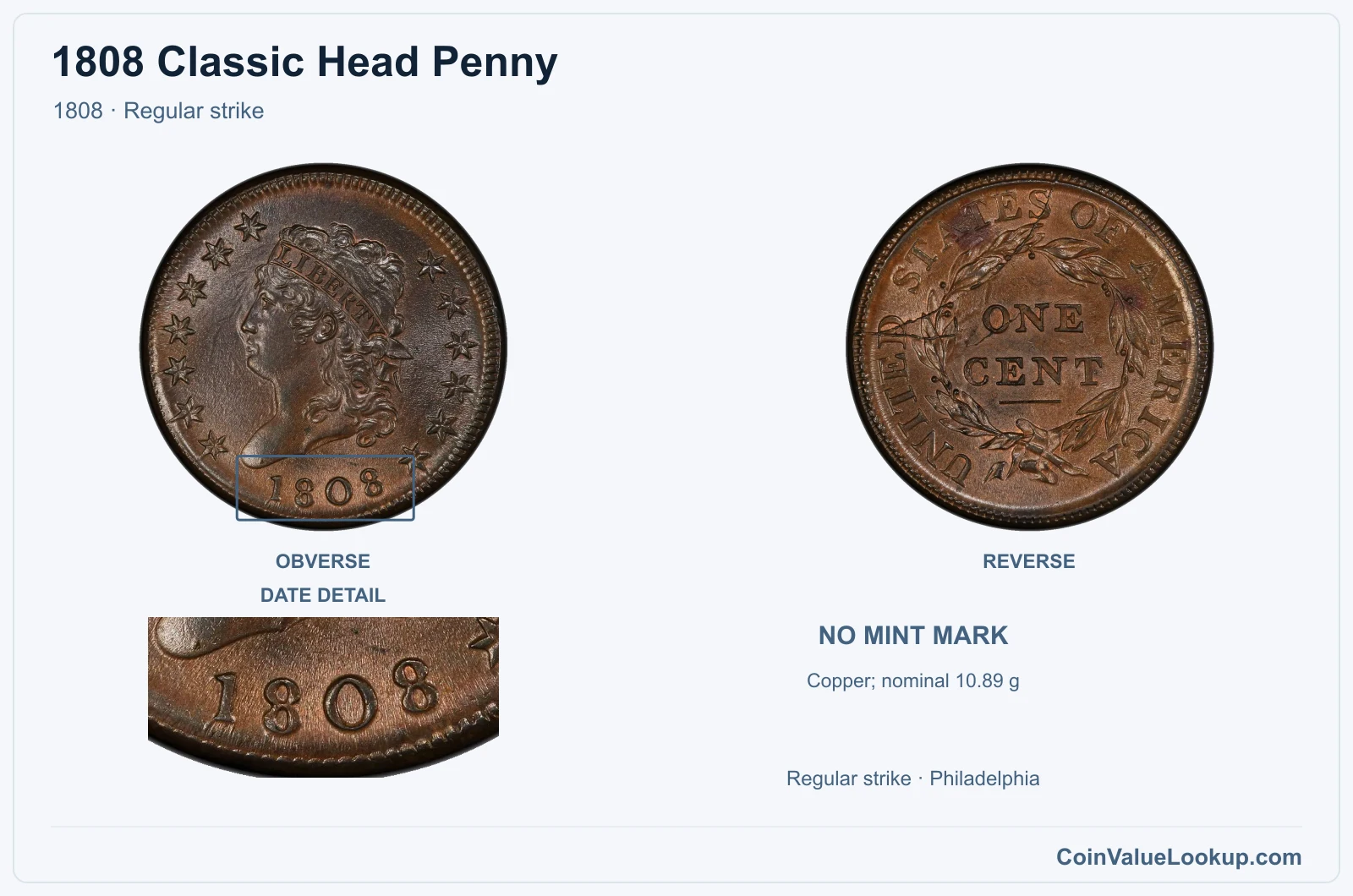
The 1808 Classic Head Cent was produced at Philadelphia with no mintmark, struck in copper at a nominal weight of about 10.89 grams. The obverse shows the Classic Head portrait of Liberty; the reverse displays the denomination ONE CENT within a wreath.
USA Coin Book guide estimates place this issue at roughly $186 in Good (G4) and around $3,083 in Extremely Fine (EF40). Grades between those anchors scale with the amount of surviving hair and wreath detail.
When evaluating your coin, focus on original surfaces rather than color. A naturally brown, problem-free example will generally be more appealing than a cleaned or corroded piece at the same apparent grade.
If you are exploring values for other early copper cents or different dates, Coin Value Lookup offers guides across many U.S. coin series to help you compare.
| Range | Grade | Price | Auction Records | Appraisal |
|---|---|---|---|---|
| PO | PO 1 | — | Coin Identifier | |
| FR | FR 2 | Coin Identifier | ||
| AG | AG 3 | Coin Identifier | ||
| G | G 4 | Coin Identifier | ||
| G 6 | Coin Identifier | |||
| VG | VG 8 | Coin Identifier | ||
| VG 10 | Coin Identifier | |||
| F | F 12 | Coin Identifier | ||
| F 15 | Coin Identifier | |||
| VF | VF 20 | Coin Identifier | ||
| VF 25 | Coin Identifier | |||
| VF 30 | Coin Identifier | |||
| VF 35 | Coin Identifier | |||
| XF | XF 40 | Coin Identifier | ||
| XF 45 | Coin Identifier | |||
| AU | AU 50 | Coin Identifier | ||
| AU 53 | Coin Identifier | |||
| AU 55 | Coin Identifier | |||
| AU 58 | Coin Identifier | |||
| MS | MS 60 | — | Coin Identifier | |
| MS 61 | Coin Identifier | |||
| MS 62 | Coin Identifier | |||
| MS 63 | Coin Identifier | |||
| MS 64 | Coin Identifier | |||
| MS 65 | — | Coin Identifier | ||
| MS 66 | Coin Identifier | |||
| MS 67 | Coin Identifier | |||
| MS 68 | — | — | — | |
| MS 69 | — | — | — | |
| MS 70 | — | — | — |
1808 Classic Head Cent Error List
1. 1808 Classic Head Cent — Lamination / Split Planchet
A lamination error on an 1808 Classic Head Cent appears as a layer of metal peeling away from the surface, sometimes lifting into a retained flap and sometimes already missing, leaving a recessed area. Photograph the edge alongside the affected face so the separation within the copper is visible.
This category has been reported for the 1808 Classic Head Cent. The cause is a flaw within the planchet that becomes apparent during or after striking.
Do not confuse it with surface scraping, active corrosion, or a coin that was deliberately cut or shaved after leaving the mint. Genuine laminations follow the contour of the planchet metal rather than showing tool marks or irregular gouges.
No specific price range is adopted for this error. Value depends on the authenticated identity of the coin, the severity and visual impact of the lamination, and overall condition.
2. 1808 Classic Head Cent — Off-Center Strike
An off-center strike happens when the planchet is not properly seated between the dies, producing a design that is shifted to one side with an unstruck crescent of blank metal on the opposite edge. On an 1808 Classic Head Cent, the key question is whether the date remains visible; without a readable date, attributing the coin to this specific year becomes very difficult.
Do not confuse an off-center strike with a clipped planchet, which removes a curved section but does not shift the design. Post-mint flattening or damage can also mimic the look.
Genuine off-center errors show consistent design displacement on both faces.
No numeric price range is adopted for this error on the 1808 cent. Each example needs individual assessment based on how far off-center the strike landed, whether the date survives, and the coin's authenticated identity and condition.
3. 1808 Classic Head Cent — Die Break / Cud
A die break leaves a raised, irregular blob of metal on the coin's surface where a chunk of the die itself cracked away. When that break connects to the rim, collectors call it a cud.
On an 1808 Classic Head Cent, look for a raised lump along the rim that disrupts the normal design or lettering.
A cud is part of the coin as struck, not damage added later. Compare it against rim dents, which are concave, not raised.
Corrosion bumps tend to be rough and porous rather than smooth and sharply bounded. Small interior die chips are related but are not true cuds because they do not reach the rim.
No supported price range is adopted for die breaks or cuds on this date. The value of a specific example depends on the size and location of the break, the coin's authenticated identity, and its overall condition.
4. 1808 Classic Head Cent — Brockage
A brockage occurs when a previously struck coin stays on one die and acts as a second die, impressing an incuse, mirror-image version of its design onto the next planchet. On an 1808 Classic Head Cent, one side will show the normal struck design while the other displays a sunken, reversed impression.
The effect is unmistakable once you know what to look for.
Do not confuse a brockage with a die clash, where the dies strike each other without a planchet and leave faint ghost impressions. Also rule out post-mint pressing, where two coins are squeezed together outside the minting process; those lack the uniform depth and sharpness of a genuine brockage.
No numeric price data is adopted for this error. Each brockage is evaluated individually based on clarity, completeness of the mirror image, authenticated identity, and the coin's overall preservation.