1814 Classic Head Cent Coin Value: How Much Is It Worth?
The 1814 Classic Head Cent is a copper large cent struck at the Philadelphia Mint during the final years of this short-lived design series. Guide estimates from USA Coin Book place ordinary circulated examples between roughly $132 in G4 and $2,496 in EF40, depending on the exact variety and condition.
Identify your specific variety first, because rare proofs, restrikes, and major errors fall outside those anchors and require separate evaluation.
Fast Way to Identify Your 1814 Classic Head Cent
The quickest way to start figuring out what your 1814 cent is worth is to upload clear photos of the front and back. Our identifier can give you a preliminary read on the variety, date style, and overall condition.
Good lighting and a sharp closeup of the "4" in the date will help the most.
1814 Classic Head Cent Value
Upload both sides of your 1814 Classic Head Cent.
Front Obverse
Upload photo
Back Reverse
Upload photo
Which 1814 Classic Head Cent Versions Are Worth Money?
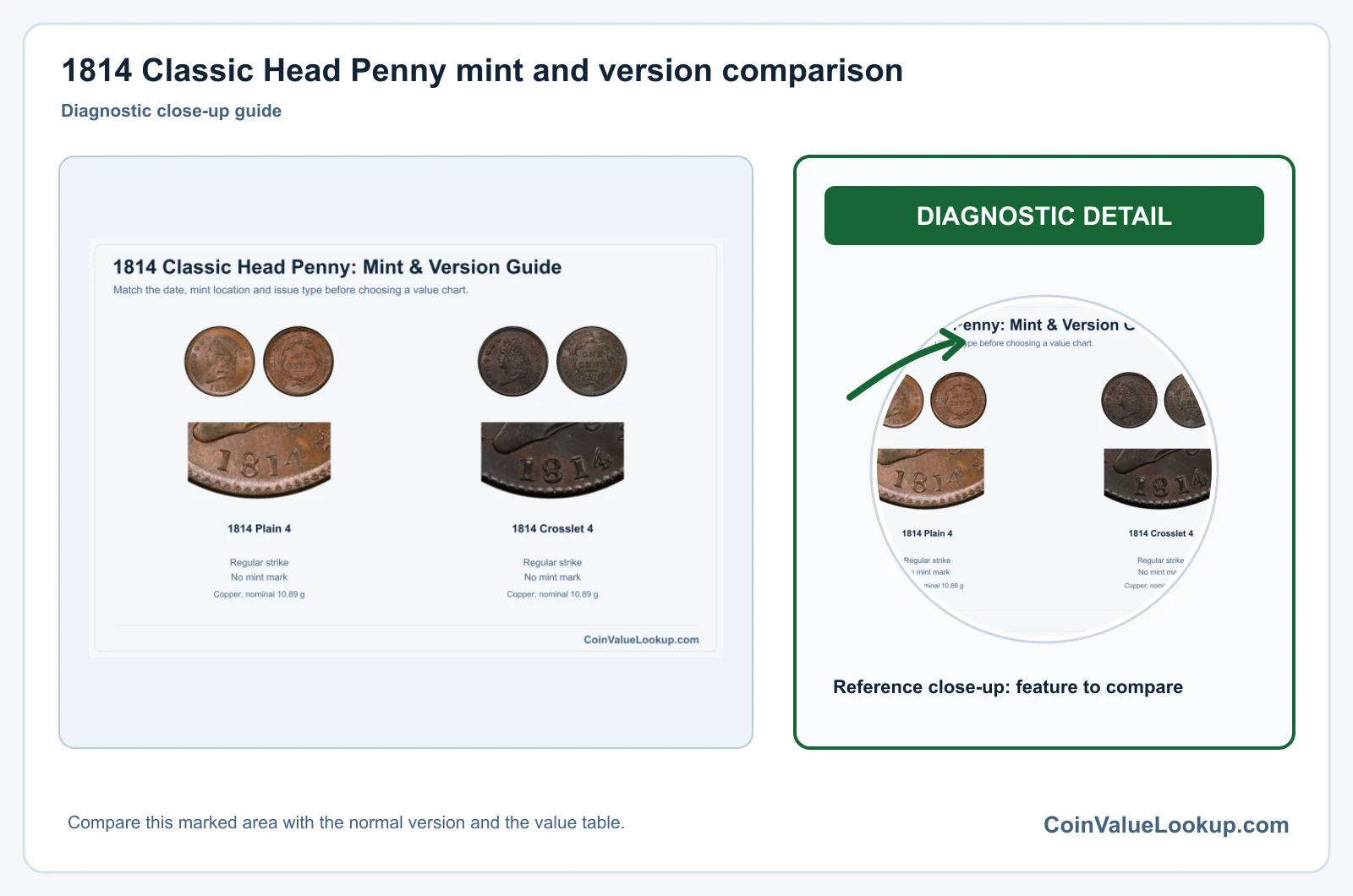
- The Plain 4 variety has guide values from $132 (G4) to $2,496 (EF40) — check whether the horizontal stroke of the 4 has a serif.
- The Crosslet 4 shares the same guide range but is a distinct variety identified by a small crossbar on the 4.
- Several reported mint error categories exist for this date, including off-center strikes and brockages, which could carry premiums tied to severity and authentication.
Step 1: Identify Your 1814 Classic Head Cent Mint Mark and Version
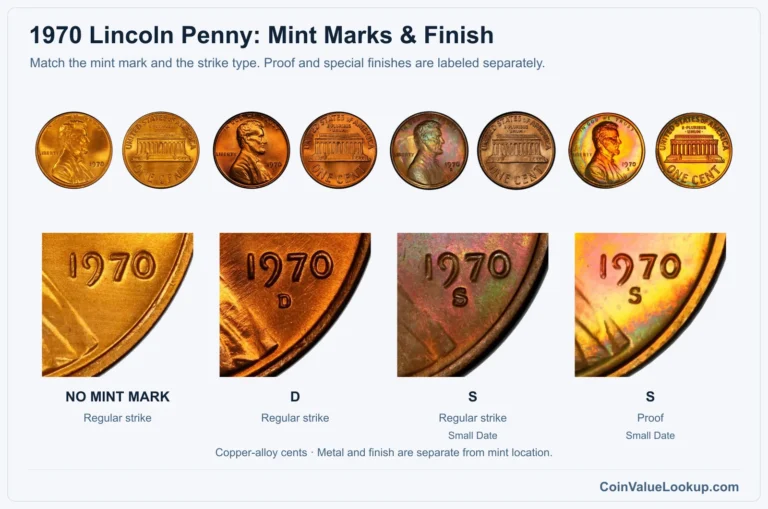
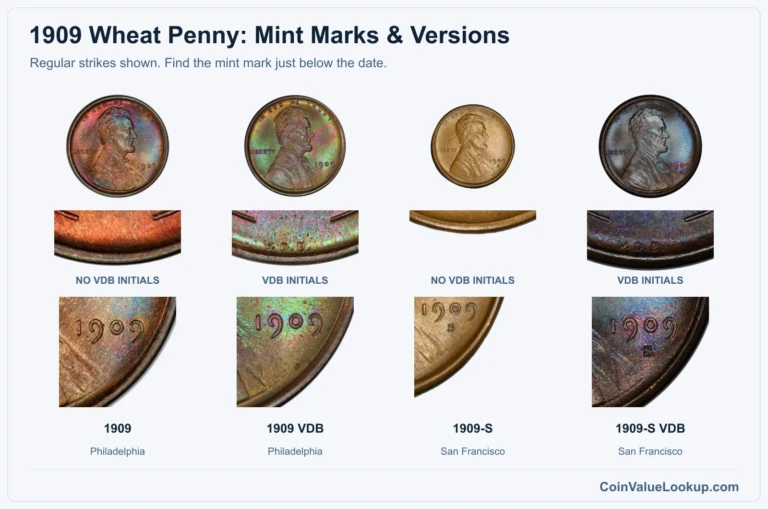
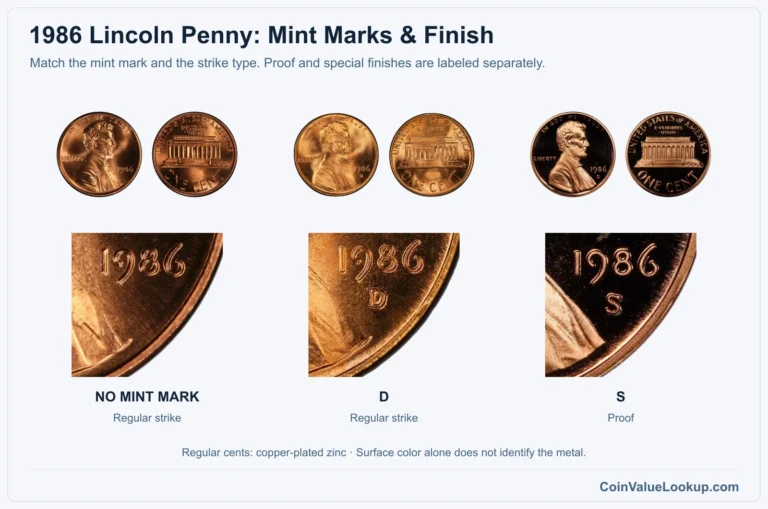
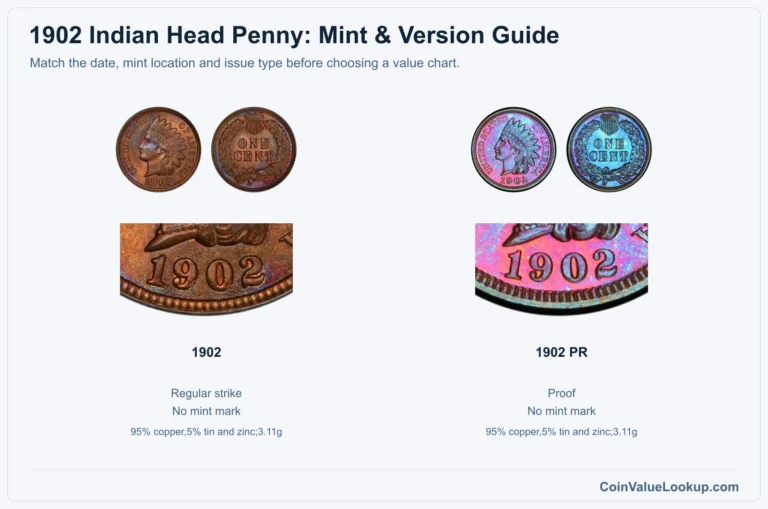
Every 1814 Classic Head Cent was struck at Philadelphia, so there is no mintmark to look for. The main identification task is deciding whether your coin is the Plain 4 or the Crosslet 4 variety.
Look closely at the numeral "4" in the date: the Crosslet 4 has a small additional serif or crossbar on the horizontal stroke, while the Plain 4 does not.
Inspect both sides and the edge carefully. Date-punch shape, legend wording, and wreath details all matter when pinning down the correct category.
Weight and material can support your identification — these are copper cents with a nominal weight of 10.89 grams — but wear, corrosion, and the production tolerances of the era mean weight alone does not prove authenticity.
If you are browsing other early cent dates, Coin Value Lookup has guides for many series that can help you compare your coin to the right reference.
Step 2: Check Your 1814 Classic Head Cent Grade
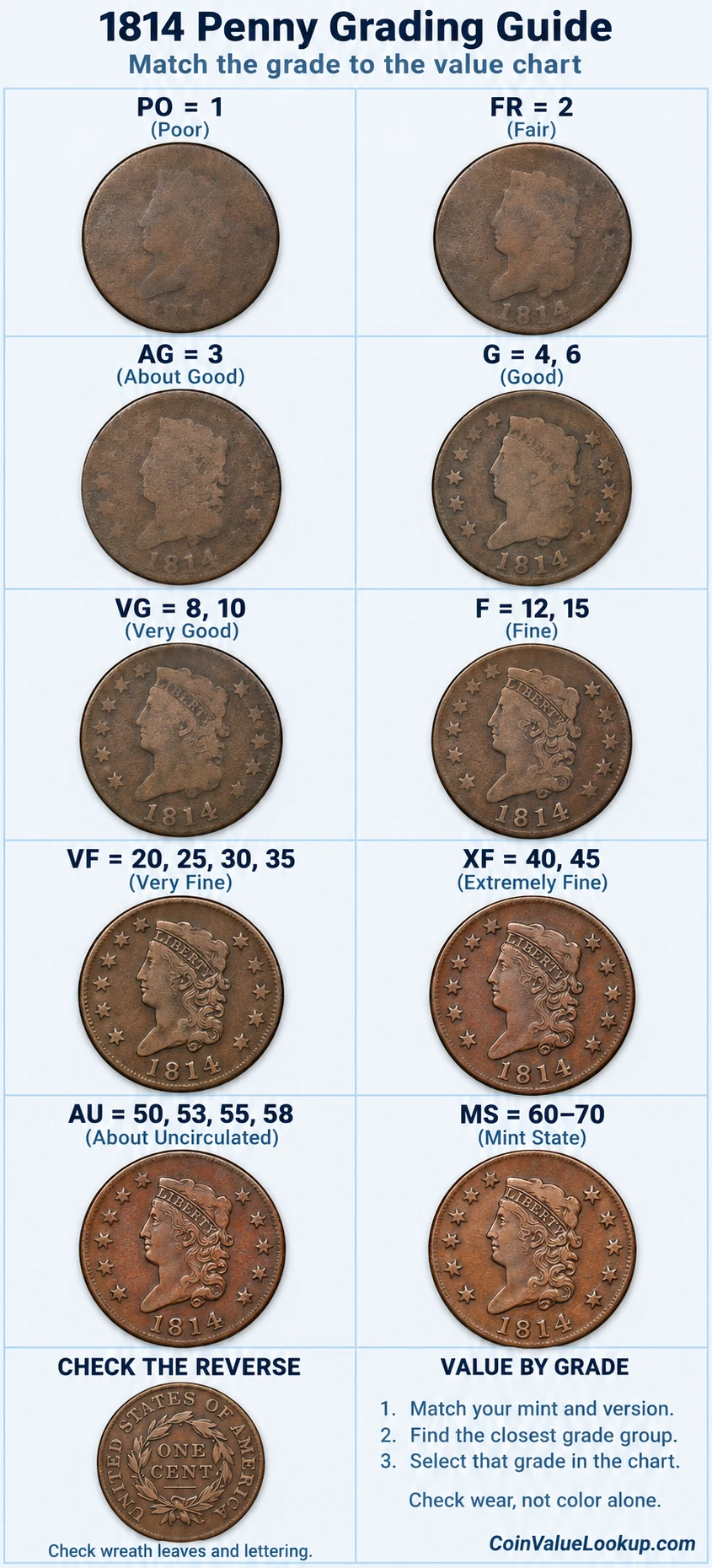
Start by comparing the hair detail and cheek on Liberty's portrait, the relief on the wreath leaves, and the sharpness of the lettering against known grade examples of the same type. The comparison image is your friend here — hold your coin next to it and look for matching wear patterns.
Do not confuse a weak strike with actual circulation wear. Early copper cents often came off the press with soft spots in the design, and that is not the same thing as a coin that spent decades in someone's pocket.
Surface problems like corrosion, porosity, or old cleaning can push the market value well below what a guide estimate suggests for the technical grade.
Color designations like BN (brown), RB (red-brown), and RD (red) describe the surface color of the copper, not different alloys or separate coin types. Proof is a manufacturing method, not a grade above Mint State.
Step 3: Check 1814 Classic Head Cent Value by Mint and Version
1814 Classic Head Cent — Plain 4
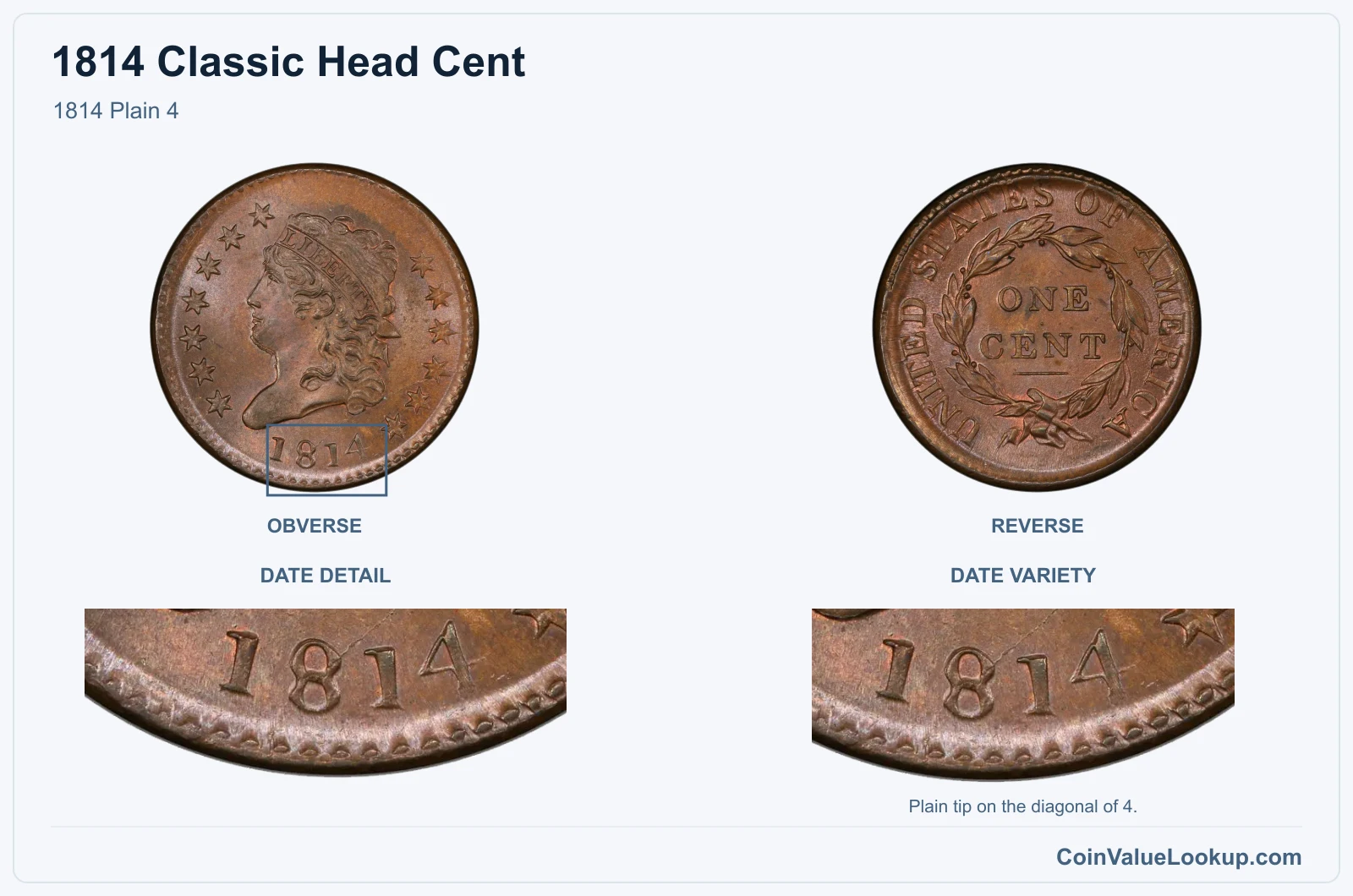
The 1814 Plain 4 is the variety without any extra serif on the horizontal arm of the numeral "4" in the date. It was struck at the Philadelphia Mint in copper, with a nominal weight of 10.89 grams and no mintmark.
The obverse carries the Classic Head portrait of Liberty; the reverse shows the denomination within a wreath.
USA Coin Book guide estimates run from about $132 in G4 to $2,496 in EF40. Those two grades represent very different coins: a G4 will have a mostly smooth portrait with only an outline visible, while an EF40 retains sharp hair detail and clear wreath leaves with just light highpoint wear.
| Range | Grade | Price | Auction Records | Appraisal |
|---|---|---|---|---|
| PO | PO 1 | — | Coin Identifier | |
| FR | FR 2 | — | Coin Identifier | |
| AG | AG 3 | Coin Identifier | ||
| G | G 4 | Coin Identifier | ||
| G 6 | Coin Identifier | |||
| VG | VG 8 | Coin Identifier | ||
| VG 10 | Coin Identifier | |||
| F | F 12 | Coin Identifier | ||
| F 15 | Coin Identifier | |||
| VF | VF 20 | Coin Identifier | ||
| VF 25 | Coin Identifier | |||
| VF 30 | Coin Identifier | |||
| VF 35 | Coin Identifier | |||
| XF | XF 40 | Coin Identifier | ||
| XF 45 | Coin Identifier | |||
| AU | AU 50 | Coin Identifier | ||
| AU 53 | Coin Identifier | |||
| AU 55 | Coin Identifier | |||
| AU 58 | Coin Identifier | |||
| MS | MS 60 | Coin Identifier | ||
| MS 61 | Coin Identifier | |||
| MS 62 | Coin Identifier | |||
| MS 63 | Coin Identifier | |||
| MS 64 | Coin Identifier | |||
| MS 65 | Coin Identifier | |||
| MS 66 | Coin Identifier | |||
| MS 67 | — | Coin Identifier | ||
| MS 68 | — | — | — | |
| MS 69 | — | — | — | |
| MS 70 | — | — | — |
1814 Classic Head Cent — Crosslet 4
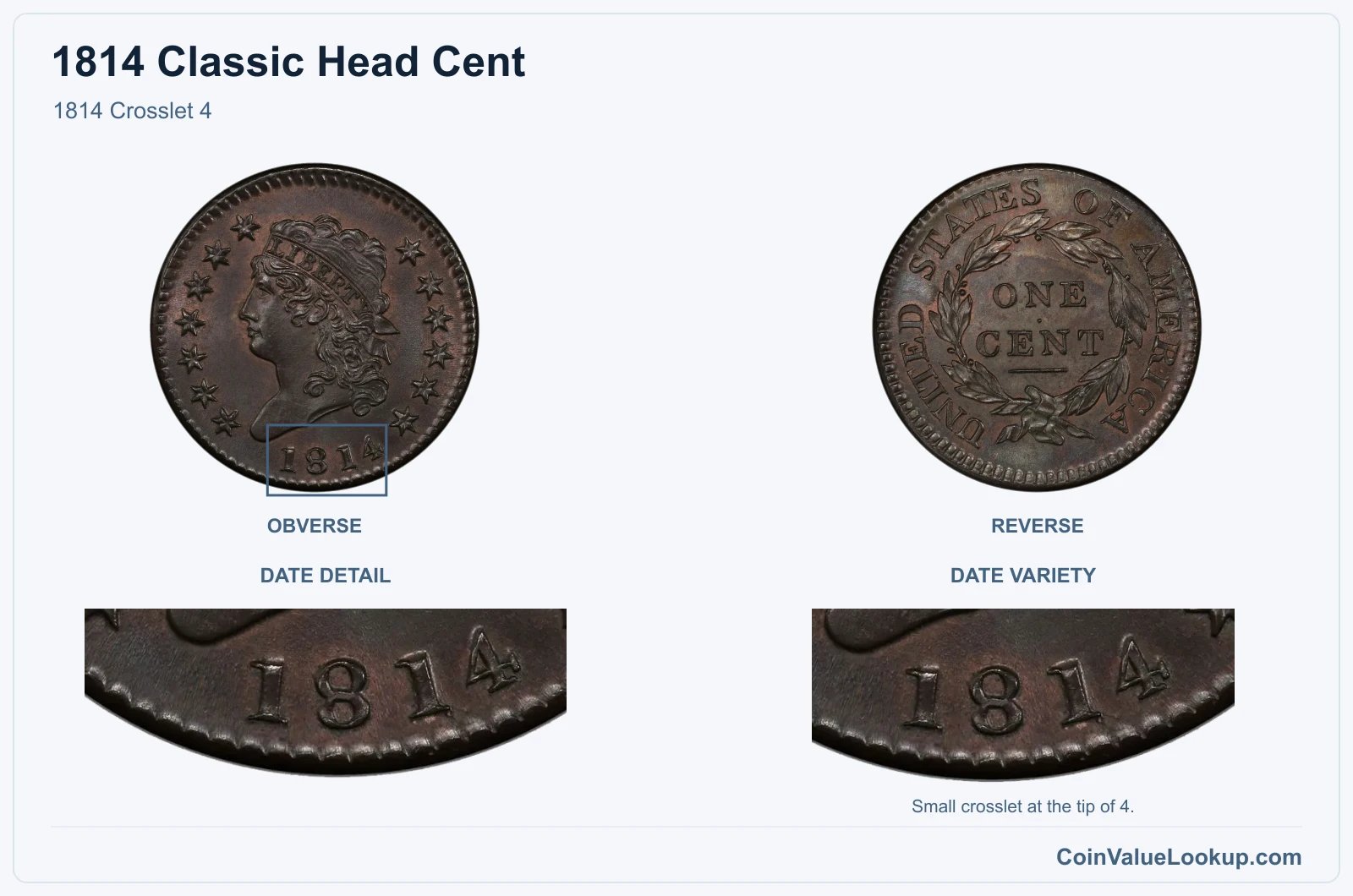
The 1814 Crosslet 4 is distinguished by a small serif or crossbar on the horizontal stroke of the "4" in the date. That little detail is the entire difference from the Plain 4.
Everything else — the Philadelphia Mint origin, the copper composition, the 10.89-gram nominal weight, and the Classic Head design — is identical.
USA Coin Book lists the same guide range here: roughly $132 at G4 and $2,496 at EF40. Because the crosslet is a subtle feature, it can wear away on heavily circulated coins, making lower-grade examples harder to attribute confidently.
A magnifying glass and good light on the date are essential. If corrosion or damage obscures the horizontal bar of the 4, you may need a second opinion from an experienced early copper specialist.
| Range | Grade | Price | Auction Records | Appraisal |
|---|---|---|---|---|
| PO | PO 1 | — | Coin Identifier | |
| FR | FR 2 | — | Coin Identifier | |
| AG | AG 3 | — | Coin Identifier | |
| G | G 4 | Coin Identifier | ||
| G 6 | Coin Identifier | |||
| VG | VG 8 | Coin Identifier | ||
| VG 10 | Coin Identifier | |||
| F | F 12 | Coin Identifier | ||
| F 15 | Coin Identifier | |||
| VF | VF 20 | Coin Identifier | ||
| VF 25 | Coin Identifier | |||
| VF 30 | Coin Identifier | |||
| VF 35 | Coin Identifier | |||
| XF | XF 40 | Coin Identifier | ||
| XF 45 | Coin Identifier | |||
| AU | AU 50 | Coin Identifier | ||
| AU 53 | Coin Identifier | |||
| AU 55 | Coin Identifier | |||
| AU 58 | Coin Identifier | |||
| MS | MS 60 | — | Coin Identifier | |
| MS 61 | Coin Identifier | |||
| MS 62 | Coin Identifier | |||
| MS 63 | Coin Identifier | |||
| MS 64 | Coin Identifier | |||
| MS 65 | Coin Identifier | |||
| MS 66 | — | Coin Identifier | ||
| MS 67 | — | Coin Identifier | ||
| MS 68 | — | — | — | |
| MS 69 | — | — | — | |
| MS 70 | — | — | — |
1814 Classic Head Cent Error List
1. 1814 Classic Head Cent — Lamination / Split Planchet
A lamination error on an 1814 Classic Head Cent shows as peeling, flaking, or separated metal on the surface. The copper may lift in a retained flap or split into distinct layers visible from the edge.
Photograph the edge and the affected face together to document the separation.
This category has been reported for the 1814 cent, though no specific numeric price range is adopted. Value depends on the authenticated identity of the coin, the severity and visibility of the lamination, and overall condition.
Be careful not to confuse scraping, deep corrosion, or a deliberately cut coin with a genuine planchet lamination — the difference matters for both attribution and value.
2. 1814 Classic Head Cent — Die Crack
Die cracks appear as thin, raised lines running across the fields or devices of the coin. They formed when the steel die fractured during use, and the crack transferred as a ridge onto every coin struck afterward.
On an 1814 cent, look for lines that cross design elements without interruption — they follow the die, not the coin's surface.
No specific price range is adopted for this error on the 1814 date. The premium depends on length, location, and the coin's authenticated grade.
Do not mistake an incuse scratch, a corrosion line, or a tool mark for a die crack. Scratches are recessed into the surface; die cracks are raised above it.
A loupe and angled light make the distinction much easier.
3. 1814 Classic Head Cent — Die Break / Cud
A die break or cud occurs when a chunk of the die literally breaks away, leaving a raised, featureless blob on the struck coin. A true cud connects to the rim, forming a lump where design detail should be.
Interior die breaks that do not touch the rim are related but technically distinct.
This error category is reported for the 1814 Classic Head Cent, but no numeric price range is adopted. Pricing depends on size, location, and the coin's overall condition and authentication.
A rim dent, corrosion buildup, or a small interior die chip can look similar at first glance. The key is that a cud is raised metal with a clean, bounded shape, not damage pushed inward.
4. 1814 Classic Head Cent — Off-Center Strike
An off-center strike means the planchet was not seated properly between the dies, so part of the design is missing and a blank crescent appears on one side. The more dramatic the displacement, the more visually striking the coin — but collectors generally want the date to remain visible for attribution.
This error has been reported for the 1814 cent. No adopted price range exists; each example must be evaluated by its authenticated identity, the percentage off center, and whether the date and enough design survive to confirm the year.
A clipped planchet, one-sided die misalignment, or post-mint flattening can mimic an off-center look, so careful examination of the edge and metal flow is important.
5. 1814 Classic Head Cent — Clipped Planchet
A clipped planchet error shows a missing curved, straight, or ragged section of the original copper blank. The clip happened before striking, so the remaining metal often shows weakness or distortion opposite the missing area — that "Blakesley effect" is a useful diagnostic clue.
Reported for the 1814 date, clipped planchet errors carry no adopted numeric price range. Value hinges on the clip's size, shape, and how much of the design remains intact, plus the coin's authenticated grade.
Watch out for coins that were filed, cut, or corroded after leaving the mint. A genuine clip will show natural edge texture consistent with the blank's original preparation, not sharp tool marks.
6. 1814 Classic Head Cent — Brockage
A brockage is one of the more dramatic mint errors you can find. It happens when a previously struck coin sticks to a die and impresses its design — in mirror-image, incuse form — onto the next coin fed into the press.
One side of the brockage coin looks normal; the other shows a sunken, reversed copy of a design.
This category has been reported for the 1814 Classic Head Cent by PCGS. No numeric price range is adopted, so each piece must be assessed individually based on its authenticated identity, the clarity and completeness of the incuse impression, and the coin's condition.
A die clash or a coin pressed against another after minting can create a faint ghost image, but a true brockage has deep, fully formed incuse detail.
7. 1814 Classic Head Cent — Double / Multiple Strike
A double or multiple strike occurs when a coin is hit by the dies more than once, with the planchet shifting or rotating between impacts. The result is two or more overlapping but displaced impressions of the design.
You will see separate outlines of Liberty's portrait, doubled legends, or rotated wreaths — not just thickened lettering.
Reported for the 1814 cent, this error has no adopted price range. Pricing depends on the number of strikes, degree of displacement, and the coin's authenticated condition.
Do not confuse a doubled die — which is a single strike from a die bearing a doubled image — with a true double strike. Also rule out post-mint impressions made outside the minting process, which lack the sharp detail of a genuine second strike.
8. 1814 Classic Head Cent — Indented Strike
An indented strike happens when a blank planchet or other object overlaps the coin being struck, leaving a bounded depressed area in the design. The indent has a distinct edge and the metal underneath is typically flat or weakly impressed, not simply dented inward like post-mint damage.
This error is reported for the 1814 Classic Head Cent. No numeric price range is adopted.
Each example requires individual assessment based on authenticated identity, the size and placement of the indent, and overall condition. The main lookalike is a post-mint dent, which usually shows displaced metal and sharper edges.
A brockage might also be confused with an indent, but a brockage carries a readable, mirrored design impression inside the depressed area — an indent does not.