1801 Draped Bust Cent Coin Value: How Much Is It Worth?
The 1801 Draped Bust Cent is a coin that rewards careful variety identification. Guide estimates from USA Coin Book range from about $103 in G4 for the ordinary Normal Reverse up to $10,013 in EF40 for the famous Three Errors Reverse variety.
That is not the entire market range, and rare proofs, restrikes or major errors require separate pricing. Pinpointing your exact variety is the critical first step before assigning any value.
Fast Way to Identify Your 1801 Draped Bust Cent
The fastest way to start figuring out what you have is to upload clear photos of both the front and back of your coin. Our identifier can give you a preliminary read on the date, design type and general variety based on those images.
It will not authenticate, certify or assign a precise grade, but it gets you pointed in the right direction quickly.
1801 Draped Bust Cent Value
Upload both sides of your 1801 Draped Bust Cent.
Front Obverse
Upload photo
Back Reverse
Upload photo
Which 1801 Draped Bust Cent Versions Are Worth Money?
- The Three Errors Reverse (1/000 fraction, one stem, IINITED) carries the highest guide values, listed at $556 in G4 and $10,013 in EF40 per USA Coin Book.
- The corrected 1/100 over 1/000 fraction variety lists at $223 in G4 and $6,827 in EF40, reflecting its recognizable overdate-style correction.
- The standalone 1/000 fraction variety without the other blunders lists at $186 in G4 and $5,218 in EF40.
- Mint errors such as clipped planchets, die cracks, die breaks and laminations are reported for this date and may add collector interest depending on severity and condition.
Step 1: Identify Your 1801 Draped Bust Cent Mint Mark and Version
Every 1801 cent was struck at Philadelphia, so there is no mintmark to hunt for. Do not let anyone tell you a branch-mint version exists.
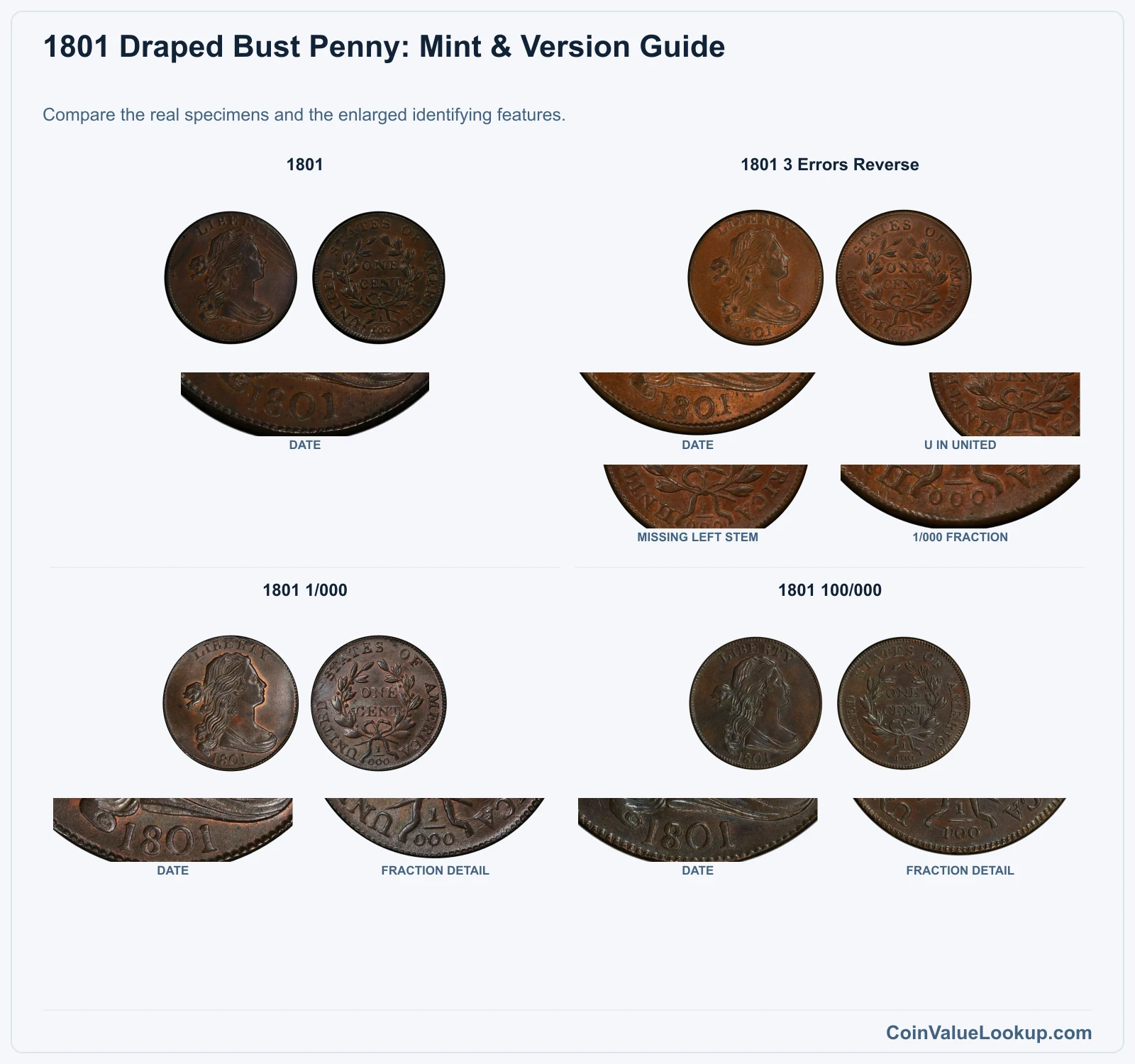
The real game is on the reverse. Look at three things: the fraction below the wreath, the number of wreath stems, and the spelling of UNITED.
On the Normal Reverse you will see a correct 1/100 fraction, two wreath stems and properly spelled UNITED STATES. If any of those differ, you have a recognized variety.
The Three Errors Reverse shows all three blunders at once: a 1/000 fraction (the "1" sits over three zeroes with no denominator change), only one wreath stem instead of two, and IINITED instead of UNITED. The 1/000 fraction variety has the wrong fraction but normal stems and spelling.
The corrected 1/100 over 1/000 shows a clear overdate-style correction in the fraction where the proper digits were punched over the original 1/000.
Use a loupe and good lighting. Examine the date-punch shape and legend wording on both sides, plus the edge.
Weight should be near 10.89 grams in copper, but wear, corrosion and original production tolerances mean weight alone cannot prove authenticity.
Step 2: Check Your 1801 Draped Bust Cent Grade
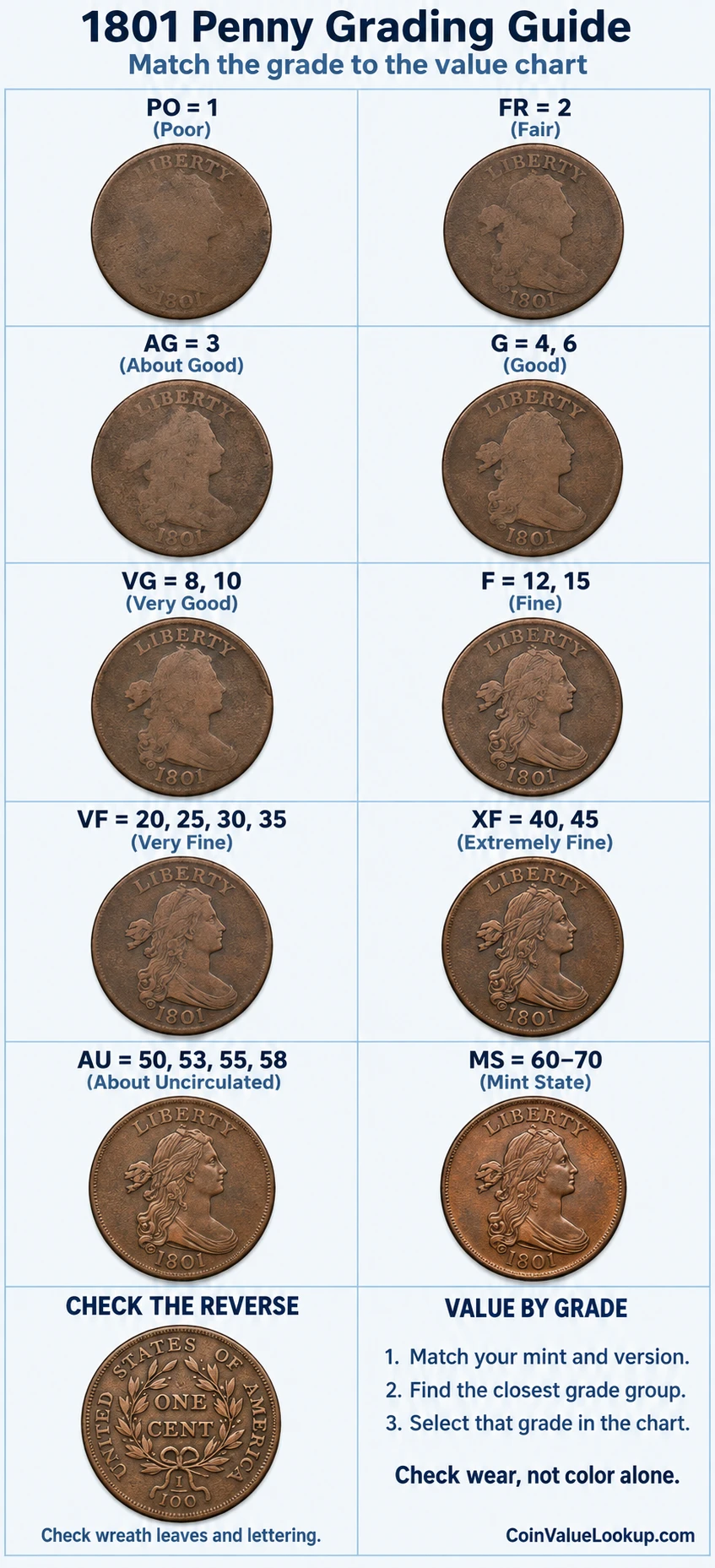
Start with the portrait on the obverse. In lower grades like Good-4, Liberty's head is a smooth silhouette with almost no hair detail, but the date and LIBERTY must still be readable.
As you move up through Fine and Very Fine, individual hair strands above the ear and behind the neck reappear progressively.
The cheek is a key wear point. A flat, featureless cheek suggests heavy circulation.
On the reverse, check the wreath leaves; their veins and individual tips wear away before the stems do.
Do not confuse a weak strike with wear. Some 1801 cents left the press with mushy detail, especially near the rims.
Look at the highest points of the design: if they show original surface texture but lack sharpness, the die may simply have been tired.
Corrosion, porosity and old cleaning can drag market value well below what the structural wear alone suggests. A coin that grades VF by sharpness but has been scrubbed or shows green pitting will not command VF money.
Use the comparison image to judge like-type examples side by side, and treat BN, RB and RD as color descriptions on copper surfaces, not different alloys or automatic premiums.
Step 3: Check 1801 Draped Bust Cent Value by Mint and Version
1801 Draped Bust Cent
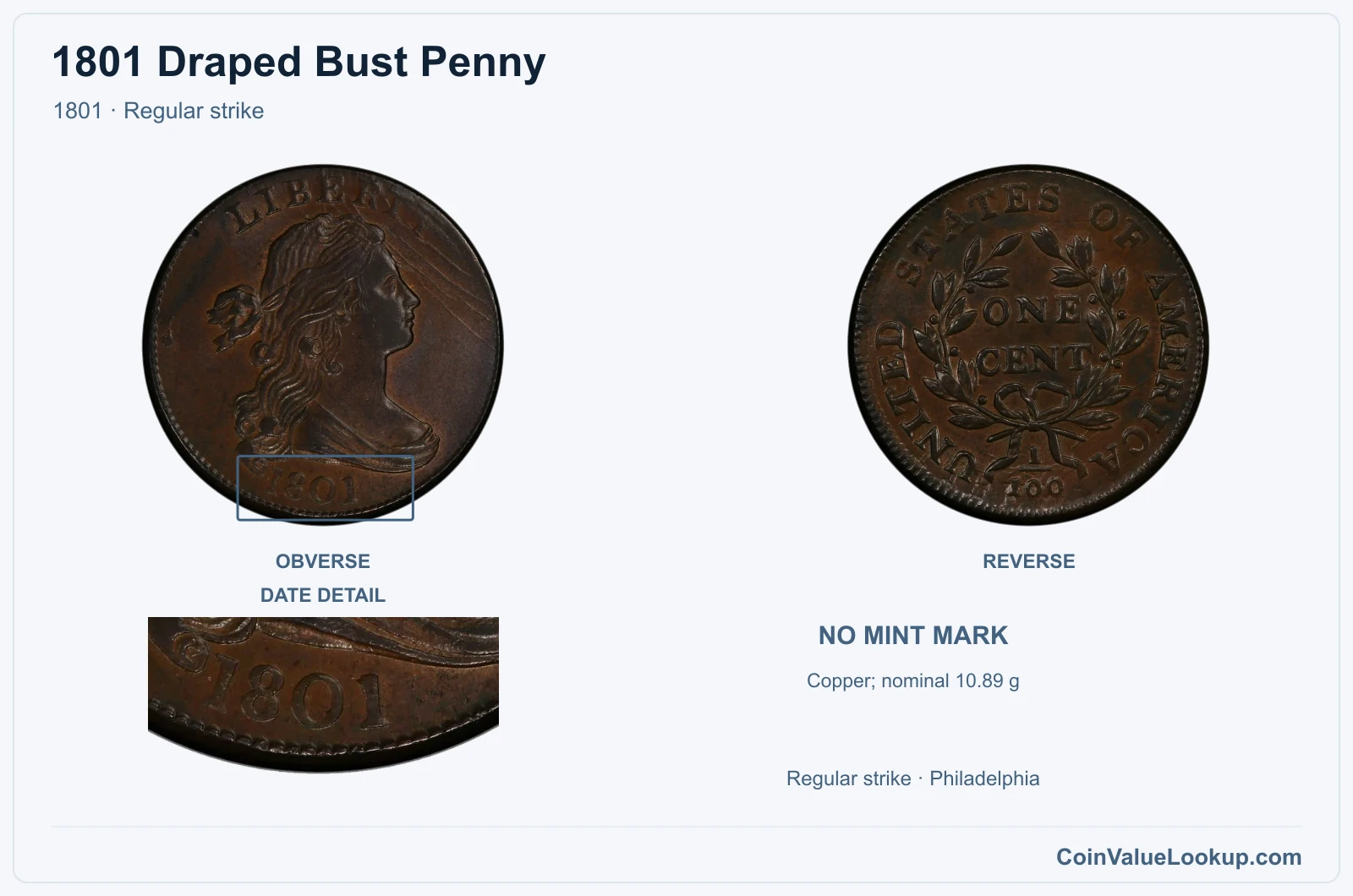
This is the standard 1801 Draped Bust Cent with a Normal Reverse. The fraction reads 1/100 correctly, two wreath stems are present, and UNITED is spelled properly.
It is the most commonly encountered version of the date.
USA Coin Book lists guide values of about $103 in G4 and $1,877 in EF40. Even the ordinary version is a scarce early copper coin more than two centuries old, so problem-free examples with decent surfaces still draw attention.
Confirm the fraction and lettering carefully before assuming you have this branch rather than one of the blundered varieties.
| Range | Grade | Price | Auction Records | Appraisal |
|---|---|---|---|---|
| PO | PO 1 | Coin Identifier | ||
| FR | FR 2 | Coin Identifier | ||
| AG | AG 3 | Coin Identifier | ||
| G | G 4 | Coin Identifier | ||
| G 6 | Coin Identifier | |||
| VG | VG 8 | Coin Identifier | ||
| VG 10 | Coin Identifier | |||
| F | F 12 | Coin Identifier | ||
| F 15 | Coin Identifier | |||
| VF | VF 20 | Coin Identifier | ||
| VF 25 | Coin Identifier | |||
| VF 30 | Coin Identifier | |||
| VF 35 | Coin Identifier | |||
| XF | XF 40 | Coin Identifier | ||
| XF 45 | Coin Identifier | |||
| AU | AU 50 | Coin Identifier | ||
| AU 53 | Coin Identifier | |||
| AU 55 | Coin Identifier | |||
| AU 58 | Coin Identifier | |||
| MS | MS 60 | — | Coin Identifier | |
| MS 61 | — | Coin Identifier | ||
| MS 62 | Coin Identifier | |||
| MS 63 | Coin Identifier | |||
| MS 64 | Coin Identifier | |||
| MS 65 | — | — | — | |
| MS 66 | — | — | — | |
| MS 67 | — | — | — | |
| MS 68 | — | — | — | |
| MS 69 | — | — | — | |
| MS 70 | — | — | — |
1801 Draped Bust Cent — 3 Errors Reverse
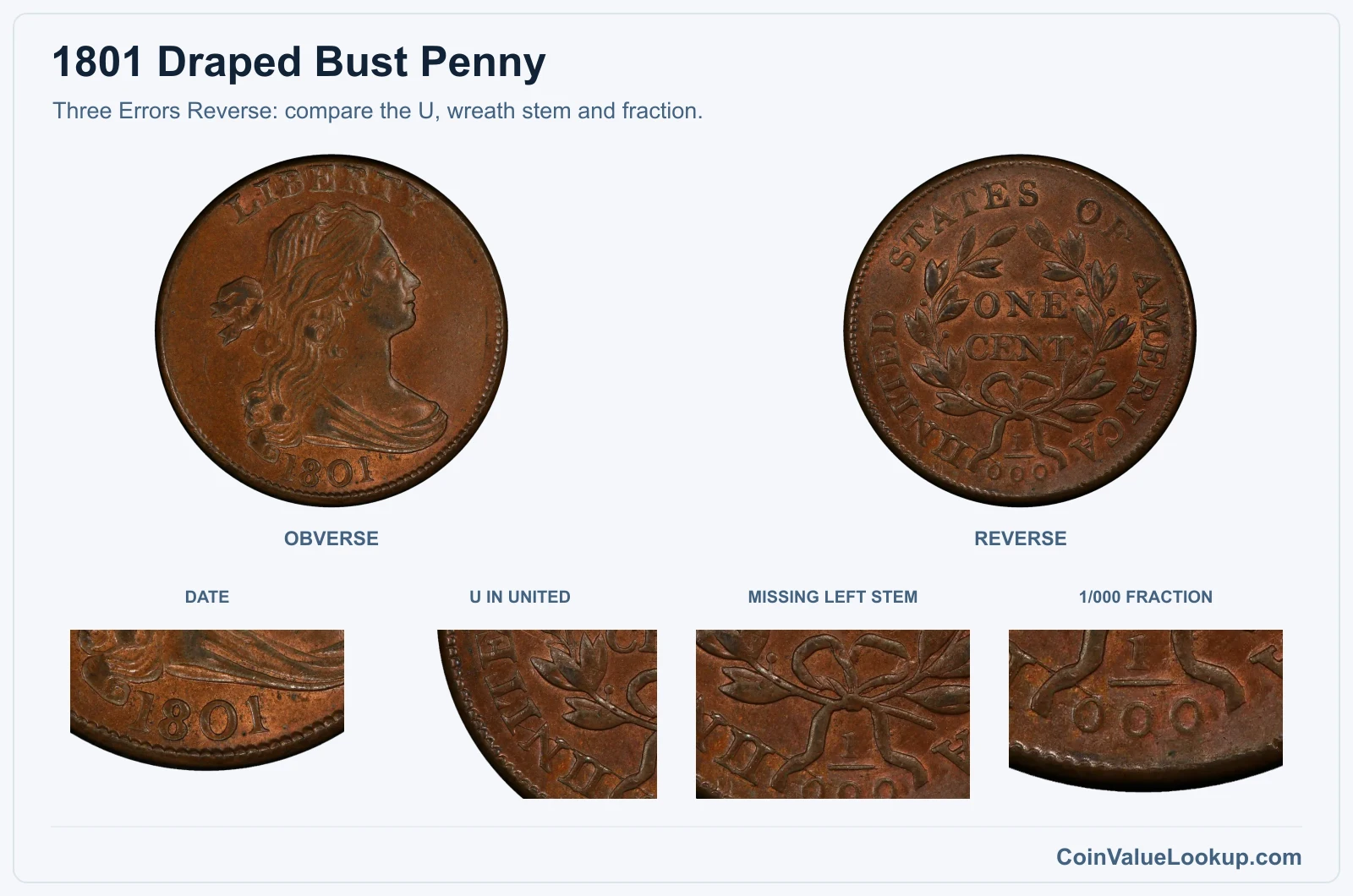
The Three Errors Reverse is the marquee variety of the 1801 cent. Three distinct die blunders appear together: the fraction reads 1/000 instead of 1/100, only one wreath stem is present where there should be two, and the legend spells IINITED instead of UNITED.
PCGS recognizes this as a major variety.
USA Coin Book guide estimates run $556 in G4 up to $10,013 in EF40. To confirm you have the real thing, all three errors must be present on the same coin.
A loupe will help with the fraction; the first "I" in IINITED can look like a worn U to the naked eye, so magnification matters. If you only see the fraction error, you likely have the standalone 1/000 variety instead.
Coin Value Lookup is a useful starting point when you want to look up guide values for other early copper dates and varieties. You can browse by denomination and year to compare how your 1801 cent stacks up against the rest of the Draped Bust series.
| Range | Grade | Price | Auction Records | Appraisal |
|---|---|---|---|---|
| PO | PO 1 | — | Coin Identifier | |
| FR | FR 2 | — | Coin Identifier | |
| AG | AG 3 | Coin Identifier | ||
| G | G 4 | Coin Identifier | ||
| G 6 | Coin Identifier | |||
| VG | VG 8 | Coin Identifier | ||
| VG 10 | Coin Identifier | |||
| F | F 12 | Coin Identifier | ||
| F 15 | Coin Identifier | |||
| VF | VF 20 | Coin Identifier | ||
| VF 25 | Coin Identifier | |||
| VF 30 | Coin Identifier | |||
| VF 35 | Coin Identifier | |||
| XF | XF 40 | Coin Identifier | ||
| XF 45 | Coin Identifier | |||
| AU | AU 50 | — | Coin Identifier | |
| AU 53 | Coin Identifier | |||
| AU 55 | — | Coin Identifier | ||
| AU 58 | Coin Identifier | |||
| MS | MS 60 | — | Coin Identifier | |
| MS 61 | — | Coin Identifier | ||
| MS 62 | — | Coin Identifier | ||
| MS 63 | Coin Identifier | |||
| MS 64 | — | — | — | |
| MS 65 | — | — | — | |
| MS 66 | — | — | — | |
| MS 67 | — | — | — | |
| MS 68 | — | — | — | |
| MS 69 | — | — | — | |
| MS 70 | — | — | — |
1801 Draped Bust Cent — 1/000
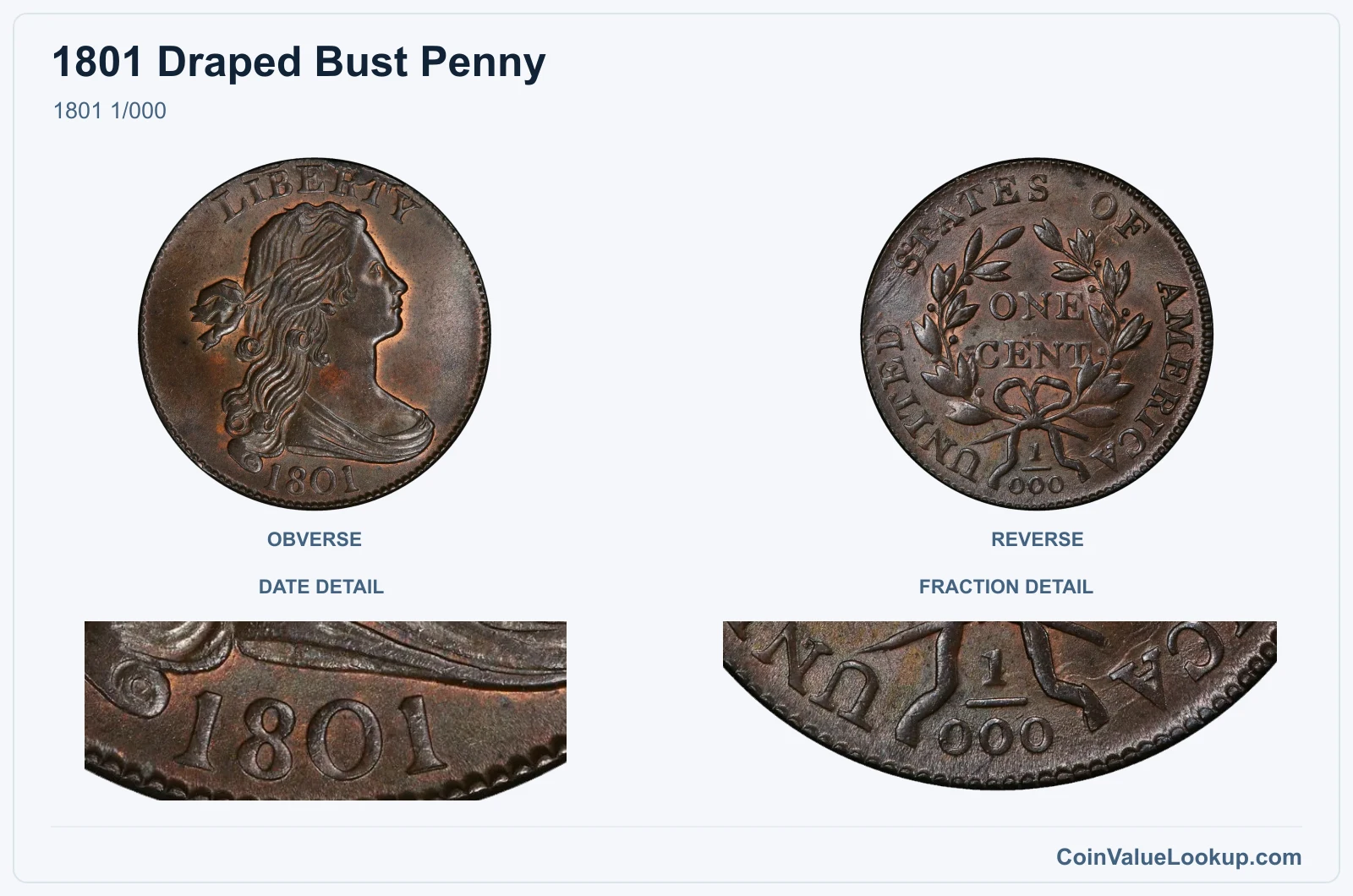
This variety shows a 1/000 fraction beneath the wreath, but the wreath retains two stems and UNITED is spelled correctly. It is a separate branch from the Three Errors Reverse.
USA Coin Book lists about $186 in G4 and $5,218 in EF40. To identify it, focus on the fraction: three zeroes sit below the bar with no correcting punch visible.
Then check the stems and legend. If you see one stem or IINITED, you have crossed into Three Errors territory.
On well-worn examples the fraction can be hard to read, so good lighting and magnification are essential.
| Range | Grade | Price | Auction Records | Appraisal |
|---|---|---|---|---|
| PO | PO 1 | — | Coin Identifier | |
| FR | FR 2 | Coin Identifier | ||
| AG | AG 3 | Coin Identifier | ||
| G | G 4 | Coin Identifier | ||
| G 6 | Coin Identifier | |||
| VG | VG 8 | Coin Identifier | ||
| VG 10 | Coin Identifier | |||
| F | F 12 | Coin Identifier | ||
| F 15 | Coin Identifier | |||
| VF | VF 20 | Coin Identifier | ||
| VF 25 | Coin Identifier | |||
| VF 30 | Coin Identifier | |||
| VF 35 | Coin Identifier | |||
| XF | XF 40 | Coin Identifier | ||
| XF 45 | — | Coin Identifier | ||
| AU | AU 50 | Coin Identifier | ||
| AU 53 | Coin Identifier | |||
| AU 55 | — | Coin Identifier | ||
| AU 58 | Coin Identifier | |||
| MS | MS 60 | Coin Identifier | ||
| MS 61 | — | Coin Identifier | ||
| MS 62 | Coin Identifier | |||
| MS 63 | Coin Identifier | |||
| MS 64 | — | Coin Identifier | ||
| MS 65 | — | — | — | |
| MS 66 | — | — | — | |
| MS 67 | — | — | — | |
| MS 68 | — | — | — | |
| MS 69 | — | — | — | |
| MS 70 | — | — | — |
1801 Draped Bust Cent — 100/000
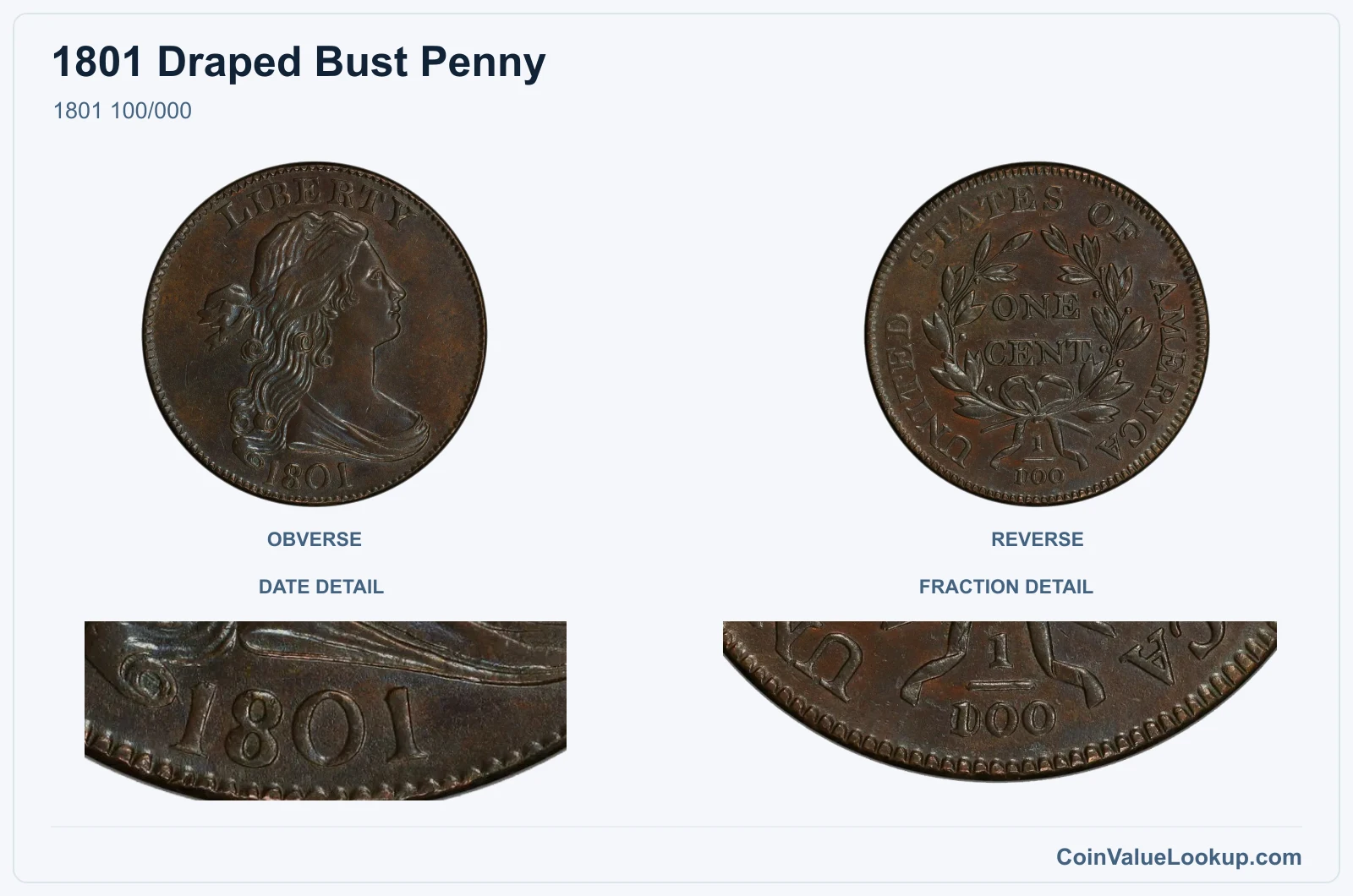
Here the original 1/000 fraction was corrected by overpunching the proper 1/100 digits on top of the erroneous ones. You can see remnants of the original three zeroes beneath the corrected fraction, giving it an overdate-style look.
Two wreath stems and correct UNITED lettering are present.
USA Coin Book lists approximately $223 in G4 and $6,827 in EF40. The diagnostic is the ghost of the underlying zeroes peeking through the corrected digits.
Tilt the coin under a direct light source to catch the traces. Heavy wear can erase those traces, making this variety easy to mistake for the Normal Reverse in low grades.
| Range | Grade | Price | Auction Records | Appraisal |
|---|---|---|---|---|
| PO | PO 1 | — | Coin Identifier | |
| FR | FR 2 | — | Coin Identifier | |
| AG | AG 3 | — | Coin Identifier | |
| G | G 4 | — | Coin Identifier | |
| G 6 | — | Coin Identifier | ||
| VG | VG 8 | Coin Identifier | ||
| VG 10 | — | Coin Identifier | ||
| F | F 12 | Coin Identifier | ||
| F 15 | Coin Identifier | |||
| VF | VF 20 | Coin Identifier | ||
| VF 25 | Coin Identifier | |||
| VF 30 | Coin Identifier | |||
| VF 35 | Coin Identifier | |||
| XF | XF 40 | Coin Identifier | ||
| XF 45 | Coin Identifier | |||
| AU | AU 50 | Coin Identifier | ||
| AU 53 | — | Coin Identifier | ||
| AU 55 | Coin Identifier | |||
| AU 58 | — | Coin Identifier | ||
| MS | MS 60 | — | Coin Identifier | |
| MS 61 | — | Coin Identifier | ||
| MS 62 | — | Coin Identifier | ||
| MS 63 | — | — | — | |
| MS 64 | — | — | — | |
| MS 65 | — | — | — | |
| MS 66 | — | — | — | |
| MS 67 | — | — | — | |
| MS 68 | — | — | — | |
| MS 69 | — | — | — | |
| MS 70 | — | — | — |
1801 Draped Bust Cent Error List
1. 1801 Draped Bust Cent — Clipped Planchet
A clipped planchet error on an 1801 cent shows a missing curved, straight or ragged section of the original copper blank. The clip is part of the coin as struck, not something added later.
Look at the area opposite the clip. Genuine clips often produce slight weakness in the design on the far side because the planchet did not completely fill the die chamber.
That opposite-side weakness is a useful confirmation.
Do not confuse a clip with a filed edge, a post-strike cut or corrosion that ate away the rim. Filed areas typically show tool marks under magnification, and corrosion has an irregular, pitted texture rather than a smooth arc.
Values depend on the authenticated variety, the size and type of clip, and overall condition; no standard numeric range is adopted here.
2. 1801 Draped Bust Cent — Die Crack
Die cracks appear as thin, raised lines running across the surface of the coin. They follow the path where the steel die fractured during use, transferring a ridge of metal onto every coin struck afterward.
On an 1801 cent, look for lines that cross open fields or cut through letters and devices. They are raised above the surface, which distinguishes them from scratches, which are incised into the metal.
Corrosion lines and tool marks also sit in the surface rather than above it.
Trace the crack from start to finish and photograph it with the full dated coin visible. Value depends on length, location, the specific variety and the coin's grade.
No adopted numeric range exists, so individual assessment by a knowledgeable dealer or grading service is the best path.
3. 1801 Draped Bust Cent — Die Break / Cud
A die break or cud occurs when a chunk of the die itself breaks away. The result is a raised, featureless blob of metal on the coin's surface.
A true cud connects to the rim; interior breaks that do not reach the rim are sometimes called retained die breaks.
Check the boundary of the raised area. It should have a distinct edge where normal design detail resumes.
Compare this with rim dents, which push metal inward and often show displaced design rather than a flat, featureless lump. Corrosion bumps are irregular and lack a clean boundary.
No standard price range is adopted for this error on the 1801 cent. Value hinges on the size of the break, its location on the design, the underlying variety and the coin's overall condition.
4. 1801 Draped Bust Cent — Lamination / Split Planchet
A lamination or split planchet error shows peeling, flaking or outright separation within the copper. You might see a retained flap of metal lifting from the surface, or a missing layer exposing a rougher interior.
Photograph the edge alongside the affected face. Genuine laminations result from impurities or gas trapped during the planchet rolling process, and they often reveal a layered structure at the edge.
This separates them from scrapes or deliberate cuts, which leave sharp tool marks. Corrosion can mimic a lamination visually, but corroded areas tend to be pitted and uneven rather than showing clean separation planes.
No numeric price range is adopted for this error. Assessment depends on the extent of the separation, whether the flap is retained, the underlying variety and the coin's condition.
5. 1801 Draped Bust Cent — Blundered Fraction / Reverse Lettering
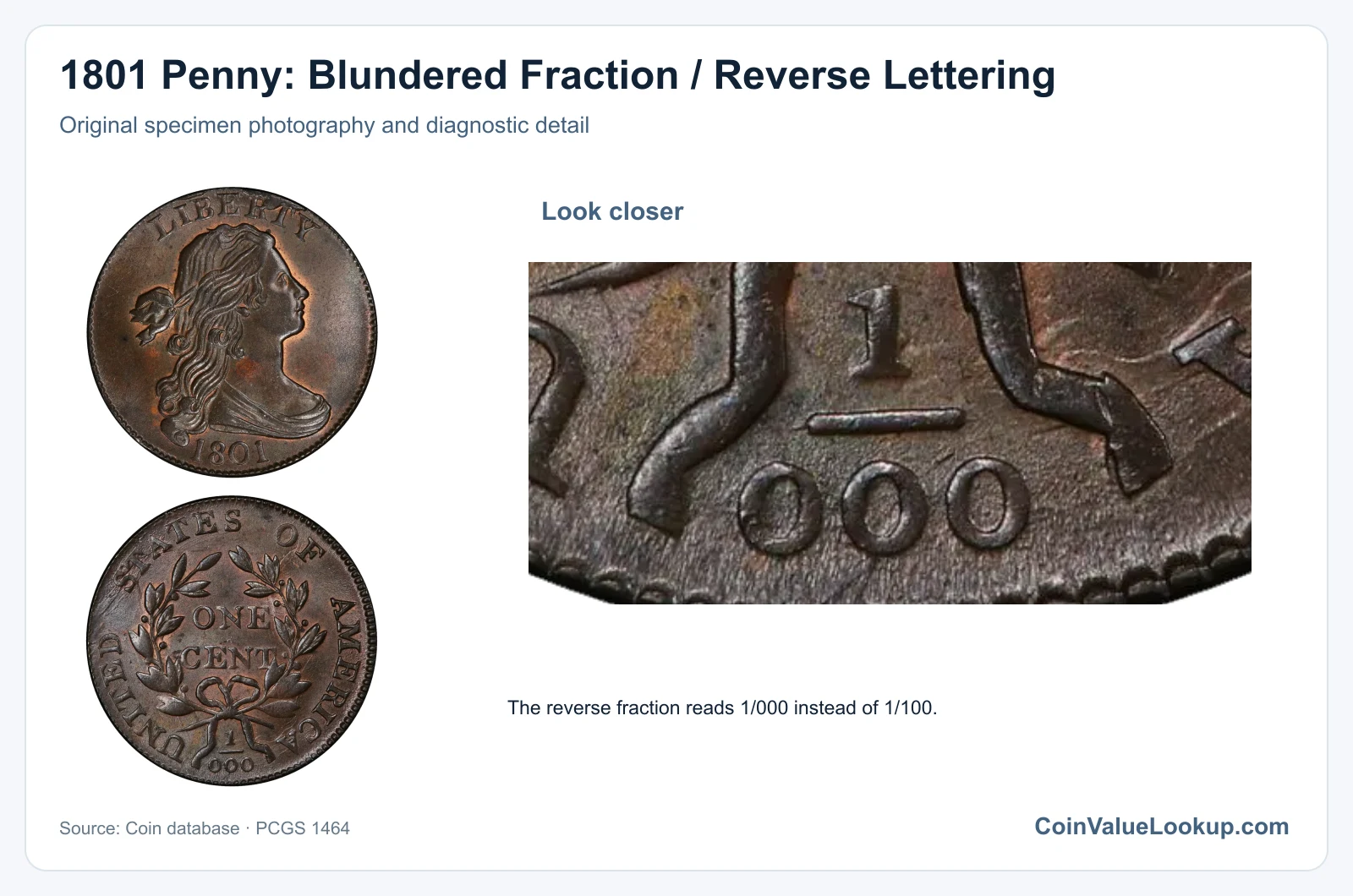
This category covers the blundered fraction and reverse lettering errors that define the 1801 cent's major varieties. Compare your reverse fraction against a normal 1/100 and check whether UNITED is correctly spelled.
The fraction may show 1/000 with no correction, 1/100 punched over 1/000 with ghost digits visible, or the standard 1/100. The legend may read IINITED instead of UNITED.
These are die-level blunders present from the moment of striking, not post-mint damage.
Heavy wear can obscure fraction digits or make a normal U resemble II, so use magnification. A scratched-out fraction bar or worn-away digits are not the same as a blundered die.
If the blunder matches a recognized variety listed above, refer to that variety's guide values. Otherwise, individual assessment is needed.