1858 Flying Eagle Cent Coin Value: How Much Is It Worth?
The 1858 Flying Eagle cent is one of those coins that rewards a close look. Guide estimates for ordinary business strikes range from about $38 in G4 to around $15,247 in MS63, depending on which variety you hold.
That spread is not the entire market picture — rare proofs, overdates and major errors each follow their own pricing. Identifying your exact variety is the essential first step before any valuation.
Fast Way to Identify Your 1858 Flying Eagle Cent
The quickest way to start figuring out what you have is to upload clear photos of the front and back of your coin. Good lighting and a steady hand help more than an expensive camera.
Our identifier can offer a preliminary read on the variety, letter size and general condition, giving you a direction for further research.
1858 Flying Eagle Cent Value
Upload both sides of your 1858 Flying Eagle Cent.
Front Obverse
Upload photo
Back Reverse
Upload photo
Which 1858 Flying Eagle Cent Versions Are Worth Money?
- The 1858/7 Strong overdate in MS63 carries a guide estimate around $15,247 — far above either standard letter variety at similar grades.
- Large Letters and Small Letters business strikes both start near $38 in G4 but diverge in higher grades, so condition matters.
- Proof versions of both Large and Small Letters are cataloged around $10,016 in PR63, requiring confirmed die characteristics rather than a polished surface.
- The 1858/(7) Weak overdate has no adopted guide range; value depends on authenticated identity and condition, making professional attribution essential.
- Lamination, struck-through and off-center errors are reported for this date and can add premium when properly confirmed.
Step 1: Identify Your 1858 Flying Eagle Cent Mint Mark and Version
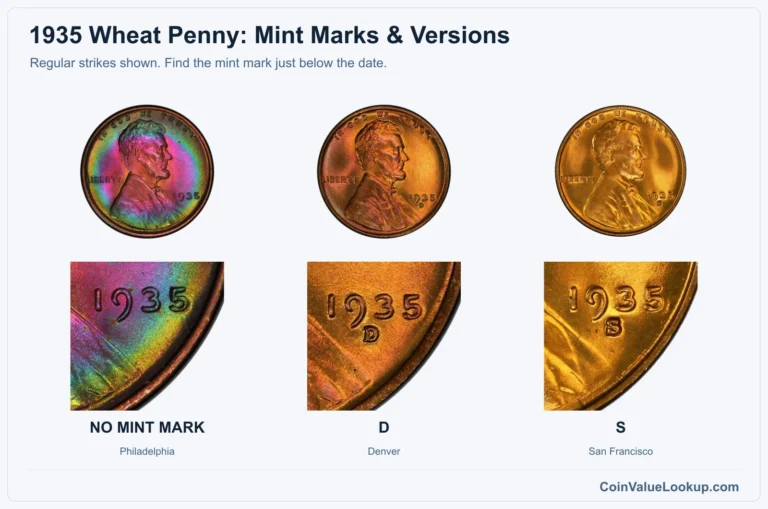
All 1858 Flying Eagle cents were struck at Philadelphia, so there is no mintmark to hunt for. Do not be misled by anyone claiming a branch-mint version exists.
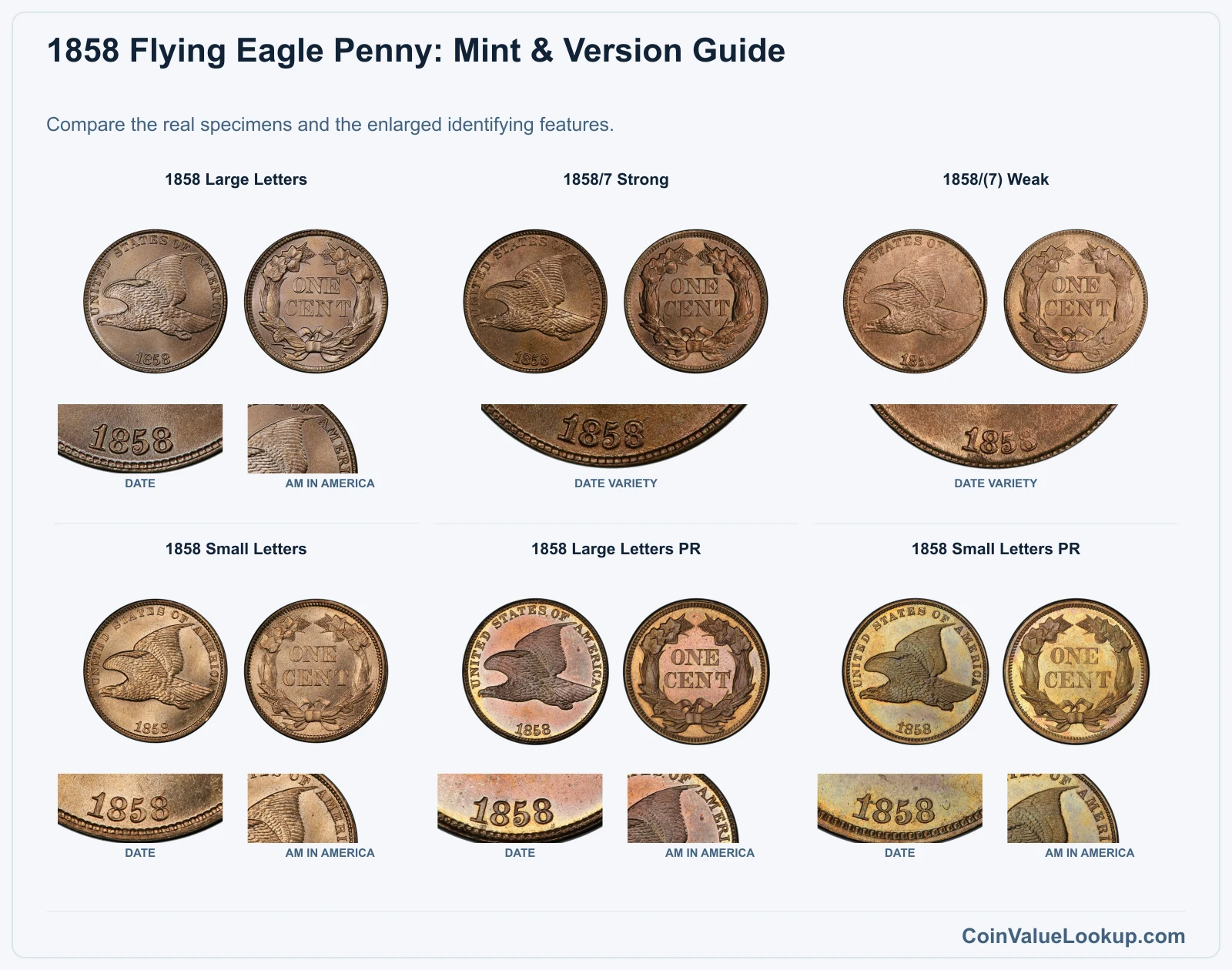
The big fork in the road is letter size. On Large Letters coins, the A and M in AMERICA touch each other.
On Small Letters coins, those two letters are clearly separated. Grab a loupe and check — it is usually obvious once you know where to look.
Beyond letter size, inspect the 8 in the date carefully. Some 1858 cents were struck from a die that still showed traces of a 7 beneath the 8, creating an overdate.
A strong overdate is easy to spot; a weak one requires patience and magnification. The underlying 7 is far less apparent on the weak variety, and confusing the two will throw off your value estimate.
Finally, check overall surfaces. The coin is 88% copper and 12% nickel, weighing about 4.67 grams at 19 mm.
Weight alone cannot prove authenticity because wear and production tolerances overlap, but a coin far outside that range deserves suspicion. Examine both faces and the edge for signs of casting, tooling or added material.
Step 2: Check Your 1858 Flying Eagle Cent Grade
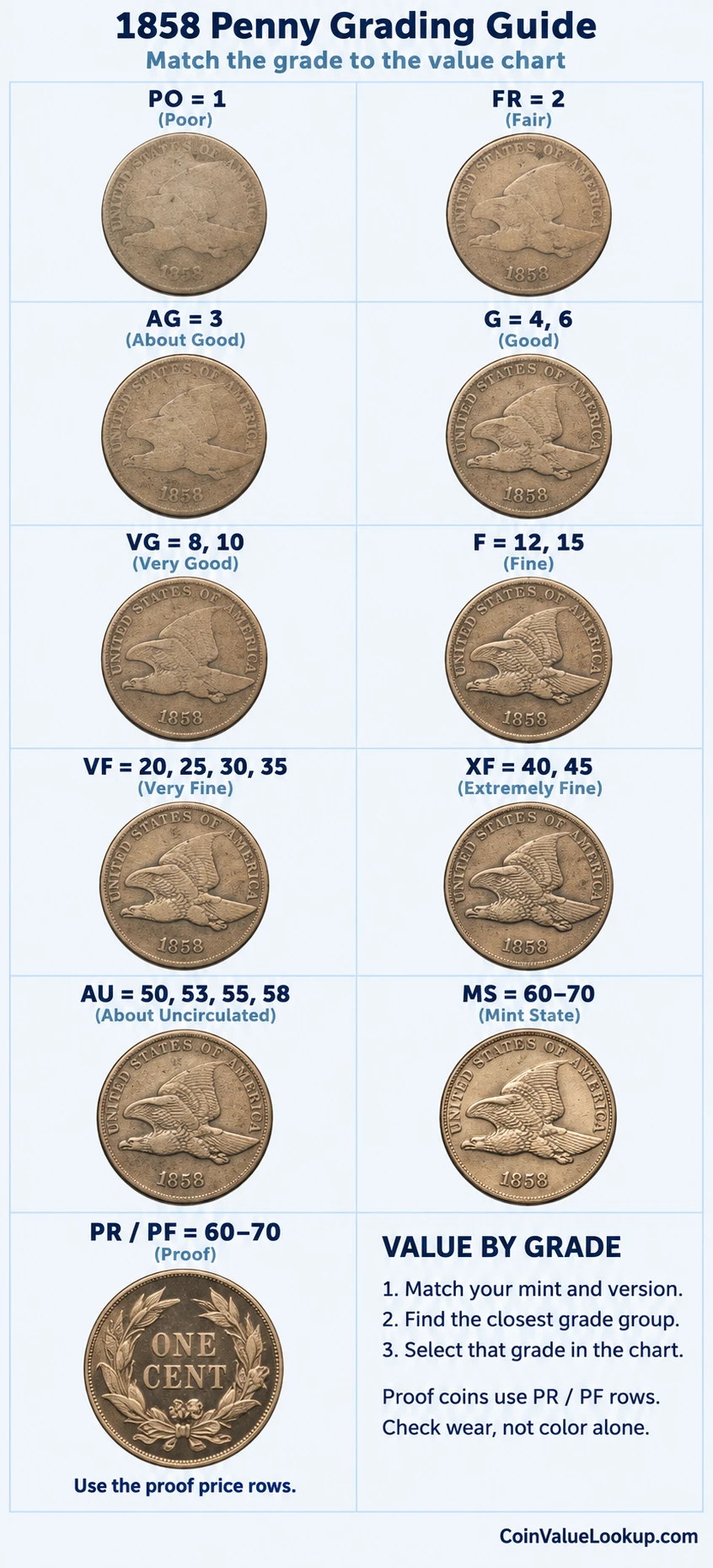
Start with the eagle's head and breast feathers on the obverse. In lower grades these merge into a flat, featureless mass.
A coin grading around Good (G4) will show a clear outline and date but little interior detail.
As you move up the scale, look for individual feather definition on the wings and separation in the tail. On the reverse, the wreath leaves should show veins and distinct edges in higher grades.
Do not confuse a weak strike with honest wear. Some 1858 cents left the press with mushy detail, especially on the eagle's breast, even in otherwise high-grade condition.
Compare your coin side by side with the grading image to see how much relief remains versus how much was never there.
Surface problems matter a lot. Cleaning, corrosion and porosity each reduce market appeal well below what the remaining sharpness might suggest.
Color descriptions like BN, RB and RD refer to the tone of the original copper surface, not different metals — nearly all survivors show brown toning. A proof is a method of manufacture with its own die characteristics, not simply a prettier coin or a grade above Mint State.
Step 3: Check 1858 Flying Eagle Cent Value by Mint and Version
1858 Flying Eagle Cent — Large Letters
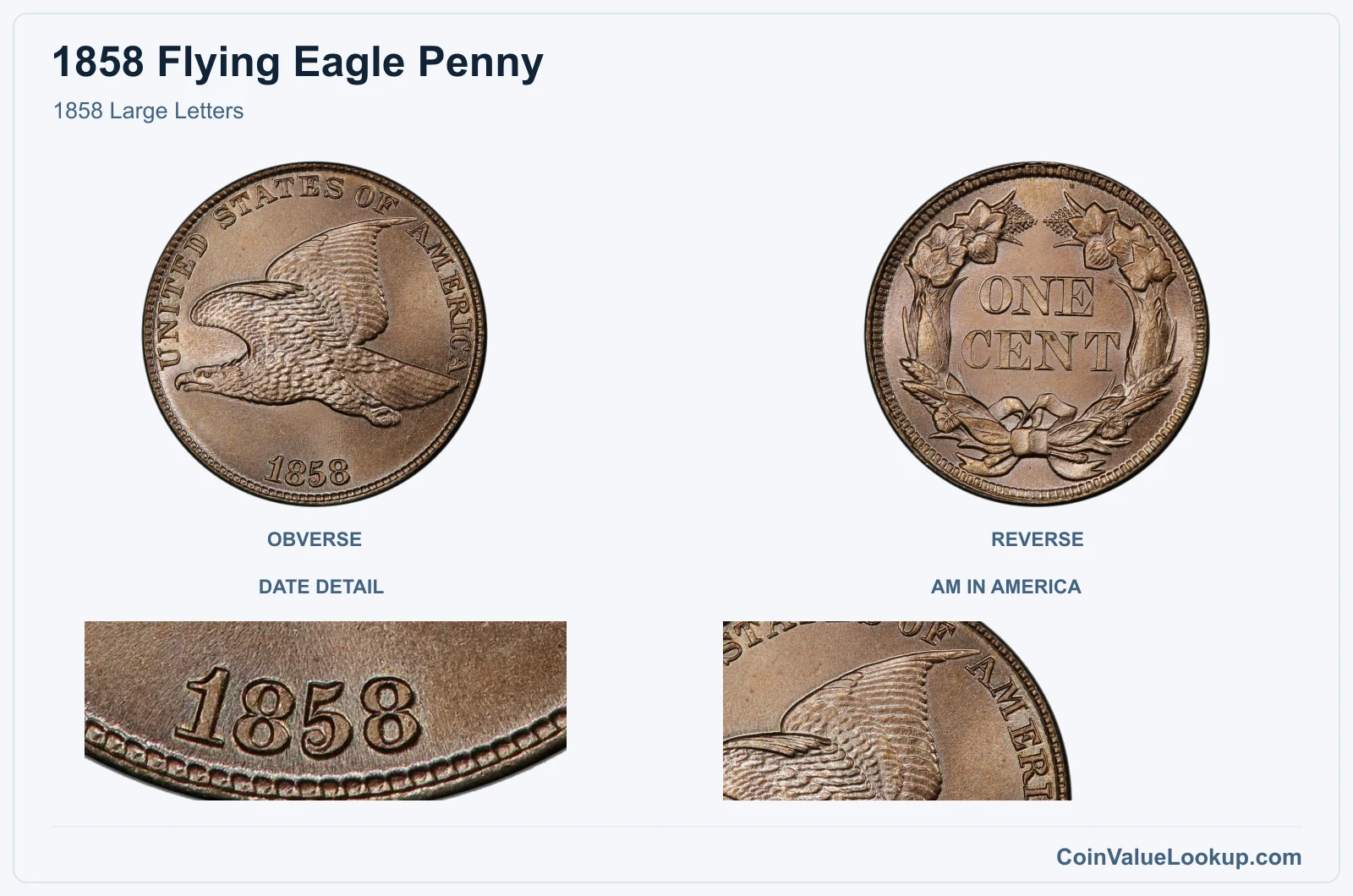
The 1858 Large Letters cent is identified by the touching A and M in AMERICA on the reverse. It is a business strike from the Philadelphia Mint, composed of 88% copper and 12% nickel at roughly 4.67 grams.
Guide estimates run from about $38 in G4 up to around $1,295 in MS63. Most survivors fall in the lower circulated grades because these coins saw heavy daily use.
If yours still has sharp wing feathers and clean fields, you are looking at something well above the baseline.
| Range | Grade | Price | Auction Records | Appraisal |
|---|---|---|---|---|
| PO | PO 1 | — | Coin Identifier | |
| FR | FR 2 | — | Coin Identifier | |
| AG | AG 3 | Coin Identifier | ||
| G | G 4 | Coin Identifier | ||
| G 6 | Coin Identifier | |||
| VG | VG 8 | — | Coin Identifier | |
| VG 10 | — | Coin Identifier | ||
| F | F 12 | Coin Identifier | ||
| F 15 | Coin Identifier | |||
| VF | VF 20 | Coin Identifier | ||
| VF 25 | Coin Identifier | |||
| VF 30 | Coin Identifier | |||
| VF 35 | Coin Identifier | |||
| XF | XF 40 | Coin Identifier | ||
| XF 45 | Coin Identifier | |||
| AU | AU 50 | Coin Identifier | ||
| AU 53 | Coin Identifier | |||
| AU 55 | Coin Identifier | |||
| AU 58 | Coin Identifier | |||
| MS | MS 60 | Coin Identifier | ||
| MS 61 | Coin Identifier | |||
| MS 62 | Coin Identifier | |||
| MS 63 | Coin Identifier | |||
| MS 64 | Coin Identifier | |||
| MS 65 | Coin Identifier | |||
| MS 66 | Coin Identifier | |||
| MS 67 | Coin Identifier | |||
| MS 68 | — | — | — | |
| MS 69 | — | — | — | |
| MS 70 | — | — | — |
1858 Flying Eagle Cent — /7 Strong
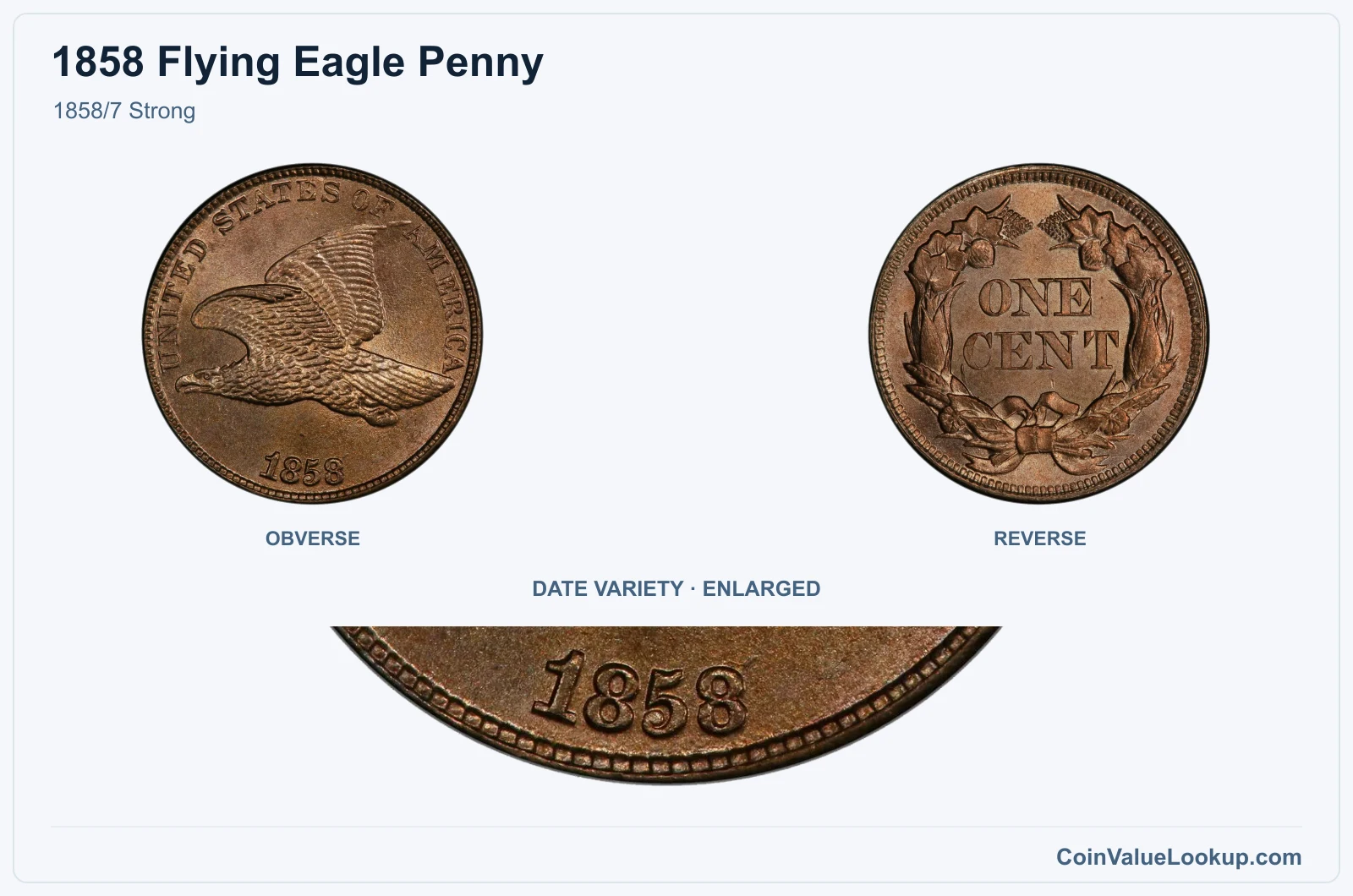
This is the variety that makes 1858 collectors sit up straight. The 1858/7 Strong overdate shows a clearly visible 7 beneath the 8 in the date, the result of a die originally punched with the previous year's numeral.
In G4, the guide estimate is about $123 — already triple the ordinary Large Letters coin. By MS63, that figure jumps to roughly $15,247, reflecting both the variety's scarcity and collector demand for sharp examples.
Confirming the overdate requires magnification; look for the curved top of the 7 protruding from beneath the upper loop of the 8. Do not confuse this with the weak overdate variety, which shows far less remnant detail.
| Range | Grade | Price | Auction Records | Appraisal |
|---|---|---|---|---|
| PO | PO 1 | — | Coin Identifier | |
| FR | FR 2 | — | Coin Identifier | |
| AG | AG 3 | — | Coin Identifier | |
| G | G 4 | — | Coin Identifier | |
| G 6 | — | Coin Identifier | ||
| VG | VG 8 | — | Coin Identifier | |
| VG 10 | — | Coin Identifier | ||
| F | F 12 | — | Coin Identifier | |
| F 15 | — | Coin Identifier | ||
| VF | VF 20 | Coin Identifier | ||
| VF 25 | Coin Identifier | |||
| VF 30 | Coin Identifier | |||
| VF 35 | Coin Identifier | |||
| XF | XF 40 | Coin Identifier | ||
| XF 45 | Coin Identifier | |||
| AU | AU 50 | Coin Identifier | ||
| AU 53 | Coin Identifier | |||
| AU 55 | Coin Identifier | |||
| AU 58 | Coin Identifier | |||
| MS | MS 60 | — | Coin Identifier | |
| MS 61 | Coin Identifier | |||
| MS 62 | Coin Identifier | |||
| MS 63 | Coin Identifier | |||
| MS 64 | Coin Identifier | |||
| MS 65 | Coin Identifier | |||
| MS 66 | — | — | — | |
| MS 67 | — | — | — | |
| MS 68 | — | — | — | |
| MS 69 | — | — | — | |
| MS 70 | — | — | — |
1858 Flying Eagle Cent — /(7) Weak
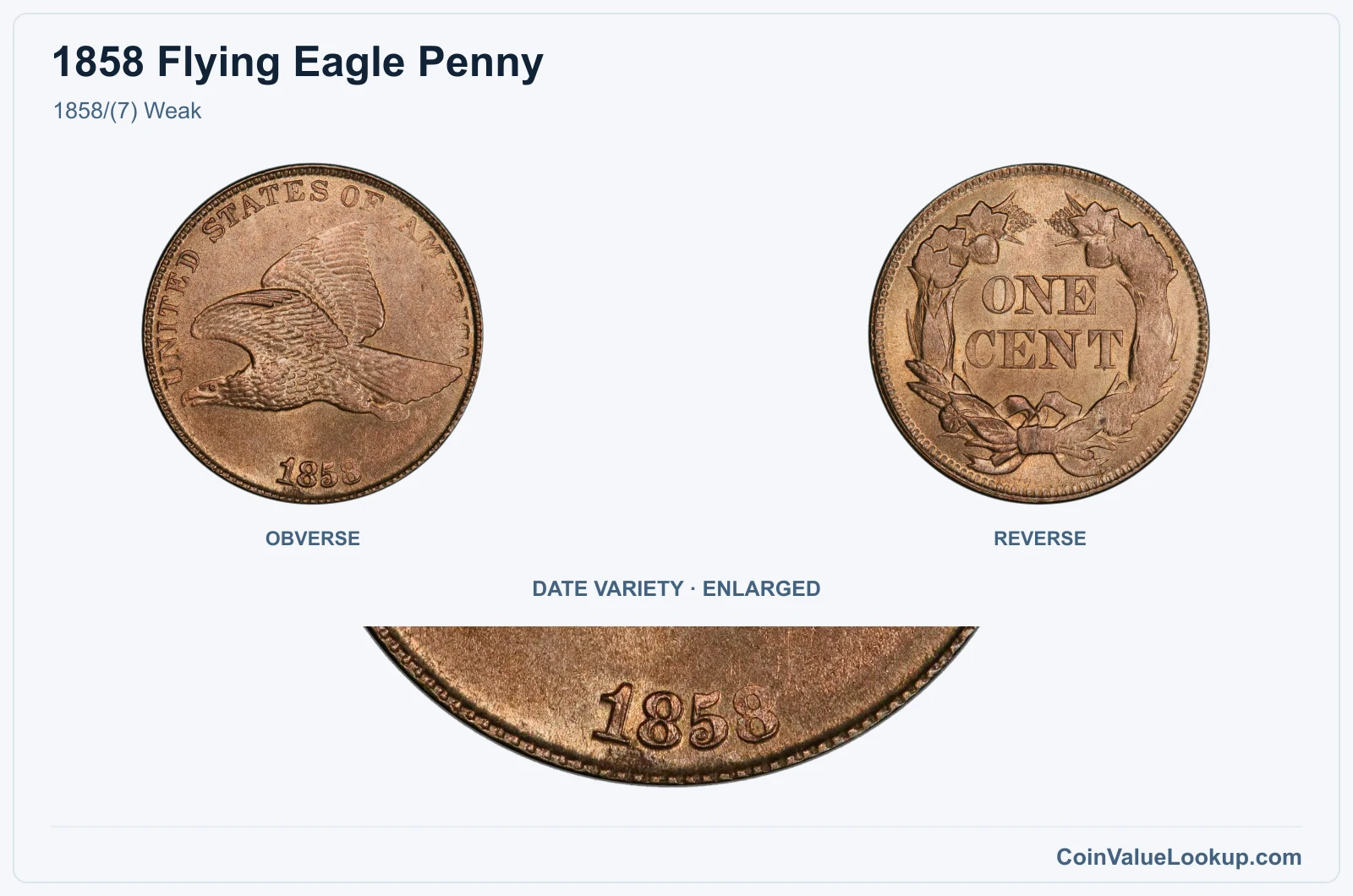
The 1858/(7) Weak overdate is the subtler sibling of the Strong variety. Traces of the underlying 7 are present but much less obvious, and spotting them usually takes good magnification and cooperative lighting.
No guide price range has been adopted for this variety. Value depends on authenticated identity, the coin's condition and overall surface quality.
Do not apply the Strong overdate's price estimates here — the two are treated as separate catalog entries. If you suspect you have this variety, professional attribution from a grading service is the practical next step.
Coin Value Lookup is a good starting point if you want to compare this coin against other Flying Eagle cent guides before deciding on next steps.
| Range | Grade | Price | Auction Records | Appraisal |
|---|---|---|---|---|
| PO | PO 1 | — | Coin Identifier | |
| FR | FR 2 | — | Coin Identifier | |
| AG | AG 3 | — | Coin Identifier | |
| G | G 4 | — | Coin Identifier | |
| G 6 | — | Coin Identifier | ||
| VG | VG 8 | — | Coin Identifier | |
| VG 10 | — | Coin Identifier | ||
| F | F 12 | Coin Identifier | ||
| F 15 | — | Coin Identifier | ||
| VF | VF 20 | — | Coin Identifier | |
| VF 25 | — | Coin Identifier | ||
| VF 30 | Coin Identifier | |||
| VF 35 | Coin Identifier | |||
| XF | XF 40 | Coin Identifier | ||
| XF 45 | — | Coin Identifier | ||
| AU | AU 50 | Coin Identifier | ||
| AU 53 | Coin Identifier | |||
| AU 55 | — | Coin Identifier | ||
| AU 58 | — | Coin Identifier | ||
| MS | MS 60 | — | Coin Identifier | |
| MS 61 | Coin Identifier | |||
| MS 62 | — | Coin Identifier | ||
| MS 63 | Coin Identifier | |||
| MS 64 | — | Coin Identifier | ||
| MS 65 | — | — | — | |
| MS 66 | — | — | — | |
| MS 67 | — | — | — | |
| MS 68 | — | — | — | |
| MS 69 | — | — | — | |
| MS 70 | — | — | — |
1858 Flying Eagle Cent — Small Letters
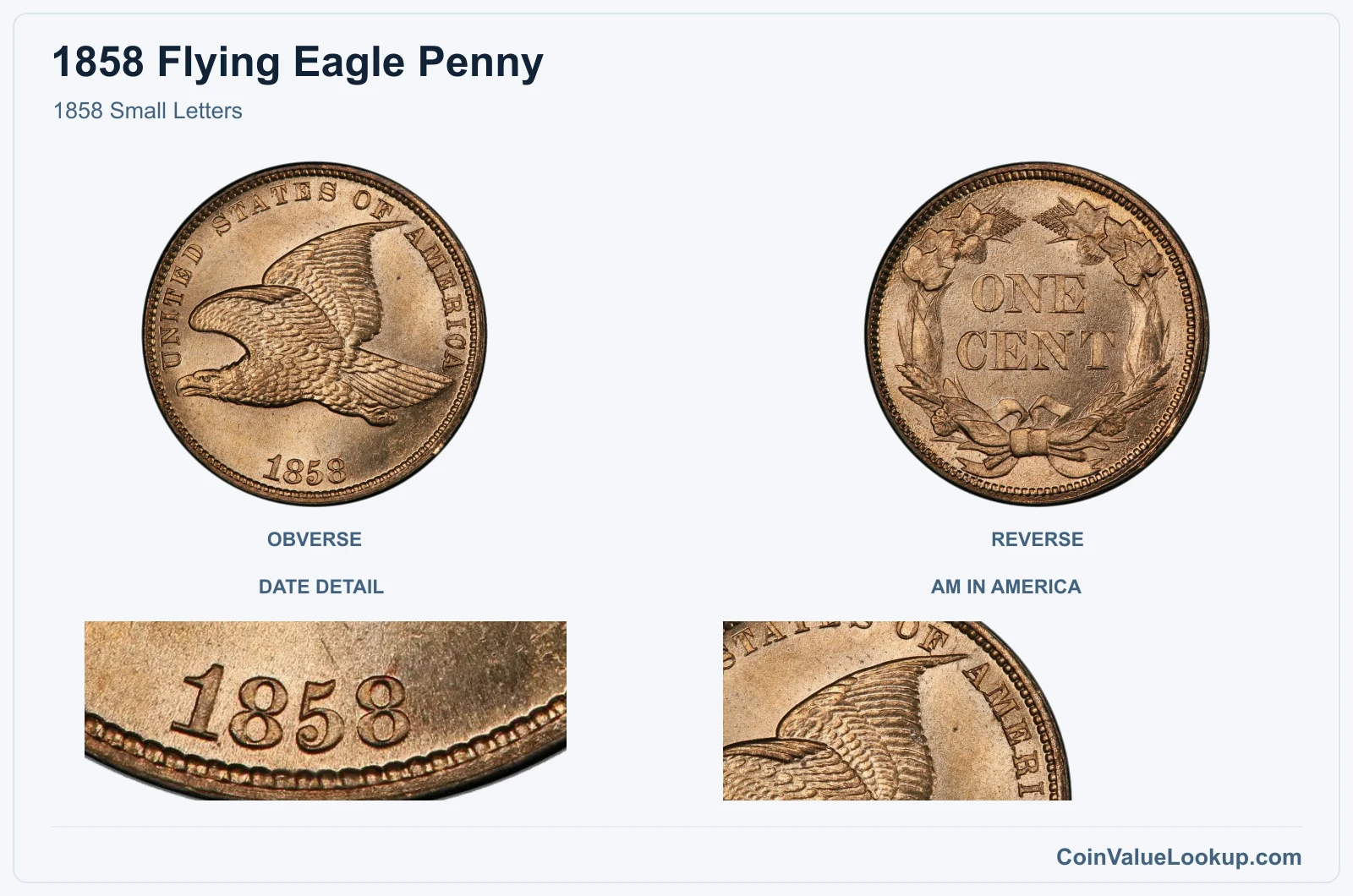
The 1858 Small Letters cent is the counterpart to the Large Letters issue. The giveaway is a visible gap between the A and M in AMERICA on the reverse.
Same Philadelphia Mint origin, same copper-nickel composition.
Guide values sit at about $38 in G4 and climb to approximately $1,445 in MS63 — slightly above the Large Letters variety at the top of the scale. In lower grades the two are nearly interchangeable in value, but the gap widens as condition improves.
Always confirm letter size before quoting a price, because a quick glance can be deceiving on worn coins.
| Range | Grade | Price | Auction Records | Appraisal |
|---|---|---|---|---|
| PO | PO 1 | — | Coin Identifier | |
| FR | FR 2 | Coin Identifier | ||
| AG | AG 3 | Coin Identifier | ||
| G | G 4 | Coin Identifier | ||
| G 6 | — | Coin Identifier | ||
| VG | VG 8 | — | Coin Identifier | |
| VG 10 | Coin Identifier | |||
| F | F 12 | Coin Identifier | ||
| F 15 | Coin Identifier | |||
| VF | VF 20 | Coin Identifier | ||
| VF 25 | Coin Identifier | |||
| VF 30 | Coin Identifier | |||
| VF 35 | Coin Identifier | |||
| XF | XF 40 | Coin Identifier | ||
| XF 45 | Coin Identifier | |||
| AU | AU 50 | Coin Identifier | ||
| AU 53 | Coin Identifier | |||
| AU 55 | Coin Identifier | |||
| AU 58 | Coin Identifier | |||
| MS | MS 60 | — | Coin Identifier | |
| MS 61 | Coin Identifier | |||
| MS 62 | Coin Identifier | |||
| MS 63 | Coin Identifier | |||
| MS 64 | Coin Identifier | |||
| MS 65 | Coin Identifier | |||
| MS 66 | Coin Identifier | |||
| MS 67 | — | — | — | |
| MS 68 | — | — | — | |
| MS 69 | — | — | — | |
| MS 70 | — | — | — |
1858 Flying Eagle Cent — Large Letters PR
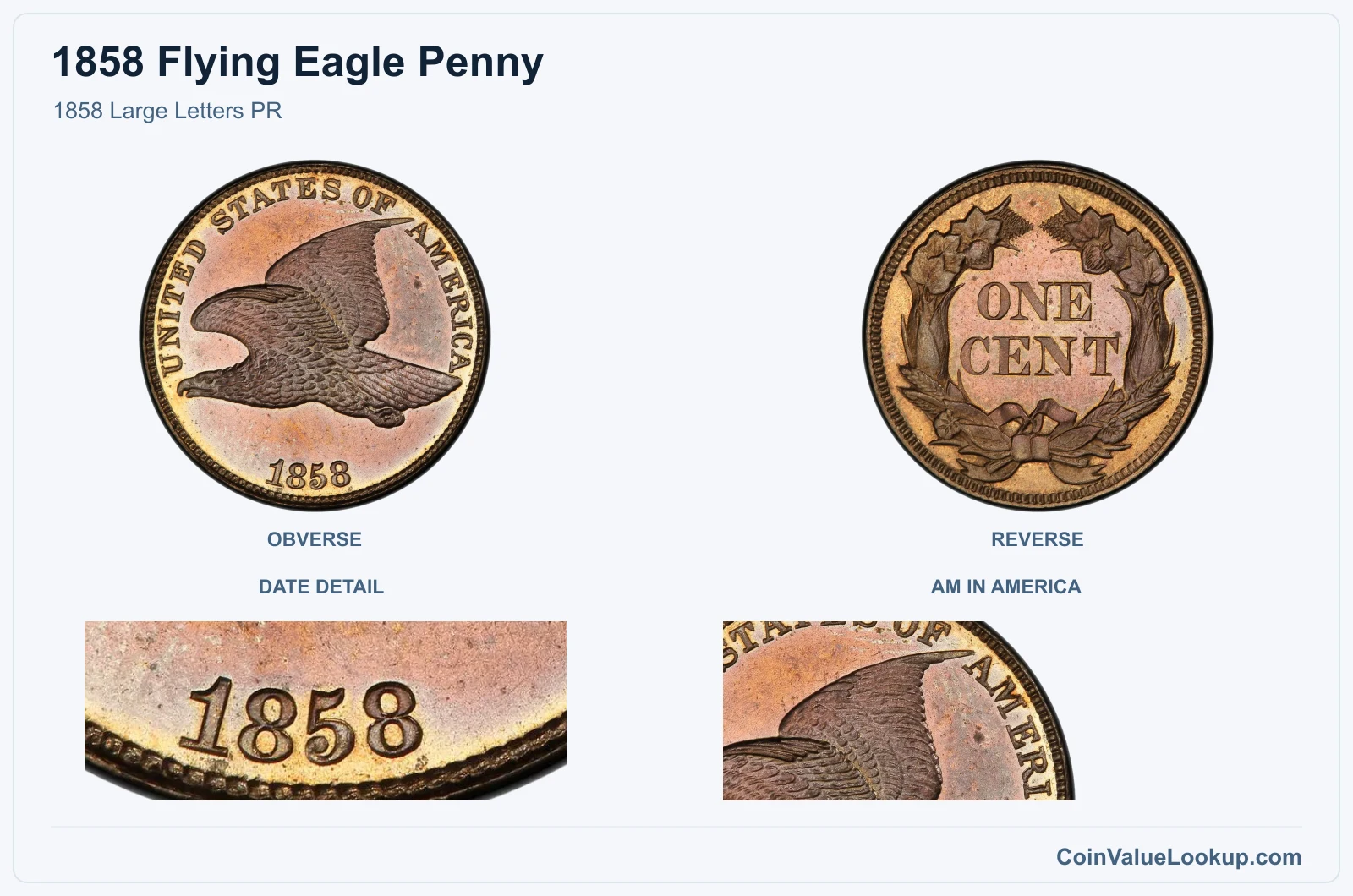
The 1858 Large Letters proof is a scarce manufacturing variety struck with specially prepared dies and planchets at the Philadelphia Mint. The guide estimate sits around $10,016 in PR63.
A real proof shows specific die characteristics: sharp rims, mirrored fields and deliberate finishing marks consistent with proof production. A polished business strike is not a proof, no matter how shiny it looks.
Attribution requires examination of surfaces, rims and die state — this is not a variety you diagnose from across the room. If you believe you have one, third-party authentication is strongly recommended before assigning any value.
| Range | Grade | Price | Auction Records | Appraisal |
|---|---|---|---|---|
| PR | PR 1 | — | Coin Identifier | |
| PR 2 | — | Coin Identifier | ||
| PR 3 | — | Coin Identifier | ||
| PR 4 | — | Coin Identifier | ||
| PR 6 | — | Coin Identifier | ||
| PR 8 | — | Coin Identifier | ||
| PR 10 | — | Coin Identifier | ||
| PR 12 | — | Coin Identifier | ||
| PR 15 | — | Coin Identifier | ||
| PR 20 | — | Coin Identifier | ||
| PR 25 | — | Coin Identifier | ||
| PR 30 | — | Coin Identifier | ||
| PR 35 | — | Coin Identifier | ||
| PR 40 | — | Coin Identifier | ||
| PR 45 | — | Coin Identifier | ||
| PR 50 | — | Coin Identifier | ||
| PR 53 | — | Coin Identifier | ||
| PR 55 | — | Coin Identifier | ||
| PR 58 | — | Coin Identifier | ||
| PR 60 | — | Coin Identifier | ||
| PR 61 | — | Coin Identifier | ||
| PR 62 | Coin Identifier | |||
| PR 63 | Coin Identifier | |||
| PR 64 | Coin Identifier | |||
| PR 65 | Coin Identifier | |||
| PR 66 | Coin Identifier | |||
| PR 67 | — | — | — | |
| PR 68 | — | — | — | |
| PR 69 | — | — | — | |
| PR 70 | — | — | — |
1858 Flying Eagle Cent — Small Letters PR
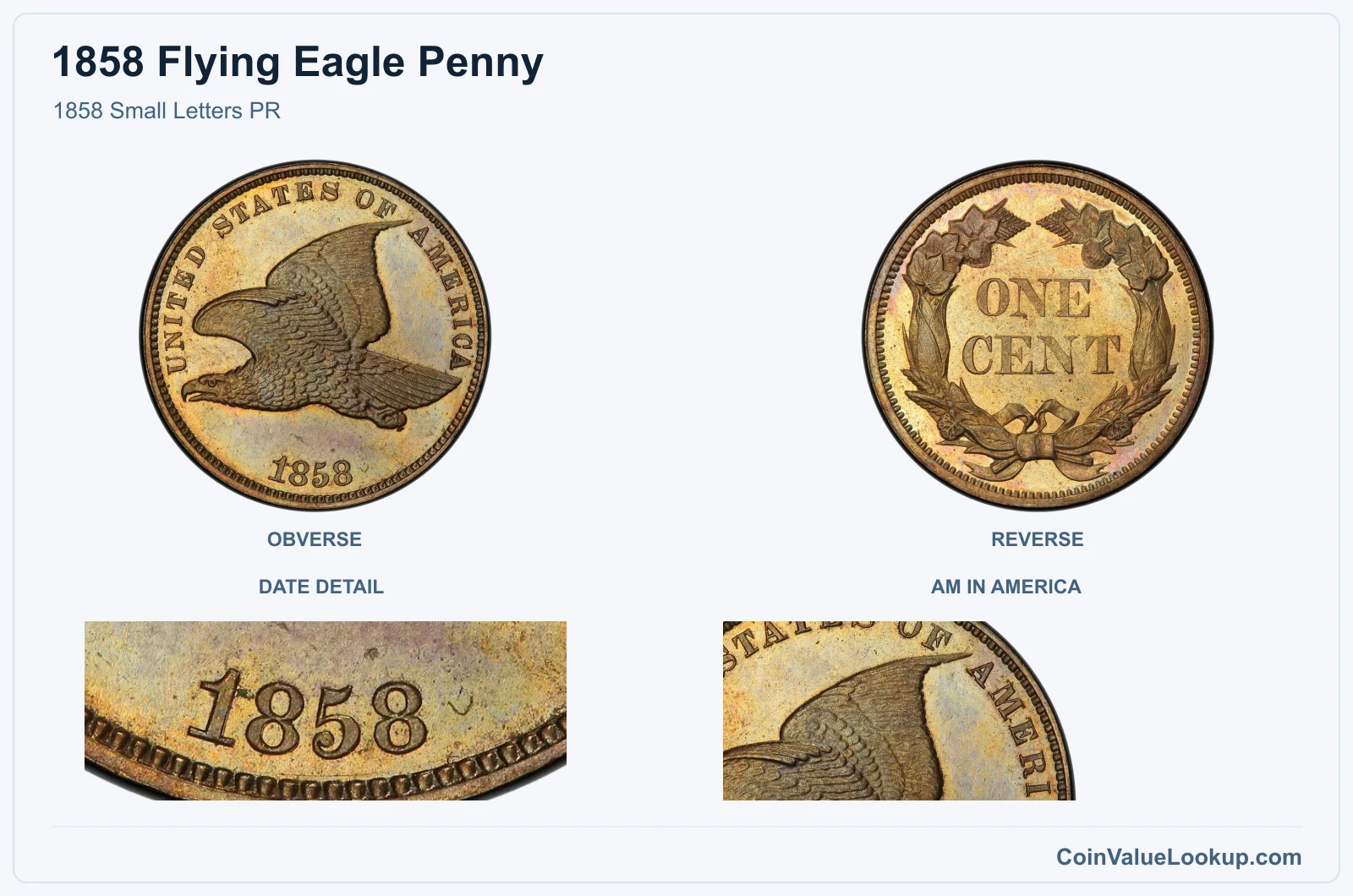
The 1858 Small Letters proof mirrors its Large Letters counterpart in rarity and approximate value, with a guide estimate of about $10,016 in PR63. Same copper-nickel composition, same Philadelphia Mint origin, but with the separated A-M spacing that defines the Small Letters die.
As with the Large Letters proof, confirming this variety means verifying proof manufacturing characteristics — mirrored fields, crisp rims and consistent die quality. Polishing a business strike does not create a proof.
Professional certification is essentially a prerequisite for selling or insuring one of these coins at catalog-level prices.
| Range | Grade | Price | Auction Records | Appraisal |
|---|---|---|---|---|
| PR | PR 1 | — | Coin Identifier | |
| PR 2 | — | Coin Identifier | ||
| PR 3 | — | Coin Identifier | ||
| PR 4 | — | Coin Identifier | ||
| PR 6 | — | Coin Identifier | ||
| PR 8 | — | Coin Identifier | ||
| PR 10 | — | Coin Identifier | ||
| PR 12 | — | Coin Identifier | ||
| PR 15 | — | Coin Identifier | ||
| PR 20 | — | Coin Identifier | ||
| PR 25 | — | Coin Identifier | ||
| PR 30 | — | Coin Identifier | ||
| PR 35 | — | Coin Identifier | ||
| PR 40 | — | Coin Identifier | ||
| PR 45 | — | Coin Identifier | ||
| PR 50 | — | Coin Identifier | ||
| PR 53 | — | Coin Identifier | ||
| PR 55 | — | Coin Identifier | ||
| PR 58 | — | Coin Identifier | ||
| PR 60 | — | Coin Identifier | ||
| PR 61 | — | Coin Identifier | ||
| PR 62 | Coin Identifier | |||
| PR 63 | Coin Identifier | |||
| PR 64 | Coin Identifier | |||
| PR 65 | Coin Identifier | |||
| PR 66 | Coin Identifier | |||
| PR 67 | — | — | — | |
| PR 68 | — | — | — | |
| PR 69 | — | — | — | |
| PR 70 | — | — | — |
1858 Flying Eagle Cent Error List
1. 1858 Flying Eagle Cent — Lamination / Split Planchet
A lamination error on an 1858 Flying Eagle cent appears as peeling metal, a retained flap or a visible separation within the copper-nickel alloy. The defect occurs within the planchet itself, not on the surface alone.
When examining a suspect coin, photograph the edge alongside the affected face. The split or peel should follow the internal structure of the metal rather than looking like a random scratch or gouge.
What it is not: scraping, surface corrosion or a deliberately cut coin can all mimic a lamination at first glance. Corrosion tends to pit the surface unevenly, while a true lamination lifts in a relatively uniform layer.
No guide price has been adopted for this error on the 1858 cent — value depends on the coin's authenticated identity, the severity of the defect and overall condition.
2. 1858 Flying Eagle Cent — Struck-Through Error
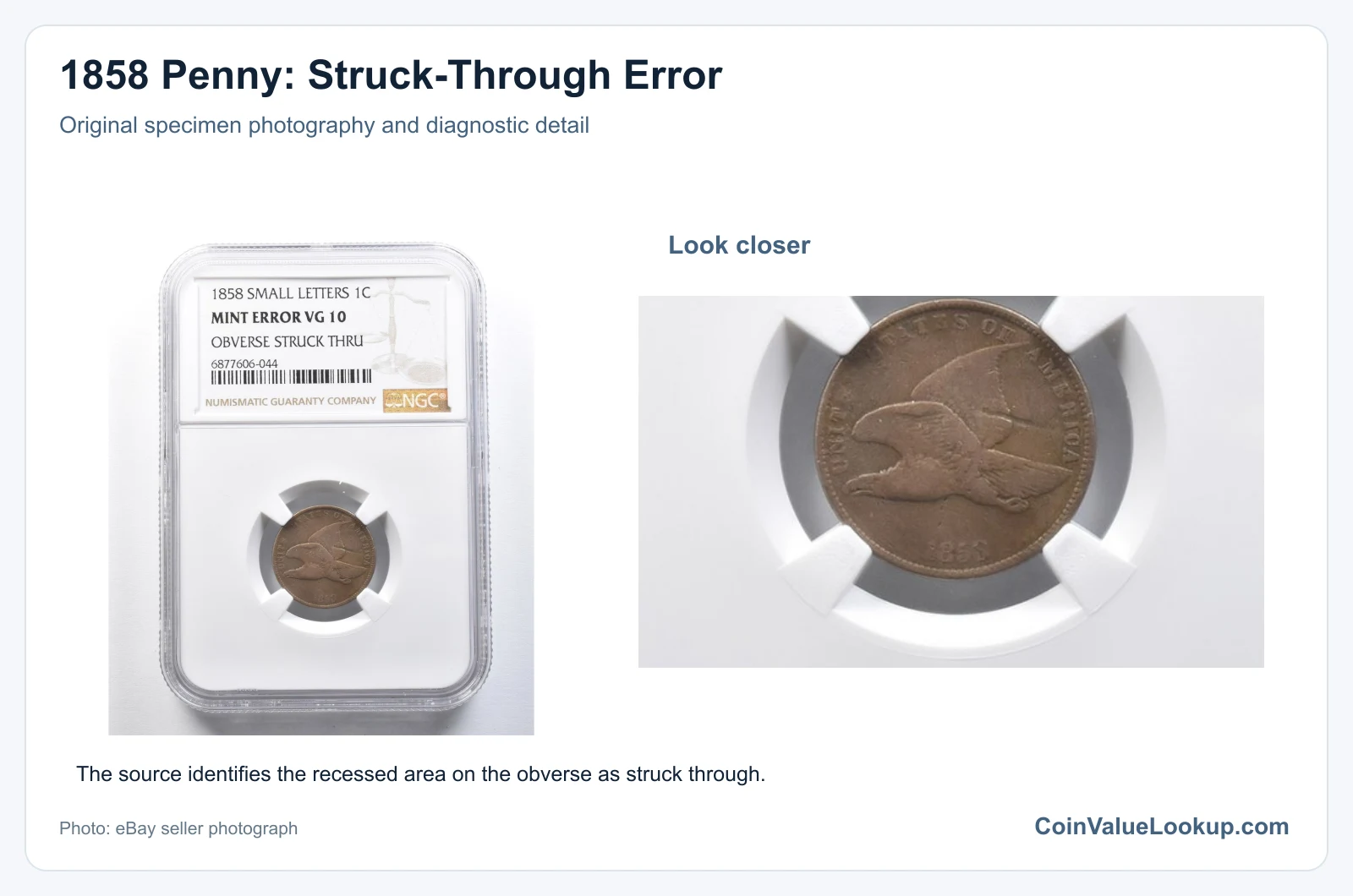
A struck-through error happens when foreign material sits between the die and the planchet during striking, leaving a localized depression or an incomplete area in the design. On an 1858 Flying Eagle cent, look for a clearly defined impression or a smooth blank patch that interrupts the normal detail.
Keep grease fills and retained foreign objects as distinct descriptions — a grease-filled die produces a different appearance than, say, a thread or metal fragment pressed into the surface.
The common lookalikes are wear, scratches and cleaning marks. Ordinary weak detail from a tired die is not a struck-through error.
The depression should have a shape or texture inconsistent with normal circulation loss. No adopted price range exists for this error on the 1858 cent; each coin needs individual evaluation based on the error's size, location and the coin's authenticated grade.
3. 1858 Flying Eagle Cent — Off-Center Strike
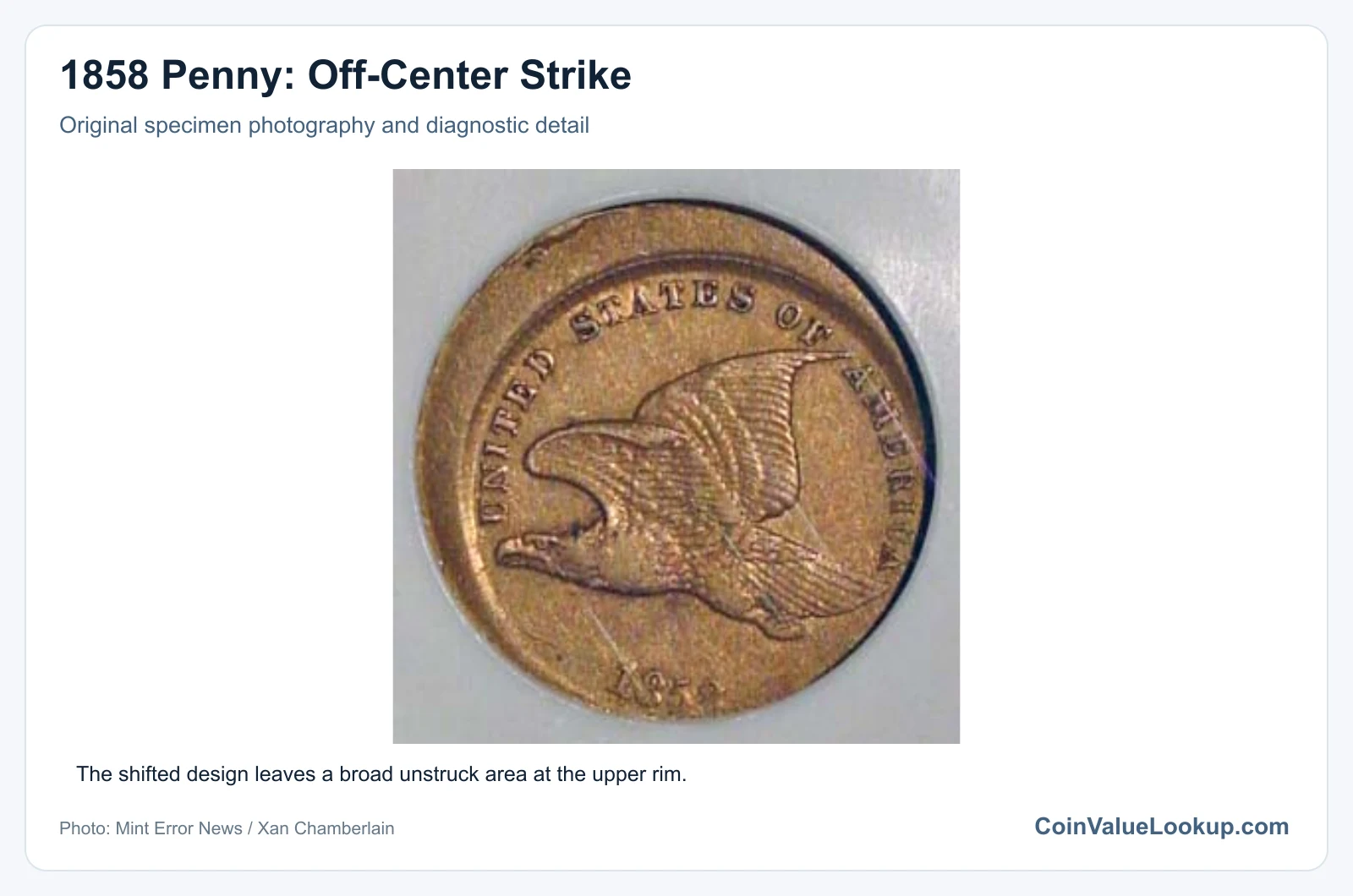
An off-center strike on an 1858 Flying Eagle cent results in a displaced design and an unstruck crescent of blank metal along one edge. The more dramatic the shift, the wider that crescent becomes.
Collectors generally prefer off-center coins that still show a complete, readable date, since that confirms the year and adds to desirability. Without the date visible, identification becomes harder and demand drops.
Do not confuse an off-center strike with a clipped planchet, a one-sided die misalignment or post-mint flattening. A clip removes material before striking and usually shows a characteristic Blakesley kick on the opposite rim.
Post-mint damage tends to distort the design rather than displace it cleanly. No guide price has been adopted for this error; individual assessment based on the degree of off-center shift, date visibility and authenticated condition determines value.