1927 Wheat Penny Coin Value: How Much Is It Worth?
A 1927 Wheat Penny in well-worn condition starts around $0.30 in Good-4 grade for the Philadelphia issue, while a sharp Mint State 63 example of the San Francisco mint can reach about $217 according to USA Coin Book guide estimates. Those figures span the three regular business-strike mints and two specific grades.
Actual value depends on your coin's exact mint, surface quality, color and wear level. Proofs, major varieties and error coins are priced separately from these guide anchors.
Fast Way to Identify Your 1927 Wheat Penny
Want a quick read on your 1927 penny? Upload clear photos of both the front and back of your coin.
Our identifier can offer a preliminary identification of your coin's mint, design type and general condition based on those images. It is not a substitute for professional authentication or certified grading, but it gives you a solid starting point before diving deeper.
1927 Wheat Penny Value
Upload both sides of your 1927 Wheat Penny.
Front Obverse
Upload photo
Back Reverse
Upload photo
Which 1927 Wheat Penny Versions Are Worth Money?
- The 1927-S commands the highest guide values of the three mints, reaching about $217 at MS63, because sharp surviving examples are scarce.
- The 1927-D sits in the middle at roughly $123 in MS63 guide value, well above the Philadelphia issue at the same grade.
- A doubled die obverse variety adds collector interest; value depends on the specific coin's authenticated identity and severity of the doubling.
- Repunched mintmark errors on the D or S issues are worth investigating, since branch-mint punching anomalies attract variety collectors.
- Off-center strikes with a visible date can carry a premium tied to how dramatic the mis-strike appears.
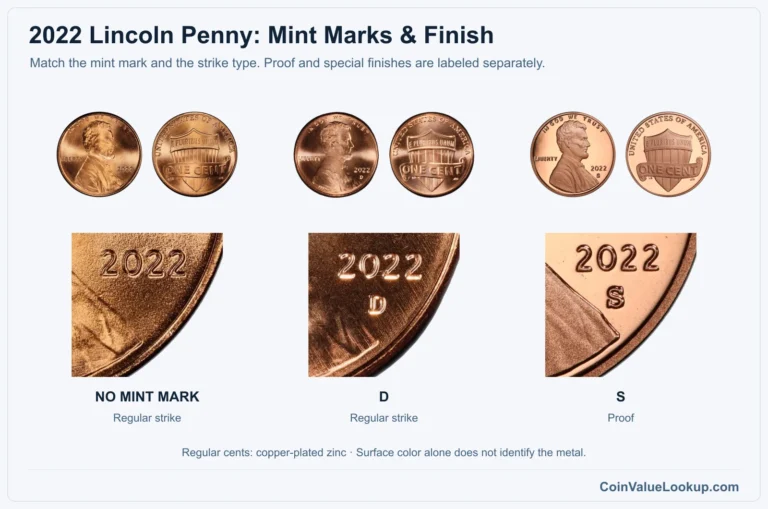
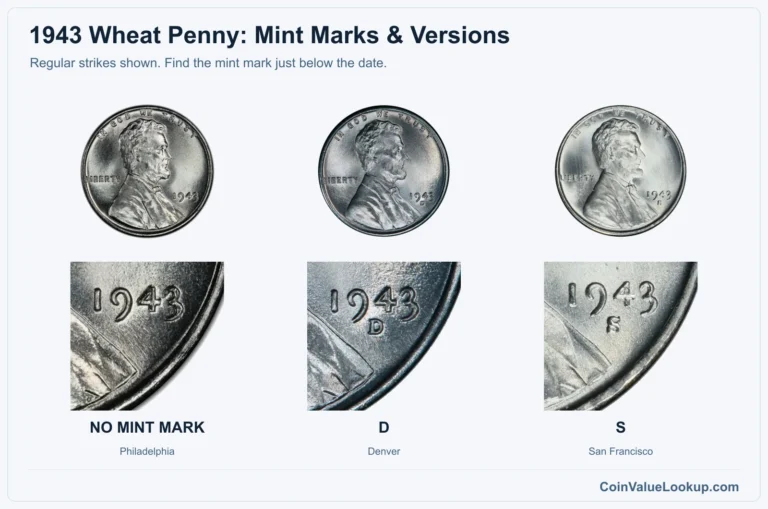
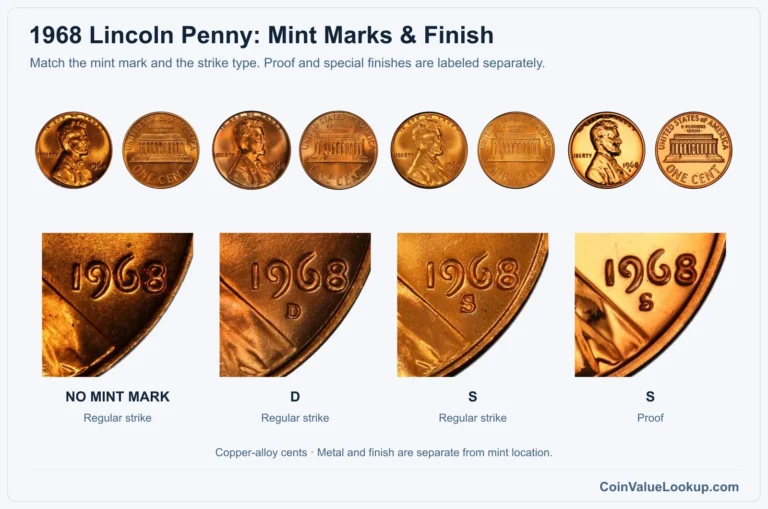
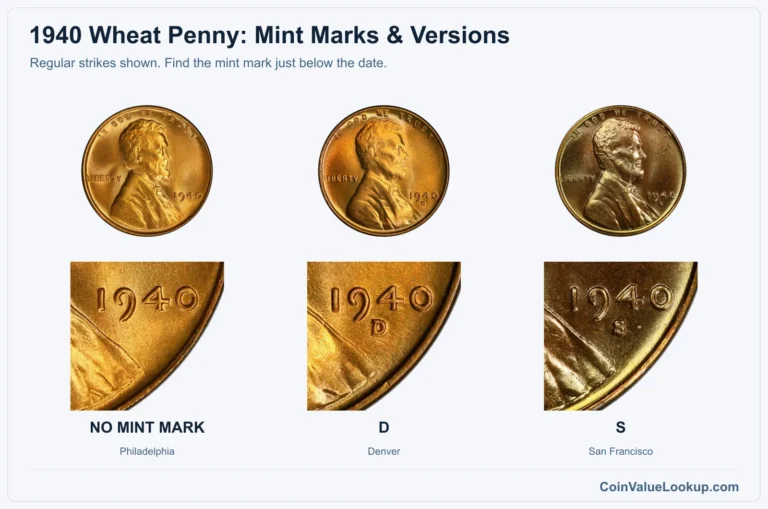
Step 1: Identify Your 1927 Wheat Penny Mint Mark and Version
Flip the coin over first. If you see two wheat ears framing "ONE CENT," you have the right reverse design.
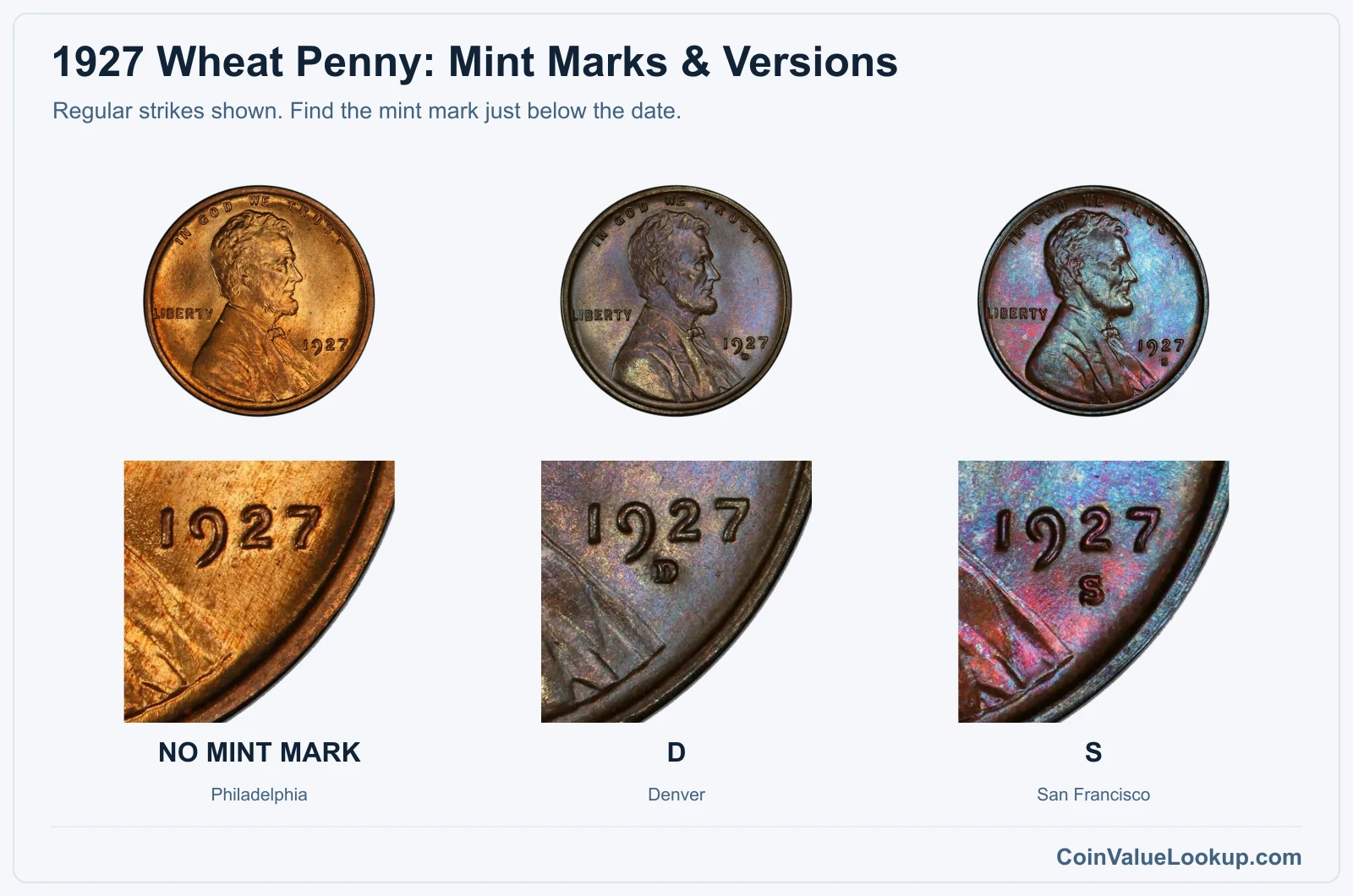
Now check the obverse, just below the date on the front: look for a small letter. No letter means Philadelphia.
A "D" means Denver. An "S" means San Francisco.
All three mints struck the 1927 Lincoln cent in the same 95% copper alloy with 5% tin and zinc, weighing about 3.11 grams with a plain edge. The coins share the same Lincoln portrait obverse and Wheat Reverse design, so the mintmark is your main sorting tool.
The San Francisco issue is the toughest of the three to find in sharp, high-grade condition. If you have a 1927-S that looks barely touched, pay close attention to its surfaces.
Doubled die obverse and repunched mintmark varieties are also reported for this date, but those are specific collectible errors, not separate proof finishes or standard branches.
Step 2: Check Your 1927 Wheat Penny Grade
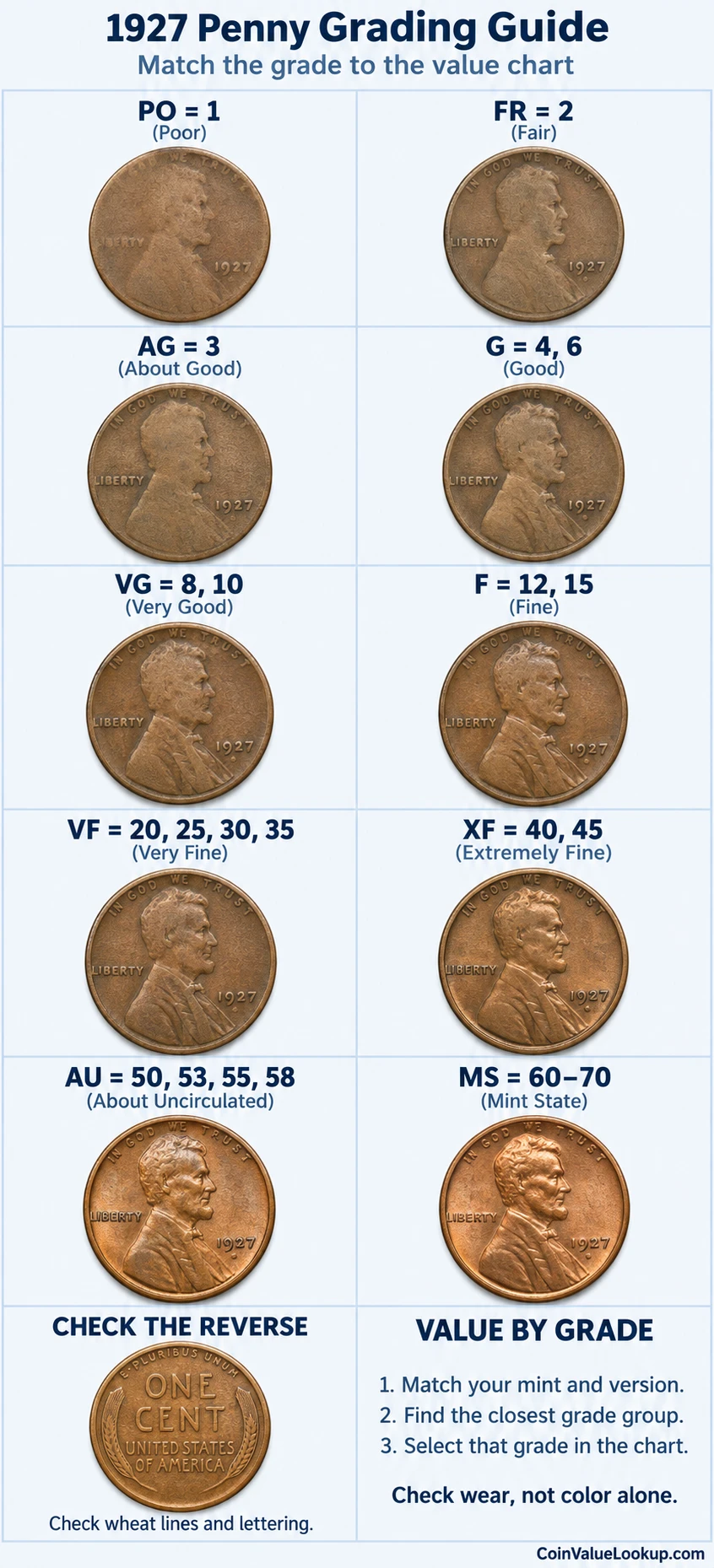
Start with Lincoln's cheekbone and jaw on the obverse. In lower grades these flatten first, blending into the field.
Next check the hair detail above the ear: on a well-preserved coin you will see individual strands, while a heavily circulated piece shows only a smooth dome.
On the reverse, look at the wheat stalks. Fine parallel lines between the grains should be visible on higher-grade examples.
As the coin wears, those lines merge and eventually disappear.
Use the comparison image to match your coin's high-point detail against known grade benchmarks. A coin that retains full luster across most surfaces with only minor contact marks fits the Mint State range.
One with obvious wear on Lincoln's cheek but clear lettering everywhere lands somewhere in the mid-circulated grades.
Keep in mind that a weak original strike can mimic wear. If the softness appears only in isolated spots and the surrounding areas still show luster, that may be a strike issue rather than circulation damage.
Color, spots, corrosion and any signs of cleaning should be evaluated separately from wear. A brown coin is not automatically lower grade than a red one, and a cleaned coin loses collector appeal regardless of how little wear it shows.
Step 3: Check 1927 Wheat Penny Value by Mint and Version
1927 Wheat Penny
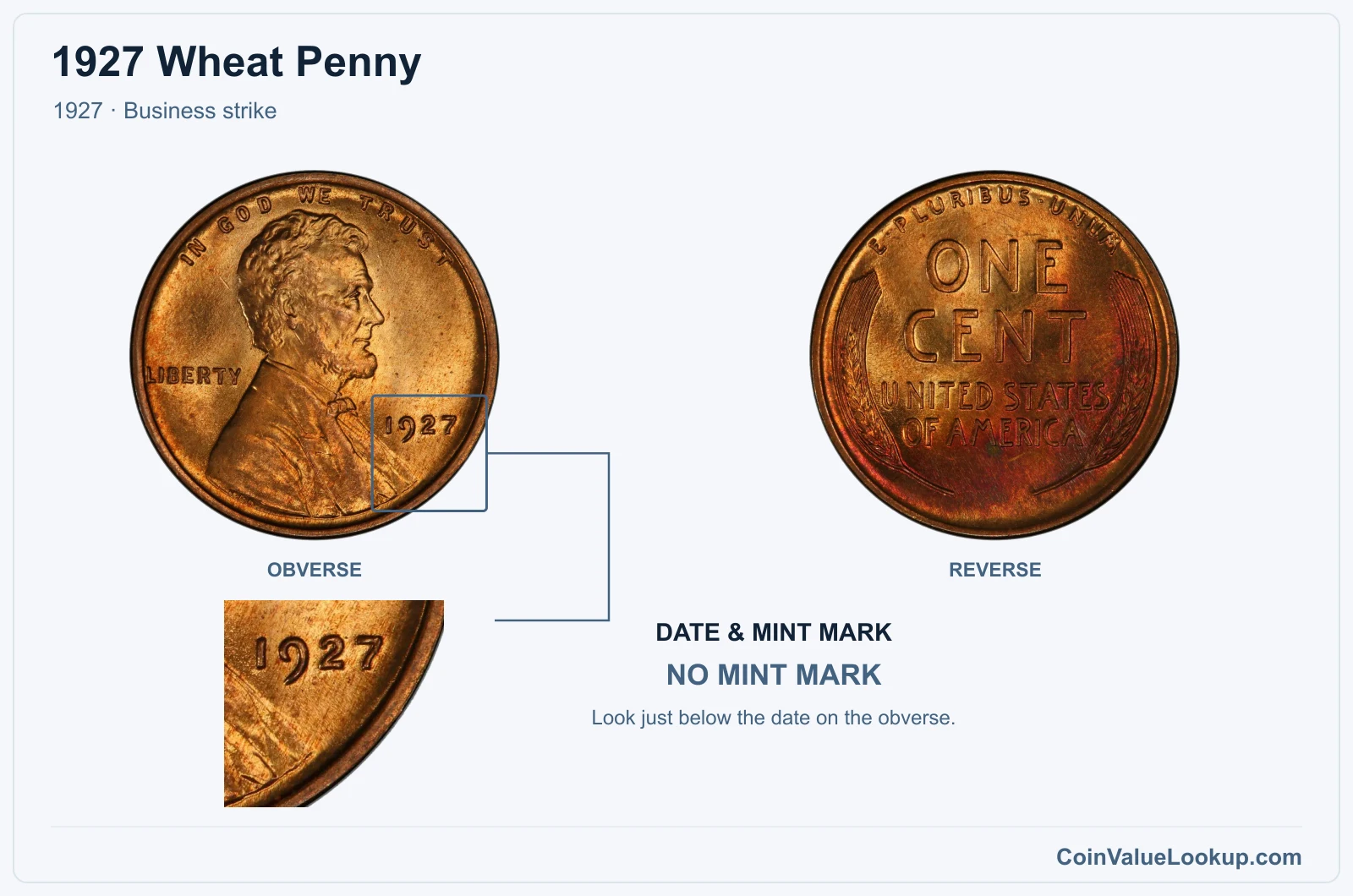
The 1927 Philadelphia cent carries no mintmark. It is the most common of the three issues for this year and guide values reflect that.
In Good-4 condition, expect around $0.30 according to USA Coin Book, climbing to roughly $19 at MS63.
Because Philadelphia produced large quantities, finding one in a junk box is easy. Finding one with full original red luster and minimal bag marks is another story.
Original surfaces matter here: a cleaned or corroded example will trade well below guide figures regardless of how little actual wear it shows.
| Range | Grade | Price | Auction Records | Appraisal |
|---|---|---|---|---|
| PO | PO 1 | — | Coin Identifier | |
| FR | FR 2 | — | Coin Identifier | |
| AG | AG 3 | — | Coin Identifier | |
| G | G 4 | — | Coin Identifier | |
| G 6 | — | Coin Identifier | ||
| VG | VG 8 | — | Coin Identifier | |
| VG 10 | — | Coin Identifier | ||
| F | F 12 | — | Coin Identifier | |
| F 15 | — | Coin Identifier | ||
| VF | VF 20 | — | Coin Identifier | |
| VF 25 | — | Coin Identifier | ||
| VF 30 | — | Coin Identifier | ||
| VF 35 | — | Coin Identifier | ||
| XF | XF 40 | — | Coin Identifier | |
| XF 45 | — | Coin Identifier | ||
| AU | AU 50 | — | Coin Identifier | |
| AU 53 | — | Coin Identifier | ||
| AU 55 | — | Coin Identifier | ||
| AU 58 | — | Coin Identifier | ||
| MS | MS 60 | — | Coin Identifier | |
| MS 61 | — | Coin Identifier | ||
| MS 62 | Coin Identifier | |||
| MS 63 | Coin Identifier | |||
| MS 64 | Coin Identifier | |||
| MS 65 | Coin Identifier | |||
| MS 66 | Coin Identifier | |||
| MS 67 | — | — | — | |
| MS 68 | — | Coin Identifier | ||
| MS 69 | — | — | — | |
| MS 70 | — | — | — |
1927 Wheat Penny — D
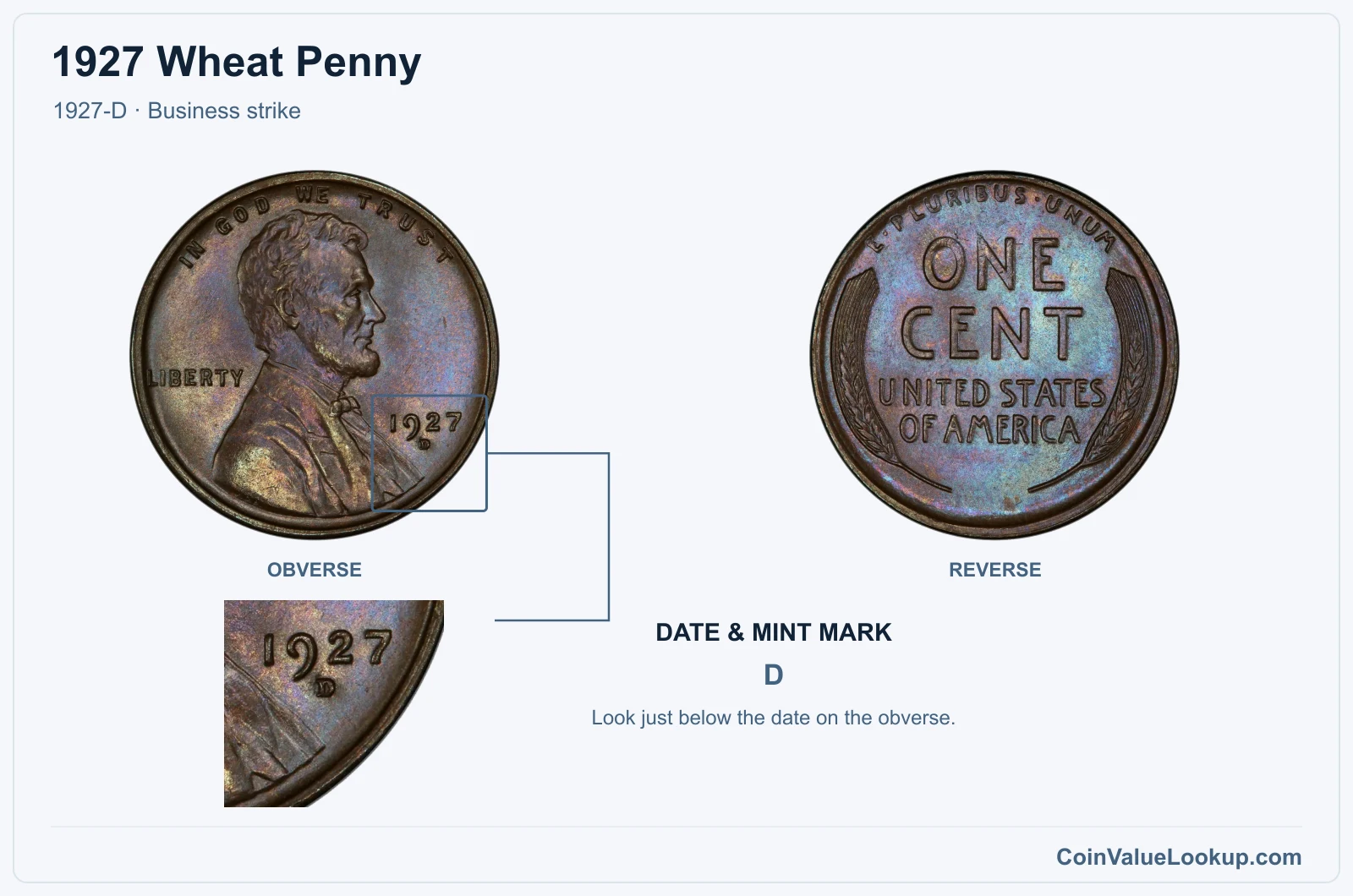
Look for a small "D" below the date to confirm Denver production. The 1927-D starts at about $1.56 in Good-4 and reaches approximately $123 at MS63 per USA Coin Book estimates.
That is a significant jump over the Philadelphia issue at the same grades, which tells you the Denver coin survived in smaller numbers at the higher end of the condition scale. If your 1927-D still has strong hair detail and visible wheat-stalk lines, it is worth examining carefully under magnification for surface quality.
A repunched mintmark on a Denver coin is also possible, so inspect that "D" closely.
Coin Value Lookup is a good place to start when you want to look up guide values for other dates and mints in the Wheat cent series.
| Range | Grade | Price | Auction Records | Appraisal |
|---|---|---|---|---|
| PO | PO 1 | — | Coin Identifier | |
| FR | FR 2 | — | Coin Identifier | |
| AG | AG 3 | — | Coin Identifier | |
| G | G 4 | — | Coin Identifier | |
| G 6 | — | Coin Identifier | ||
| VG | VG 8 | — | Coin Identifier | |
| VG 10 | — | Coin Identifier | ||
| F | F 12 | — | Coin Identifier | |
| F 15 | — | Coin Identifier | ||
| VF | VF 20 | — | Coin Identifier | |
| VF 25 | — | Coin Identifier | ||
| VF 30 | — | Coin Identifier | ||
| VF 35 | — | Coin Identifier | ||
| XF | XF 40 | — | Coin Identifier | |
| XF 45 | Coin Identifier | |||
| AU | AU 50 | — | Coin Identifier | |
| AU 53 | Coin Identifier | |||
| AU 55 | Coin Identifier | |||
| AU 58 | Coin Identifier | |||
| MS | MS 60 | — | Coin Identifier | |
| MS 61 | Coin Identifier | |||
| MS 62 | Coin Identifier | |||
| MS 63 | Coin Identifier | |||
| MS 64 | Coin Identifier | |||
| MS 65 | Coin Identifier | |||
| MS 66 | — | Coin Identifier | ||
| MS 67 | — | — | — | |
| MS 68 | — | — | — | |
| MS 69 | — | — | — | |
| MS 70 | — | — | — |
1927 Wheat Penny — S
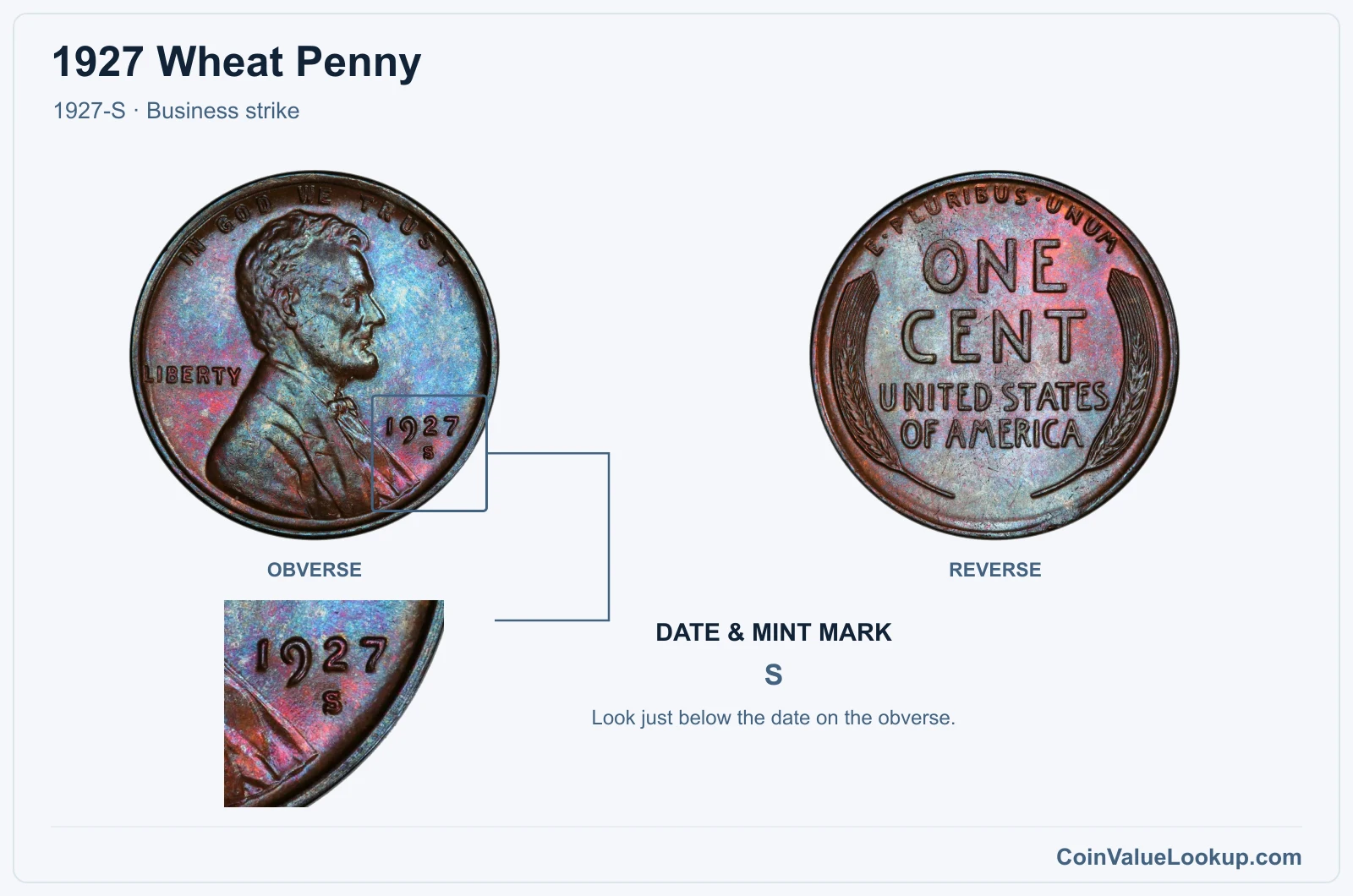
The 1927-S is the prize of this year's trio. A Good-4 example lists at about $1.88, but push it up to MS63 and the USA Coin Book guide shows roughly $217.
That gap between circulated and uncirculated value tells the real story: San Francisco coins from this era survived mostly in well-worn condition, and sharp ones are genuinely difficult to locate.
Check that the "S" mintmark is clear and not filled with grime. A full detail 1927-S with undisturbed original surfaces is the kind of coin that makes a Wheat cent collection stand out.
Color is a separate factor from grade, so do not assume a brown example is worth less just because it lacks red toning. Match your coin's actual wear to known grade standards before estimating its value.
| Range | Grade | Price | Auction Records | Appraisal |
|---|---|---|---|---|
| PO | PO 1 | — | Coin Identifier | |
| FR | FR 2 | — | Coin Identifier | |
| AG | AG 3 | — | Coin Identifier | |
| G | G 4 | — | Coin Identifier | |
| G 6 | — | Coin Identifier | ||
| VG | VG 8 | — | Coin Identifier | |
| VG 10 | — | Coin Identifier | ||
| F | F 12 | — | Coin Identifier | |
| F 15 | — | Coin Identifier | ||
| VF | VF 20 | — | Coin Identifier | |
| VF 25 | — | Coin Identifier | ||
| VF 30 | — | Coin Identifier | ||
| VF 35 | — | Coin Identifier | ||
| XF | XF 40 | Coin Identifier | ||
| XF 45 | — | Coin Identifier | ||
| AU | AU 50 | — | Coin Identifier | |
| AU 53 | Coin Identifier | |||
| AU 55 | Coin Identifier | |||
| AU 58 | Coin Identifier | |||
| MS | MS 60 | Coin Identifier | ||
| MS 61 | Coin Identifier | |||
| MS 62 | Coin Identifier | |||
| MS 63 | Coin Identifier | |||
| MS 64 | Coin Identifier | |||
| MS 65 | Coin Identifier | |||
| MS 66 | — | — | — | |
| MS 67 | — | — | — | |
| MS 68 | — | — | — | |
| MS 69 | — | — | — | |
| MS 70 | — | — | — |
1927 Wheat Penny Error List
1. 1927 Wheat Penny — Doubled Die Obverse
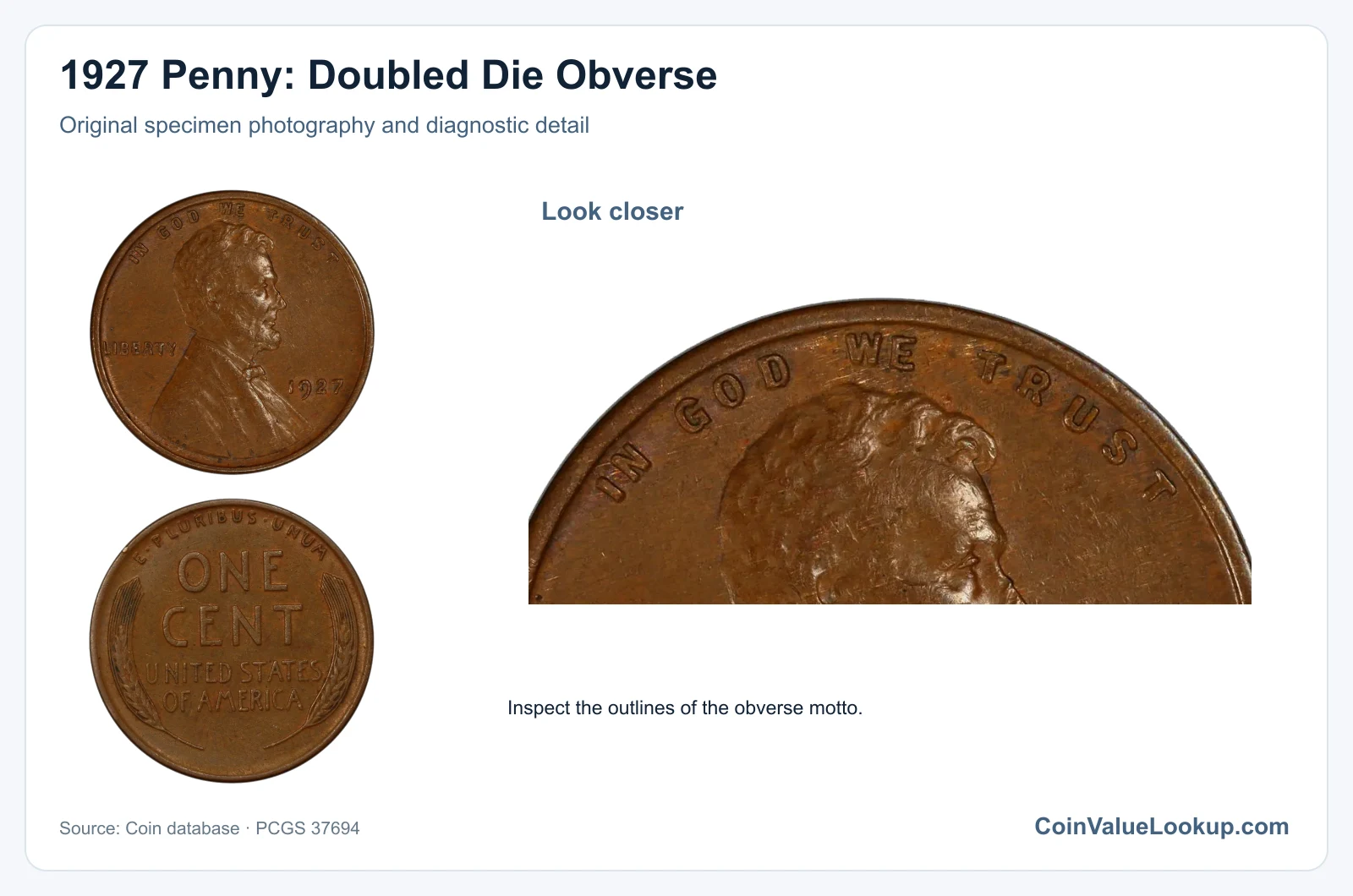
A doubled die obverse on a 1927 Wheat cent shows consistent doubling on the obverse lettering or design elements. You are looking for separation, notching or a secondary image on features like "LIBERTY," "IN GOD WE TRUST" or the date numerals.
The doubling should appear uniform across multiple letters, not random.
The key word is consistent. Machine doubling, which is far more common, tends to produce a flat shelf on one side of the letters without the rounded secondary image that a true doubled die displays.
Lighting angle matters when you inspect, so rotate the coin under a single light source and compare against a known normal 1927 cent.
No specific price range is adopted for this variety. Value depends on the authenticated identity of the doubling, the coin's overall condition and how visually dramatic the error appears.
Professional third-party attribution is the standard way to confirm a doubled die.
2. 1927 Wheat Penny — Repunched Mintmark
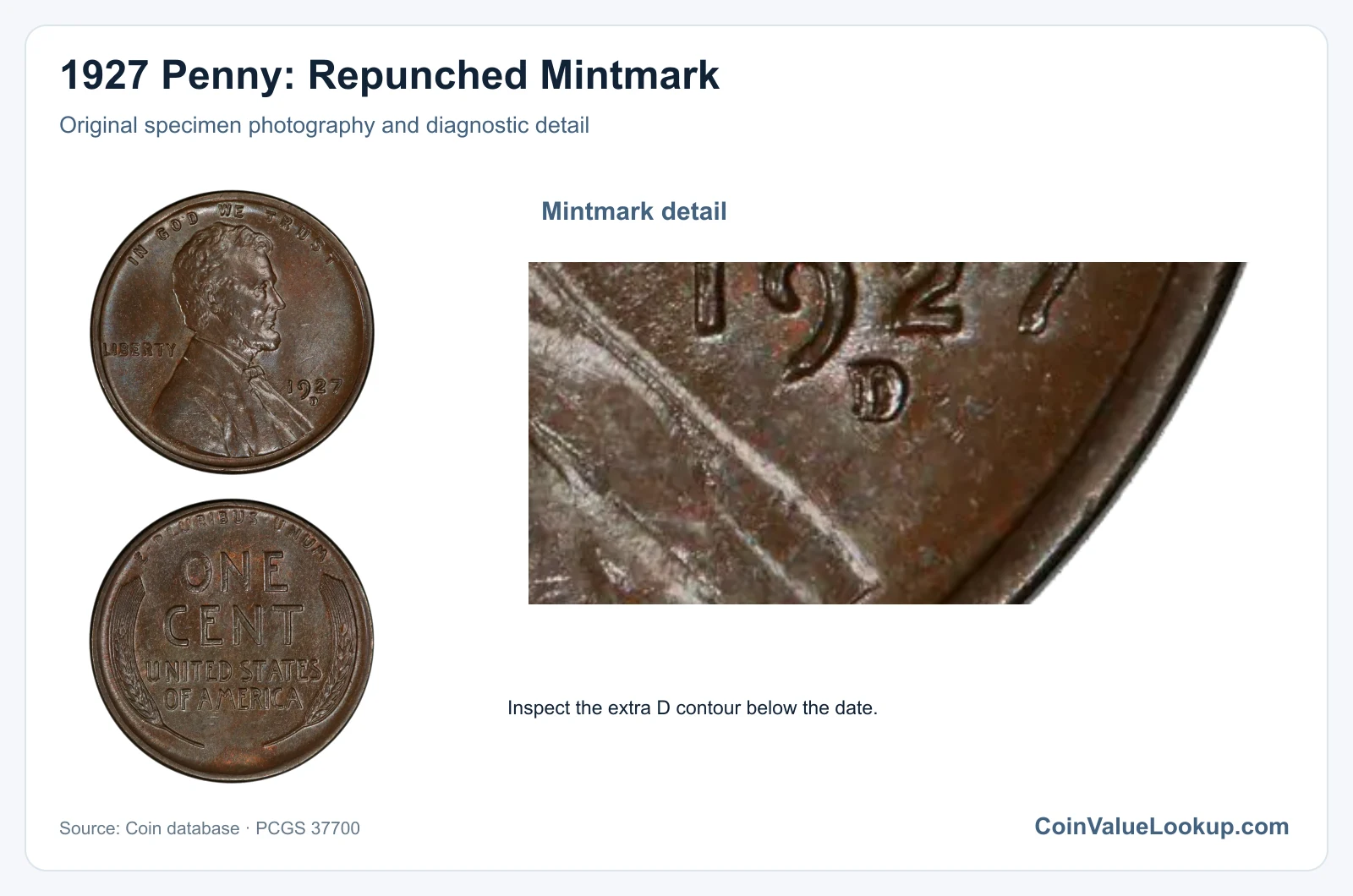
Repunched mintmark errors occur only on the branch-mint issues, the 1927-D and 1927-S. Philadelphia coins have no mintmark to repunch.
What you are looking for is evidence of a second, slightly offset impression of the "D" or "S" beneath or beside the primary mintmark.
Under magnification, a genuine repunched mintmark shows remnants of a separately positioned punch, often visible as a partial extra serif or a shadow in a direction that does not match the coin's strike axis. Compare your mintmark to a normal example at the same magnification before getting excited.
Die chips, corrosion buildup around the letter, and machine doubling can all mimic a repunched mintmark to the untrained eye. No specific price is adopted for this category.
Each coin's premium depends on its authenticated identity, the clarity of the repunching and overall condition.
3. 1927 Wheat Penny — Off-Center Strike
An off-center strike happens when the planchet is not seated properly between the dies. The result is a design that is shifted to one side with a blank crescent of unstruck metal on the opposite edge.
The more dramatic the shift, the more collector interest it draws, but the date must remain visible for the coin to be readily attributable to 1927.
Do not confuse an off-center strike with a clipped planchet, which shows a curved bite out of the edge, or with post-mint damage from being flattened or bent. A genuine off-center error will have a clean unstruck area with the rim absent on that side, and the struck portion of the design remains sharp relative to the coin's overall wear.
No specific price range is adopted. Value depends on the percentage of off-center displacement, date visibility, mint and the coin's condition.
A 10% shift looks different from a 50% shift, and collectors price them accordingly.
4. 1927 Wheat Penny — Lamination / Split Planchet
A lamination or split planchet error on a 1927 Wheat cent appears as peeling metal, a retained flap or a visible separation within the copper alloy. The planchet essentially delaminated during or before striking, leaving layers that did not bond properly.
To identify one, look for a raised flap of metal or a void where a layer has broken away. Photograph the edge of the coin alongside the affected face, because the separation is often most obvious from that angle.
The edges of the flap usually follow the coin's contour rather than looking like a straight gouge.
Scratches from tools, surface corrosion and deliberately altered coins can resemble lamination errors. Genuine laminations have a natural, irregular appearance and the exposed metal underneath typically shows the same alloy.
No price range is adopted for this error. Each example is valued individually based on its size, visual impact and authenticated condition.