1826 Capped Bust Half Dollar Coin Value: How Much Is It Worth?
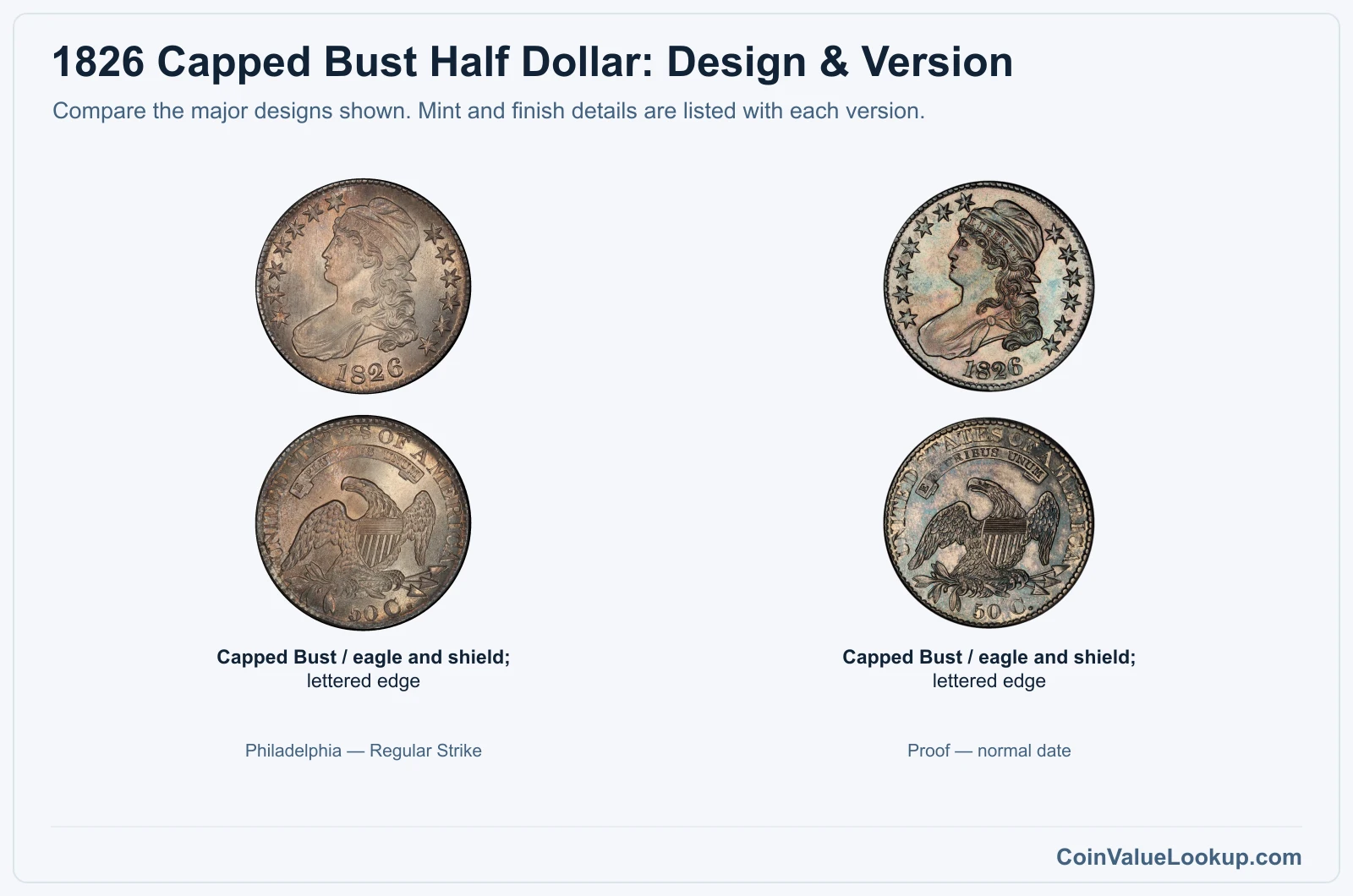
A circulated 1826 Capped Bust Half Dollar in regular strike form carries guide estimates from roughly $111 at Good-4 to $457 at About Uncirculated-50, according to USA Coin Book. Actual value depends heavily on condition, die variety, and whether the coin is a rare early Proof — a separate category that cannot be assumed from a shiny surface alone.
Fast Way to Identify Your 1826 Capped Bust Half Dollar
Want a quick read on your 1826 half dollar? Upload clear photos of the front and back, and our identifier can help with a preliminary identification of the version and approximate condition.
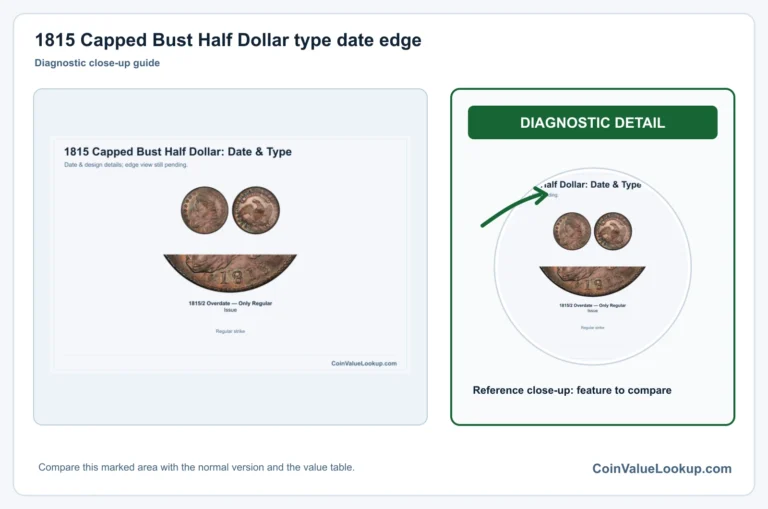
Edge details matter on this series too, so a crisp edge shot is a bonus if you can manage one.
1826 Capped Bust Half Dollar Value
Upload both sides of your 1826 Capped Bust Half Dollar.
Front Obverse
Upload photo
Back Reverse
Upload photo
Which 1826 Capped Bust Half Dollar Versions Are Worth Money?
- Philadelphia Regular Strike — the standard 1826 issue, with guide estimates from $111 at Good-4 up to $457 at About Uncirculated-50, making it worth checking condition carefully.
- Early Proof — a rare specialist-attributed finish with a single recorded sale of $80,500 in PR-65 at a January 2006 Heritage auction; professional attribution and provenance are essential.
Step 1: Identify Your 1826 Capped Bust Half Dollar Mint Mark and Version
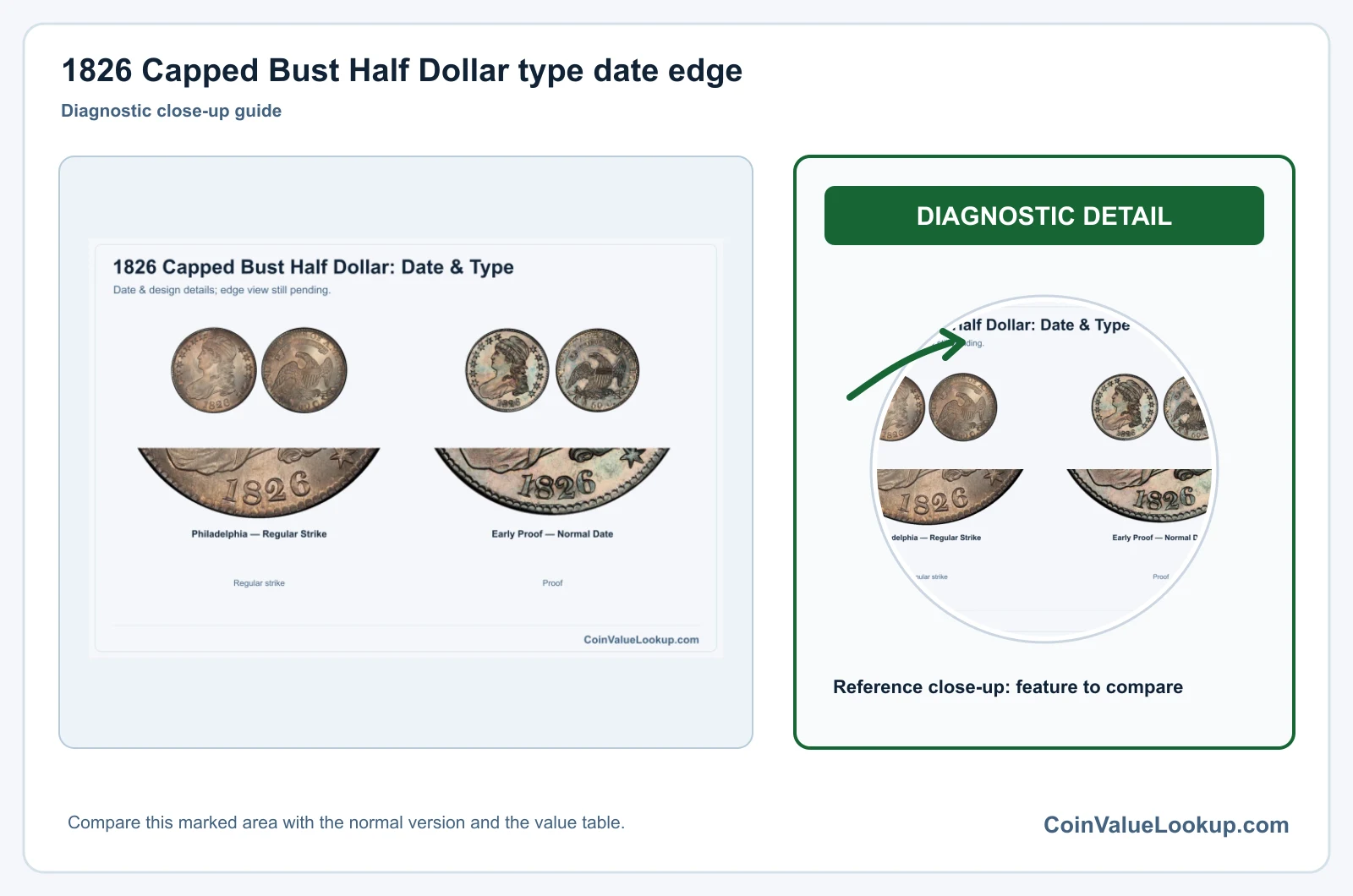
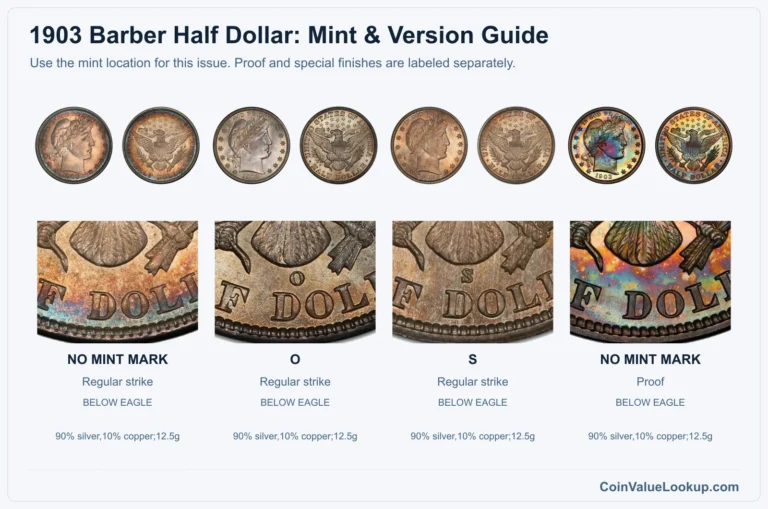
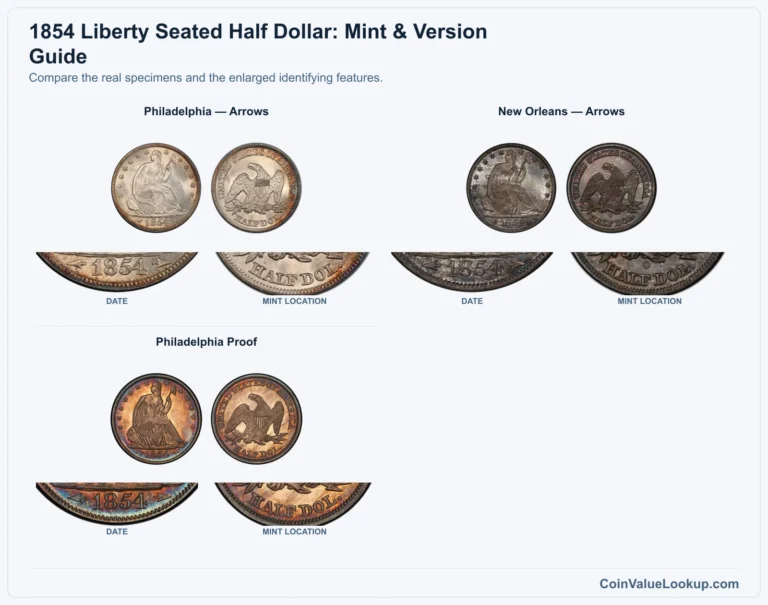
Every 1826 Capped Bust Half Dollar was struck at Philadelphia. There is no mintmark to hunt for.
The obverse shows a left-facing Liberty wearing a cap, while the reverse features an eagle holding a shield with "50 C" below. The edge is lettered: FIFTY CENTS OR HALF A DOLLAR.
These coins are a silver-copper alloy, approximately 89.24% silver, with a nominal weight of 13.48 grams and a diameter of 32.5 mm. A correct weight is a useful check but cannot authenticate a coin by itself.
The main distinction you need to make is between a Philadelphia regular strike and the rare early Proof. Proof attribution requires specialist examination of die characteristics, surface quality, and provenance.
A polished, reflective, or prooflike regular strike is not the same thing — plenty of well-preserved coins look "too nice" without being Proofs.
Step 2: Check Your 1826 Capped Bust Half Dollar Grade
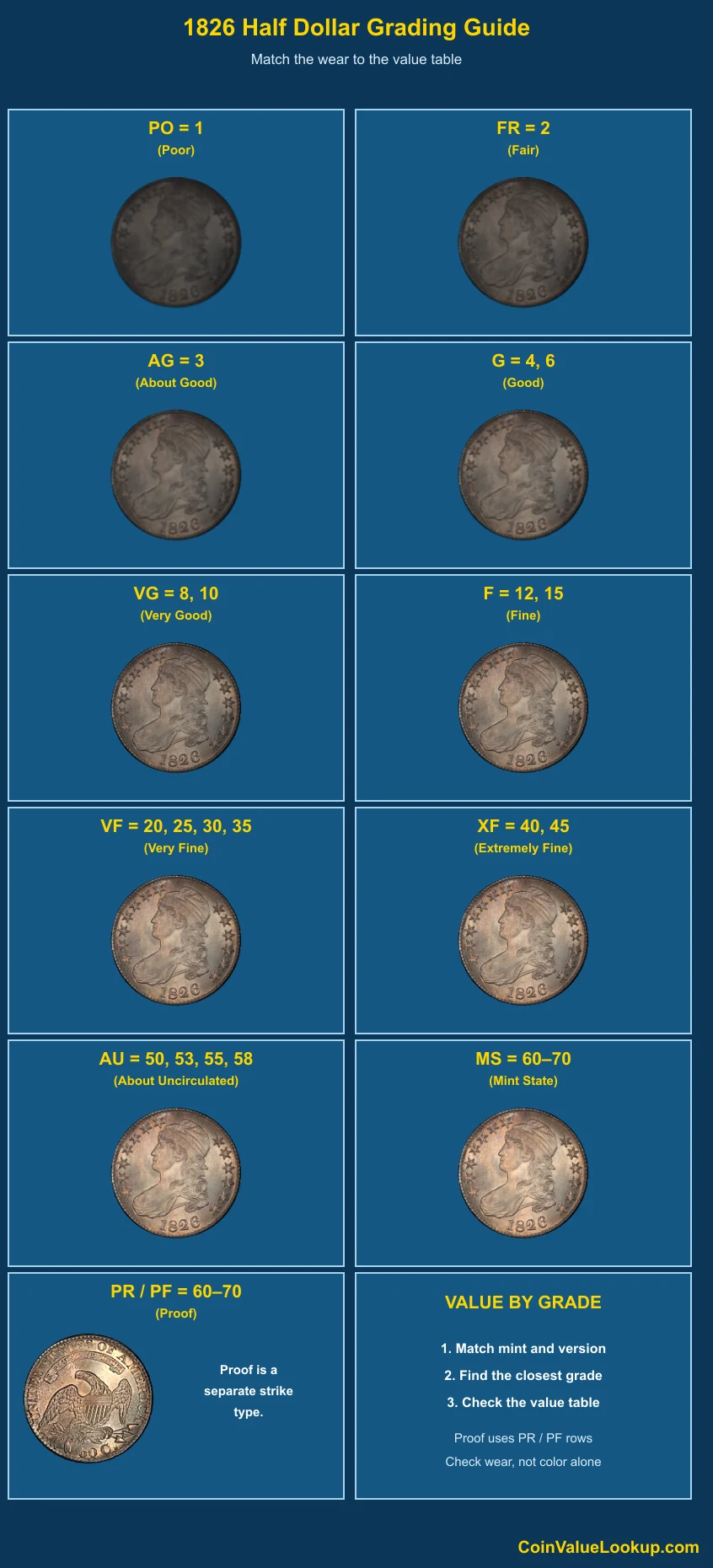
Start with Liberty's hair above the forehead and around the ear. On a well-worn coin, these areas flatten first, followed by the cheek and the drapery at the shoulder.
A Good-4 example will show a clear outline of Liberty but most interior detail is smooth.
Flip the coin over and check the eagle's breast feathers and wing tips. This design sometimes came off the dies with soft spots in the original strike, so missing detail does not always mean wear.
Look for breaks in the original mint luster — that tells you more than a single flat spot.
Use the comparison image to match your coin against known grade benchmarks. Coins that have been cleaned, holed, tooled, or scratched receive "Details" designations from grading services.
These trade well below straight-graded examples at the same apparent wear level. If you are tempted to clean your coin: don't.
Step 3: Check 1826 Capped Bust Half Dollar Value by Mint and Version
1826 Capped Bust Half Dollar — Philadelphia — Regular Strike
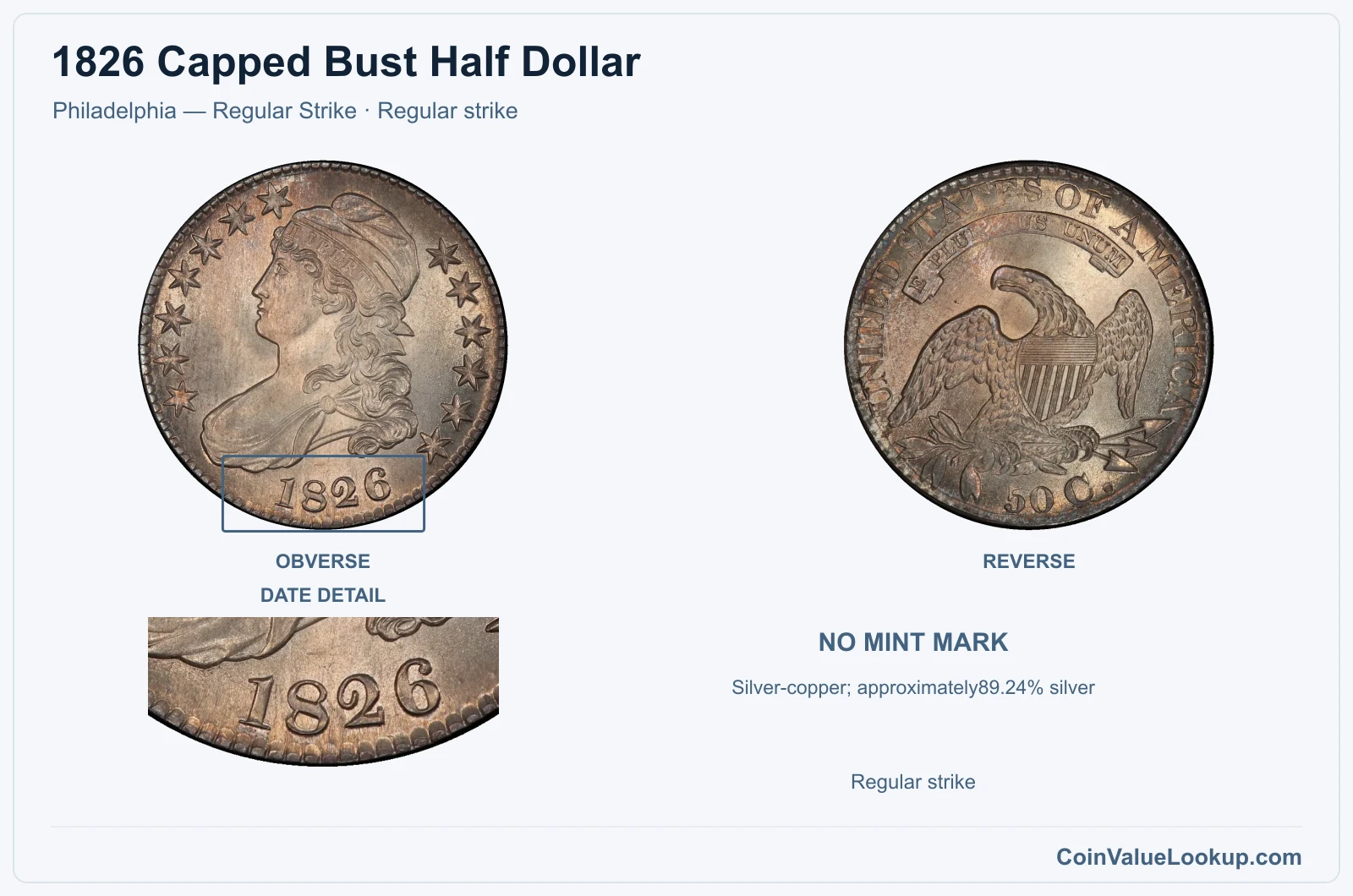
This is the coin most people will have. The Philadelphia regular strike was the sole business-strike issue for 1826, with no mintmark present.
USA Coin Book guide estimates place it at about $111 in Good-4, $163 in Very Fine-20, and $457 in About Uncirculated-50. These are retail guide figures, not guaranteed sale prices.
Condition drives value sharply — a jump from VF to AU nearly triples the estimate.
Before assuming your coin fits neatly on this curve, inspect the surfaces carefully and rule out a professionally attributed Proof. Minor die lines or polish alone do not create an expensive new variety.
Range Grade
Price Auction Records Appraisal PO PO 1
—
Coin Identifier FR FR 2
—
Coin Identifier AG AG 3
—
Coin Identifier G G 4
—
Coin Identifier
G 6
—
Coin Identifier VG VG 8
Coin Identifier
VG 10
Coin Identifier F F 12
Coin Identifier
F 15
Coin Identifier VF VF 20
Coin Identifier
VF 25
Coin Identifier
VF 30
Coin Identifier
VF 35
Coin Identifier XF XF 40
Coin Identifier
XF 45
Coin Identifier AU AU 50
Coin Identifier
AU 53
Coin Identifier
AU 55
Coin Identifier
AU 58
Coin Identifier MS MS 60
Coin Identifier
MS 61
Coin Identifier
MS 62
Coin Identifier
MS 63
Coin Identifier
MS 64
Coin Identifier
MS 65
Coin Identifier
MS 66
Coin Identifier
MS 67
Coin Identifier
MS 68
—
—
—
MS 69
—
—
—
MS 70
—
—
—
1826 Capped Bust Half Dollar — Early Proof — Normal Date
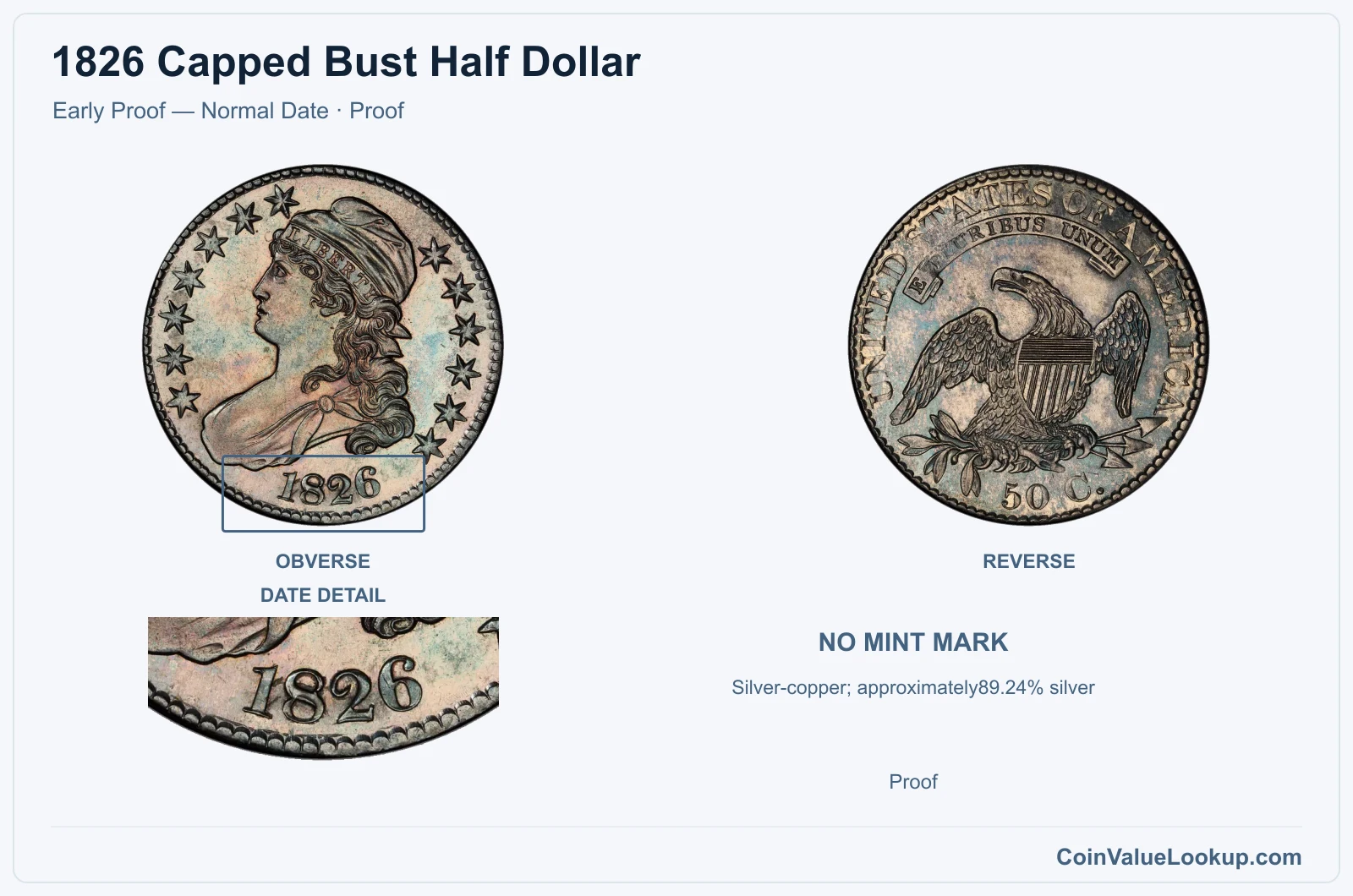
Early Proof half dollars from 1826 are a genuinely rare collector issue, struck as presentation or specimen pieces at Philadelphia using the Proof manufacturing process. They differ from regular strikes in surface preparation and die characteristics, not simply in how shiny they look.
PCGS catalogs this as a separate issue. The only historical sale anchor reported is a PR-65 example that sold for $80,500 through Heritage Auctions in January 2006.
That is a single data point from nearly two decades ago, not a current market range or a price curve you can slide down to lower grades.
Attribution requires professional certification backed by die-identity analysis and provenance documentation. Every reflective 1826 half dollar is not a Proof, and calling one a Proof without that evidence is a fast way to overpay.
Coin Value Lookup is a good starting point if you want to look up guide values for other dates and denominations in this series before diving into specialist attribution.
Range Grade
Price Auction Records Appraisal PR PR 1
—
Coin Identifier
PR 2
—
Coin Identifier
PR 3
—
Coin Identifier
PR 4
—
Coin Identifier
PR 6
—
Coin Identifier
PR 8
—
Coin Identifier
PR 10
—
Coin Identifier
PR 12
—
Coin Identifier
PR 15
—
Coin Identifier
PR 20
—
Coin Identifier
PR 25
—
Coin Identifier
PR 30
—
Coin Identifier
PR 35
—
Coin Identifier
PR 40
—
Coin Identifier
PR 45
—
Coin Identifier
PR 50
—
Coin Identifier
PR 53
—
Coin Identifier
PR 55
—
Coin Identifier
PR 58
—
Coin Identifier
PR 60
—
Coin Identifier
PR 61
—
Coin Identifier
PR 62
—
Coin Identifier
PR 63
Coin Identifier
PR 64
Coin Identifier
PR 65
Coin Identifier
PR 66
—
—
—
PR 67
—
—
—
PR 68
—
—
—
PR 69
—
—
—
PR 70
—
—
—
1826 Capped Bust Half Dollar Error List
1. 1826 Capped Bust Half Dollar — Die Crack / Die Chip
Die cracks on 1826 half dollars appear as thin raised lines on the coin's surface, created when the steel die developed fractures during use. One documented example shows reverse cracks running through the tops of the letters in NITED STATES and MERICA — essentially a line connecting letter tops across the upper reverse.
To confirm a die crack, look for a raised ridge that follows a consistent path across the design. It should feel slightly raised, not incised.
Scratches, corrosion lines, and foreign material sitting on the surface can mimic cracks but tend to be random, recessed, or removable. A genuine die crack is part of the metal itself.
The value of a die-cracked 1826 half dollar depends on the crack's visibility, location, and the coin's overall condition. No specific price range is established for this category, so individual assessment matters.
2. 1826 Capped Bust Half Dollar — Doubled Edge Lettering
Doubled edge lettering has been reported on 1826 Capped Bust Half Dollars. Because these coins received their edge inscription in a separate operation from the obverse and reverse striking, misalignment or double impressions could occur, leaving overlapping or repeated letter impressions along the edge.
To check, examine the full edge under good light and compare against an attributed same-year example. The doubling should be consistent and appear as part of the striking process, not random.
Post-mint damage, ordinary wear that softens lettering, or design features from a different year can all look similar to the untrained eye.
No numerical price range is established for this variety. Value depends on the clarity of the doubling, the coin's overall grade, and collector demand for the specific error.
If you suspect doubled edge lettering, professional attribution from a grading service is the safest route to confirmation.