1882 Shield Nickel Coin Value: How Much Is It Worth?
The 1882 Shield Nickel is one of the more available late dates in the Shield series, which makes it a reasonable entry point for collectors. A USA Coin Book guide estimate places an ordinary circulation strike at about $38 in G4 and around $281 in MS63, while a proof example anchors near $468 in PR63.
These are retail guide estimates, not guaranteed sale prices. Actual value depends on the specific coin's condition, surfaces, and whether any recognized variety or error is present.
Fast Way to Identify Your 1882 Shield Nickel
The quickest way to get a preliminary identification of your 1882 Shield Nickel is to upload clear photos of both the front and back. Good lighting at a slight angle helps capture surface detail and any doubling or die cracks.
Our identifier can help narrow down whether you have a standard circulation strike, a proof, or a potential error coin.
1882 Shield Nickel Value
Upload both sides of your 1882 Shield Nickel.
Front Obverse
Upload photo
Back Reverse
Upload photo
Which 1882 Shield Nickel Versions Are Worth Money?
- The business-strike 1882 Shield Nickel ranges from about $38 in G4 to $281 in MS63 per USA Coin Book guide estimates.
- Proof examples carry a higher anchor, around $468 in PR63, reflecting their limited original mintage and deliberate finish.
- Doubled die obverse and repunched date varieties are reported for this date and can carry premiums that depend on visibility and condition.
- Off-center strikes and wrong-planchet errors are documented for 1882 and are scarce enough that each coin requires individual assessment.
- Die breaks and cuds on this date have been cataloged; value depends on size, location, and the coin's overall grade.
Step 1: Identify Your 1882 Shield Nickel Mint Mark and Version
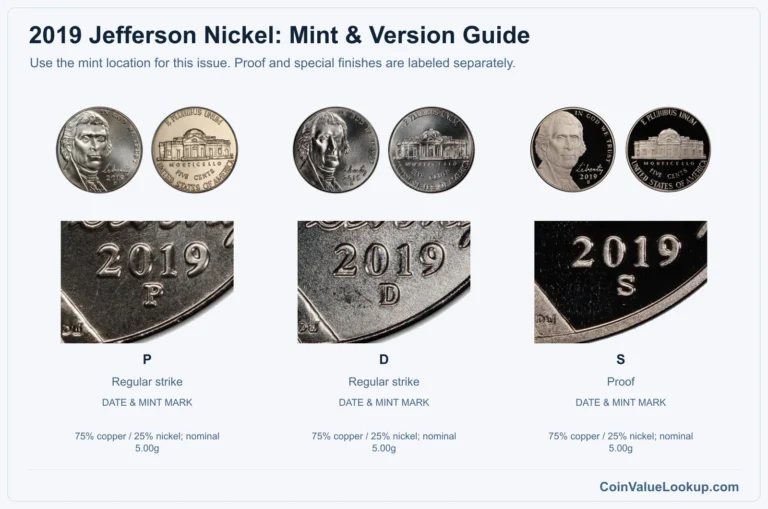
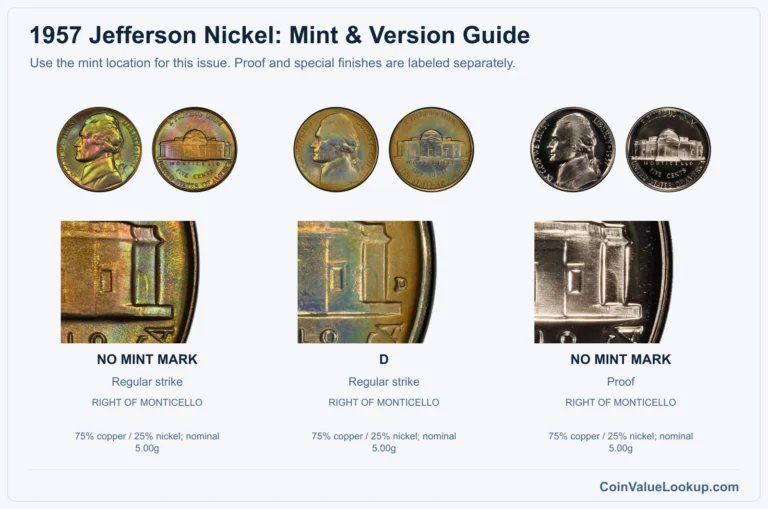
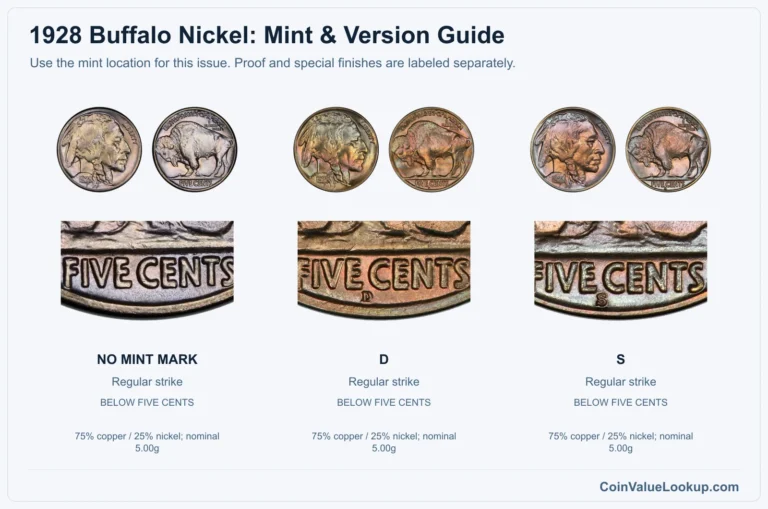
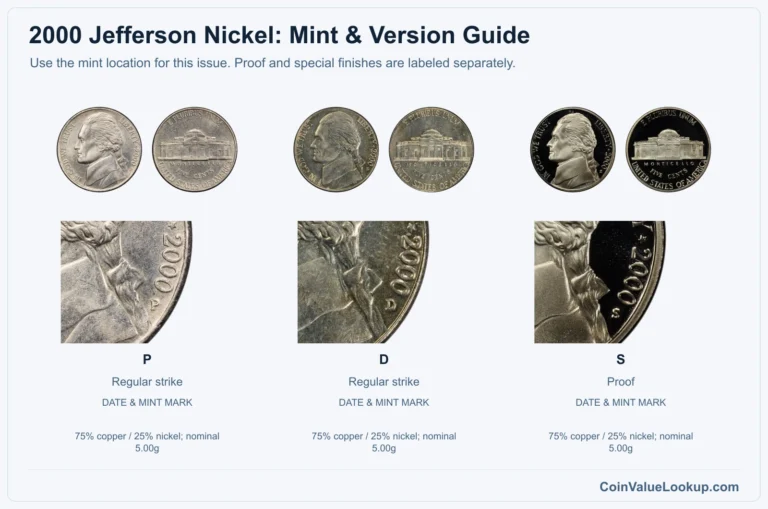
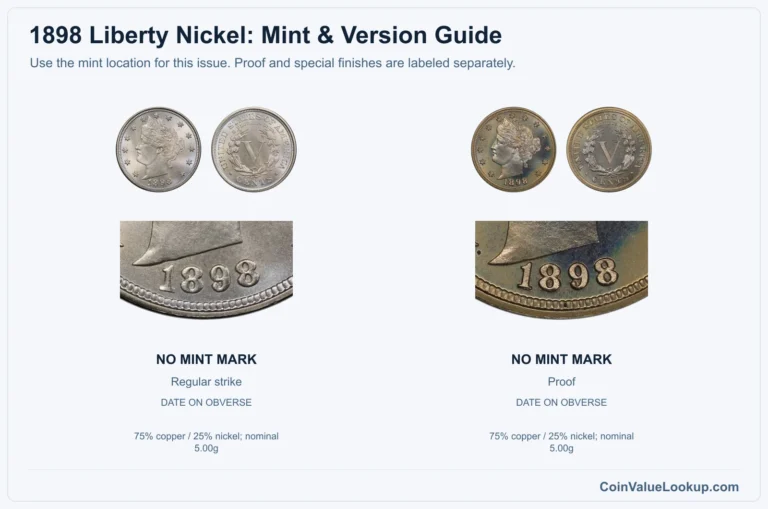
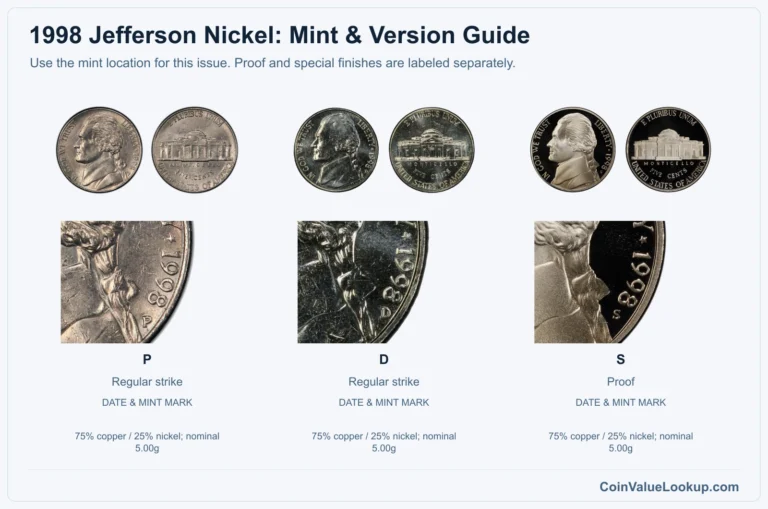
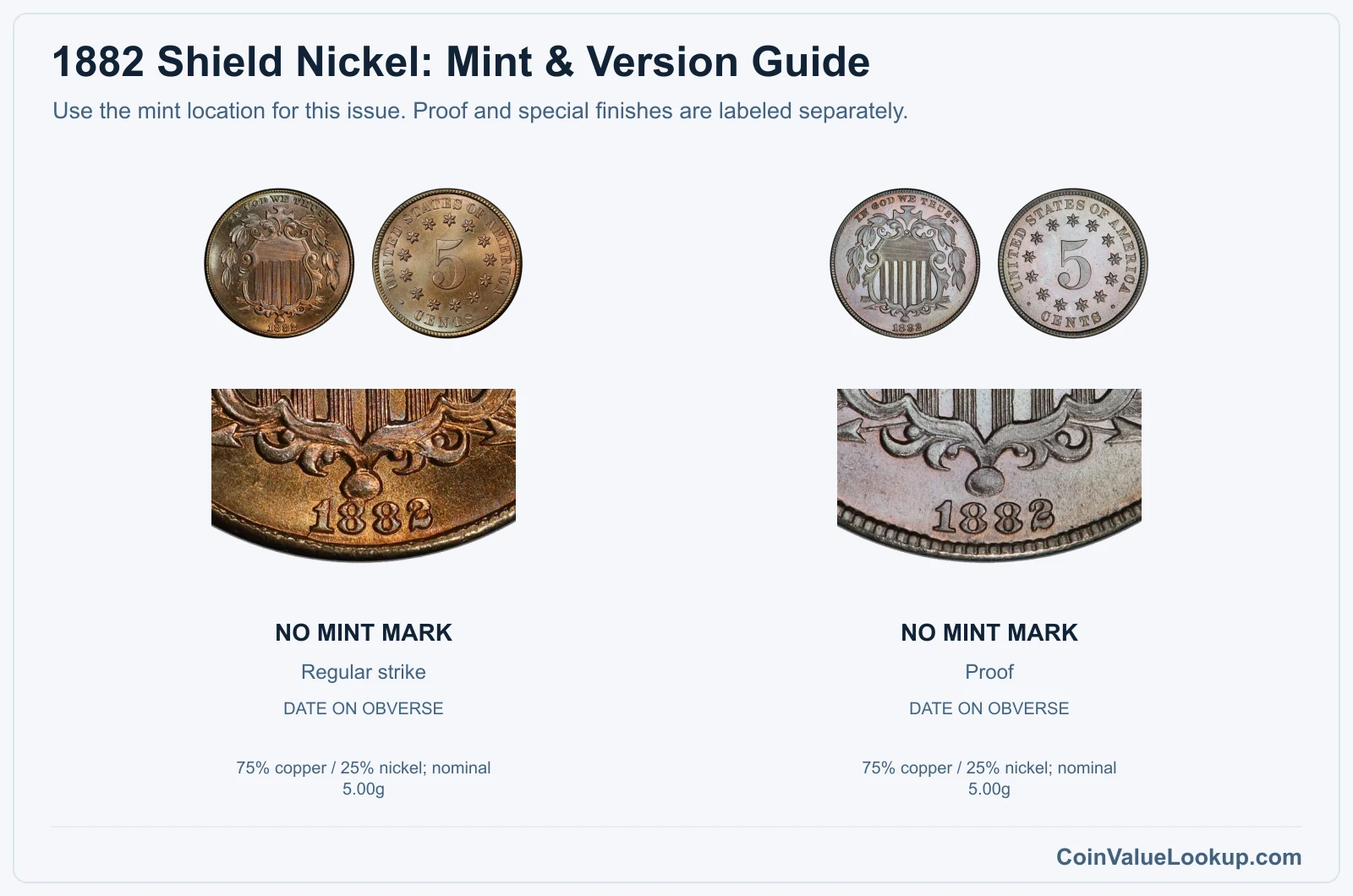
Every 1882 Shield Nickel was struck at Philadelphia. There is no mintmark, and the absence of a mint letter is completely normal for this issue, not an error.
The coin is copper-nickel, composed of 75% copper and 25% nickel, with a nominal weight of 5 grams and a diameter of 20.5 mm. The edge is plain.
There is no silver version of this date.
The 1882 belongs to the "No Rays" type, the design used after 1867 when the stars-and-rays reverse was simplified. The two branches you need to distinguish are the standard business strike and the proof, which share the same design but differ in manufacturing finish and surface character.
If you find an 1882 nickel that looks silver or feels lighter than expected, that calls for closer inspection, not celebration. Plating, corrosion, or acid alteration can mimic an off-metal appearance.
Step 2: Check Your 1882 Shield Nickel Grade
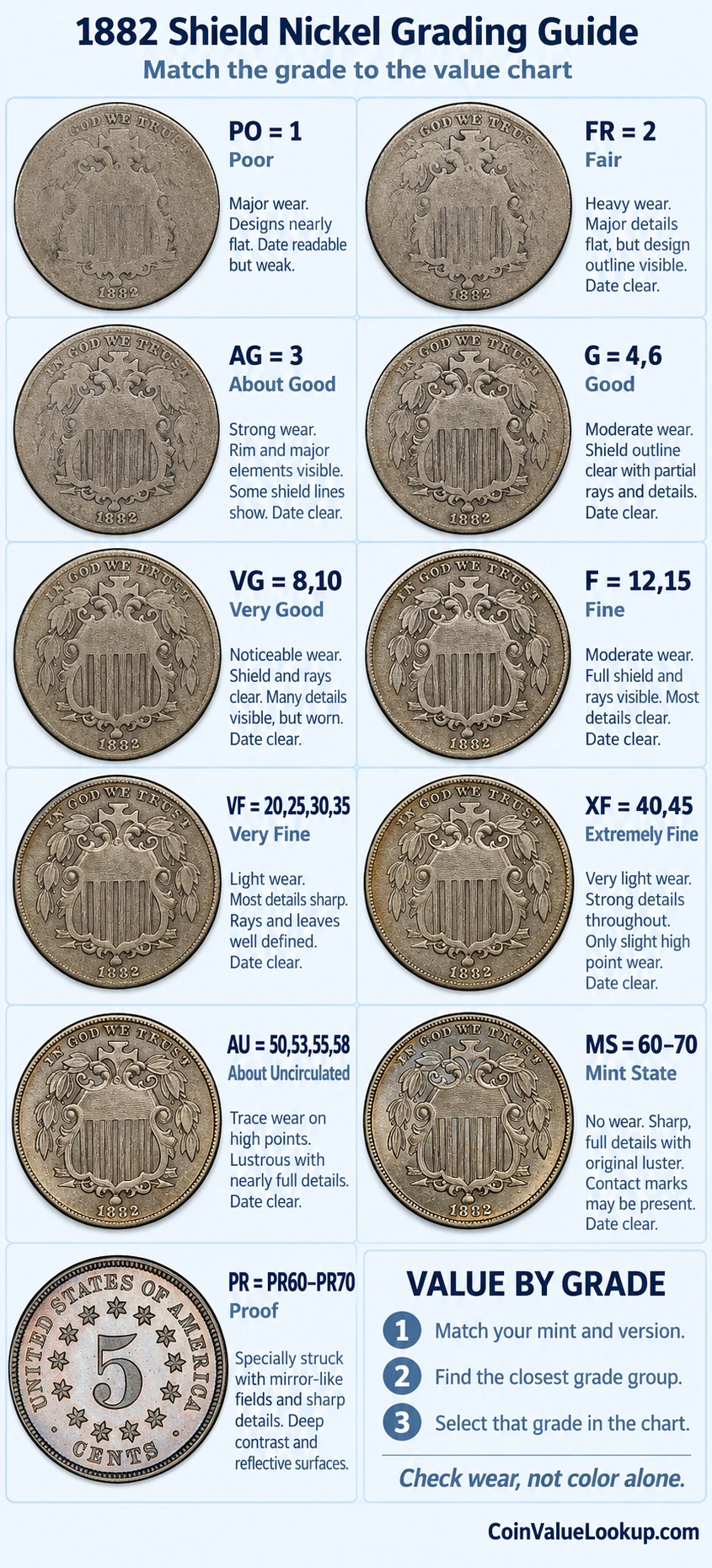
Start by examining the shield on the obverse. The horizontal and vertical lines within the shield are the first details to blur together as the coin wears.
In low grades, much of the shield interior will be flat.
Next, check the cross and wreath on the reverse. Individual leaf tips and the cross's edges lose definition early.
A coin grading around Good (G4) will show a clear outline of the shield and cross but little interior detail.
Weak strikes can imitate wear on Shield Nickels. Some coins left the press without full detail, especially in the shield lines.
Compare your coin to the reference image and look at the high points alongside the fields, because a weakly struck coin often retains luster in protected areas that a worn coin does not.
Proofs are a separate category. They were made with polished dies and specially prepared planchets, producing mirror-like fields.
Assess proof surfaces for hairlines, haze, and contact marks rather than the circulation-wear scale. A proof with heavy hairlines grades lower but is still a proof.
Do not clean your coin. Cleaning removes original surfaces and typically reduces value, sometimes drastically.
A coin with natural toning or minor contact marks is almost always preferred over one that has been scrubbed bright.
Step 3: Check 1882 Shield Nickel Value by Mint and Version
1882 Shield Nickel — No Mint Mark — Circulation Strike
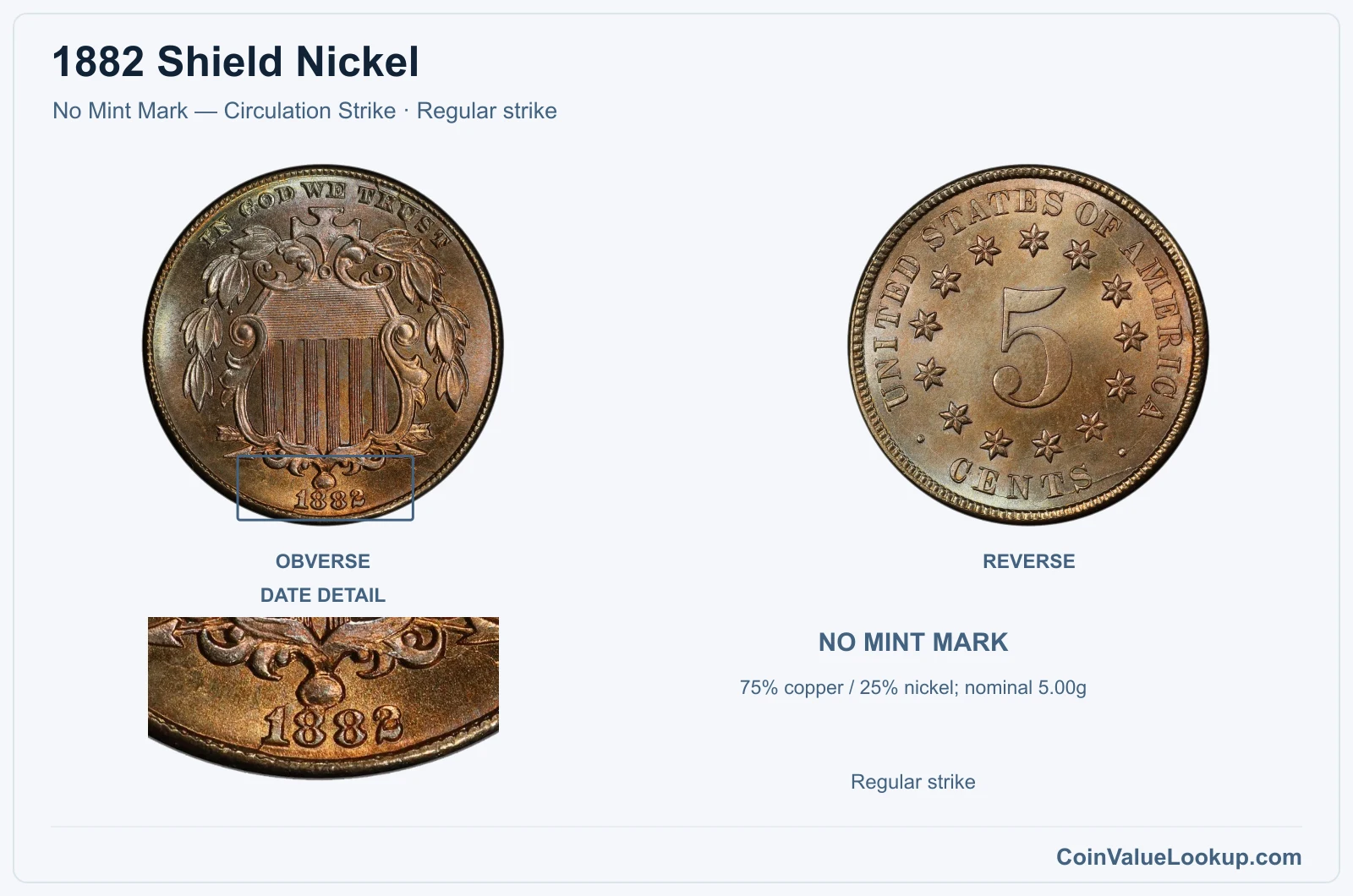
This is the standard circulation-strike 1882 Shield Nickel, produced at Philadelphia with no mintmark. It uses the "No Rays" reverse design, the version struck from 1867 onward.
The coin is 75% copper and 25% nickel, weighs about 5 grams, and has a plain edge.
USA Coin Book guide estimates place this version at roughly $38 in G4 and around $281 in MS63. That spread tells you condition matters a lot.
A well-worn example is affordable; a fully lustrous uncirculated piece commands a real premium.
As a late-date Shield Nickel, the 1882 is comparatively available. That makes it a practical type coin for collectors who want a Shield Nickel without paying early-date prices.
Range Grade
Price Auction Records Appraisal PO PO 1
—
Coin Identifier FR FR 2
—
Coin Identifier AG AG 3
—
Coin Identifier G G 4
—
Coin Identifier
G 6
Coin Identifier VG VG 8
—
Coin Identifier
VG 10
—
Coin Identifier F F 12
Coin Identifier
F 15
Coin Identifier VF VF 20
—
Coin Identifier
VF 25
—
Coin Identifier
VF 30
—
Coin Identifier
VF 35
—
Coin Identifier XF XF 40
Coin Identifier
XF 45
Coin Identifier AU AU 50
Coin Identifier
AU 53
Coin Identifier
AU 55
Coin Identifier
AU 58
Coin Identifier MS MS 60
—
Coin Identifier
MS 61
Coin Identifier
MS 62
Coin Identifier
MS 63
Coin Identifier
MS 64
Coin Identifier
MS 65
Coin Identifier
MS 66
Coin Identifier
MS 67
Coin Identifier
MS 68
—
—
—
MS 69
—
—
—
MS 70
—
—
—
1882 Shield Nickel — No Mint Mark — Proof
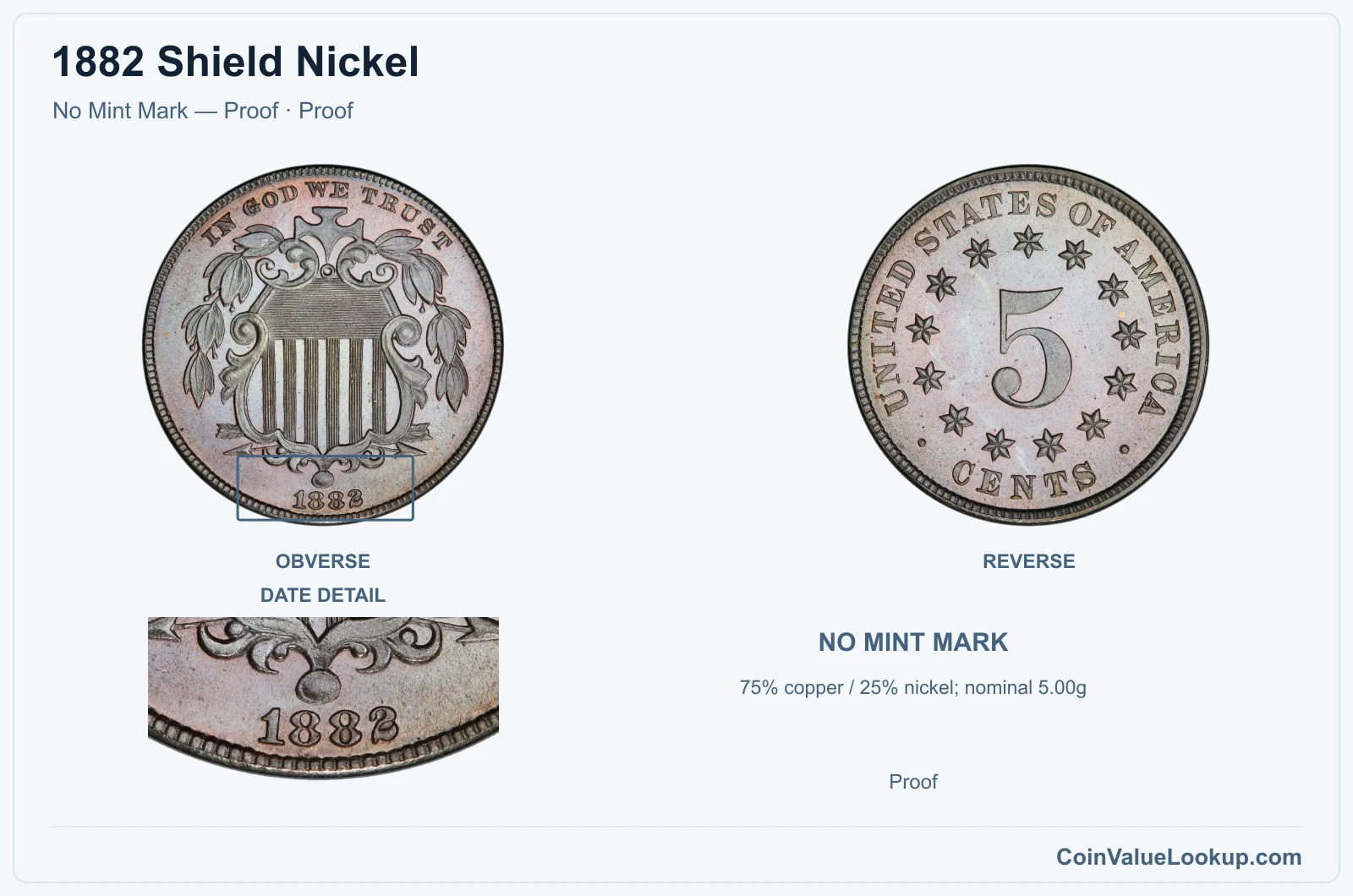
The 1882 proof Shield Nickel was struck specifically for collectors using polished dies and carefully prepared planchets, producing mirror-like fields. Both faces should show sharper detail than a typical business strike, with squared-off rims and reflective surfaces.
A USA Coin Book guide estimate places this version at about $468 in PR63. Some proof specimens exhibit cameo contrast between frosted devices and mirrored fields, though cameo is a separate designation beyond the base proof classification.
Coin Value Lookup is a good starting point if you want to compare this proof with other Shield Nickel dates or look up additional denominations from the same era.
Distinguishing a proof from a well-preserved business strike takes careful examination. Look for the combination of squared rims, full mirror fields on both faces, and a level of detail that business strikes rarely achieve.
If only one side looks prooflike, proceed with caution.
Range Grade
Price Auction Records Appraisal PR PR 1
—
Coin Identifier
PR 2
—
Coin Identifier
PR 3
—
Coin Identifier
PR 4
—
Coin Identifier
PR 6
—
Coin Identifier
PR 8
—
Coin Identifier
PR 10
—
Coin Identifier
PR 12
—
Coin Identifier
PR 15
—
Coin Identifier
PR 20
—
Coin Identifier
PR 25
—
Coin Identifier
PR 30
—
Coin Identifier
PR 35
—
Coin Identifier
PR 40
—
Coin Identifier
PR 45
—
Coin Identifier
PR 50
—
Coin Identifier
PR 53
—
Coin Identifier
PR 55
—
Coin Identifier
PR 58
—
Coin Identifier
PR 60
—
Coin Identifier
PR 61
Coin Identifier
PR 62
Coin Identifier
PR 63
Coin Identifier
PR 64
Coin Identifier
PR 65
Coin Identifier
PR 66
Coin Identifier
PR 67
Coin Identifier
PR 68
Coin Identifier
PR 69
—
—
—
PR 70
—
—
—
1882 Shield Nickel Error List
1. 1882 Shield Nickel — Doubled Die Obverse
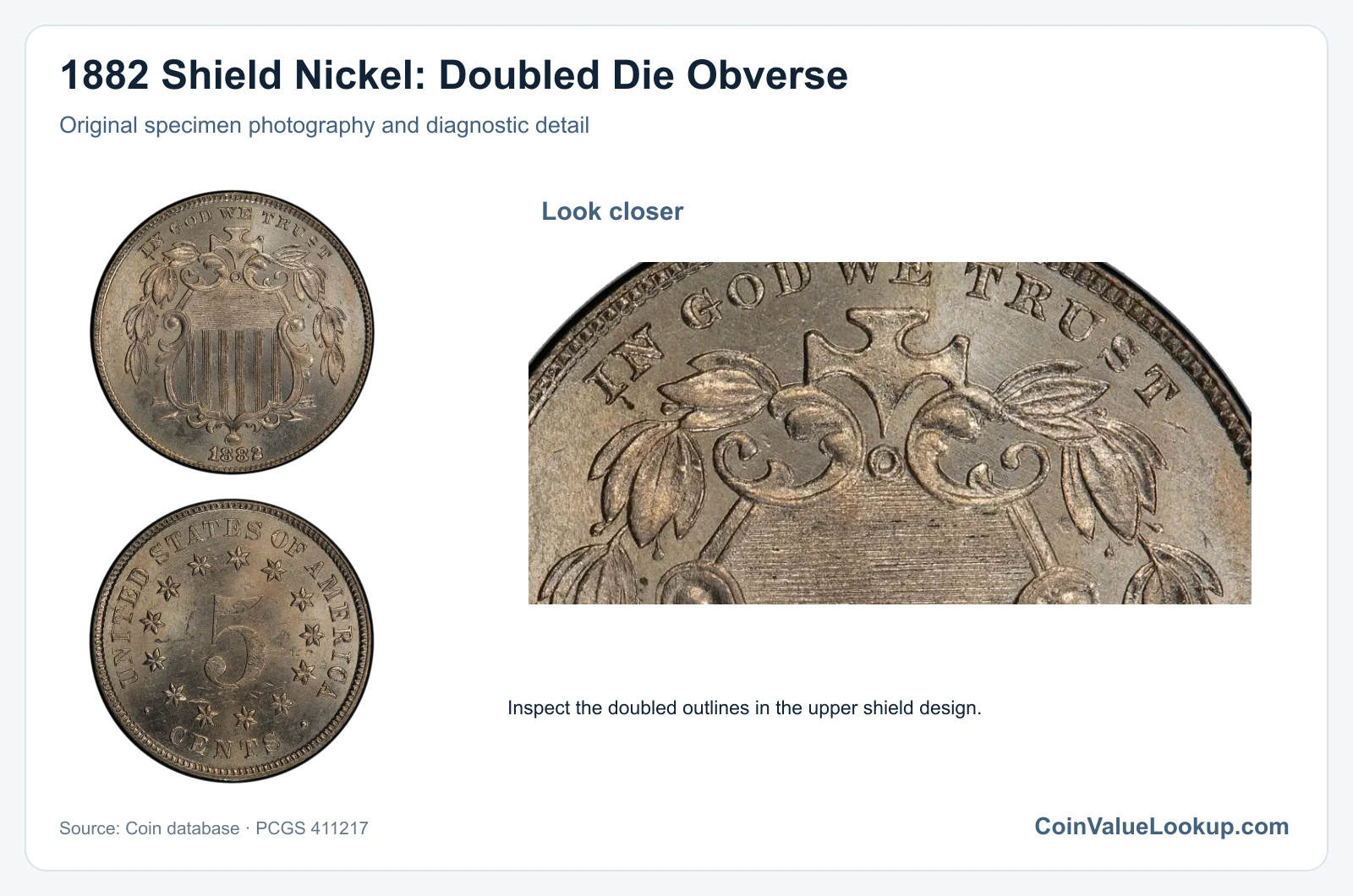
A doubled die obverse on the 1882 Shield Nickel shows consistent doubling on the obverse design elements, such as the lettering or date. The key word is consistent: the doubling appears in the same direction and magnitude across affected features because it originated in the die-making process.
To check, compare the obverse letters and date numerals with a normal 1882 under similar lighting. Look for separation or notching along the edges of letters.
True doubled dies show a clean secondary image, not a flat, shelf-like distortion.
Machine doubling is the most common lookalike. It produces flat, shelf-like displacement rather than a rounded secondary image.
Reflections from lighting angles and worn die contours can also mimic doubling to an untrained eye.
No specific price range is available for this variety. Value depends on the visibility of the doubling and the coin's overall condition, so each example needs individual assessment.
2. 1882 Shield Nickel — Repunched Date
A repunched date on the 1882 Shield Nickel occurs when one or more date numerals were punched into the working die more than once, with the second impression slightly offset from the first. The result is visible remnants of an earlier punch position next to the final date digits.
Look closely at each numeral in "1882." Remnants typically appear as partial serifs, extra curves, or shadow digits beside or beneath the final numbers. This is different from a doubled die, which affects the entire obverse design rather than just the date area.
Damaged dates and machine doubling are the main lookalikes. A date damaged after striking usually shows uneven displacement or incuse marks rather than the raised, consistent traces left by a repunched die.
No adopted price range is available. The premium depends on how clearly the repunching shows and the coin's grade.
3. 1882 Shield Nickel — Die Crack / Die Chip
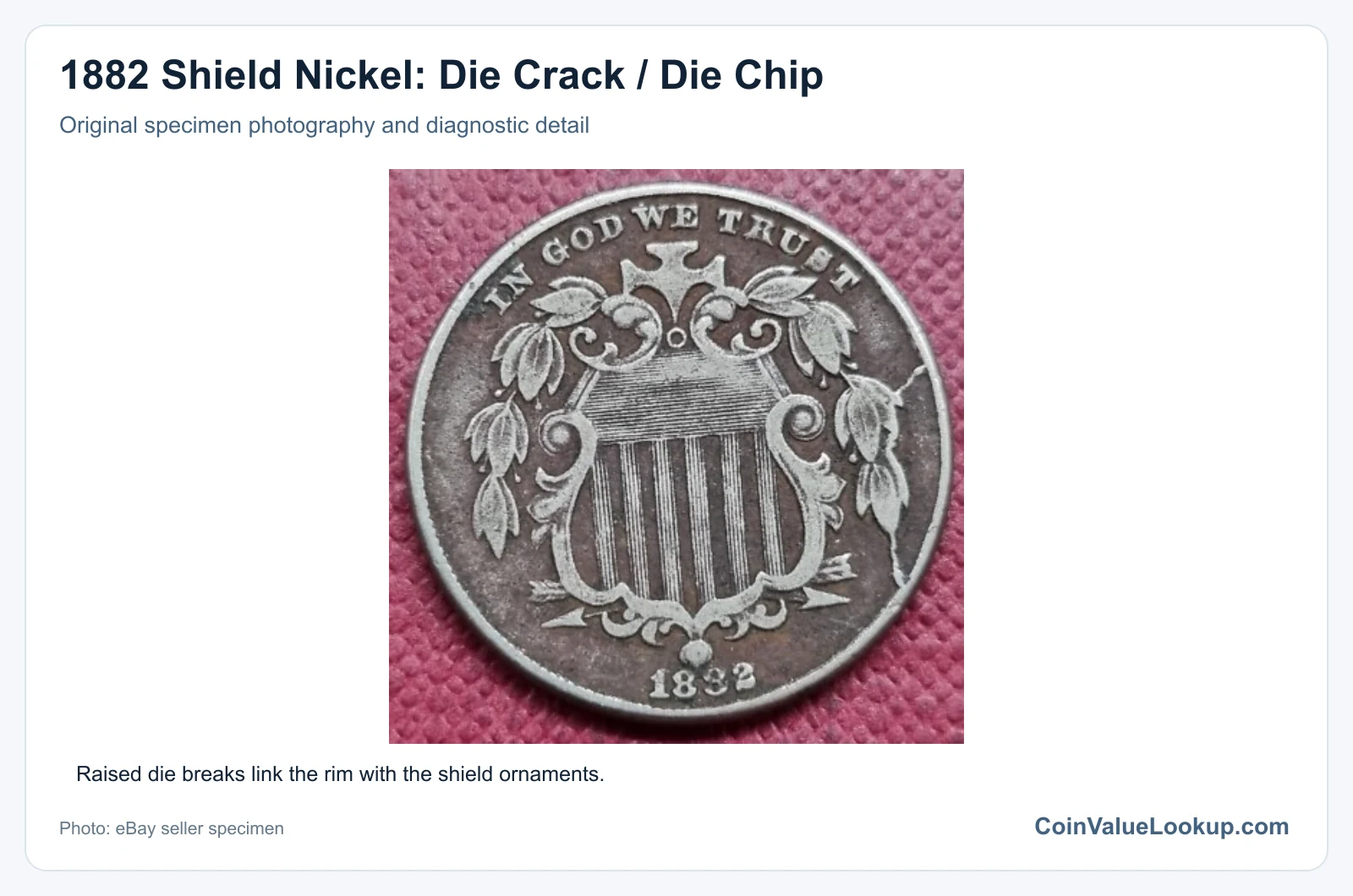
Die cracks and die chips on the 1882 Shield Nickel appear as raised lines or small raised blobs on the coin's surface. They result from fractures or missing pieces in the steel die used to strike the coin.
A crack typically runs as a thin raised line, while a chip shows up as a small raised irregular area.
To identify one, examine the entire surface under good light. A die crack is raised above the field, which distinguishes it from a scratch, which is incuse.
Corrosion deposits or foreign material stuck to the surface can also look like raised features, but they usually lack the sharp, linear quality of a true die crack.
An interior chip should not be confused with a cud, which connects to the rim. Location and size both matter for collectibility.
No specific price is available. Value depends on the crack's prominence, location, and the coin's overall condition.
4. 1882 Shield Nickel — Off-Center Strike
An off-center strike happens when the planchet is not properly seated between the dies, causing the design to be displaced to one side with a blank crescent on the opposite edge. A documented example for 1882 describes about 10% off center.
The date needs to be fully visible for the coin to be attributed to 1882 with certainty. An off-center Shield Nickel with a missing or partial date loses most of its collectible premium because the year cannot be confirmed.
Lookalikes include clipped planchets, which show a curved or straight missing edge rather than a displaced design, and post-mint damage from flattening or vice marks. A genuine off-center coin will still show the full thickness of the planchet along the blank crescent.
No price range is available. Each off-center coin is judged individually based on the percentage of displacement, date visibility, and overall condition.
5. 1882 Shield Nickel — Wrong Planchet / Off-Metal Strike
The 1882 Shield Nickel has been reported struck on a bronze planchet intended for Indian Head cents. This means a cent-sized bronze blank was accidentally fed into the nickel press.
The result is a coin carrying the Shield Nickel design but on a noticeably different blank: bronze instead of copper-nickel, likely lighter, and potentially slightly smaller.
To check a suspect coin, compare its weight, diameter, edge, and color to a normal 1882 Shield Nickel. A genuine wrong-planchet error will differ measurably in weight and will often show incomplete design detail where the smaller or softer blank could not fully fill the dies.
Plating, corrosion, and acid treatments can make a normal nickel look bronze or copper-colored. These alterations affect only the surface and do not change the coin's weight or diameter.
No price is available. A confirmed wrong-planchet Shield Nickel would require professional authentication, and value depends entirely on the individual coin.
6. 1882 Shield Nickel — Die Break / Cud
A cud on the 1882 Shield Nickel is a specific type of die break where a piece of the die along the rim has broken away entirely. The result is a raised, flat, featureless blob on the coin that connects to the rim.
A reverse cud has been cataloged for this date.
To identify a cud, look for an area along the rim where the normal design is replaced by a raised, shapeless mass. The boundary between the cud and the intact design is usually sharp.
The rest of the coin's design may show distortion near the break.
Rim dents from post-mint damage are the primary lookalike, but dents are incuse rather than raised. Corrosion buildup along the rim can also simulate a cud, though it lacks the smooth, flat surface of a true die break.
An interior die chip that does not reach the rim is a related but separate category.
No price range is available. Value depends on cud size, location, and the coin's grade.