1993 Washington Quarter Coin Value: How Much Is It Worth?
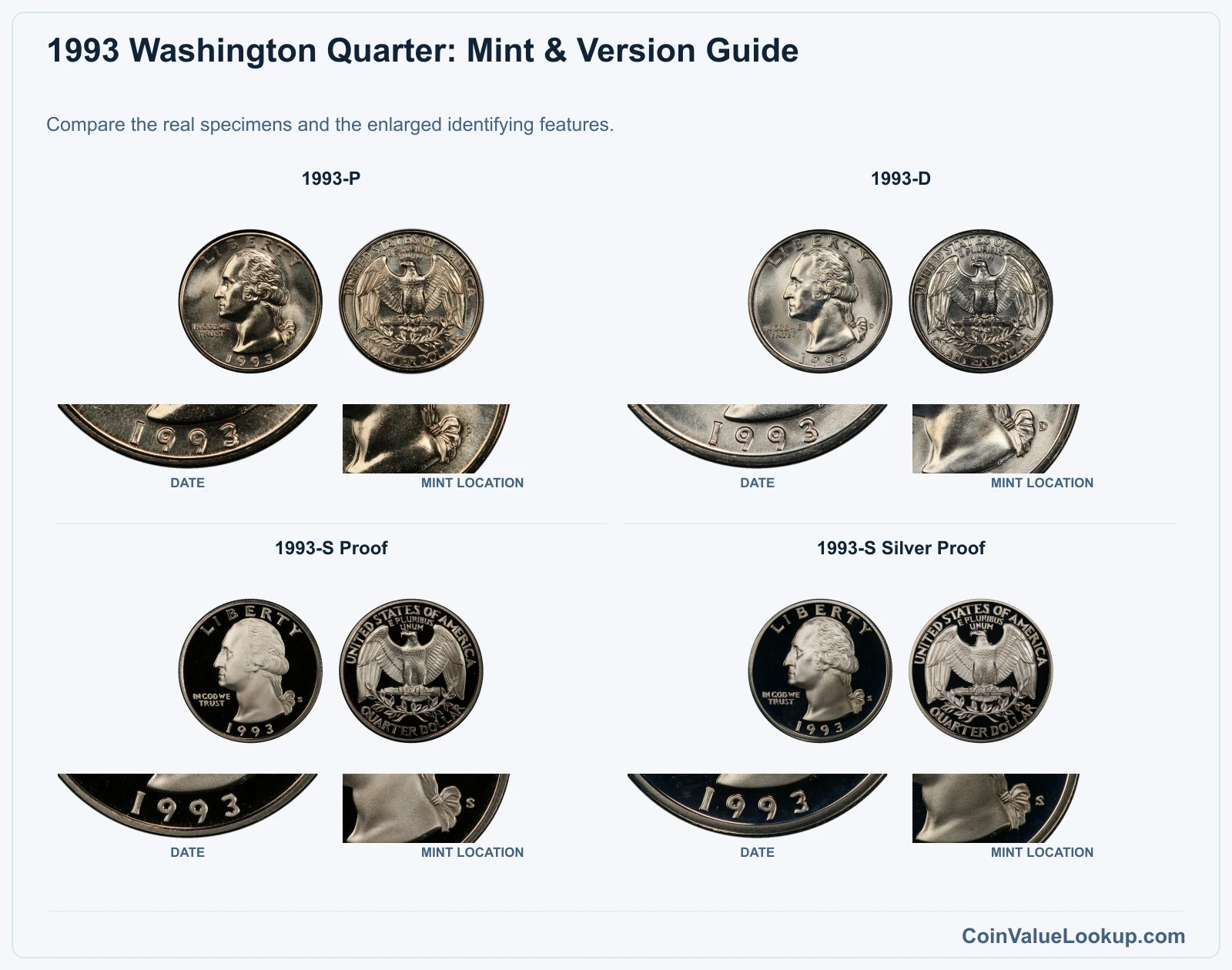
Most 1993 Washington quarters you find in pocket change are worth face value — 25 cents. In higher uncirculated grades, a USA Coin Book guide estimate puts the 1993-P or 1993-D at around $8.64 in MS65.
The 1993-S silver proof is a different story, with a PR65 guide estimate near $21. Before comparing prices, you need to separate mint, metal and finish.
Fast Way to Identify Your 1993 Washington Quarter
Snap clear photos of the front and back of your 1993 quarter and upload them here for a preliminary identification. This can help you figure out which mint and version you have so you know what to research next.
It is not a substitute for professional authentication or exact grading, but it is a solid starting point.
1993 Washington Quarter Value
Upload both sides of your 1993 Washington Quarter.
Front Obverse
Upload photo
Back Reverse
Upload photo
Which 1993 Washington Quarter Versions Are Worth Money?
- The 1993-S silver proof at PR65 carries a guide estimate around $21 — the highest single guide figure among the four versions at comparable top grades.
- High-grade 1993-P or 1993-D business strikes in MS65 condition have a guide estimate of about $8.64 each, well above face value.
- A 1993-D missing clad layer error sold for $156 in MS62 Red at Heritage Auctions in November 2020.
- A 1993-P double strike with off-center second strike sold for $431.25 in AU58 at Heritage Auctions in January 2005.
- Doubled die and rotated die errors have been reported for 1993 quarters; value depends on the specific die, visibility and condition.
Step 1: Identify Your 1993 Washington Quarter Mint Mark and Version
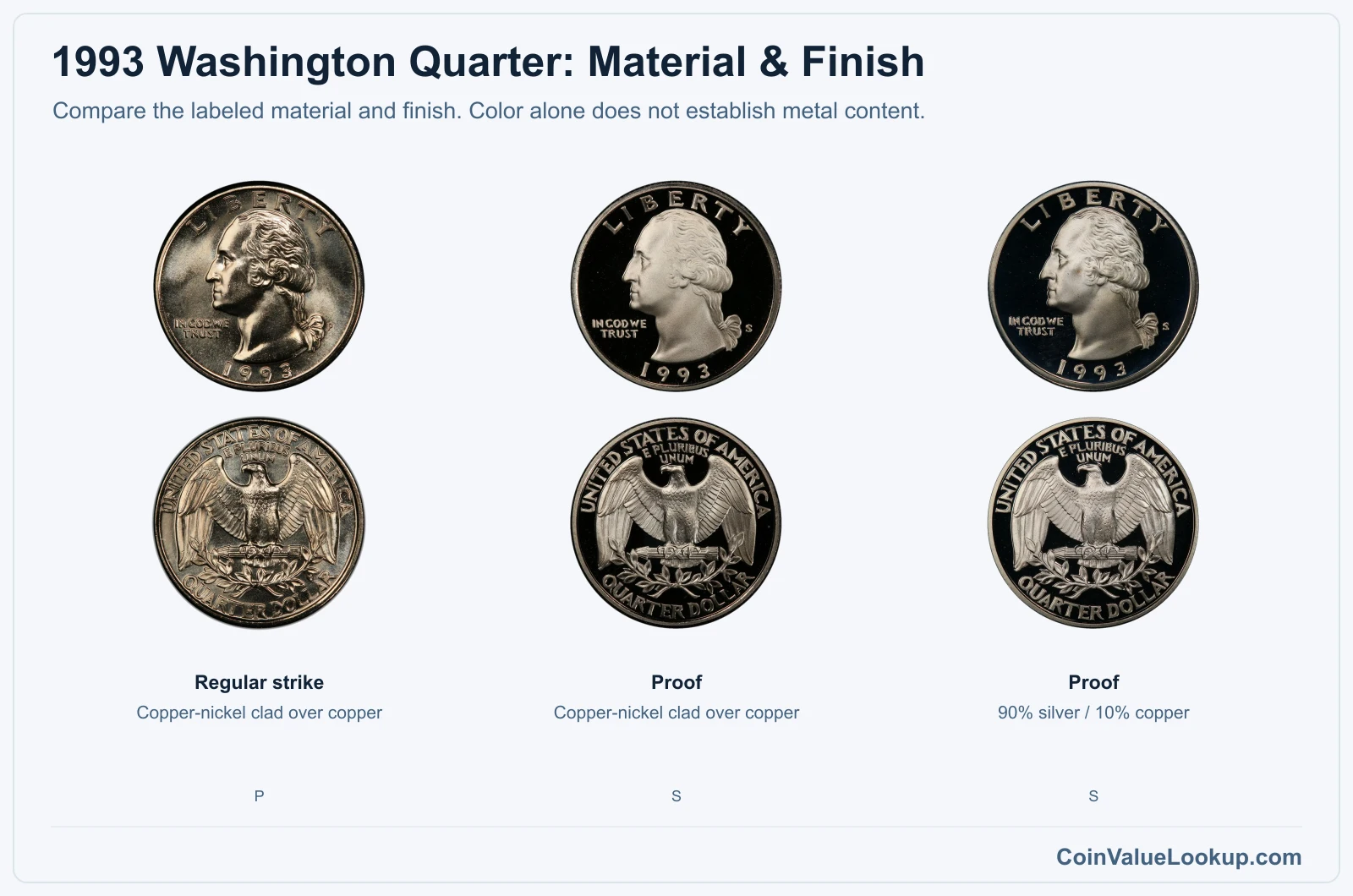
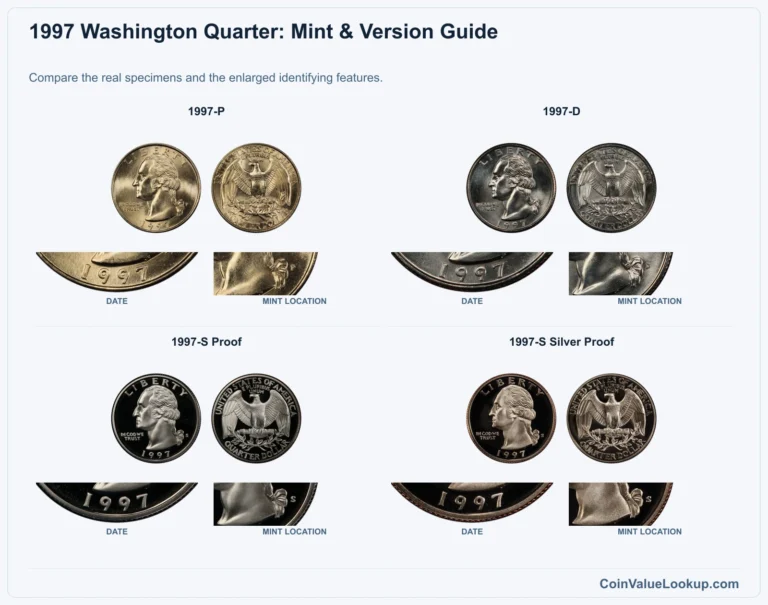
Start by finding the mintmark. It sits on the obverse, near the date at the lower right.
A "P" means Philadelphia, a "D" means Denver, and an "S" means San Francisco. There is no blank-mintmark Philadelphia variety for 1993.
Philadelphia and Denver coins are copper-nickel clad business strikes, weighing about 5.67 grams with a diameter of roughly 24.3 mm. They entered circulation normally.
San Francisco produced two separate proof issues. One is copper-nickel clad, the other is 90% silver with 10% copper and weighs approximately 6.25 grams.
Both carry the S mintmark, so you cannot tell them apart by the letter alone. A kitchen scale can help — silver proofs are heavier.
Look at the edge, too: a clad coin shows a visible copper-colored stripe, while a silver proof edge is uniformly gray. Original government packaging is another strong indicator.
Separating these two metals is essential because their values differ and their price histories cannot be mixed together.
Step 2: Check Your 1993 Washington Quarter Grade
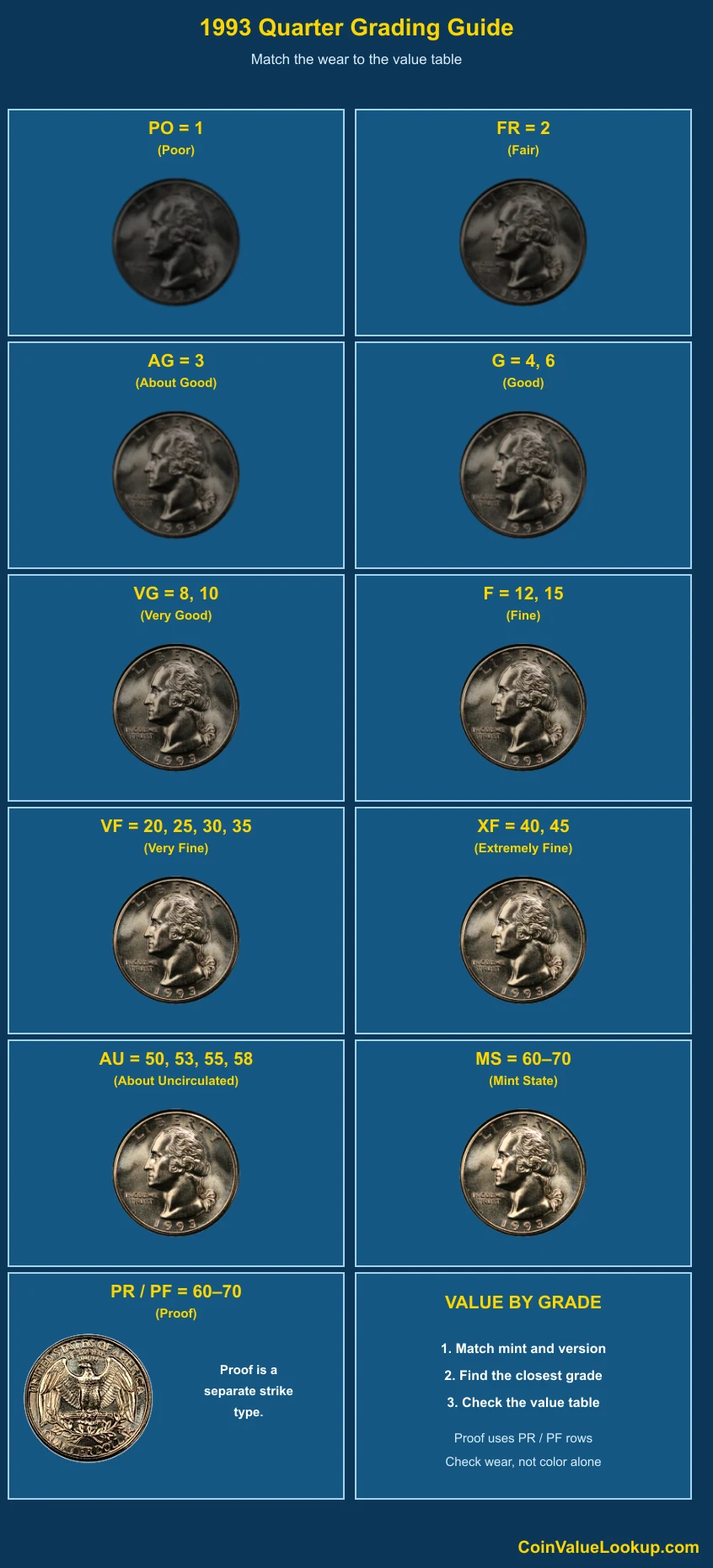
Check the hair above Washington's ear first. On a well-circulated coin, that area goes flat quickly.
Then look at the cheek and jawline — any rub there drops the grade. Flip it over and examine the eagle's breast feathers for smoothing.
A coin with full, unbroken luster across both sides is a candidate for Mint State grades. Do not confuse brightness with luster; a cleaned coin can look shiny but will show tiny hairlines under magnification.
Contact marks — little nicks from other coins banging around in bags — also pull the grade down.
For proofs, the grade reflects surface preservation, not the proof finish itself. A proof is a way of manufacturing the coin, not a grade above Mint State.
Deep Cameo (DCAM) describes the contrast between frosted devices and mirrored fields; it is a separate designation, not an indicator of silver content. Compare your coin's surfaces with the reference image to gauge where it falls.
Step 3: Check 1993 Washington Quarter Value by Mint and Version
1993 Washington Quarter — P
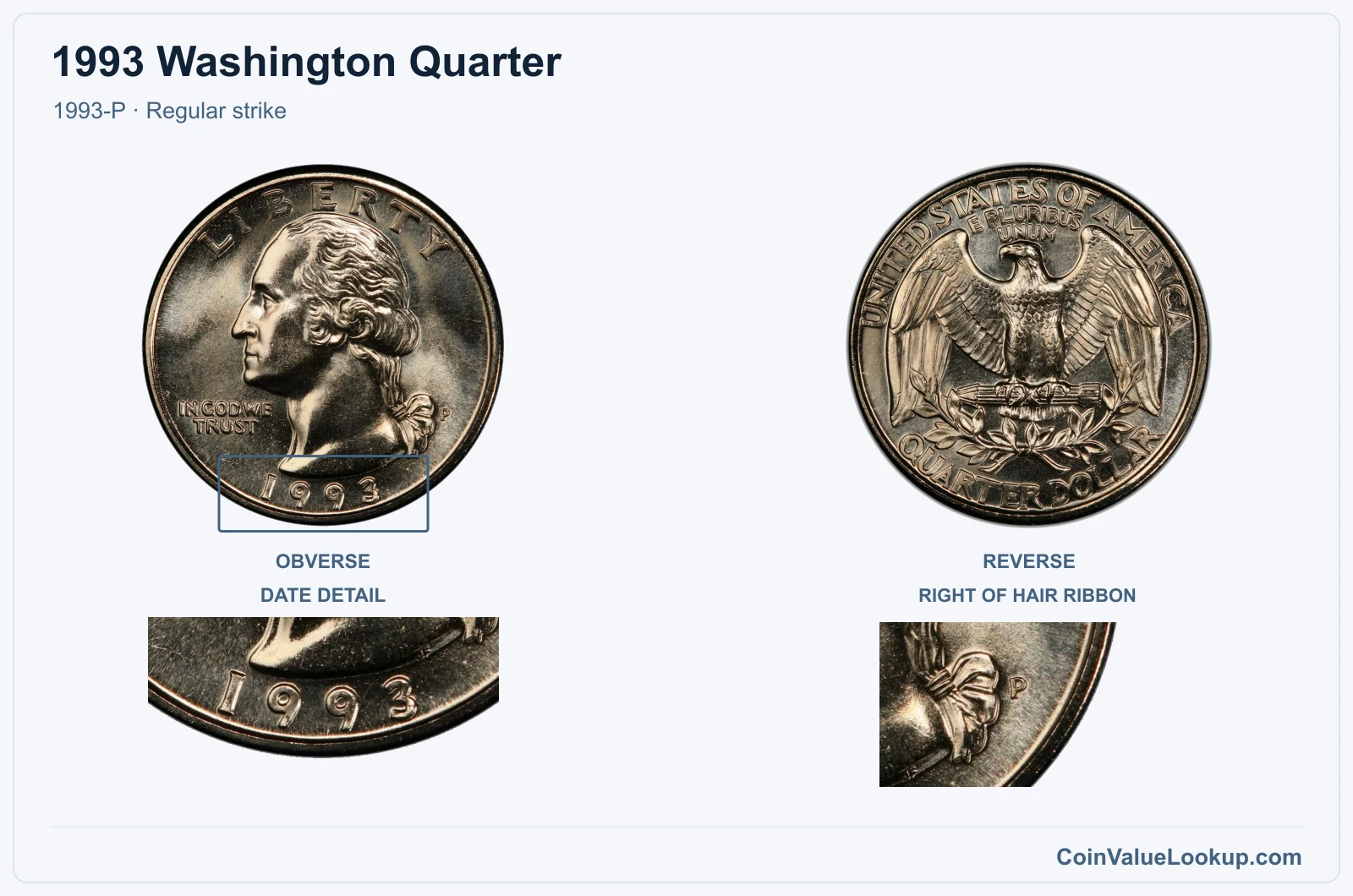
The 1993-P is a copper-nickel clad business strike from the Philadelphia Mint. Look for the small "P" mintmark on the obverse near the date.
It weighs about 5.67 grams and shows the standard Washington obverse paired with the eagle, arrows and olive branches reverse.
A USA Coin Book guide estimate puts the 1993-P at approximately $8.64 in MS65. In circulated condition, it is a 25-cent coin.
The jump in value comes only when you find one that avoided bag marks and retained full original luster — not an everyday occurrence for a coin struck by the hundreds of millions.
| Range | Grade | Price | Auction Records | Appraisal |
|---|---|---|---|---|
| PO | PO 1 | — | Coin Identifier | |
| FR | FR 2 | — | Coin Identifier | |
| AG | AG 3 | — | Coin Identifier | |
| G | G 4 | — | Coin Identifier | |
| G 6 | — | Coin Identifier | ||
| VG | VG 8 | — | Coin Identifier | |
| VG 10 | — | Coin Identifier | ||
| F | F 12 | — | Coin Identifier | |
| F 15 | — | Coin Identifier | ||
| VF | VF 20 | — | Coin Identifier | |
| VF 25 | — | Coin Identifier | ||
| VF 30 | — | Coin Identifier | ||
| VF 35 | — | Coin Identifier | ||
| XF | XF 40 | — | Coin Identifier | |
| XF 45 | — | Coin Identifier | ||
| AU | AU 50 | — | Coin Identifier | |
| AU 53 | — | Coin Identifier | ||
| AU 55 | — | Coin Identifier | ||
| AU 58 | — | Coin Identifier | ||
| MS | MS 60 | — | Coin Identifier | |
| MS 61 | — | Coin Identifier | ||
| MS 62 | — | Coin Identifier | ||
| MS 63 | — | Coin Identifier | ||
| MS 64 | Coin Identifier | |||
| MS 65 | — | Coin Identifier | ||
| MS 66 | Coin Identifier | |||
| MS 67 | Coin Identifier | |||
| MS 68 | — | Coin Identifier | ||
| MS 69 | — | — | — | |
| MS 70 | — | — | — |
1993 Washington Quarter — D
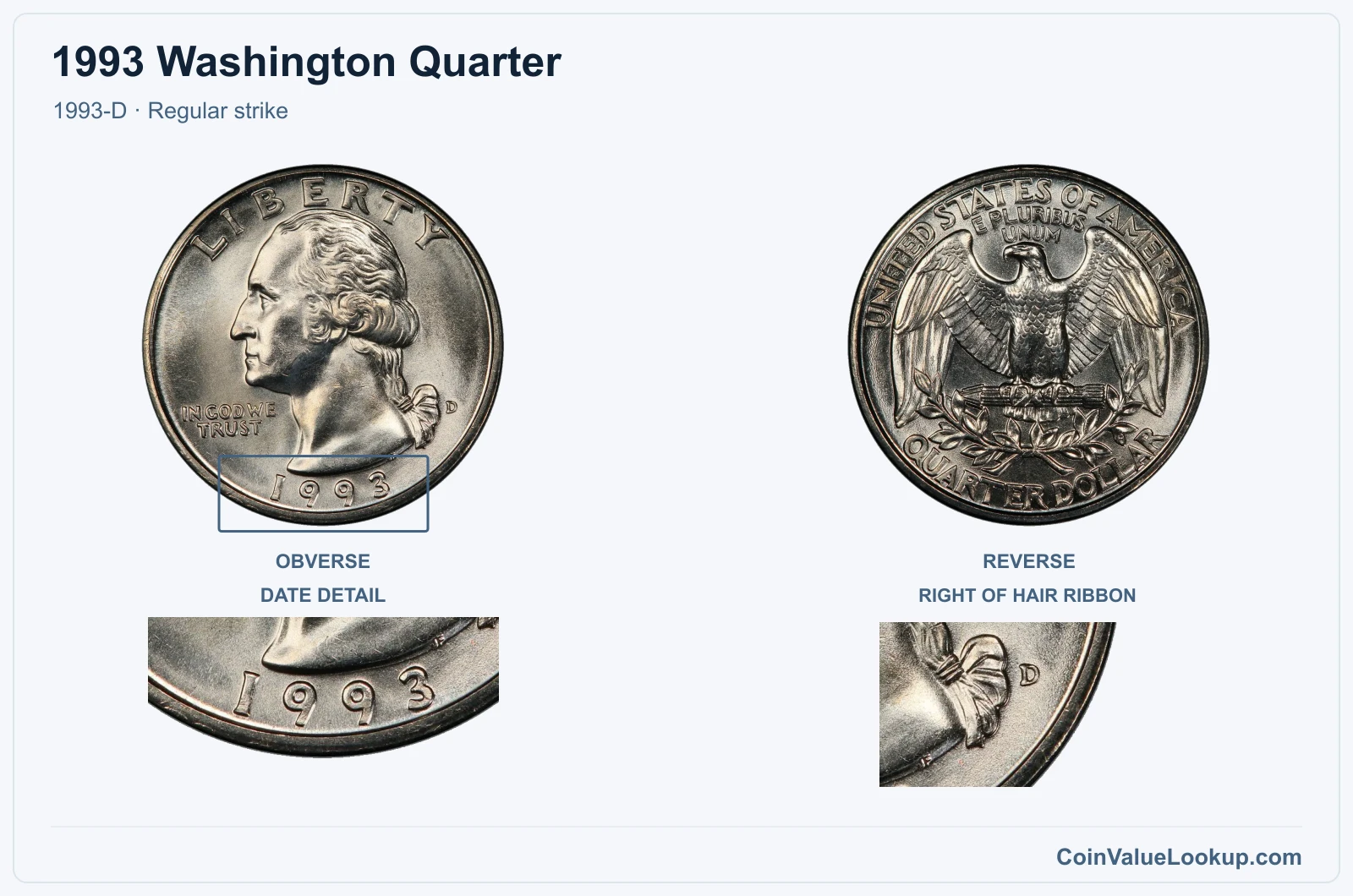
The 1993-D comes from the Denver Mint. Same copper-nickel clad composition, same 5.67-gram weight, same design — just a "D" mintmark instead of a "P" near the date.
In MS65, the USA Coin Book guide estimate is about $8.64, identical to the Philadelphia issue. Circulated examples are face value.
If yours still has sharp hair detail above the ear and clean fields with original luster, it may be worth a closer look at the grade.
Coin Value Lookup is a handy place to look up guides for quarters and other denominations when you want to compare values across years.
| Range | Grade | Price | Auction Records | Appraisal |
|---|---|---|---|---|
| PO | PO 1 | — | Coin Identifier | |
| FR | FR 2 | — | Coin Identifier | |
| AG | AG 3 | — | Coin Identifier | |
| G | G 4 | — | Coin Identifier | |
| G 6 | — | Coin Identifier | ||
| VG | VG 8 | — | Coin Identifier | |
| VG 10 | — | Coin Identifier | ||
| F | F 12 | — | Coin Identifier | |
| F 15 | — | Coin Identifier | ||
| VF | VF 20 | — | Coin Identifier | |
| VF 25 | — | Coin Identifier | ||
| VF 30 | — | Coin Identifier | ||
| VF 35 | — | Coin Identifier | ||
| XF | XF 40 | — | Coin Identifier | |
| XF 45 | — | Coin Identifier | ||
| AU | AU 50 | — | Coin Identifier | |
| AU 53 | — | Coin Identifier | ||
| AU 55 | — | Coin Identifier | ||
| AU 58 | — | Coin Identifier | ||
| MS | MS 60 | — | Coin Identifier | |
| MS 61 | — | Coin Identifier | ||
| MS 62 | — | Coin Identifier | ||
| MS 63 | — | Coin Identifier | ||
| MS 64 | — | Coin Identifier | ||
| MS 65 | Coin Identifier | |||
| MS 66 | Coin Identifier | |||
| MS 67 | Coin Identifier | |||
| MS 68 | — | — | — | |
| MS 69 | — | — | — | |
| MS 70 | — | — | — |
1993 Washington Quarter — S Proof
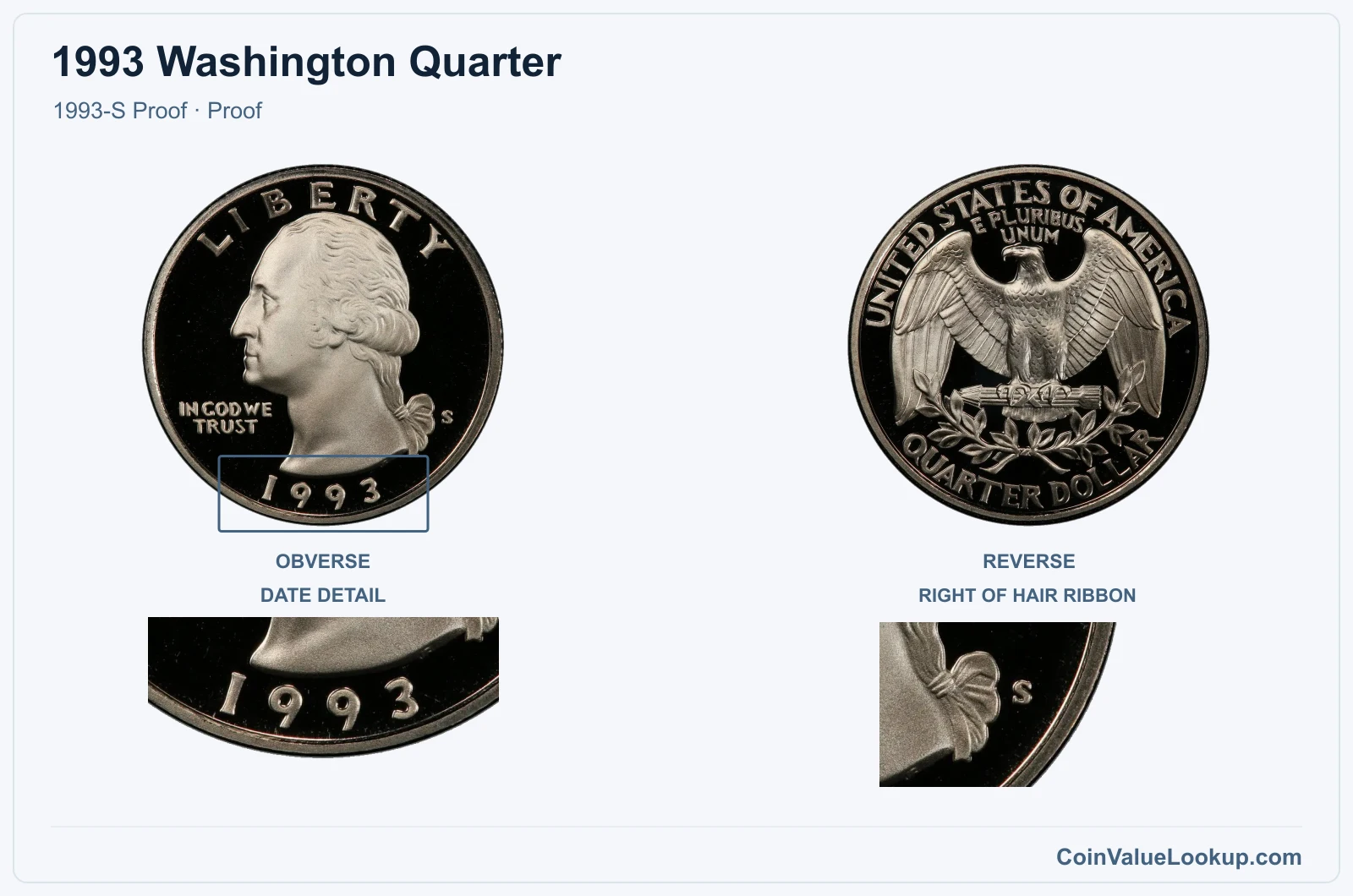
The 1993-S clad proof was struck at San Francisco on copper-nickel clad planchets, the same metal as P and D business strikes but with the mirror-finish proof process. It carries the S mintmark.
A USA Coin Book guide estimate for PR65 is about $4.96. That is for a generic proof grade without a Deep Cameo designation — do not treat this number as a DCAM quote.
This version is important to separate from the silver proof below because they share a mintmark and look very similar from the front. Check the edge for a copper stripe or weigh the coin; clad proofs hit around 5.67 grams while silver proofs are heavier.
| Range | Grade | Price | Auction Records | Appraisal |
|---|---|---|---|---|
| PR | PR 1 | — | Coin Identifier | |
| PR 2 | — | Coin Identifier | ||
| PR 3 | — | Coin Identifier | ||
| PR 4 | — | Coin Identifier | ||
| PR 6 | — | Coin Identifier | ||
| PR 8 | — | Coin Identifier | ||
| PR 10 | — | Coin Identifier | ||
| PR 12 | — | Coin Identifier | ||
| PR 15 | — | Coin Identifier | ||
| PR 20 | — | Coin Identifier | ||
| PR 25 | — | Coin Identifier | ||
| PR 30 | — | Coin Identifier | ||
| PR 35 | — | Coin Identifier | ||
| PR 40 | — | Coin Identifier | ||
| PR 45 | — | Coin Identifier | ||
| PR 50 | — | Coin Identifier | ||
| PR 53 | — | Coin Identifier | ||
| PR 55 | — | Coin Identifier | ||
| PR 58 | — | Coin Identifier | ||
| PR 60 | — | Coin Identifier | ||
| PR 61 | — | Coin Identifier | ||
| PR 62 | — | Coin Identifier | ||
| PR 63 | — | Coin Identifier | ||
| PR 64 | — | Coin Identifier | ||
| PR 65 | — | Coin Identifier | ||
| PR 66 | — | Coin Identifier | ||
| PR 67 | Coin Identifier | |||
| PR 68 | Coin Identifier | |||
| PR 69 | Coin Identifier | |||
| PR 70 | Coin Identifier |
1993 Washington Quarter — S Silver Proof
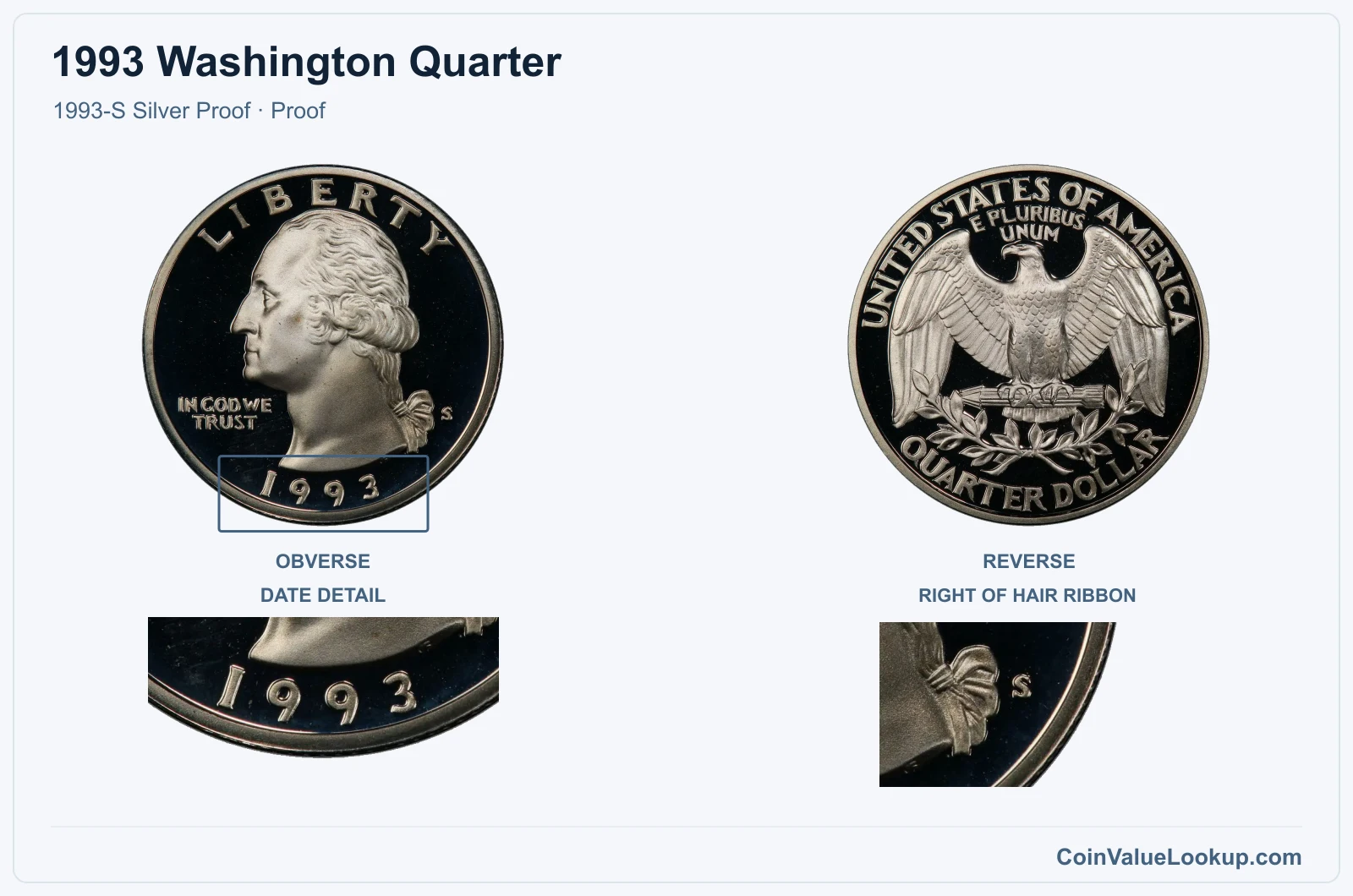
The 1993-S silver proof is struck on a 90% silver, 10% copper planchet. It weighs approximately 6.25 grams — PCGS rounds the catalog weight to 6.30 grams.
That extra heft compared to the 5.67-gram clad version is one of the easiest ways to tell them apart.
At PR65, the USA Coin Book guide estimate is about $21, the highest figure among the four 1993 quarter versions at their respective top reported grades. Keep in mind this estimate is sensitive to the silver market.
As with the clad proof, the PR65 guide figure is not a DCAM-specific quote. Original U.S. Mint packaging, edge color and weight are your best tools for confirming the silver composition before applying any value comparison.
| Range | Grade | Price | Auction Records | Appraisal |
|---|---|---|---|---|
| PR | PR 1 | — | Coin Identifier | |
| PR 2 | — | Coin Identifier | ||
| PR 3 | — | Coin Identifier | ||
| PR 4 | — | Coin Identifier | ||
| PR 6 | — | Coin Identifier | ||
| PR 8 | — | Coin Identifier | ||
| PR 10 | — | Coin Identifier | ||
| PR 12 | — | Coin Identifier | ||
| PR 15 | — | Coin Identifier | ||
| PR 20 | — | Coin Identifier | ||
| PR 25 | — | Coin Identifier | ||
| PR 30 | — | Coin Identifier | ||
| PR 35 | — | Coin Identifier | ||
| PR 40 | — | Coin Identifier | ||
| PR 45 | — | Coin Identifier | ||
| PR 50 | — | Coin Identifier | ||
| PR 53 | — | Coin Identifier | ||
| PR 55 | — | Coin Identifier | ||
| PR 58 | — | Coin Identifier | ||
| PR 60 | — | Coin Identifier | ||
| PR 61 | — | Coin Identifier | ||
| PR 62 | — | Coin Identifier | ||
| PR 63 | — | Coin Identifier | ||
| PR 64 | — | Coin Identifier | ||
| PR 65 | — | Coin Identifier | ||
| PR 66 | — | Coin Identifier | ||
| PR 67 | Coin Identifier | |||
| PR 68 | Coin Identifier | |||
| PR 69 | Coin Identifier | |||
| PR 70 | Coin Identifier |
1993 Washington Quarter Error List
1. 1993 Washington Quarter — Missing Clad Layer
A 1993-D quarter missing one of its clad layers exposes the copper core underneath, giving the affected side a distinctive reddish-copper color instead of the usual silver tone. The certified example that sold was graded ANACS MS62 Red, bringing $156 at Heritage Auctions in November 2020.
The specific affected side and measured weight were not stated in the source, so do not assume which face is bare from photos alone. What matters is that the original strike surfaces, date, and D mintmark are all present and undisturbed.
A coin that has been filed, hammered, chemically stripped or plated after leaving the mint can mimic the look. Odd color or a funny rim by itself is not enough — you need matching original detail across the entire coin.
Third-party certification is the standard way to confirm this type of error.
2. 1993 Washington Quarter — Double Strike with Off-Center Second Strike
This 1993-P quarter received two strikes from the dies. The first impression landed centered, and the second hit roughly 10% off-center toward 12 o'clock, leaving two distinct sets of design elements visible on the coin.
You can see two date positions and the P mintmark on both impressions.
A Heritage Auctions sale in January 2005 brought $431.25 for an NGC AU58 example. The AU58 grade reflects only light surface rub, which does not obscure the dramatic manufacturing error.
Do not confuse this with a doubled die or flat machine doubling. Those show minor design separation on a single strike — they do not shift an entire second impression across the planchet.
A genuine double strike produces two fully separate design positions that are impossible to replicate with post-mint damage.
3. 1993 Washington Quarter — Doubled Die
Doubled die quarters dated 1993 have been reported in collector sources. This type of error shows consistent design separation or notching on affected elements — letters, digits or design features appear slightly split or shadowed in a uniform direction.
Compare suspected doubling against a normal 1993 quarter. Genuine doubled dies repeat from coin to coin struck by the same defective die, so the separation pattern is predictable and consistent.
Machine doubling, by contrast, tends to look flat and shelf-like with no raised secondary image. Reflections from proof surfaces and post-mint impressions can also fool the eye.
No specific price was adopted for this category. Value depends on the particular die involved, how visible the doubling is, and the coin's overall condition.
Professional attribution is the reliable way to confirm a doubled die versus a lookalike.
4. 1993 Washington Quarter — Rotated Dies
A rotated die error has been reported for the 1993-P quarter. To check, hold the obverse upright and flip the coin top-to-bottom along a vertical axis.
On a normally aligned U.S. coin, the reverse should appear upright as well. If the reverse is tilted noticeably — say 15 degrees or more — you may have a rotated die error.
Be careful with photographs. A picture taken at an odd angle or a coin turned sideways in a holder can create the illusion of rotation where none exists.
Always verify with the coin in hand.
No specific price was adopted for this error. The value depends on the degree of rotation, the coin's condition, and collector demand for the specific piece.
Larger rotations generally attract more interest than slight misalignments.