1954 Wheat Penny Coin Value: How Much Is It Worth?
A 1954 Wheat Penny in ordinary circulated condition runs about $0.06 at lower grades such as Good-4 or Fine-12, depending on the mint, up to roughly $2.50 at MS63 for uncirculated examples. Proofs, major varieties and error coins are priced separately from those guide figures.
Original surfaces, color and the specific mint branch all affect what a given coin will actually bring.
Fast Way to Identify Your 1954 Wheat Penny
Snap a clear photo of the front and back of your 1954 penny and upload both images. Our identifier can give you a preliminary read on which mint branch you have and point out any obvious features worth a closer look.
It is not a substitute for professional authentication, but it is a solid first step before you dig deeper.
1954 Wheat Penny Value
Upload both sides of your 1954 Wheat Penny.
Front Obverse
Upload photo
Back Reverse
Upload photo
Which 1954 Wheat Penny Versions Are Worth Money?
- Philadelphia (no mintmark) business strikes range from about $0.06 in Good-4 to $2.50 in MS63 — the highest circulated-mint ceiling among the three branches at that grade.
- Denver and San Francisco business strikes both guide around $0.06 in Fine-12 to $1.24 in MS63, making strong uncirculated examples the ones to watch.
- Philadelphia brilliant proofs carry a guide value near $25 at PR63, well above any circulation branch at comparable preservation.
- Error coins such as repunched mintmarks, off-center strikes and doubled dies are assessed individually based on severity and authentication rather than a fixed schedule.
Step 1: Identify Your 1954 Wheat Penny Mint Mark and Version
Start by flipping the coin to the reverse. You should see two wheat ears flanking "ONE CENT" — that confirms the Wheat Reverse design used through 1958.
The obverse carries Lincoln's portrait, the date and the word LIBERTY.
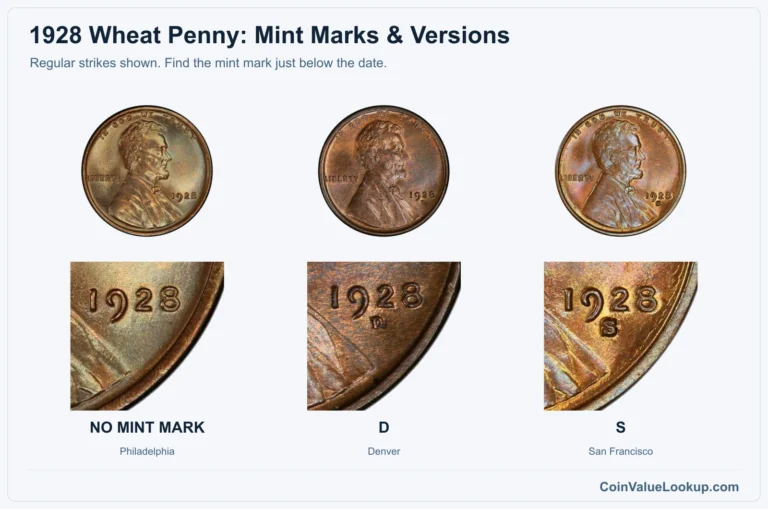
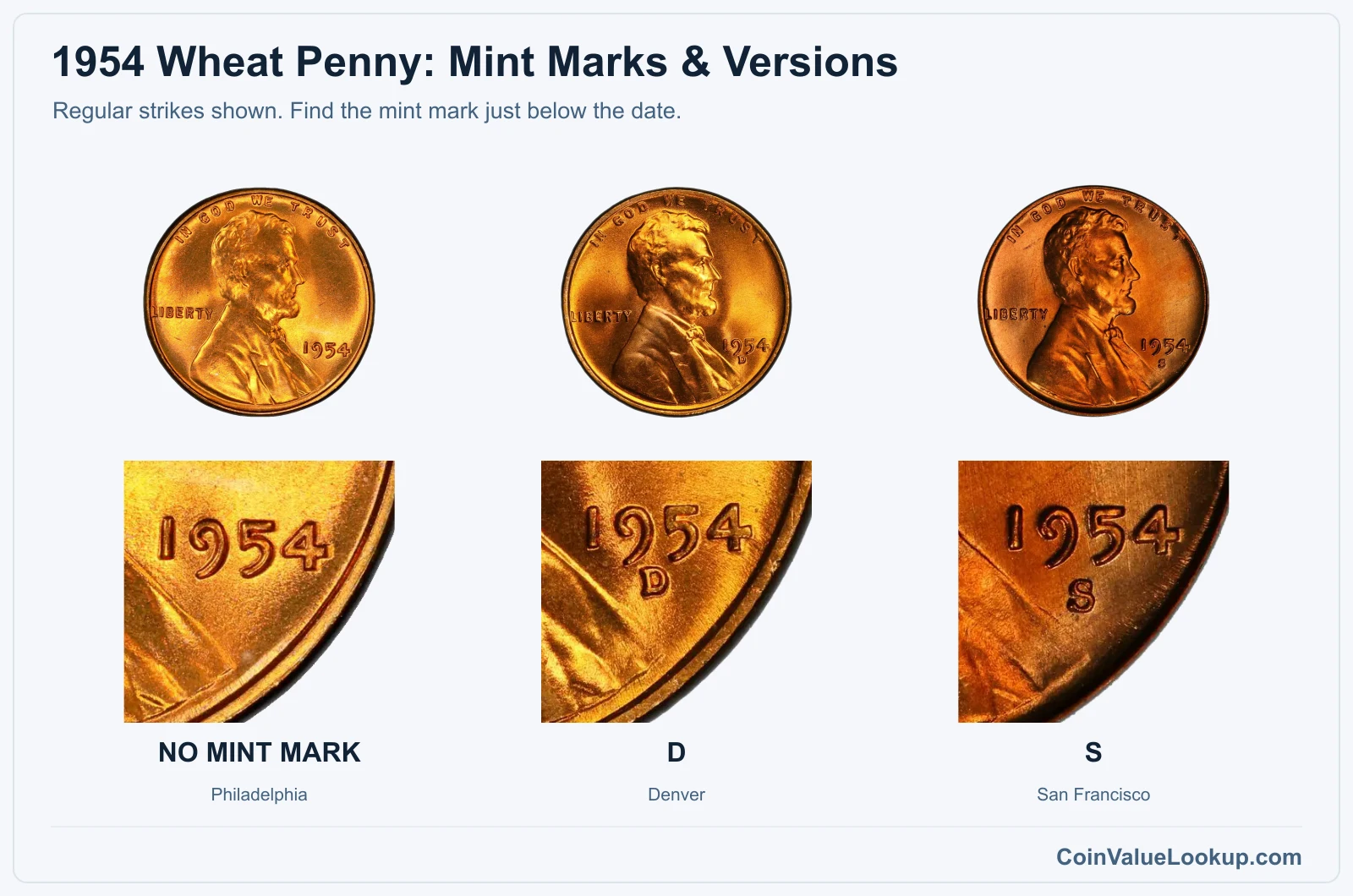
Now check for a mintmark. Look just below the date on the obverse.
No letter means Philadelphia. A small "D" means Denver.
A small "S" means San Francisco. All three mints struck circulation cents in 1954.
Philadelphia also produced brilliant proof cents for collectors that year. These have mirrored fields and sharp, fully struck details that a normal business strike will not match.
A polished circulation cent is not a proof — the mirror finish on a proof comes from the manufacturing process, not from someone buffing the coin afterward.
The coin is a copper-alloy cent weighing about 3.11 grams with a plain edge. If your coin is noticeably lighter or heavier, or has a reeded edge, you may be looking at something other than a standard 1954 cent.
Step 2: Check Your 1954 Wheat Penny Grade
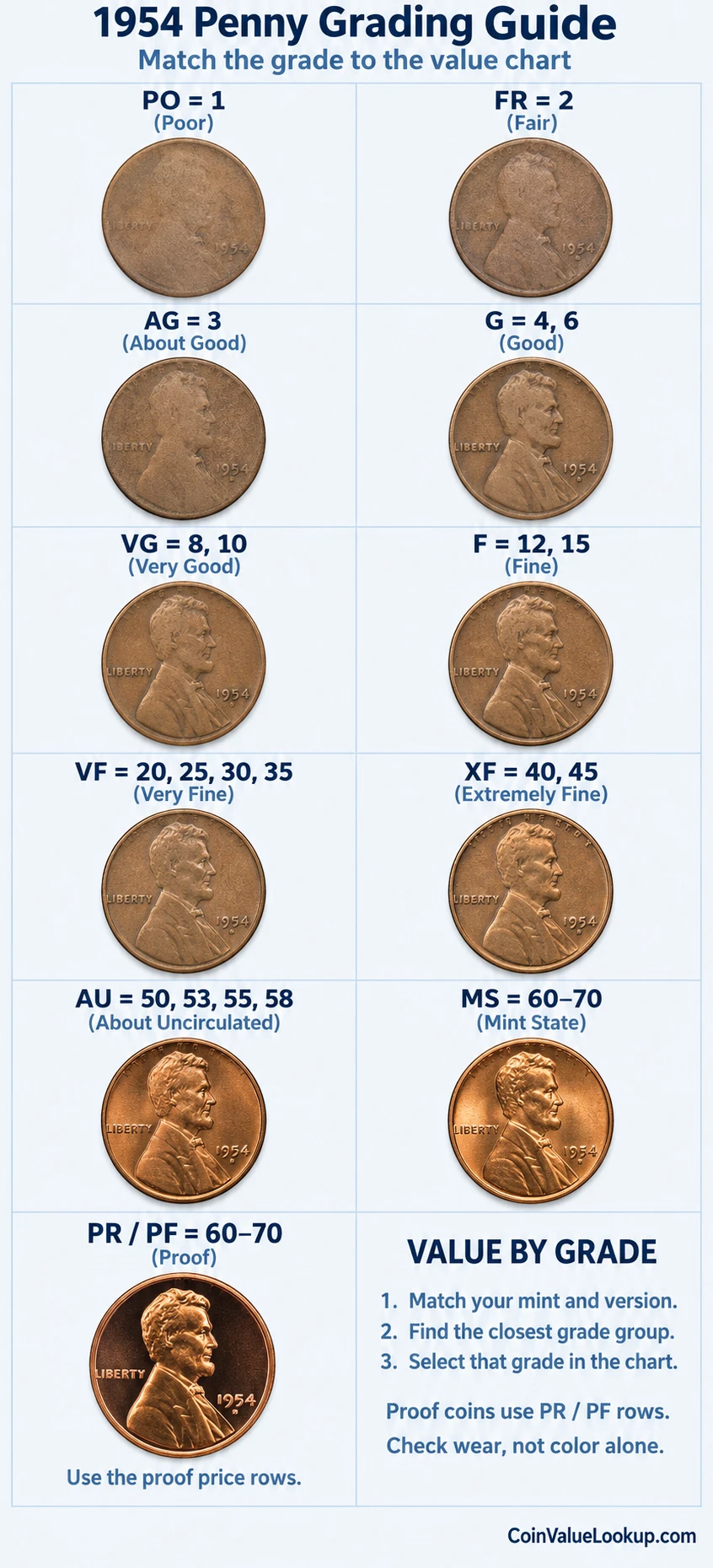
Focus on Lincoln's cheekbone, jawline and the fine hair detail above the ear. Those are the highest points on the obverse and the first places to lose definition as a coin circulates.
On the reverse, the individual wheat grains and the horizontal lines between the stalks wear away next.
A coin grading around Good-4 will have a very flat portrait with the outline still visible but almost no interior detail. At Fine-12 the major hair and jaw features are distinct, though high-point flatness is obvious.
An MS63 coin shows full original luster with only minor contact marks — no wear at all.
Weak original strikes do exist, and they can look like wear to an untrained eye. If the softness is only in certain areas and the surrounding luster is intact, it may be a strike issue rather than circulation damage.
Compare your coin to the reference image to see how much detail you should expect at each level.
Color matters separately from grade. Red, red-brown and brown describe the toning state of the copper surface, and each carries a different premium at the same numerical grade.
Cleaning, spots and corrosion also lower a coin's appeal and should not be confused with natural toning.
Step 3: Check 1954 Wheat Penny Value by Mint and Version
1954 Wheat Penny
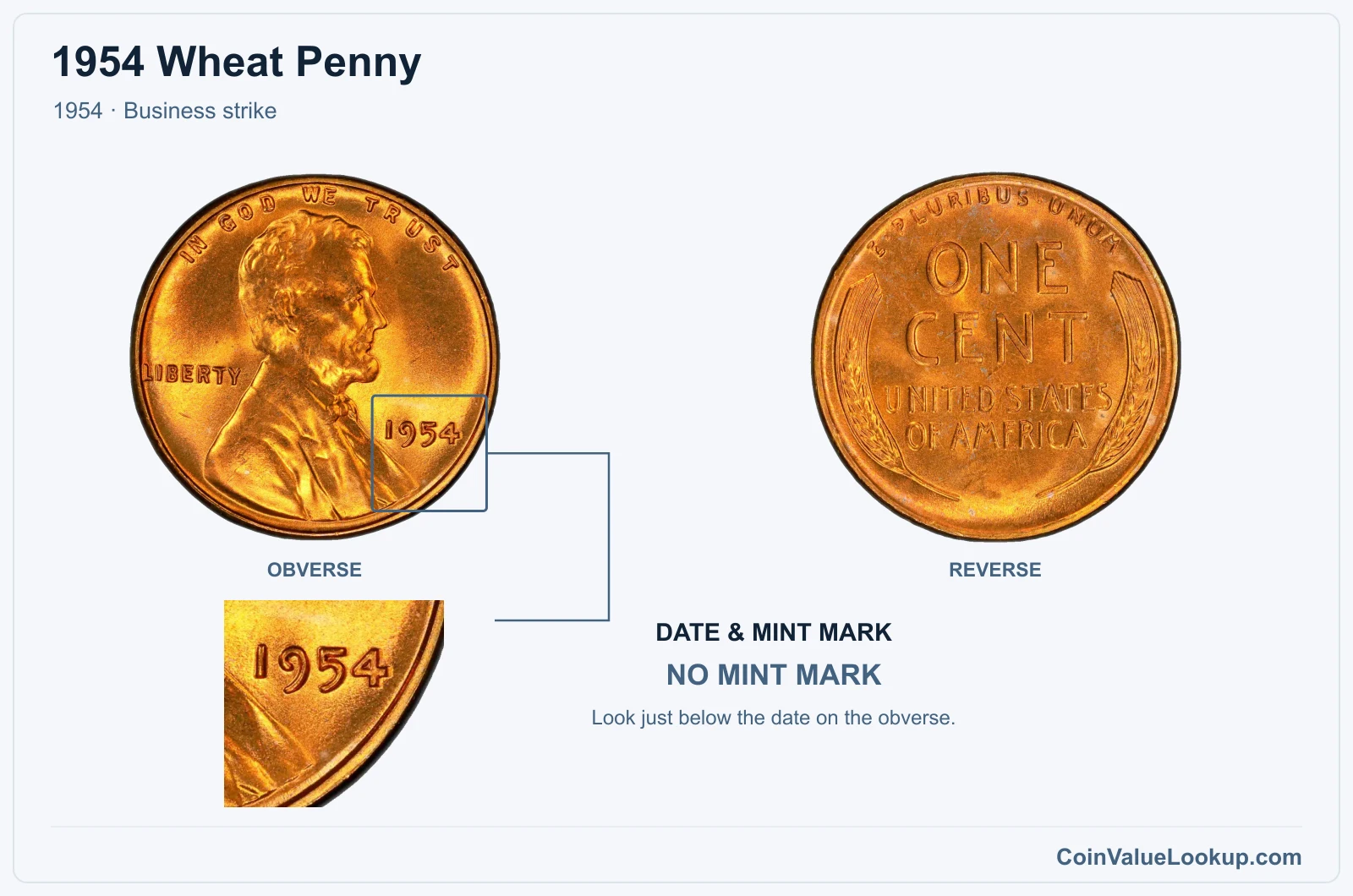
The 1954 Philadelphia cent carries no mintmark — just a blank space below the date. It is a business-strike coin made from 95% copper with 5% tin and zinc, weighing about 3.11 grams.
Guide values run from roughly $0.06 in Good-4 to around $2.50 at MS63. Those figures assume original, unimpaired surfaces; cleaned or corroded coins will trade below guide.
Color is not specified in the guide range used here, so do not assume these numbers reflect a certified full-red designation.
If you find one in truly uncirculated condition with strong luster, it is worth setting aside. Most surviving examples saw heavy pocket duty.
| Range | Grade | Price | Auction Records | Appraisal |
|---|---|---|---|---|
| PO | PO 1 | — | Coin Identifier | |
| FR | FR 2 | — | Coin Identifier | |
| AG | AG 3 | — | Coin Identifier | |
| G | G 4 | — | Coin Identifier | |
| G 6 | — | Coin Identifier | ||
| VG | VG 8 | — | Coin Identifier | |
| VG 10 | — | Coin Identifier | ||
| F | F 12 | — | Coin Identifier | |
| F 15 | — | Coin Identifier | ||
| VF | VF 20 | — | Coin Identifier | |
| VF 25 | — | Coin Identifier | ||
| VF 30 | — | Coin Identifier | ||
| VF 35 | — | Coin Identifier | ||
| XF | XF 40 | — | Coin Identifier | |
| XF 45 | — | Coin Identifier | ||
| AU | AU 50 | — | Coin Identifier | |
| AU 53 | — | Coin Identifier | ||
| AU 55 | — | Coin Identifier | ||
| AU 58 | — | Coin Identifier | ||
| MS | MS 60 | — | Coin Identifier | |
| MS 61 | — | Coin Identifier | ||
| MS 62 | — | Coin Identifier | ||
| MS 63 | — | Coin Identifier | ||
| MS 64 | Coin Identifier | |||
| MS 65 | Coin Identifier | |||
| MS 66 | Coin Identifier | |||
| MS 67 | Coin Identifier | |||
| MS 68 | — | — | — | |
| MS 69 | — | — | — | |
| MS 70 | — | — | — |
1954 Wheat Penny — D
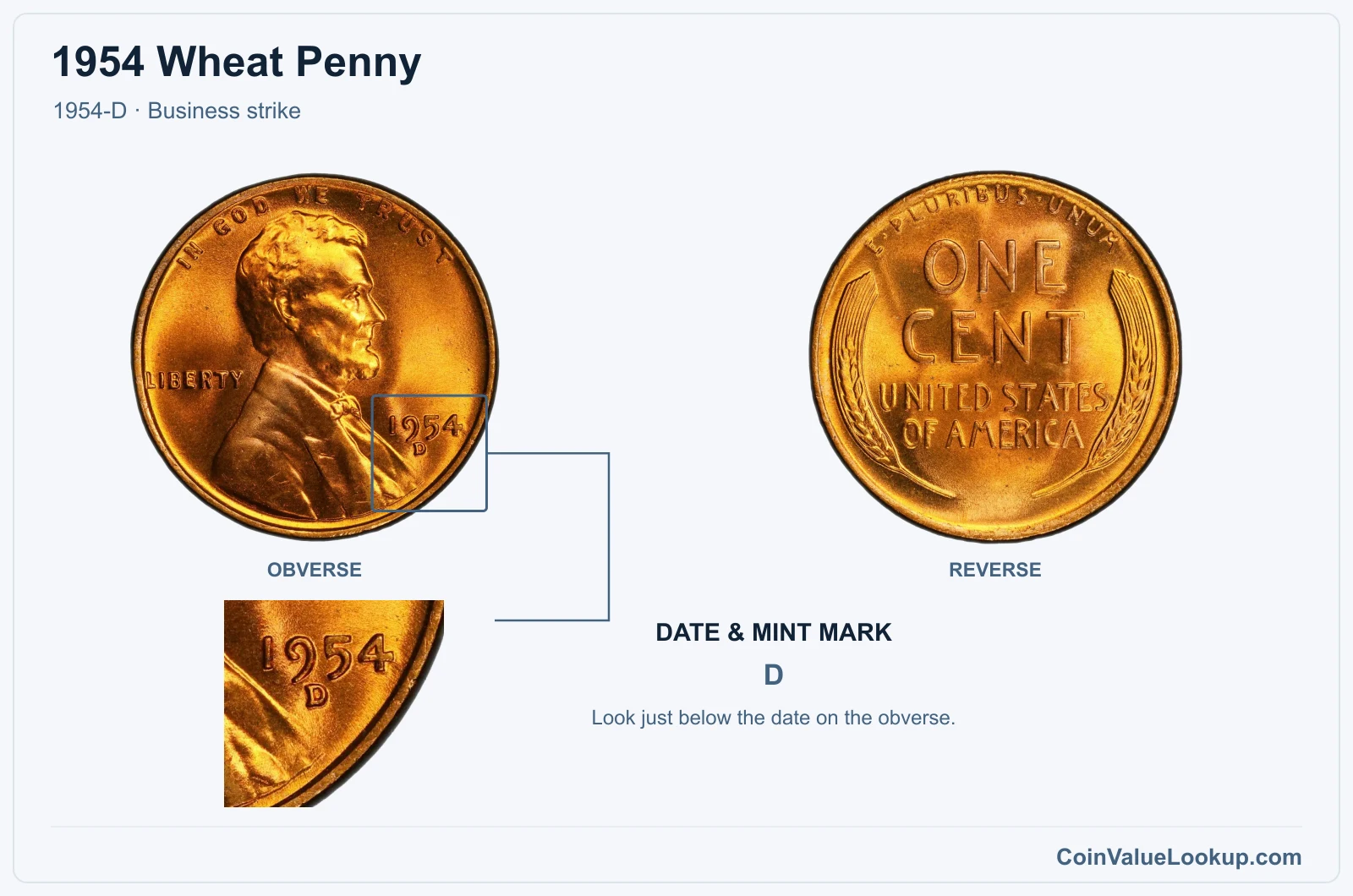
Look for a small "D" mintmark below the date. That marks a Denver Mint coin, struck in the same copper alloy and weight as the Philadelphia issue.
Guide estimates place the 1954-D at about $0.06 in Fine-12 and around $1.24 at MS63. The difference between a worn example and a sharp uncirculated one is real but modest in dollar terms.
Still, an original-surface mint-state Denver cent with good eye appeal is not something you trip over every day.
Coin Value Lookup is a handy place to compare guide values across different dates and mints in the Wheat Penny series if you are working through a collection.
| Range | Grade | Price | Auction Records | Appraisal |
|---|---|---|---|---|
| PO | PO 1 | — | Coin Identifier | |
| FR | FR 2 | — | Coin Identifier | |
| AG | AG 3 | — | Coin Identifier | |
| G | G 4 | — | Coin Identifier | |
| G 6 | — | Coin Identifier | ||
| VG | VG 8 | — | Coin Identifier | |
| VG 10 | — | Coin Identifier | ||
| F | F 12 | — | Coin Identifier | |
| F 15 | — | Coin Identifier | ||
| VF | VF 20 | — | Coin Identifier | |
| VF 25 | — | Coin Identifier | ||
| VF 30 | — | Coin Identifier | ||
| VF 35 | — | Coin Identifier | ||
| XF | XF 40 | — | Coin Identifier | |
| XF 45 | — | Coin Identifier | ||
| AU | AU 50 | — | Coin Identifier | |
| AU 53 | — | Coin Identifier | ||
| AU 55 | — | Coin Identifier | ||
| AU 58 | — | Coin Identifier | ||
| MS | MS 60 | — | Coin Identifier | |
| MS 61 | — | Coin Identifier | ||
| MS 62 | — | Coin Identifier | ||
| MS 63 | — | Coin Identifier | ||
| MS 64 | Coin Identifier | |||
| MS 65 | Coin Identifier | |||
| MS 66 | Coin Identifier | |||
| MS 67 | Coin Identifier | |||
| MS 68 | — | — | — | |
| MS 69 | — | — | — | |
| MS 70 | — | — | — |
1954 Wheat Penny — S
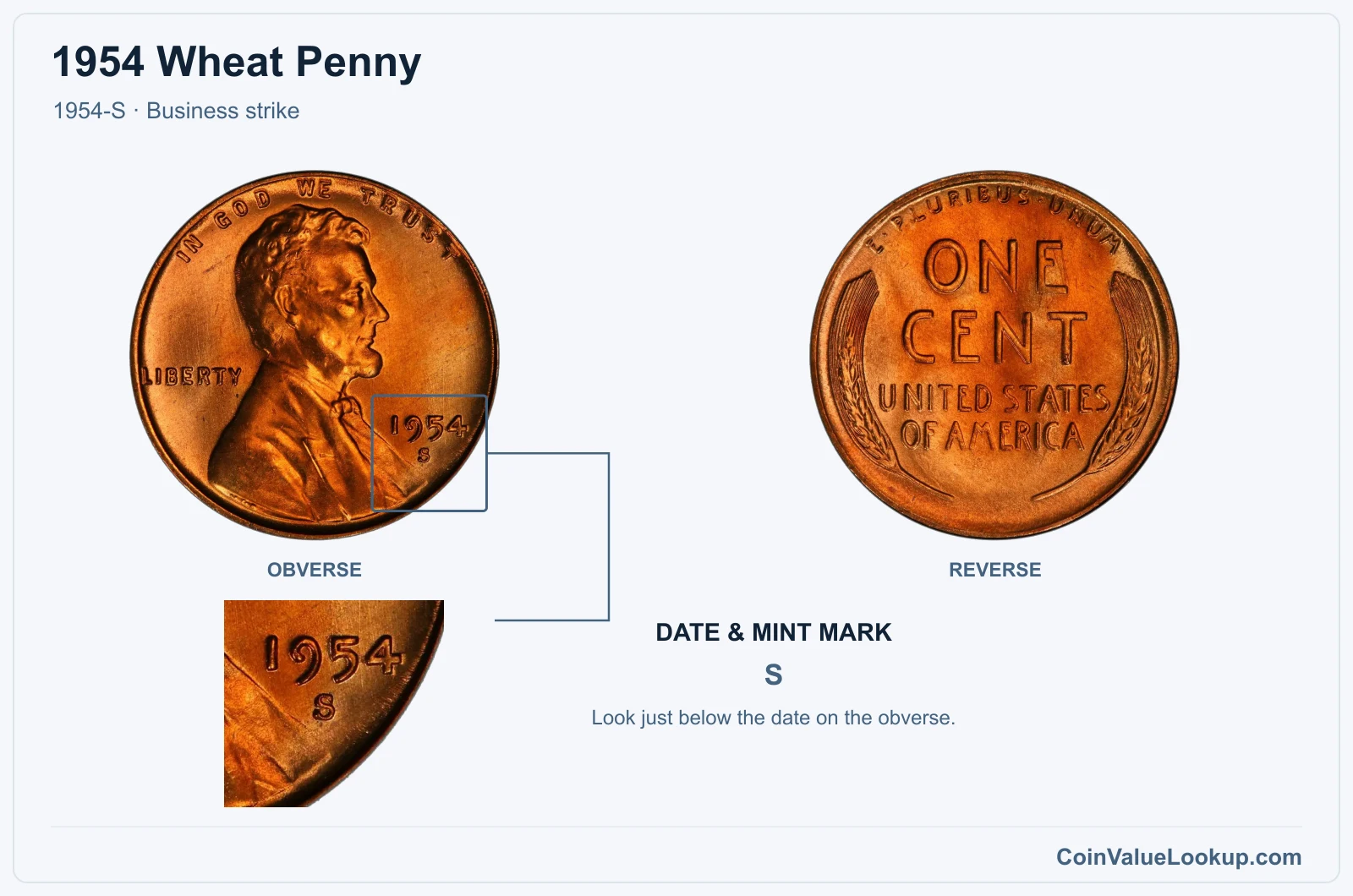
The 1954-S carries a small "S" mintmark below the date, identifying it as a San Francisco Mint product. Same 95% copper composition, same 3.11-gram weight, same Wheat Reverse design.
Guide values for the 1954-S line up with the Denver issue: about $0.06 at Fine-12 and roughly $1.24 at MS63. In circulated grades, these are common coins.
Uncirculated pieces with original surfaces are where the modest premium lives.
San Francisco cents from this era sometimes show slightly sharper strikes than their Denver counterparts, but that is a coin-by-coin observation, not a rule.
| Range | Grade | Price | Auction Records | Appraisal |
|---|---|---|---|---|
| PO | PO 1 | — | Coin Identifier | |
| FR | FR 2 | — | Coin Identifier | |
| AG | AG 3 | — | Coin Identifier | |
| G | G 4 | — | Coin Identifier | |
| G 6 | — | Coin Identifier | ||
| VG | VG 8 | — | Coin Identifier | |
| VG 10 | — | Coin Identifier | ||
| F | F 12 | — | Coin Identifier | |
| F 15 | — | Coin Identifier | ||
| VF | VF 20 | — | Coin Identifier | |
| VF 25 | — | Coin Identifier | ||
| VF 30 | — | Coin Identifier | ||
| VF 35 | — | Coin Identifier | ||
| XF | XF 40 | — | Coin Identifier | |
| XF 45 | — | Coin Identifier | ||
| AU | AU 50 | — | Coin Identifier | |
| AU 53 | — | Coin Identifier | ||
| AU 55 | — | Coin Identifier | ||
| AU 58 | — | Coin Identifier | ||
| MS | MS 60 | — | Coin Identifier | |
| MS 61 | — | Coin Identifier | ||
| MS 62 | — | Coin Identifier | ||
| MS 63 | — | Coin Identifier | ||
| MS 64 | Coin Identifier | |||
| MS 65 | Coin Identifier | |||
| MS 66 | Coin Identifier | |||
| MS 67 | Coin Identifier | |||
| MS 68 | Coin Identifier | |||
| MS 69 | — | — | — | |
| MS 70 | — | — | — |
1954 Wheat Penny — PR
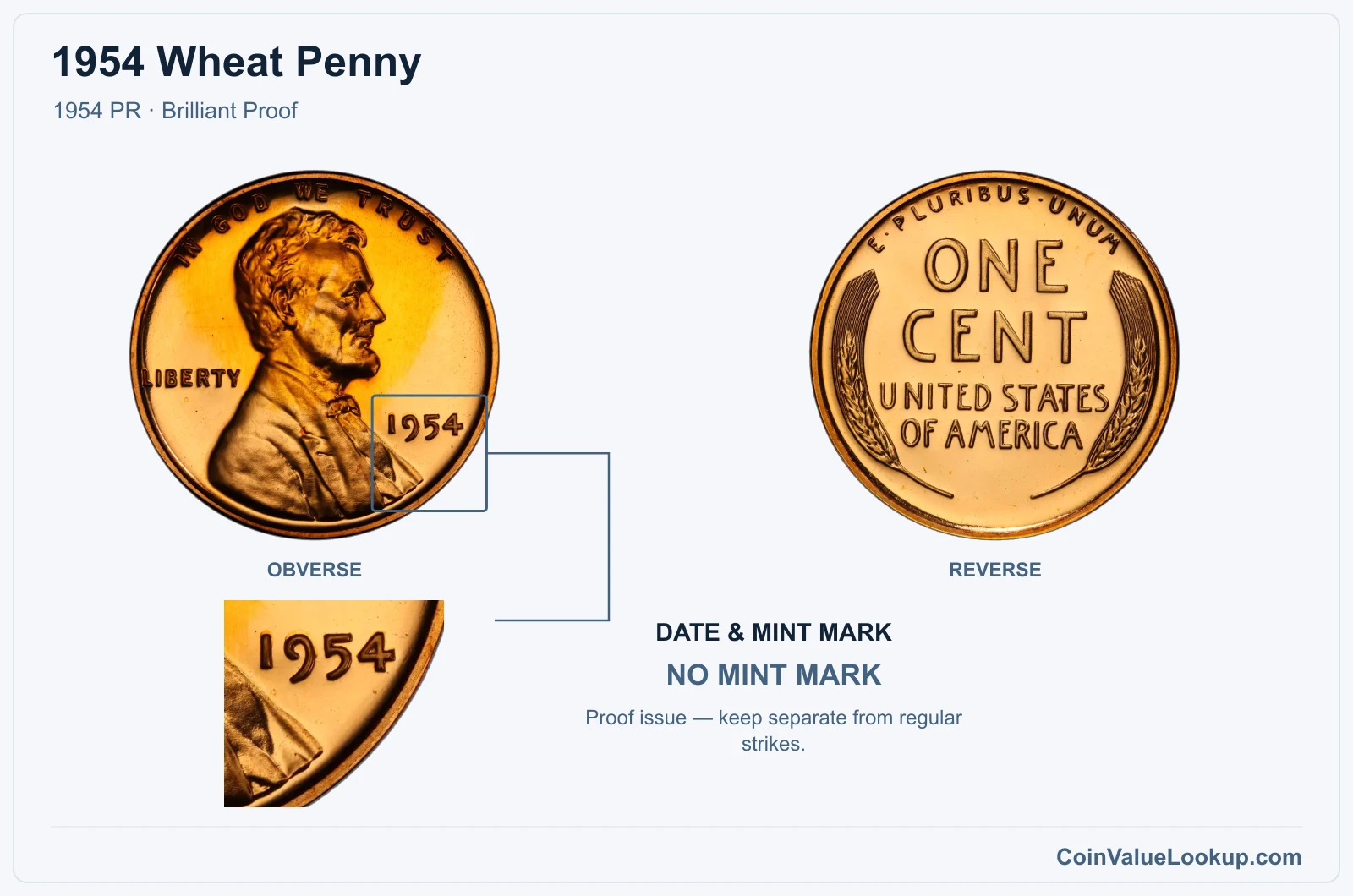
The 1954 Proof cent was struck at Philadelphia using specially prepared dies and polished planchets. The result is a coin with brilliant mirrored fields and crisp, fully defined devices — a deliberate manufacturing finish, not simply a well-preserved circulation coin.
At PR63, guide values sit around $25, which is a significant step above any business-strike branch at a comparable preservation level. Cameo and deep cameo contrast designations describe the visual relationship between frosted devices and mirrored fields; they are contrast labels, not errors or separate varieties.
Do not confuse a polished or lightly circulated business strike for a proof. Genuine proofs have a distinctive field texture that buffing cannot replicate.
If you are unsure, compare the edge and field reflections under a single directed light source — a real proof will show a deep, liquid mirror effect.
| Range | Grade | Price | Auction Records | Appraisal |
|---|---|---|---|---|
| PR | PR 1 | — | Coin Identifier | |
| PR 2 | — | Coin Identifier | ||
| PR 3 | — | Coin Identifier | ||
| PR 4 | — | Coin Identifier | ||
| PR 6 | — | Coin Identifier | ||
| PR 8 | — | Coin Identifier | ||
| PR 10 | — | Coin Identifier | ||
| PR 12 | — | Coin Identifier | ||
| PR 15 | — | Coin Identifier | ||
| PR 20 | — | Coin Identifier | ||
| PR 25 | — | Coin Identifier | ||
| PR 30 | — | Coin Identifier | ||
| PR 35 | — | Coin Identifier | ||
| PR 40 | — | Coin Identifier | ||
| PR 45 | — | Coin Identifier | ||
| PR 50 | — | Coin Identifier | ||
| PR 53 | — | Coin Identifier | ||
| PR 55 | — | Coin Identifier | ||
| PR 58 | — | Coin Identifier | ||
| PR 60 | — | Coin Identifier | ||
| PR 61 | — | Coin Identifier | ||
| PR 62 | — | Coin Identifier | ||
| PR 63 | Coin Identifier | |||
| PR 64 | Coin Identifier | |||
| PR 65 | Coin Identifier | |||
| PR 66 | Coin Identifier | |||
| PR 67 | Coin Identifier | |||
| PR 68 | Coin Identifier | |||
| PR 69 | — | — | — | |
| PR 70 | — | — | — |
1954 Wheat Penny Error List
1. 1954 Wheat Penny — Repunched Mintmark
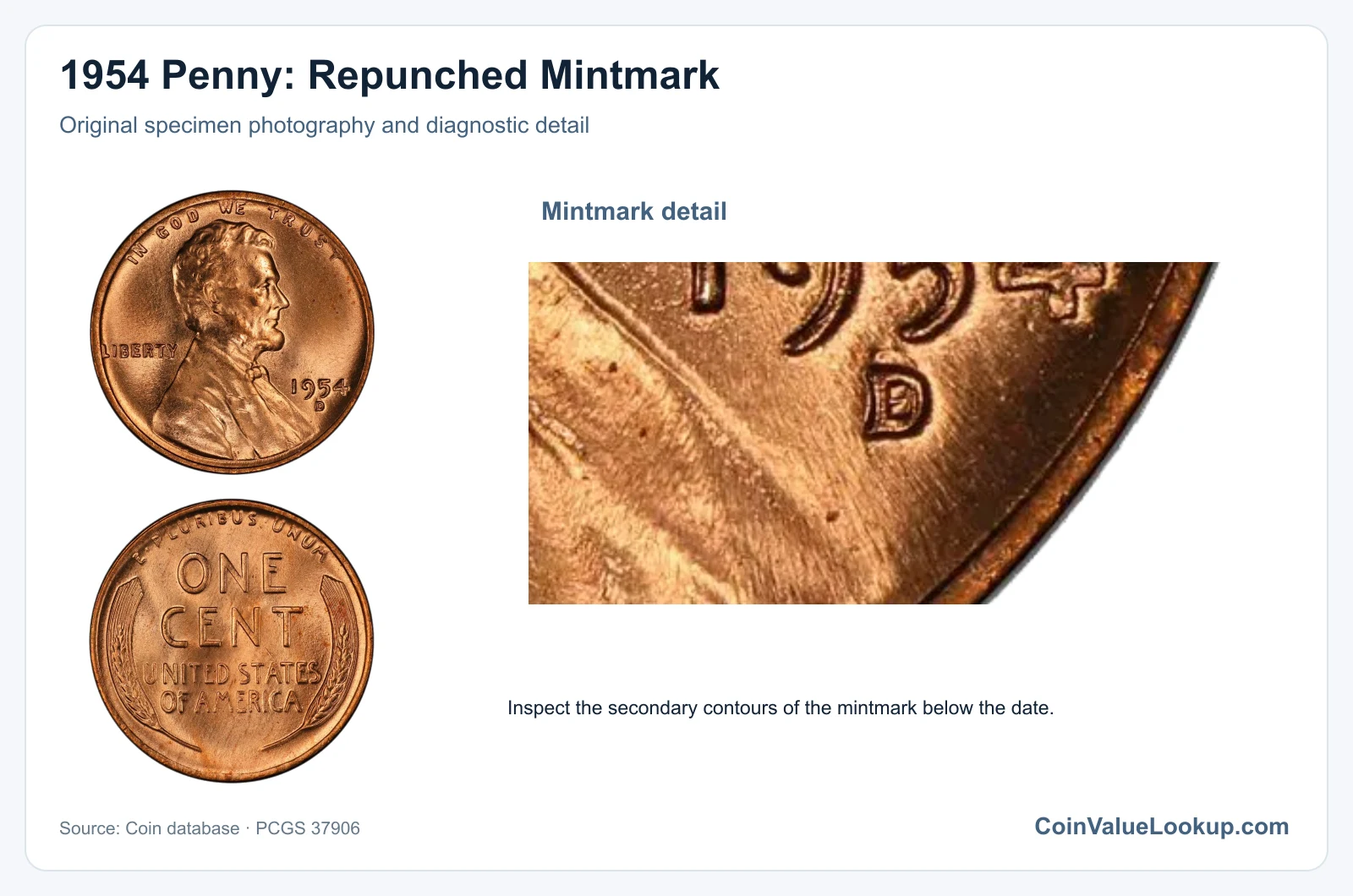
A repunched mintmark occurs when the mintmark punch was applied more than once in slightly different positions on the working die. On 1954 cents this applies to the Denver (D) and San Francisco (S) branches only — Philadelphia coins carry no mintmark, so there is nothing to repunch.
To check, examine the mintmark area under at least 5x magnification. Look for traces of a second impression: a partial letter offset from the primary mark, shadow-like serifs, or notching along the edges of the letter.
The extra impression should be consistent across every coin struck from that die.
Machine doubling, die chips and corrosion near the mintmark can mimic a repunched mintmark. Machine doubling tends to produce a flat shelf rather than a distinctly separated second punch.
Values depend on the specific variety, its visual strength and the coin's overall condition, so authenticated examples should be evaluated individually.
2. 1954 Wheat Penny — BIE Die Break
A BIE die break shows up as a small raised bump or vertical bridge between the letters B and E in LIBERTY on the obverse. It is caused by a crack in the die that fills with metal during striking.
To spot one, look at LIBERTY under good lighting and mild magnification. A genuine BIE will be a raised feature — metal standing above the field — and it will appear in the same spot on every coin struck from that cracked die.
The surrounding surface should look normal.
Dirt wedged between letters, a scratch running vertically, or a bit of foreign metal stuck to the surface can all look like a BIE at first glance. The key difference is that a real die break is part of the struck surface, not sitting on top of it or incised into it.
Pricing depends on the size of the break, the coin's condition and authentication, so each piece needs individual assessment.
3. 1954 Wheat Penny — Off-Center Strike
An off-center strike happens when the planchet is not properly seated between the dies at the moment of striking. The result is a design that is shifted to one side, leaving a blank crescent of unstruck metal on the opposite edge.
The percentage of off-center displacement matters a lot. A 5% shift is barely noticeable.
A 50% shift with the date still visible is the sweet spot collectors tend to prize, because the error is dramatic yet the coin remains identifiable.
Be careful not to confuse a clipped planchet, a misaligned die or post-mint damage with a genuine off-center strike. Post-mint flattening can push metal outward and mimic a shift, but the edge profile and metal flow will look different under magnification.
Values are assessed individually based on the degree of displacement, date visibility, mint and overall condition.
4. 1954 Wheat Penny — Clipped Planchet
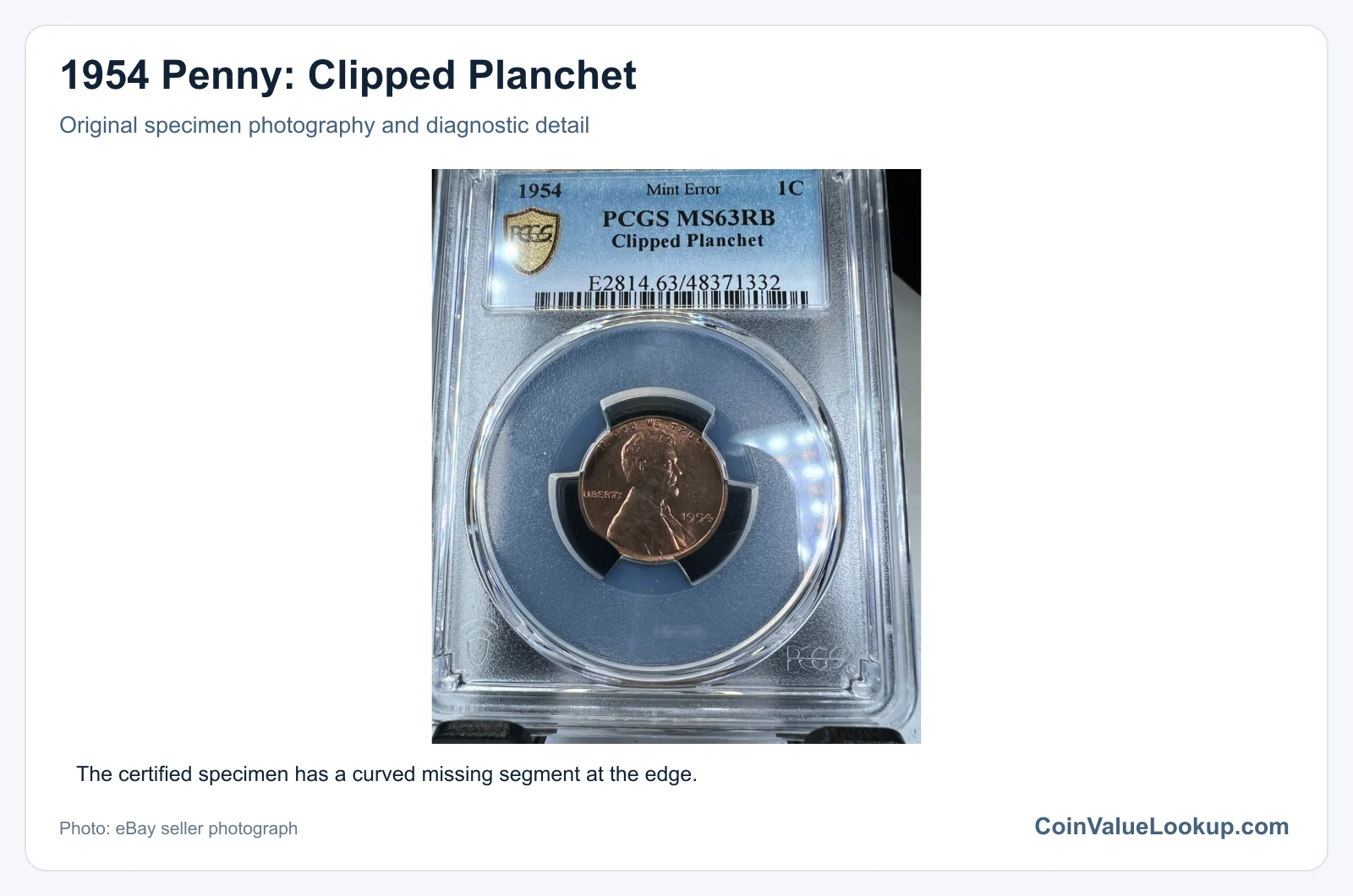
A clipped planchet error means a portion of the blank was missing before the coin was struck. The clip can be curved (from an overlapping punch in the blanking press), straight or irregularly shaped.
Look for a section of the rim and adjacent design that is simply absent, with the remaining edge showing the original blank's contour rather than a sharp mechanical cut. On a genuine clip, you will often see weakness in the design directly opposite the missing area — the metal had less material to flow into during the strike, so the detail thins out.
A filed notch, a deliberate edge cut or heavy corrosion along the rim can resemble a clip. The giveaway is the opposite-side weakness and the natural metal-flow pattern that post-mint damage will not produce.
Each clipped-planchet cent is valued individually based on the size and type of clip, the coin's overall condition and professional authentication.
5. 1954 Wheat Penny — Doubled Die Obverse
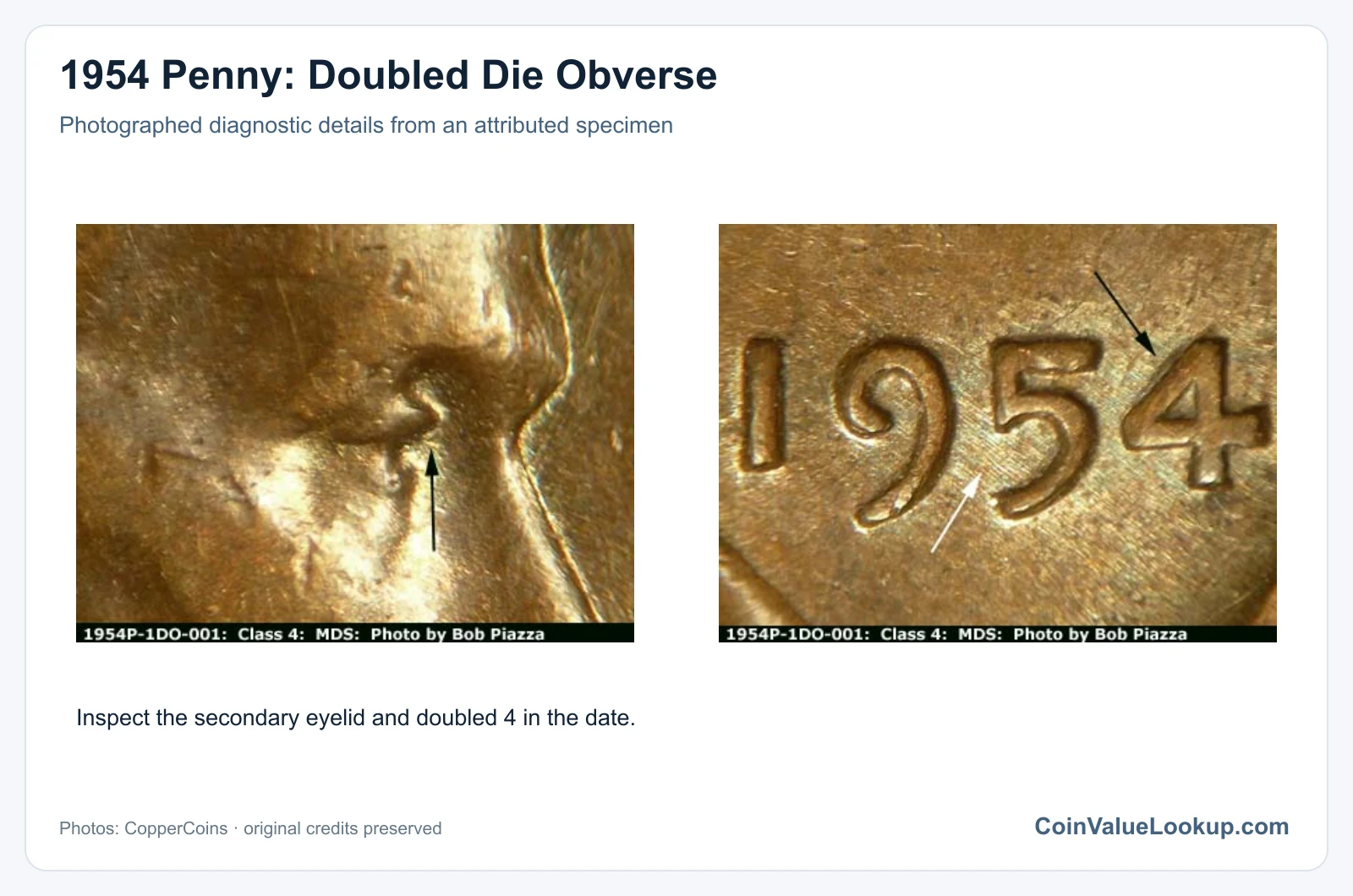
A doubled die obverse is created during the die-making process when a misalignment between hub impressions leaves doubled elements on the working die. Every coin struck from that die will show the same doubling in the same location.
Check the obverse lettering — especially LIBERTY and IN GOD WE TRUST — and the date numerals under magnification. Genuine hub doubling produces consistent separation or notching on the affected elements, with distinct secondary outlines rather than a flat, shelf-like smear.
Machine doubling is the most common lookalike. It creates a flat, displaced shelf on the design with a loss of detail in the affected area, whereas true hub doubling retains sharp definition on both impressions.
Worn die contours and reflections under certain lighting can also mislead. Values depend entirely on the specific doubled die, its visual strength and the coin's authenticated condition.
6. 1954 Wheat Penny — Lamination / Split Planchet
A lamination or split-planchet error results from impurities or gas pockets trapped in the metal strip during manufacture. When the coin is struck, these weak zones can separate, producing a peeling flap, a missing layer or a visible crack within the metal.
Inspect both faces and especially the edge of the coin. A lamination will show metal that appears to be lifting away or already detached, exposing a rough, irregular undersurface.
The affected area usually follows the contour of the coin rather than a straight line.
Scraping, corrosion pits and deliberately cut or shaved coins can look somewhat similar. The difference is that a genuine lamination reveals an internal separation in the alloy — the exposed surface has a distinctive grainy or striated texture that external damage does not produce.
Pricing requires individual assessment based on the size of the affected area, whether the flap is retained, and professional authentication of the error.