1954 Jefferson Nickel Coin Value: How Much Is It Worth?
A 1954 Jefferson nickel in ordinary circulated condition is worth a modest amount, but uncirculated examples tell a different story. Guide estimates for Mint State coins range from about $1.24 at MS60 to $38 at MS65, depending on the mint.
Proofs, Full Steps designations, and the S over D overmintmark variety each carry their own separate premiums worth investigating.
Fast Way to Identify Your 1954 Jefferson Nickel
The quickest way to get a preliminary identification of your 1954 Jefferson nickel is to upload clear photos of both the front and back. That lets us check the mintmark location, surface condition, and any obvious variety markers.
Good lighting and a steady shot make all the difference.
1954 Jefferson Nickel Value
Upload both sides of your 1954 Jefferson Nickel.
Front Obverse
Upload photo
Back Reverse
Upload photo
Which 1954 Jefferson Nickel Versions Are Worth Money?
- Uncirculated Philadelphia and Denver strikes with full original luster can reach $25 to $38 at MS65 depending on the mint.
- Philadelphia proofs with mirrored fields are a separate collectible category, with a PR65 guide value around $26.
- The 1954 S over D overmintmark variety is the standout, with guide values of $46 at MS60 and $186 at MS65.
Step 1: Identify Your 1954 Jefferson Nickel Mint Mark and Version
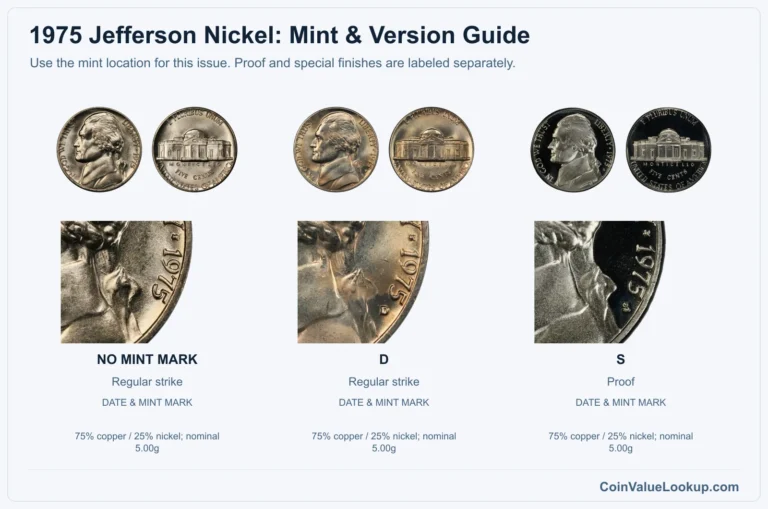
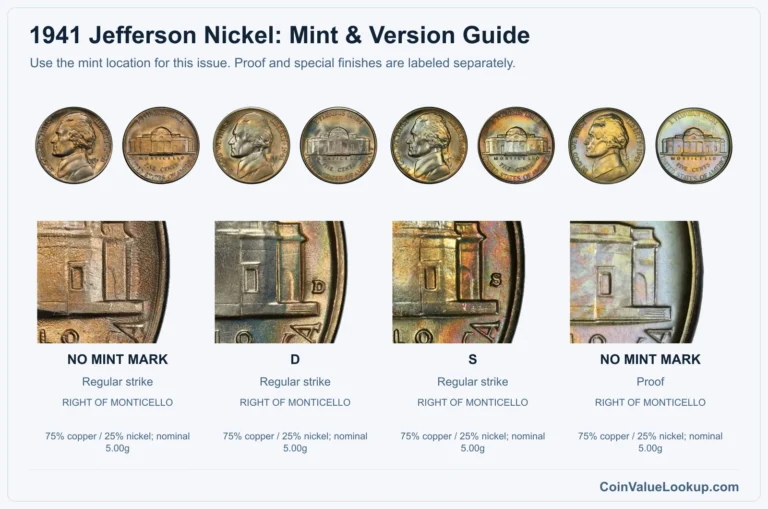
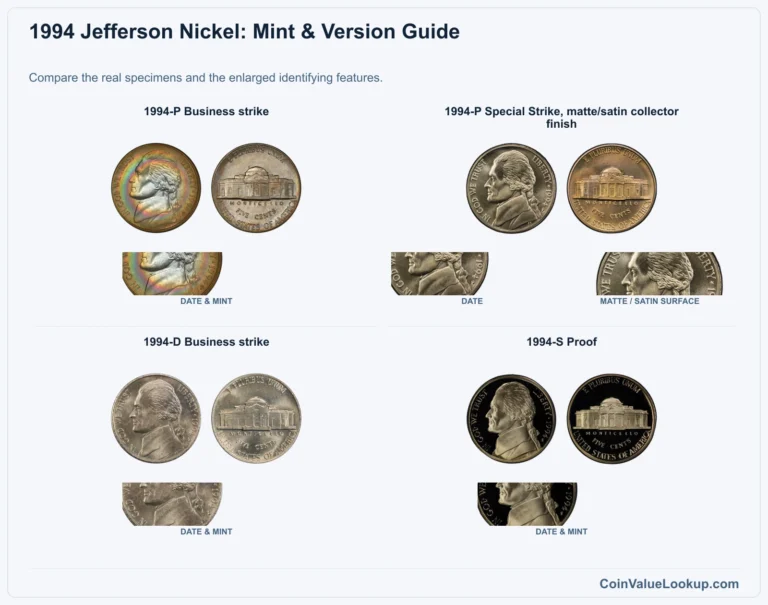
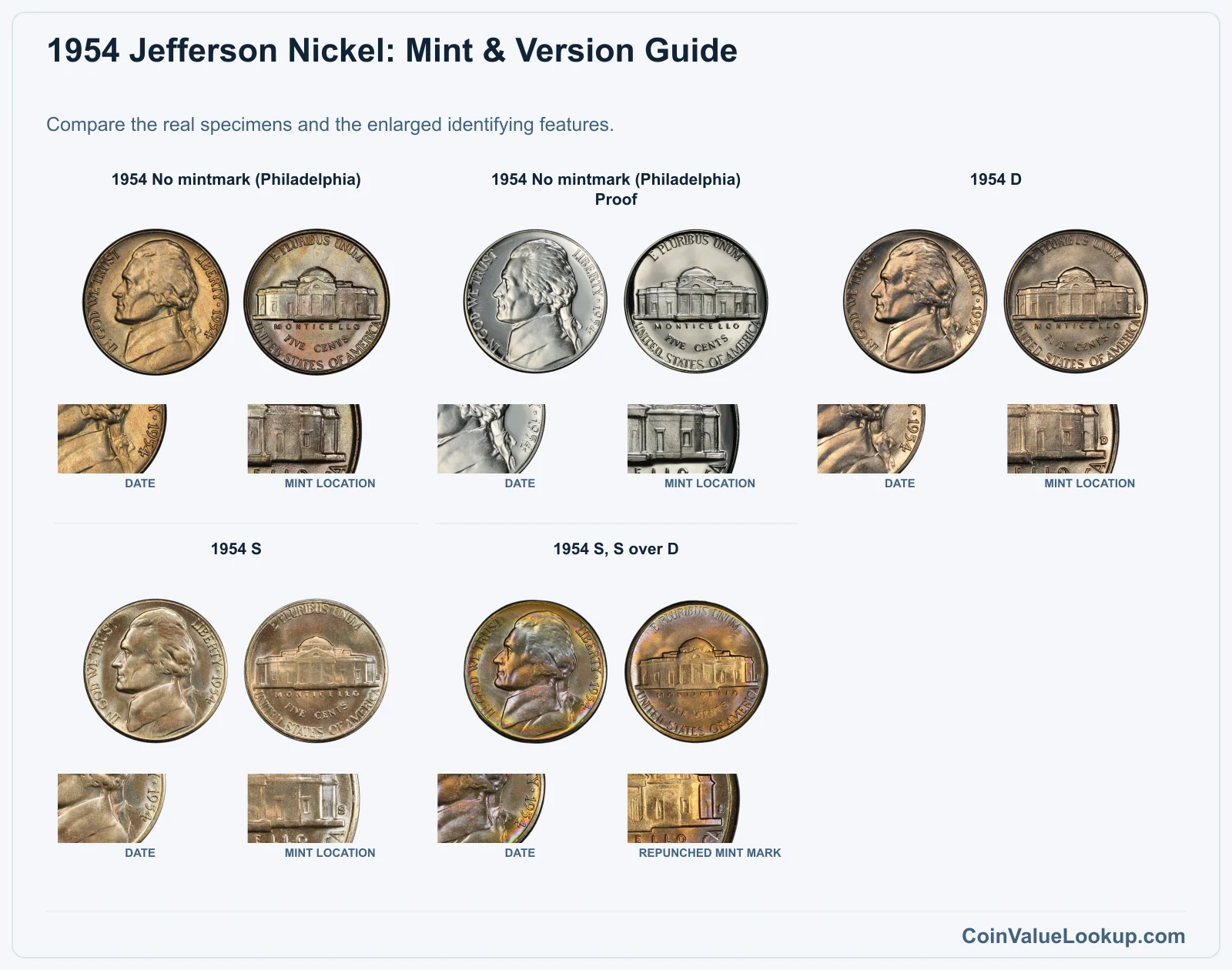
Start with the obverse: the date 1954 sits on the lower left. Philadelphia strikes carry no mintmark at all.
Denver and San Francisco coins show a small D or S on the reverse, to the right of Monticello's building.
All standard 1954 nickels are 75% copper and 25% nickel, weighing 5.00 grams with a 21.2 mm diameter and a plain edge. There is no silver content in these coins, so a silvery gleam is just normal alloy or toning.
Separate your coin into three finish categories: circulated business strikes, uncirculated business strikes, and proofs. A polished business strike is not a proof, no matter how shiny it looks.
Proofs have mirror-like fields struck deliberately at the Philadelphia Mint for collectors.
Step 2: Check Your 1954 Jefferson Nickel Grade
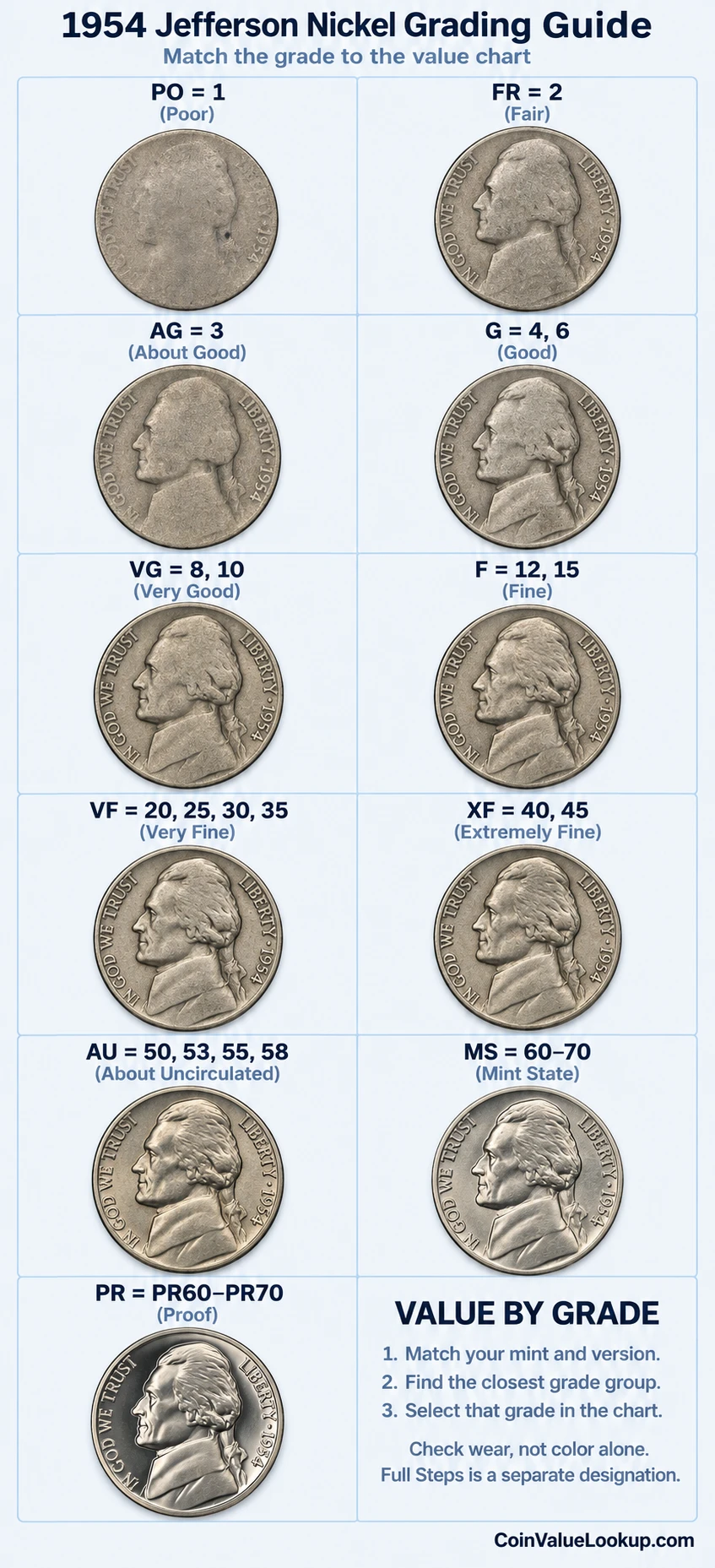
When grading a 1954 nickel, check Jefferson's cheekbone first. That high point wears earliest, followed by the hair detail directly above his ear.
On the reverse, examine the Monticello roof lines and the four tall columns for any flattening.
Luster matters as much as wear. A coin with full original mint sheen and no contact marks grades higher than one with the same detail but cleaned or scratched surfaces.
Compare your coin against the reference image to see how these areas look at different grade levels.
The steps at the base of Monticello deserve special attention. Five or more clearly separated, uninterrupted steps can qualify a coin for the PCGS Full Steps designation, which commands a premium above ordinary Mint State prices.
A weak strike that mushes the steps together is a strike issue, not necessarily wear, but it still disqualifies the coin from that designation.
Step 3: Check 1954 Jefferson Nickel Value by Mint and Version
1954 Jefferson Nickel — No mintmark (Philadelphia)
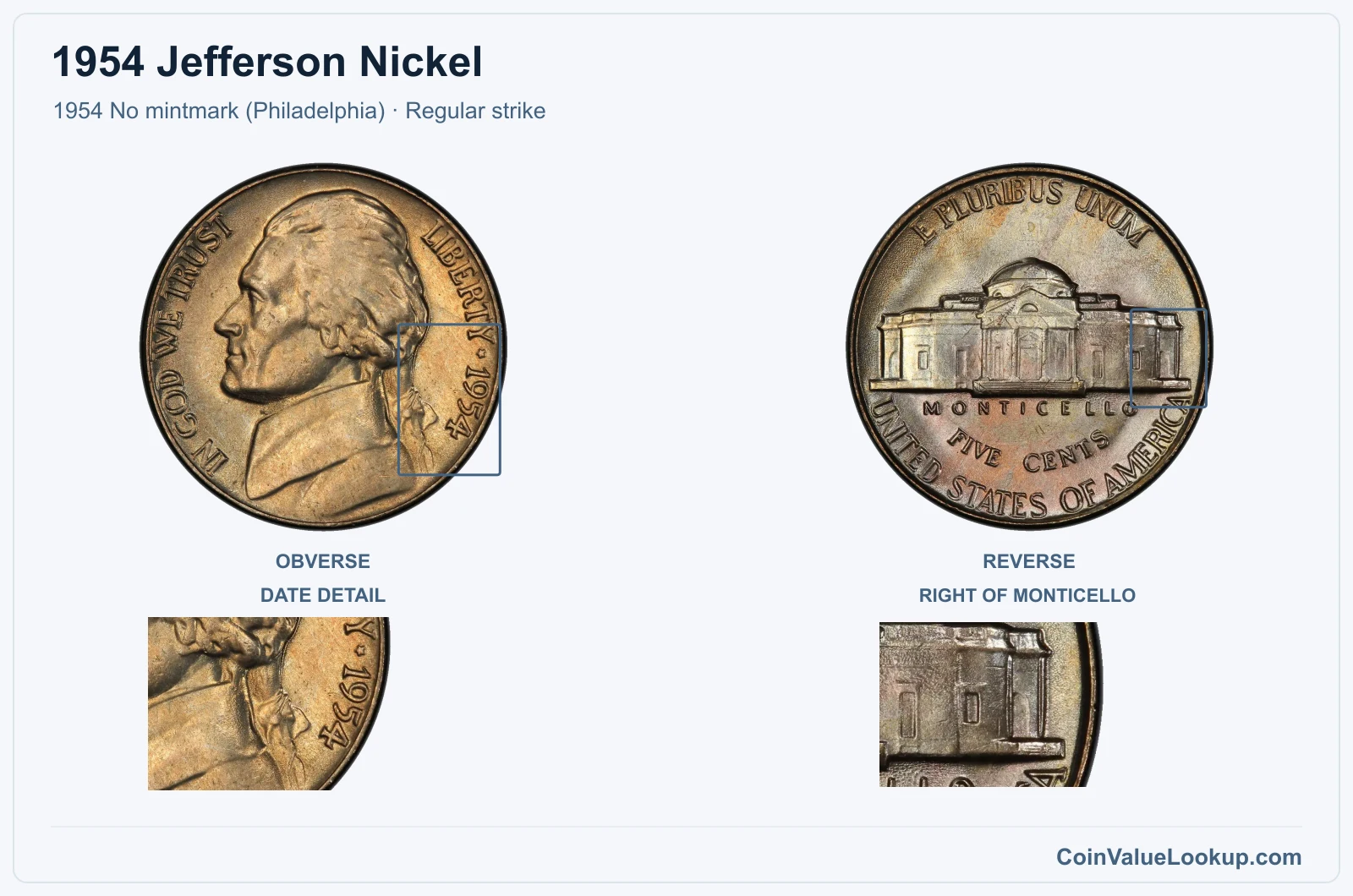
The 1954 Philadelphia nickel has no mintmark. In uncirculated condition, guide estimates place it around $1.24 at MS60 and about $25 at MS65.
Worn circulated examples are common enough that no separate guide price is listed for lower grades.
Look for unbroken luster across both sides and minimal bag marks on Jefferson's cheek. Full Steps coins, where five or more Monticello steps are clearly separated, are tracked separately and carry their own premium above these standard Mint State figures.
| Range | Grade | Price | Auction Records | Appraisal |
|---|---|---|---|---|
| PO | PO 1 | — | Coin Identifier | |
| FR | FR 2 | — | — | — |
| AG | AG 3 | — | — | — |
| G | G 4 | — | — | — |
| G 6 | — | — | — | |
| VG | VG 8 | — | — | — |
| VG 10 | — | — | — | |
| F | F 12 | — | — | — |
| F 15 | — | — | — | |
| VF | VF 20 | — | — | — |
| VF 25 | — | — | — | |
| VF 30 | — | — | — | |
| VF 35 | — | — | — | |
| XF | XF 40 | — | Coin Identifier | |
| XF 45 | — | Coin Identifier | ||
| AU | AU 50 | — | Coin Identifier | |
| AU 53 | — | Coin Identifier | ||
| AU 55 | — | Coin Identifier | ||
| AU 58 | — | Coin Identifier | ||
| MS | MS 60 | — | Coin Identifier | |
| MS 61 | — | Coin Identifier | ||
| MS 62 | — | Coin Identifier | ||
| MS 63 | Coin Identifier | |||
| MS 64 | Coin Identifier | |||
| MS 65 | Coin Identifier | |||
| MS 66 | Coin Identifier | |||
| MS 67 | Coin Identifier | |||
| MS 68 | — | — | — | |
| MS 69 | — | — | — | |
| MS 70 | — | — | — |
1954 Jefferson Nickel — No mintmark (Philadelphia) Proof
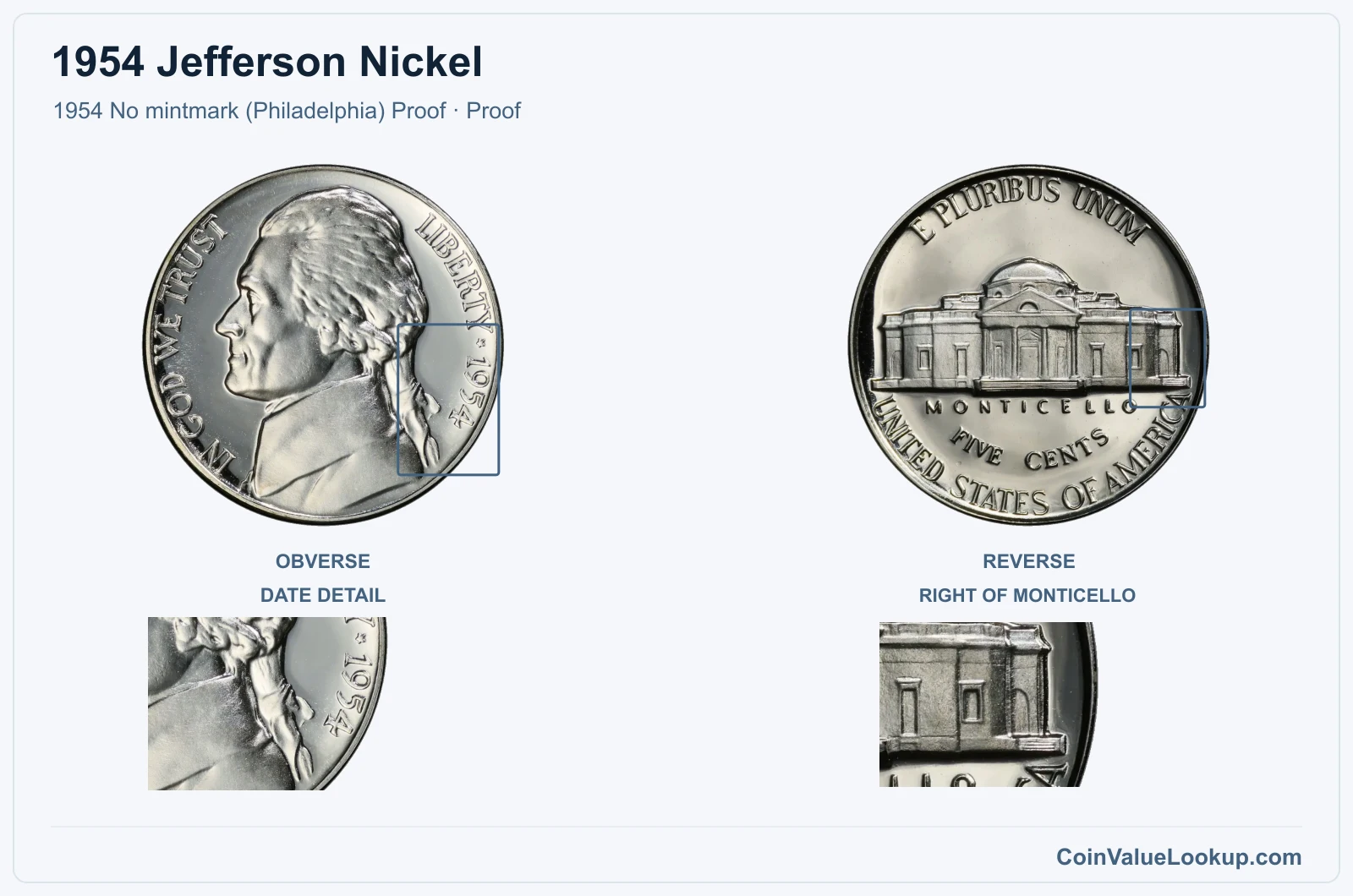
Philadelphia also struck proof nickels in 1954 for collectors. These have deeply mirrored fields and sharp, fully struck devices.
A PR65 example carries a guide estimate of about $26.
Cameo and Deep Cameo designations, where frosted devices contrast against mirror fields, are graded separately and can add value beyond the base proof price. Look for any hairlines across the mirror surfaces, since even light ones affect the grade.
Do not confuse a polished business strike with a genuine proof; the difference is in the manufacturing process, not just shininess.
Coin Value Lookup is a good starting point if you want to compare this proof against other Jefferson nickel years and see where your coin fits in the series.
| Range | Grade | Price | Auction Records | Appraisal |
|---|---|---|---|---|
| PR | PR 1 | — | Coin Identifier | |
| PR 2 | — | Coin Identifier | ||
| PR 3 | — | Coin Identifier | ||
| PR 4 | — | Coin Identifier | ||
| PR 6 | — | Coin Identifier | ||
| PR 8 | — | Coin Identifier | ||
| PR 10 | — | Coin Identifier | ||
| PR 12 | — | Coin Identifier | ||
| PR 15 | — | Coin Identifier | ||
| PR 20 | — | Coin Identifier | ||
| PR 25 | — | Coin Identifier | ||
| PR 30 | — | Coin Identifier | ||
| PR 35 | — | Coin Identifier | ||
| PR 40 | — | Coin Identifier | ||
| PR 45 | — | Coin Identifier | ||
| PR 50 | — | Coin Identifier | ||
| PR 53 | — | Coin Identifier | ||
| PR 55 | — | Coin Identifier | ||
| PR 58 | — | Coin Identifier | ||
| PR 60 | — | Coin Identifier | ||
| PR 61 | — | Coin Identifier | ||
| PR 62 | Coin Identifier | |||
| PR 63 | — | Coin Identifier | ||
| PR 64 | Coin Identifier | |||
| PR 65 | Coin Identifier | |||
| PR 66 | Coin Identifier | |||
| PR 67 | Coin Identifier | |||
| PR 68 | Coin Identifier | |||
| PR 69 | Coin Identifier | |||
| PR 70 | — | — | — |
1954 Jefferson Nickel — D
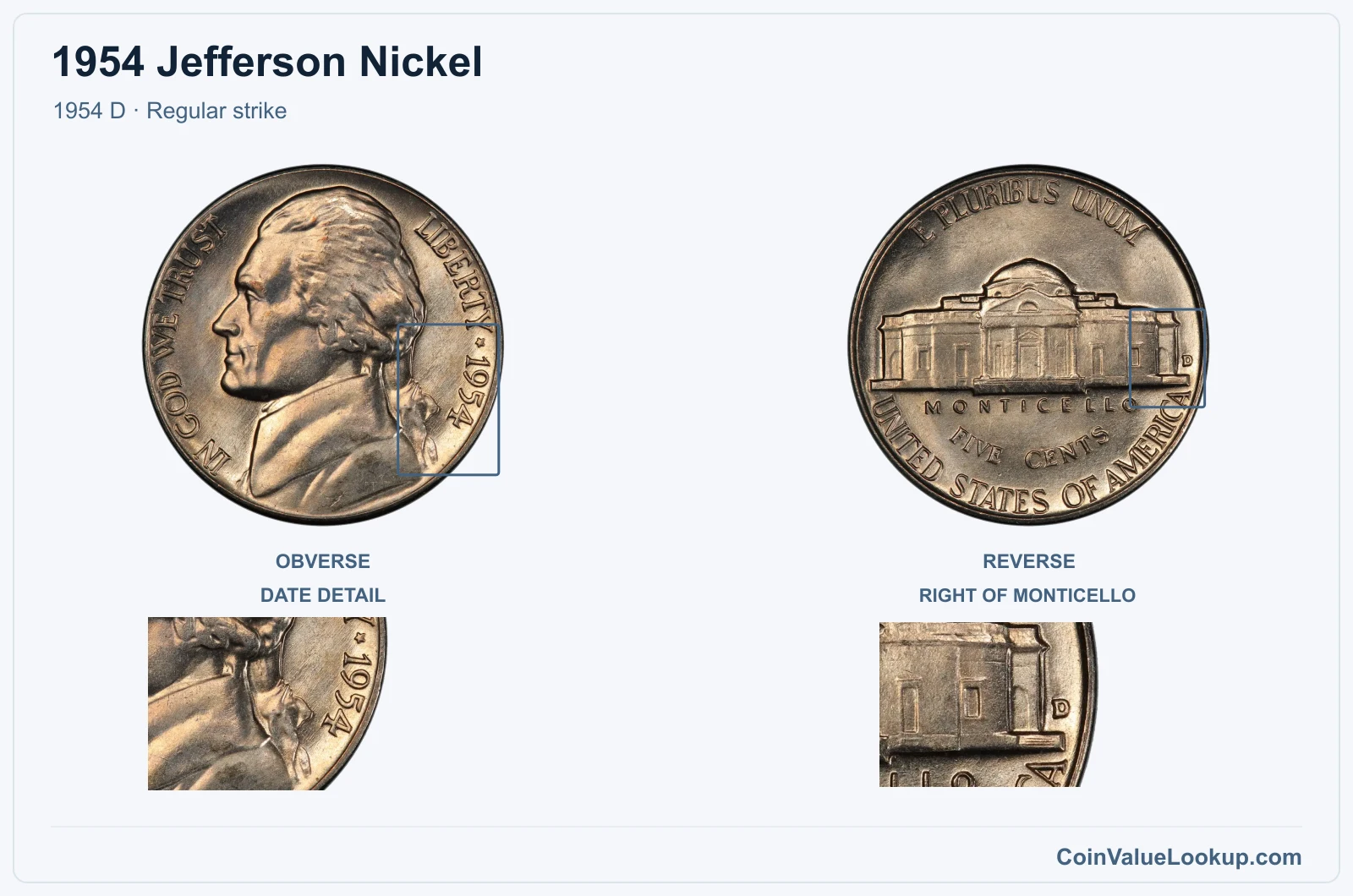
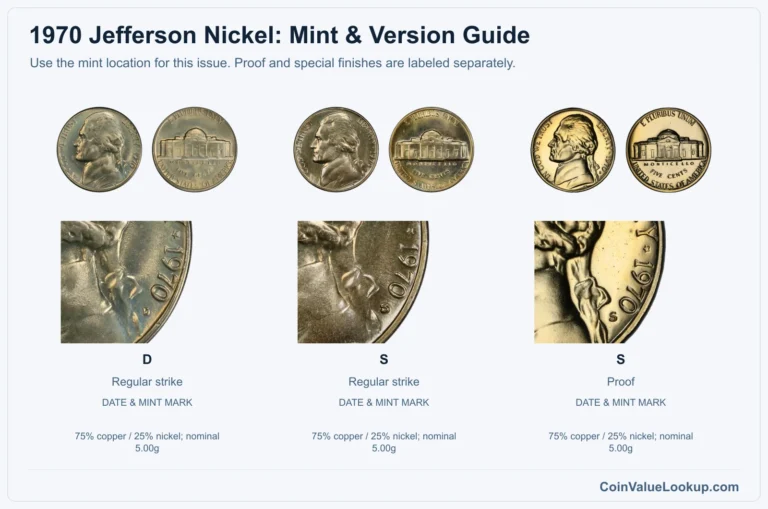
The 1954-D was struck at the Denver Mint and carries a small D on the reverse to the right of Monticello. Guide estimates run about $1.24 at MS60 and roughly $38 at MS65, making the Denver issue the highest-valued standard business strike for this year at gem grade.
Circulated pieces are plentiful and not separately priced in the guide. For Mint State coins, look for strong luster and clean fields.
Full Steps examples are tracked with their own values separate from regular uncirculated prices.
| Range | Grade | Price | Auction Records | Appraisal |
|---|---|---|---|---|
| PO | PO 1 | — | Coin Identifier | |
| FR | FR 2 | — | — | — |
| AG | AG 3 | — | — | — |
| G | G 4 | — | — | — |
| G 6 | — | — | — | |
| VG | VG 8 | — | — | — |
| VG 10 | — | — | — | |
| F | F 12 | — | — | — |
| F 15 | — | — | — | |
| VF | VF 20 | — | — | — |
| VF 25 | — | — | — | |
| VF 30 | — | — | — | |
| VF 35 | — | — | — | |
| XF | XF 40 | — | Coin Identifier | |
| XF 45 | — | Coin Identifier | ||
| AU | AU 50 | — | Coin Identifier | |
| AU 53 | — | Coin Identifier | ||
| AU 55 | — | Coin Identifier | ||
| AU 58 | — | Coin Identifier | ||
| MS | MS 60 | — | Coin Identifier | |
| MS 61 | — | Coin Identifier | ||
| MS 62 | — | Coin Identifier | ||
| MS 63 | — | Coin Identifier | ||
| MS 64 | Coin Identifier | |||
| MS 65 | Coin Identifier | |||
| MS 66 | Coin Identifier | |||
| MS 67 | — | — | — | |
| MS 68 | — | — | — | |
| MS 69 | — | — | — | |
| MS 70 | — | — | — |
1954 Jefferson Nickel — S
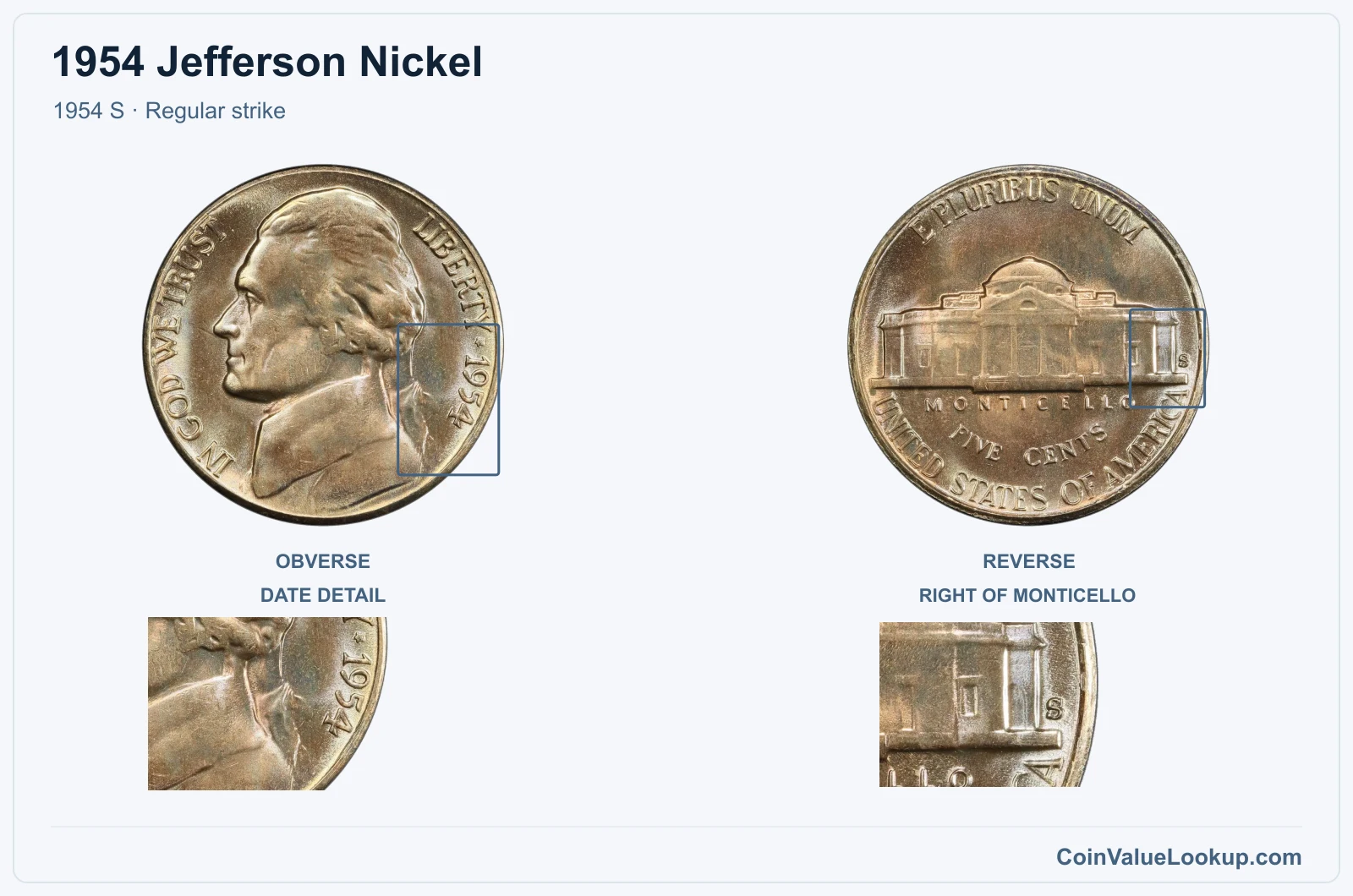
San Francisco struck 1954-S nickels bearing a small S mintmark on the reverse. Uncirculated guide estimates sit at about $2.19 at MS60 and around $30 at MS65.
Before you price your S-mint coin at those figures, take a close look at the mintmark. Some 1954-S nickels are actually the S over D variety, which is worth considerably more.
If your mintmark looks normal with no traces of another letter underneath, you have the standard issue. Full Steps coins again carry their own separate premiums.
| Range | Grade | Price | Auction Records | Appraisal |
|---|---|---|---|---|
| PO | PO 1 | — | Coin Identifier | |
| FR | FR 2 | — | — | — |
| AG | AG 3 | — | — | — |
| G | G 4 | — | — | — |
| G 6 | — | — | — | |
| VG | VG 8 | — | — | — |
| VG 10 | — | — | — | |
| F | F 12 | — | — | — |
| F 15 | — | — | — | |
| VF | VF 20 | — | — | — |
| VF 25 | — | — | — | |
| VF 30 | — | — | — | |
| VF 35 | — | — | — | |
| XF | XF 40 | — | Coin Identifier | |
| XF 45 | — | Coin Identifier | ||
| AU | AU 50 | — | Coin Identifier | |
| AU 53 | — | Coin Identifier | ||
| AU 55 | — | Coin Identifier | ||
| AU 58 | — | Coin Identifier | ||
| MS | MS 60 | — | Coin Identifier | |
| MS 61 | — | Coin Identifier | ||
| MS 62 | — | Coin Identifier | ||
| MS 63 | Coin Identifier | |||
| MS 64 | Coin Identifier | |||
| MS 65 | Coin Identifier | |||
| MS 66 | Coin Identifier | |||
| MS 67 | Coin Identifier | |||
| MS 68 | — | — | — | |
| MS 69 | — | — | — | |
| MS 70 | — | — | — |
1954 Jefferson Nickel — S, S over D
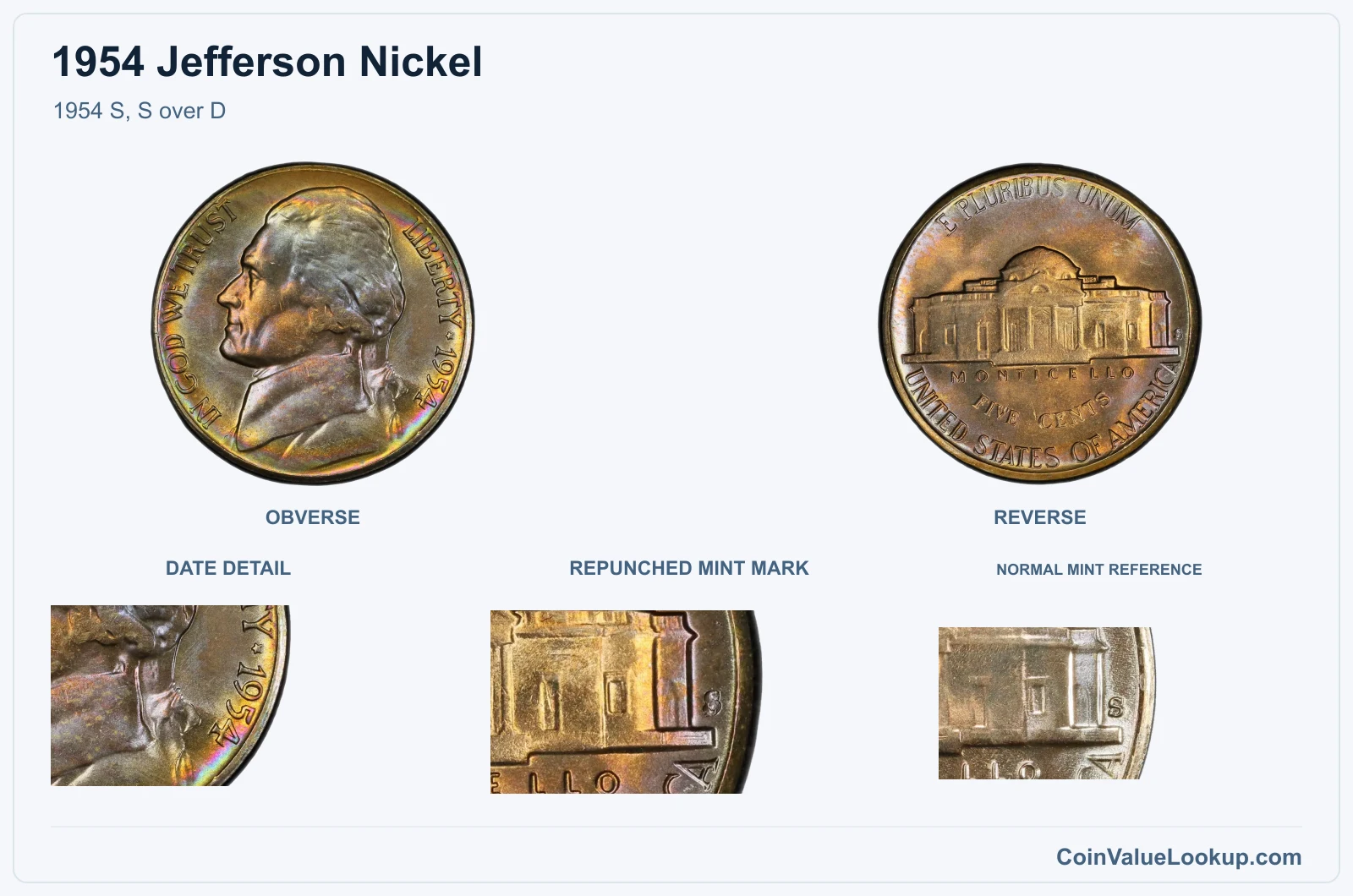
This is the one collectors hunt for. The 1954 S over D variety shows a San Francisco S mintmark punched over the remnants of a Denver D.
You can spot it by examining the base and upright of the mintmark under magnification: traces of the underlying D peek out from beneath the S.
Guide estimates are roughly $46 at MS60 and about $186 at MS65, a significant jump over the regular 1954-S. Full Steps prices are tracked separately and not included in those figures.
Because this variety commands real money, authentication matters. A scratch, die chip, or loose metal near the mintmark can mimic an overmintmark to the untrained eye.
If you think you have one, compare it carefully against known examples before assuming the best.
| Range | Grade | Price | Auction Records | Appraisal |
|---|---|---|---|---|
| PO | PO 1 | — | Coin Identifier | |
| FR | FR 2 | — | Coin Identifier | |
| AG | AG 3 | — | Coin Identifier | |
| G | G 4 | — | Coin Identifier | |
| G 6 | — | Coin Identifier | ||
| VG | VG 8 | — | Coin Identifier | |
| VG 10 | — | Coin Identifier | ||
| F | F 12 | — | Coin Identifier | |
| F 15 | — | Coin Identifier | ||
| VF | VF 20 | — | Coin Identifier | |
| VF 25 | — | Coin Identifier | ||
| VF 30 | — | Coin Identifier | ||
| VF 35 | — | Coin Identifier | ||
| XF | XF 40 | — | Coin Identifier | |
| XF 45 | — | Coin Identifier | ||
| AU | AU 50 | — | Coin Identifier | |
| AU 53 | — | Coin Identifier | ||
| AU 55 | — | Coin Identifier | ||
| AU 58 | — | Coin Identifier | ||
| MS | MS 60 | — | Coin Identifier | |
| MS 61 | — | Coin Identifier | ||
| MS 62 | — | Coin Identifier | ||
| MS 63 | Coin Identifier | |||
| MS 64 | Coin Identifier | |||
| MS 65 | Coin Identifier | |||
| MS 66 | Coin Identifier | |||
| MS 67 | — | — | — | |
| MS 68 | — | — | — | |
| MS 69 | — | — | — | |
| MS 70 | — | — | — |
1954 Jefferson Nickel Error List
1. 1954 Jefferson Nickel — S over D mintmark
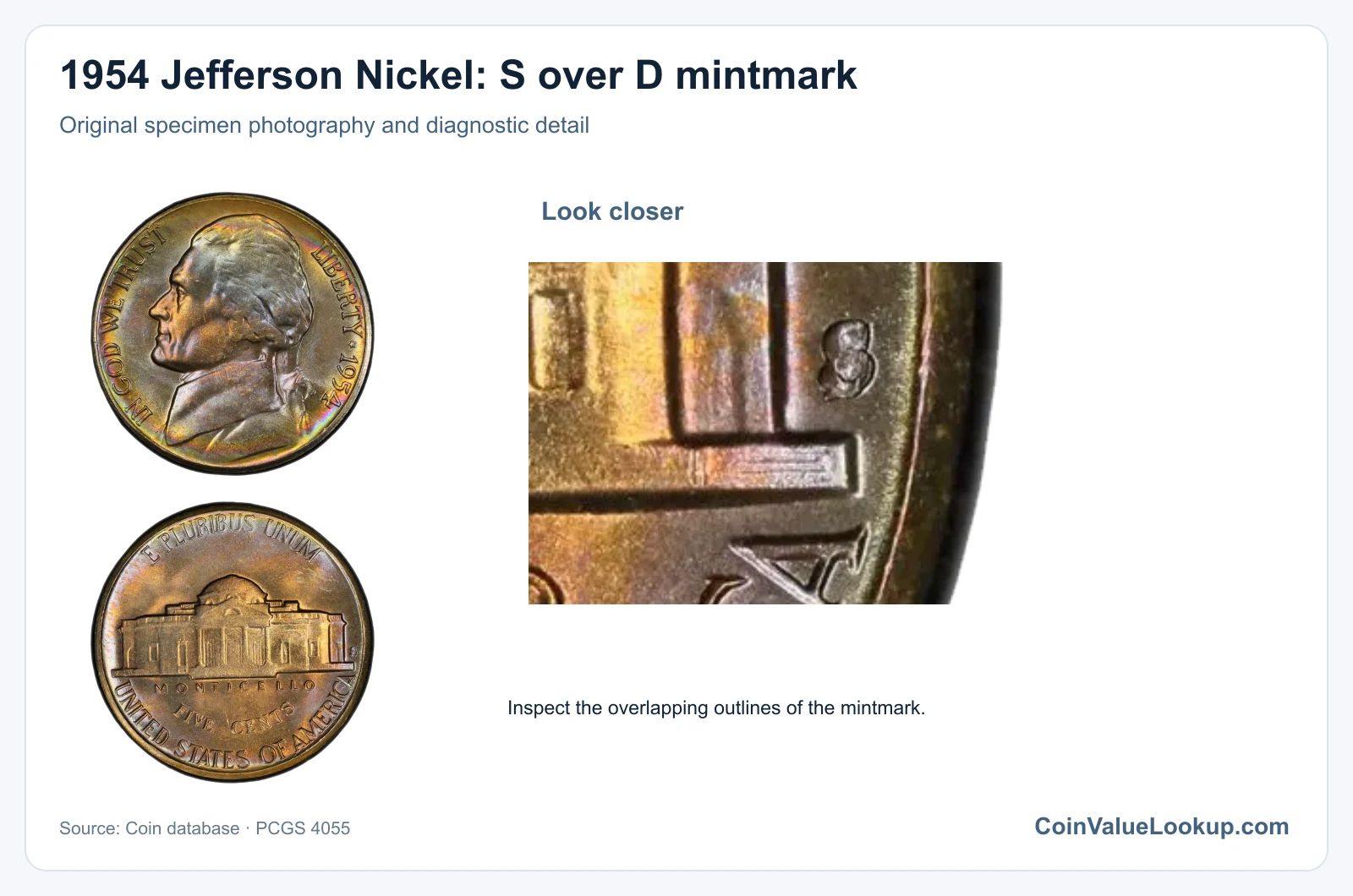
The S over D overmintmark is a recognized variety on the 1954 Jefferson nickel. The San Francisco Mint used a die originally intended for Denver, so remnants of the D sit beneath the S mintmark.
Under magnification, look at the base and the upright of the letter: the D's curved outline should be visible where it doesn't align with the S shape.
Guide values run about $46 at MS60 and $186 at MS65. Full Steps prices are separate and not included in those figures.
Watch out for lookalikes. A scratch running through the mintmark area or a small blob of displaced metal can create the illusion of a second letter.
Machine doubling, which produces flat shelf-like traces, is also not the same thing. Compare your mintmark at matching magnification to a confirmed example before drawing conclusions.
2. 1954 Jefferson Nickel — Off-center strike
An off-center strike happens when the planchet isn't seated properly between the dies. The result is an unstruck crescent on one side of the coin and an incomplete rim on the opposite edge.
The design shifts visibly, and both faces will show the misalignment.
A 1954-S example struck roughly 15% off-center, graded PCGS MS61, sold through Heritage Auctions in March 2023 for $139. That gives you a single data point, not a broad market range.
The percentage of off-center shift, whether the date remains visible, and overall condition all affect what a specific coin brings.
Don't confuse this with a single-die misalignment, which produces mild unevenness but a complete rim. A physically cut or damaged coin is also not an off-center strike.
The unstruck crescent should have a smooth, original planchet surface with no tool marks.
3. 1954 Jefferson Nickel — Defective planchet
A defective planchet error means the metal blank had a flaw before the coin was struck. The striking process imprints the design around and over the defect, so you see normal struck surfaces adjacent to the flaw area.
That combination of mint-produced design and a pre-existing metal irregularity is the hallmark of a genuine planchet defect.
A 1954-S example graded NGC MS65 has appeared at auction as part of a multi-coin lot, confirming the error exists for this date and mint. No standard price range is established; value depends on the authenticated identity, the coin's condition, and how dramatic the defect is.
Corrosion pits and post-strike damage can look similar but lack the struck-over character. The standard Jefferson nickel is a solid alloy, not a clad coin with separate layers, so a missing "clad layer" is not a valid diagnosis here.
4. 1954 Jefferson Nickel — Repunched Mintmark
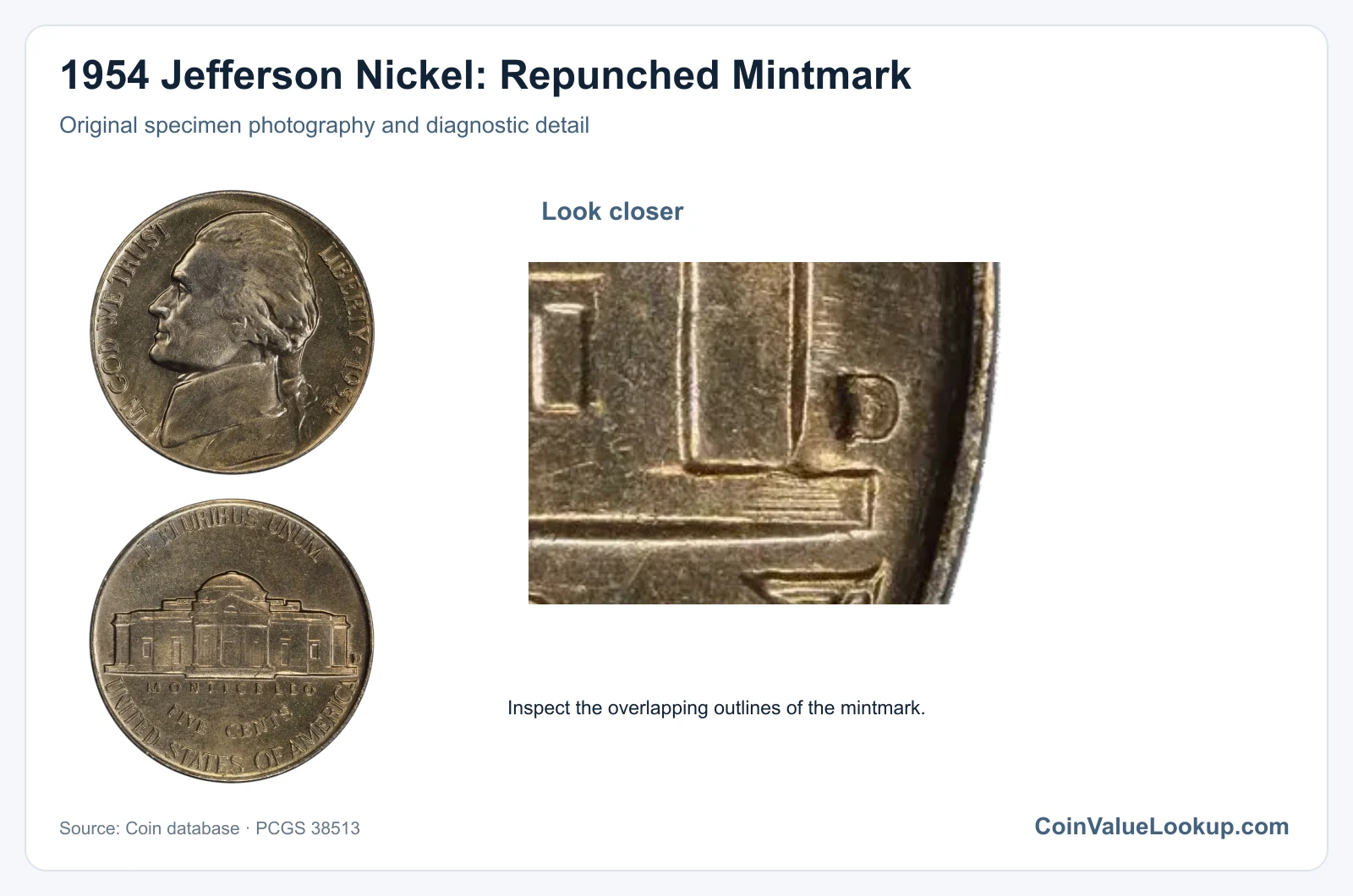
A repunched mintmark variety has been reported for the 1954 Denver issue, where the D mintmark shows remnants of a second, slightly offset punch position. Under magnification you may see doubling or a shadow next to the primary D that doesn't match the shape of machine doubling or a die chip.
Machine doubling leaves flat, shelf-like traces and carries no collector premium. A die chip adds metal rather than showing a shifted second impression.
Corrosion around the mintmark can also blur the outline and create false doubling.
No numerical price range is established for this variety. Value depends on the coin's condition, the clarity of the repunched mintmark, and authentication.
If your 1954-D shows something unusual near the mintmark, compare it at matching magnification to a normal example before assuming you have the variety.
5. 1954 Jefferson Nickel — Doubled Die Reverse
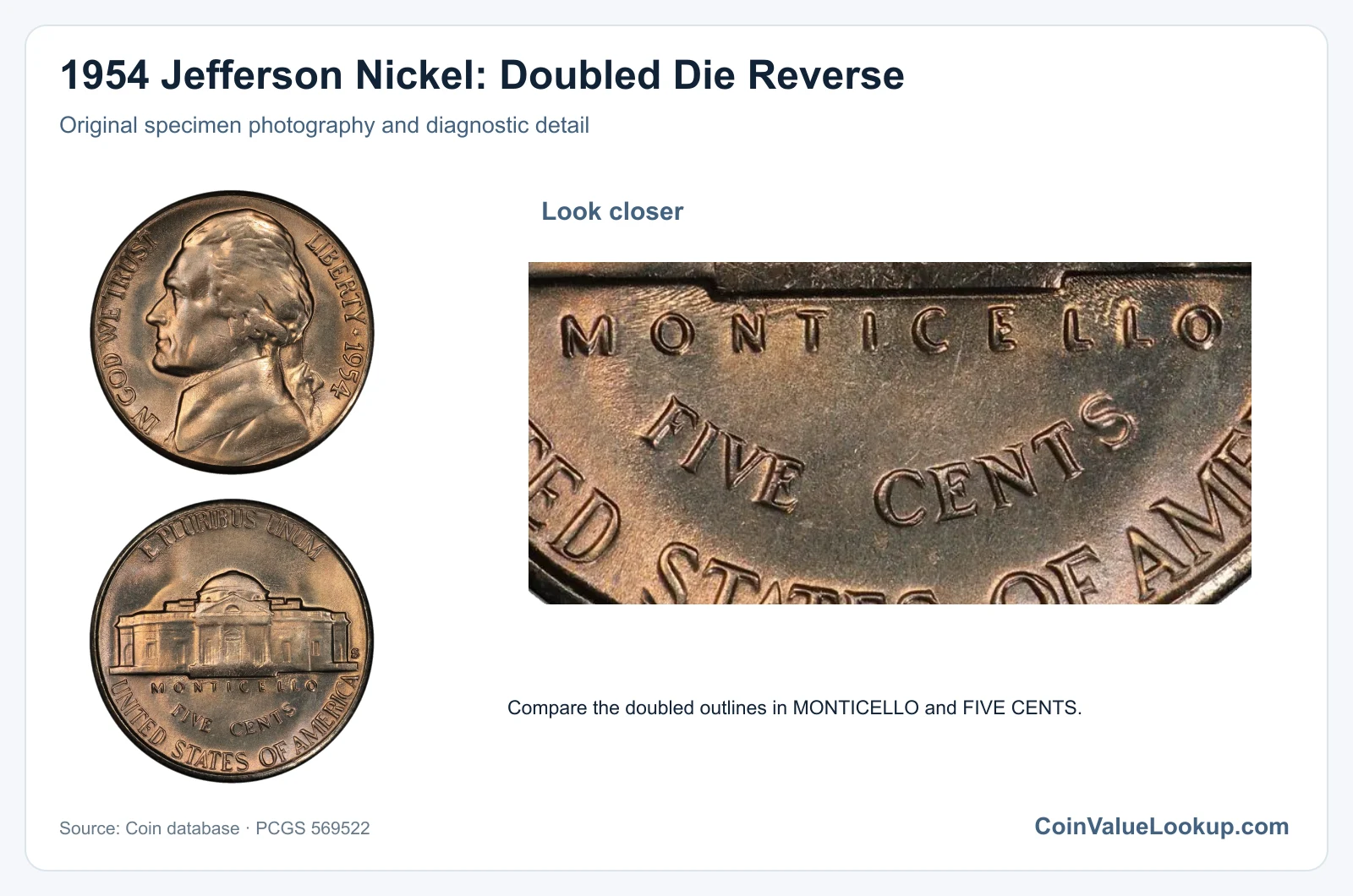
A doubled die reverse variety has been reported for the 1954 San Francisco nickel. Doubled die errors occur during die manufacture when a second impression slightly offsets the design.
The result is true hub doubling visible on reverse lettering or design contours.
To check, compare your coin's reverse legends and Monticello details against a normal 1954-S at the same magnification. Look for consistent doubling in the same direction across multiple design elements, not just one isolated spot.
Machine doubling is the most common lookalike and produces flat, shelf-like displacement without the rounded, separated profiles of genuine hub doubling. Light reflections and random post-strike damage can also fool you.
No standard price range is available for this variety; value depends on condition, the visibility of doubling, and whether the coin has been authenticated by a grading service.