1939 Mercury Dime Coin Value: How Much Is It Worth?
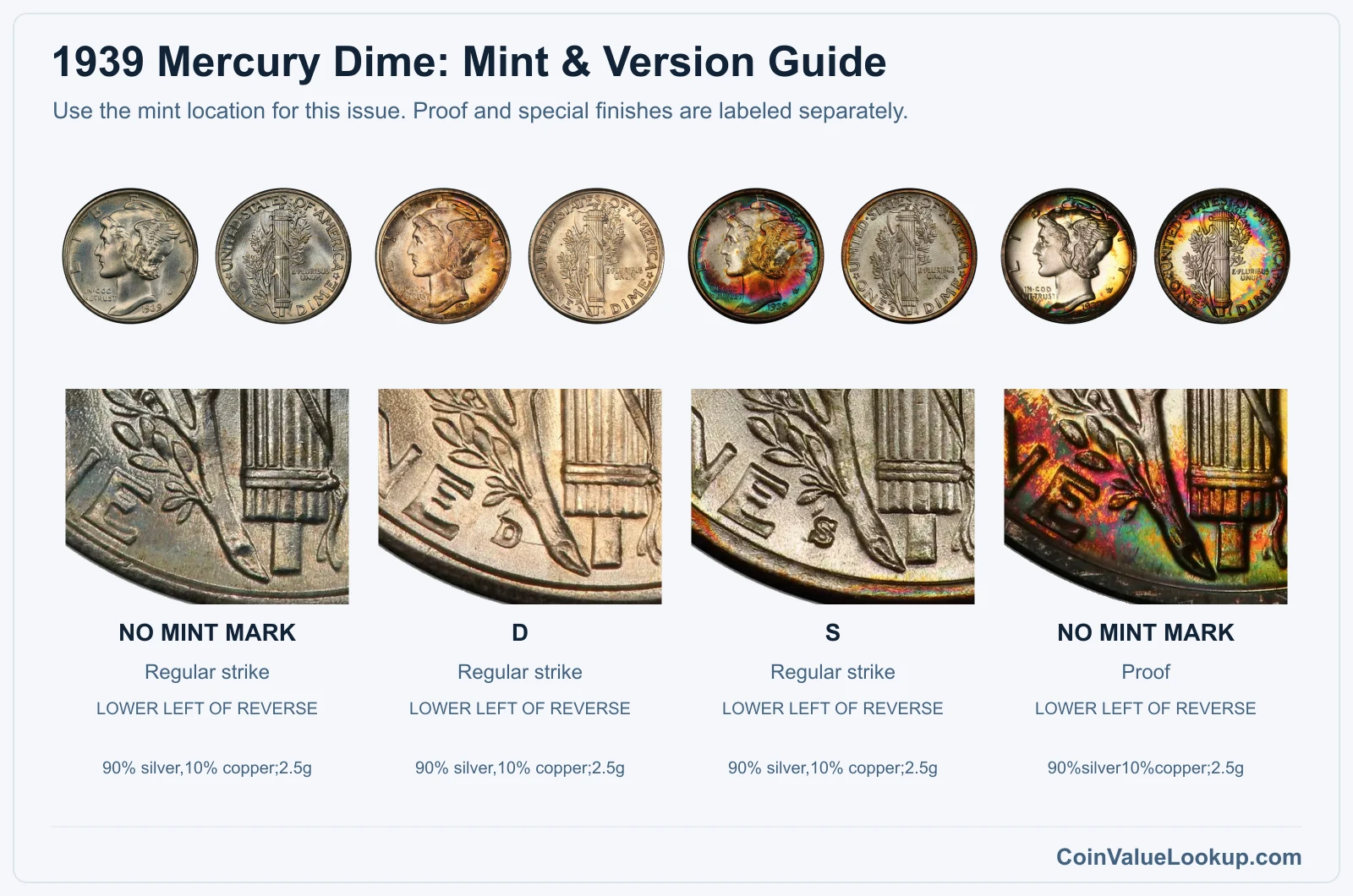
The 1939 Mercury dime is a 90% silver coin that remains affordable in circulated grades, with guide estimates running from about $5.73 in G4 to $56 in MS65 depending on the mint. Philadelphia also struck proof versions that year.
Full Bands strikes, proofs, and identified varieties each carry their own pricing, so the specific version matters.
Fast Way to Identify Your 1939 Mercury Dime
Snap a clear photo of the front and back of your 1939 dime and upload both images. That gives us enough to make a preliminary identification of the mint, general condition, and version so you know where your coin fits before going further.
1939 Mercury Dime Value
Upload both sides of your 1939 Mercury Dime.
Front Obverse
Upload photo
Back Reverse
Upload photo
Which 1939 Mercury Dime Versions Are Worth Money?
- Philadelphia business strikes in MS65 are guided around $36; Full Bands examples may bring more but require separate evaluation.
- Denver business strikes guide slightly higher at about $43 in MS65, making nice uncirculated D-mint coins worth checking.
- San Francisco pieces carry the highest regular guide estimate at roughly $56 in MS65, reflecting tighter supply in top grades.
- Philadelphia proofs are guided near $285 in PR65 and are a distinct collectible category from business strikes.
- Doubled die obverse, repunched mintmark, and lamination errors have been reported for 1939 dimes and can add value depending on visibility and condition.
Step 1: Identify Your 1939 Mercury Dime Mint Mark and Version
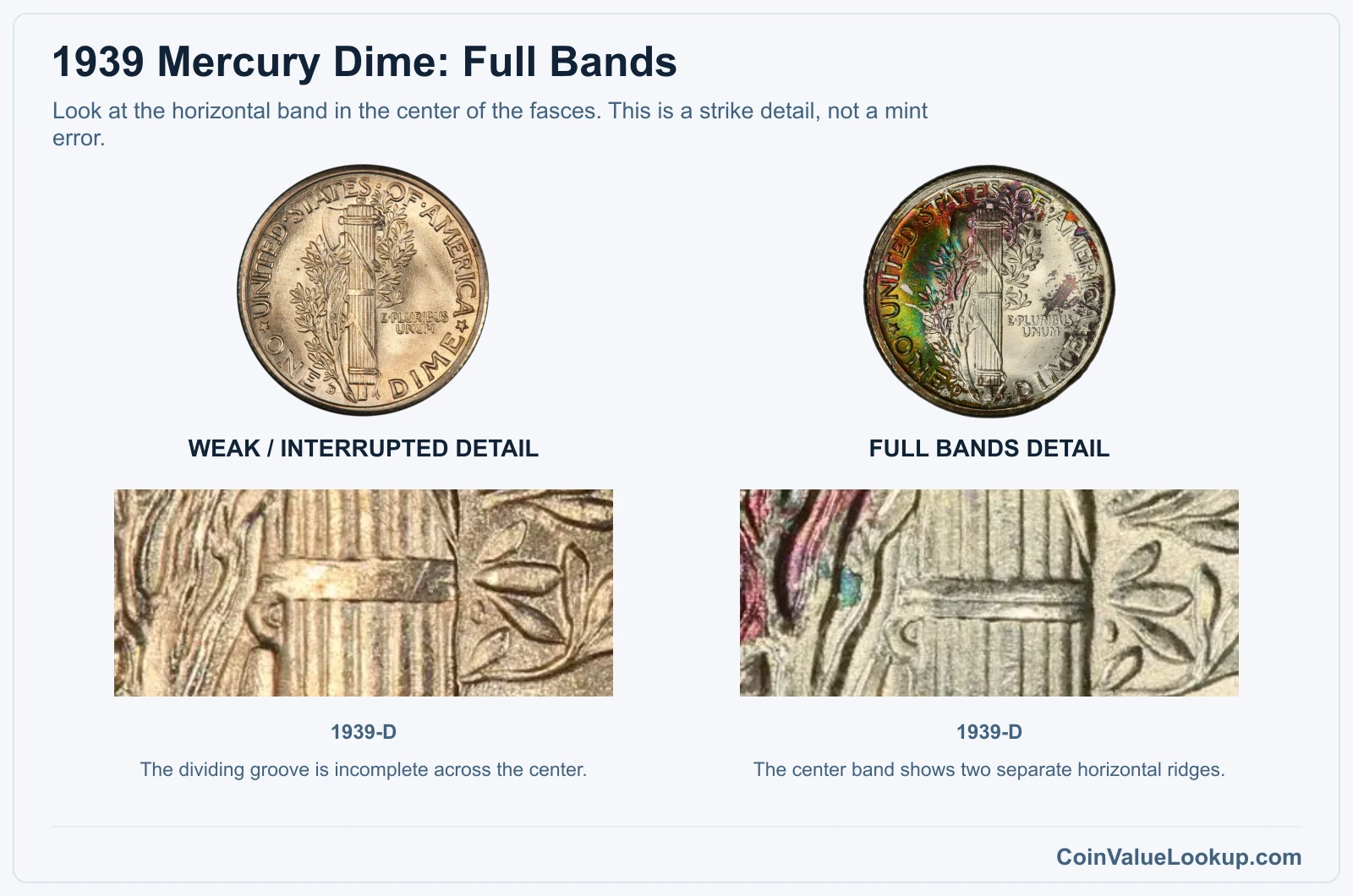
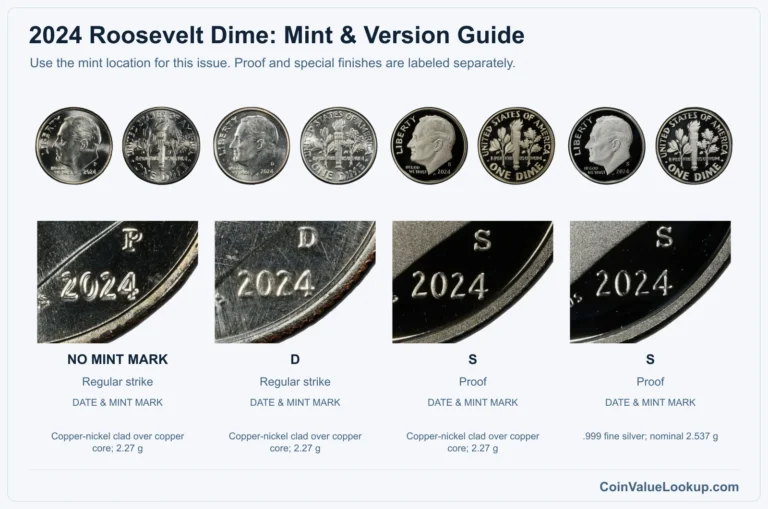
Three mints produced business-strike 1939 Mercury dimes: Philadelphia, Denver, and San Francisco. Philadelphia coins carry no mintmark.
Denver shows a small "D" and San Francisco a small "S," both located on the lower left of the reverse near the word ONE.
Don't confuse the "AW" monogram on the obverse with a mintmark. Those are designer Adolph Weinman's initials, not a West Point mark.
All 1939 dimes share the same composition: 90% silver and 10% copper, weighing about 2.5 grams with a 17.9 mm diameter and a reeded edge. Philadelphia also produced brilliant proof strikes that year, which are a separate manufacturing category from business strikes.
Step 2: Check Your 1939 Mercury Dime Grade
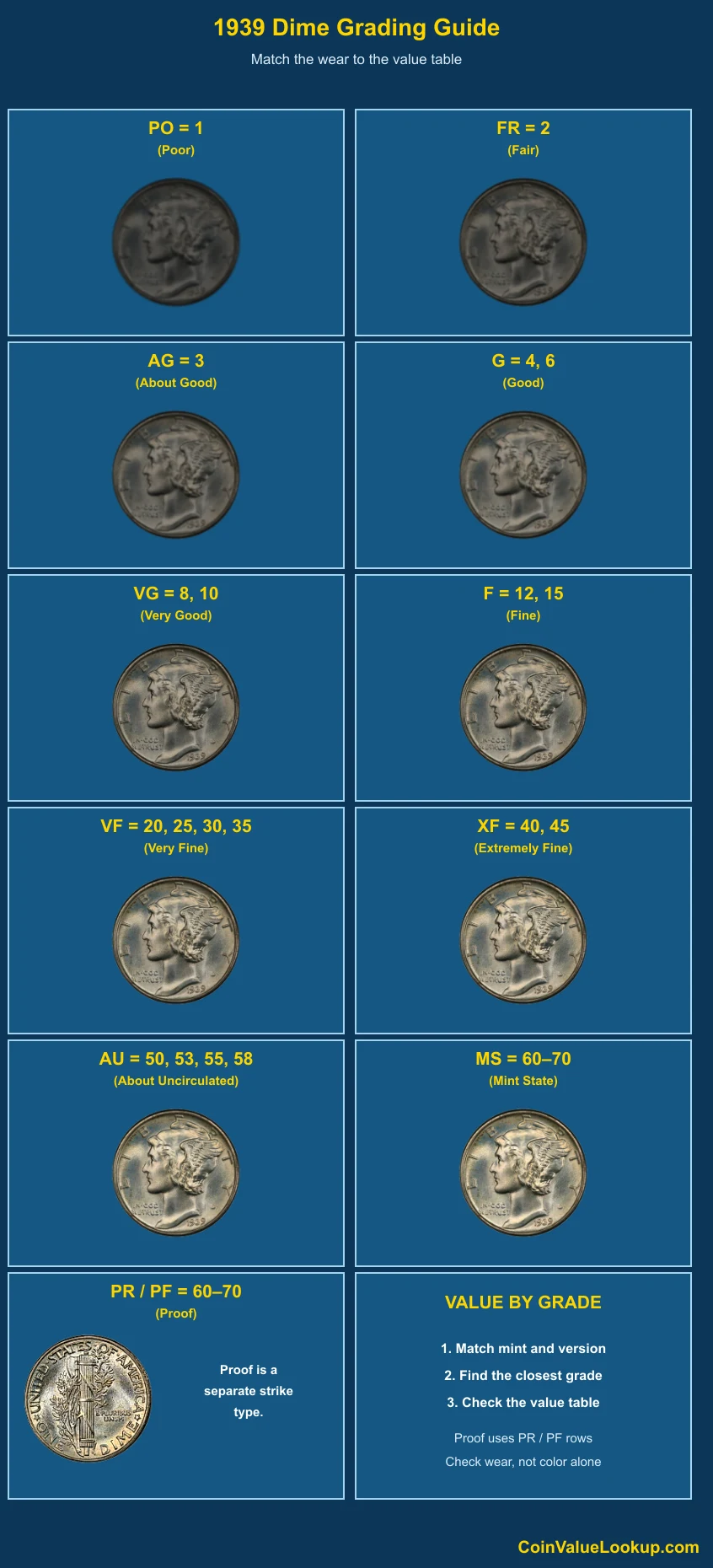
Start by examining the hair detail above and in front of Liberty's ear. On a well-worn coin those strands merge into a flat area.
Next check the wings on the cap and the horizontal bands on the reverse fasces.
Weak bands or soft peripheral lettering don't automatically mean heavy circulation. Some branch-mint pieces simply received a softer strike at the press.
Compare your coin's surfaces under good light using the comparison image to separate actual wear from strike weakness.
Luster, contact marks, and any signs of cleaning all factor into the grade. Full Bands is a separate strike designation that NGC evaluates by checking band separation, and different grading services may apply slightly different criteria.
Proof is a manufacturing finish, not a grade above Mint State.
Coin Value Lookup is a good starting point if you want to look up guides for other dates in this series or different denominations entirely.
Step 3: Check 1939 Mercury Dime Value by Mint and Version
1939 Mercury Dime — No Mint Mark — Silver Circulation
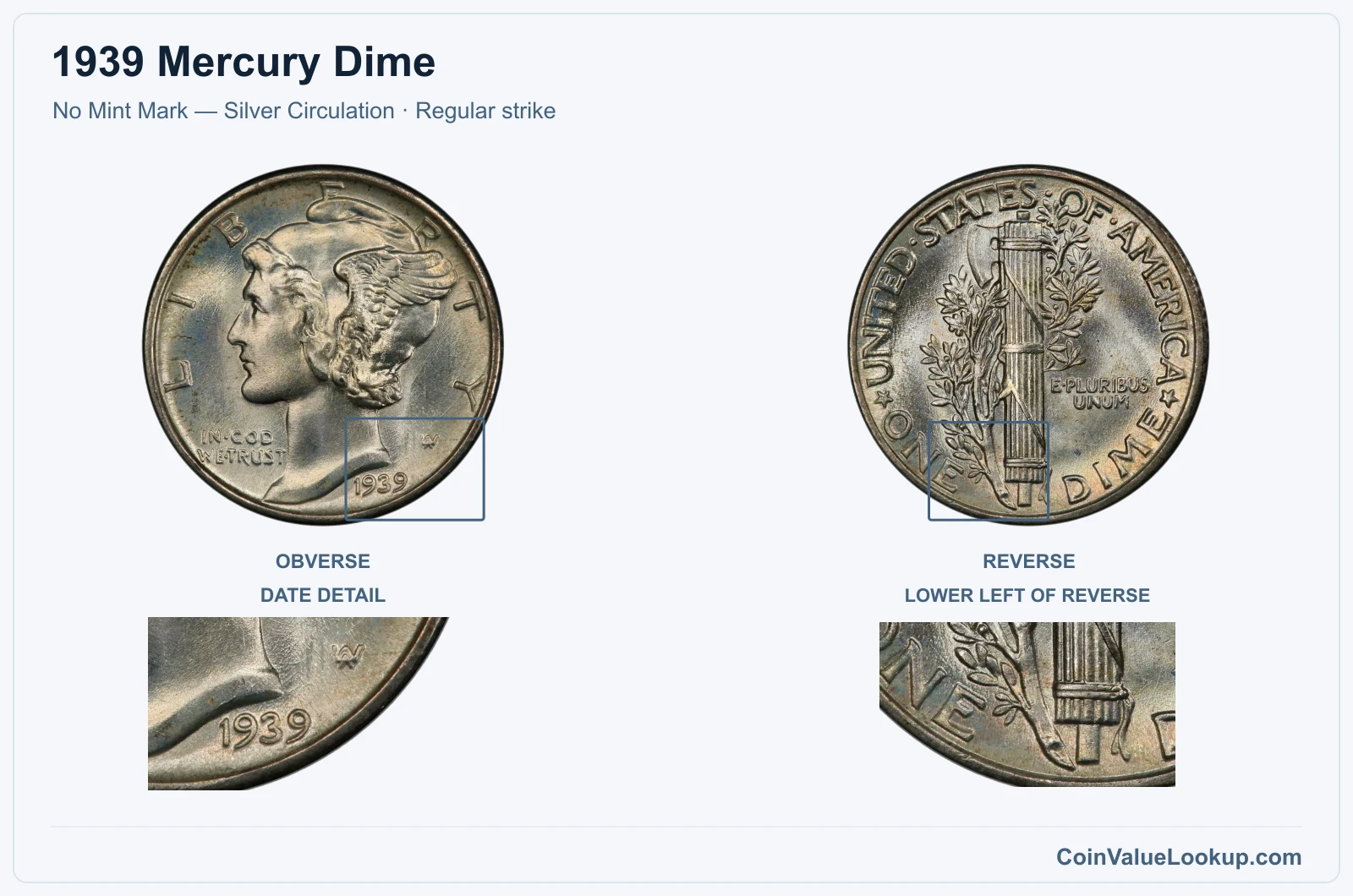
The 1939 Philadelphia dime has no mintmark. Look at the lower left reverse beside ONE and confirm the space is blank.
Guide estimates place this coin at about $5.73 in G4 and around $36 in MS65.
Full Bands examples, where the horizontal bands on the fasces show complete separation, can command higher prices, but no Full Bands premium is included in those regular MS65 figures. Treat FB as a separate filter when evaluating your coin.
| Range | Grade | Price | Auction Records | Appraisal |
|---|---|---|---|---|
| PO | PO 1 | — | Coin Identifier | |
| FR | FR 2 | — | Coin Identifier | |
| AG | AG 3 | — | Coin Identifier | |
| G | G 4 | — | Coin Identifier | |
| G 6 | — | Coin Identifier | ||
| VG | VG 8 | — | Coin Identifier | |
| VG 10 | — | Coin Identifier | ||
| F | F 12 | — | Coin Identifier | |
| F 15 | — | Coin Identifier | ||
| VF | VF 20 | — | Coin Identifier | |
| VF 25 | — | Coin Identifier | ||
| VF 30 | — | Coin Identifier | ||
| VF 35 | — | Coin Identifier | ||
| XF | XF 40 | Coin Identifier | ||
| XF 45 | — | Coin Identifier | ||
| AU | AU 50 | — | Coin Identifier | |
| AU 53 | — | Coin Identifier | ||
| AU 55 | — | Coin Identifier | ||
| AU 58 | — | Coin Identifier | ||
| MS | MS 60 | — | Coin Identifier | |
| MS 61 | — | Coin Identifier | ||
| MS 62 | Coin Identifier | |||
| MS 63 | Coin Identifier | |||
| MS 64 | Coin Identifier | |||
| MS 65 | Coin Identifier | |||
| MS 66 | Coin Identifier | |||
| MS 67 | Coin Identifier | |||
| MS 68 | Coin Identifier | |||
| MS 69 | Coin Identifier | |||
| MS 70 | — | — | — |
1939 Mercury Dime — D — Silver Circulation
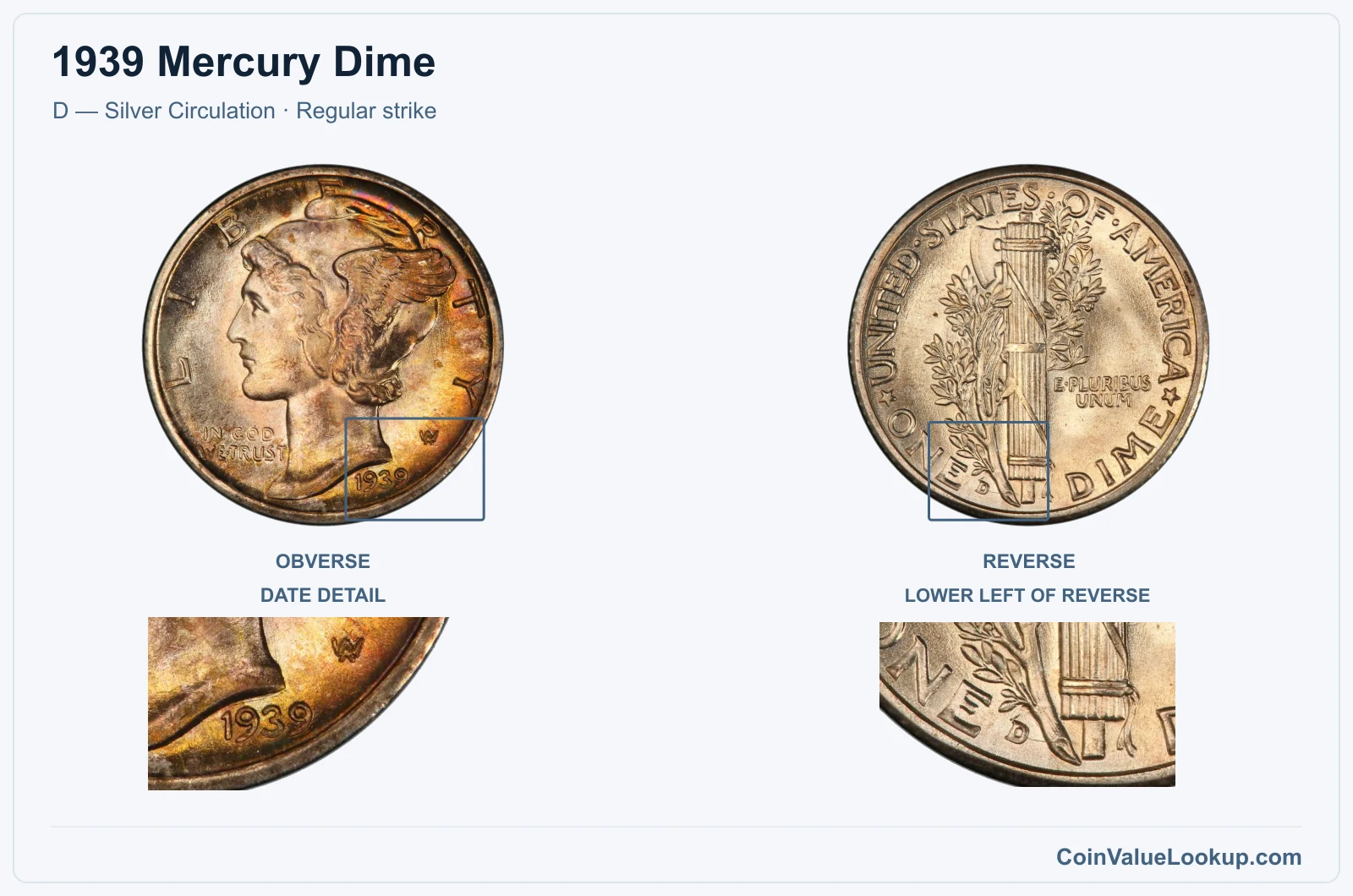
Denver struck 1939 dimes with a small "D" mintmark on the lower left reverse. In G4 the guide value sits at about $5.73, same as Philadelphia, but in MS65 the Denver coin pulls ahead at roughly $43.
That modest premium over the Philadelphia issue reflects collector demand for well-preserved D-mint examples. As with all business strikes, a Full Bands designation is evaluated separately and is not reflected in the standard MS65 estimate.
| Range | Grade | Price | Auction Records | Appraisal |
|---|---|---|---|---|
| PO | PO 1 | — | Coin Identifier | |
| FR | FR 2 | — | Coin Identifier | |
| AG | AG 3 | — | Coin Identifier | |
| G | G 4 | — | Coin Identifier | |
| G 6 | — | Coin Identifier | ||
| VG | VG 8 | — | Coin Identifier | |
| VG 10 | — | Coin Identifier | ||
| F | F 12 | — | Coin Identifier | |
| F 15 | — | Coin Identifier | ||
| VF | VF 20 | — | Coin Identifier | |
| VF 25 | — | Coin Identifier | ||
| VF 30 | — | Coin Identifier | ||
| VF 35 | — | Coin Identifier | ||
| XF | XF 40 | — | Coin Identifier | |
| XF 45 | — | Coin Identifier | ||
| AU | AU 50 | Coin Identifier | ||
| AU 53 | — | Coin Identifier | ||
| AU 55 | Coin Identifier | |||
| AU 58 | Coin Identifier | |||
| MS | MS 60 | — | Coin Identifier | |
| MS 61 | — | Coin Identifier | ||
| MS 62 | — | Coin Identifier | ||
| MS 63 | Coin Identifier | |||
| MS 64 | Coin Identifier | |||
| MS 65 | Coin Identifier | |||
| MS 66 | Coin Identifier | |||
| MS 67 | Coin Identifier | |||
| MS 68 | Coin Identifier | |||
| MS 69 | — | — | — | |
| MS 70 | — | — | — |
1939 Mercury Dime — S — Silver Circulation
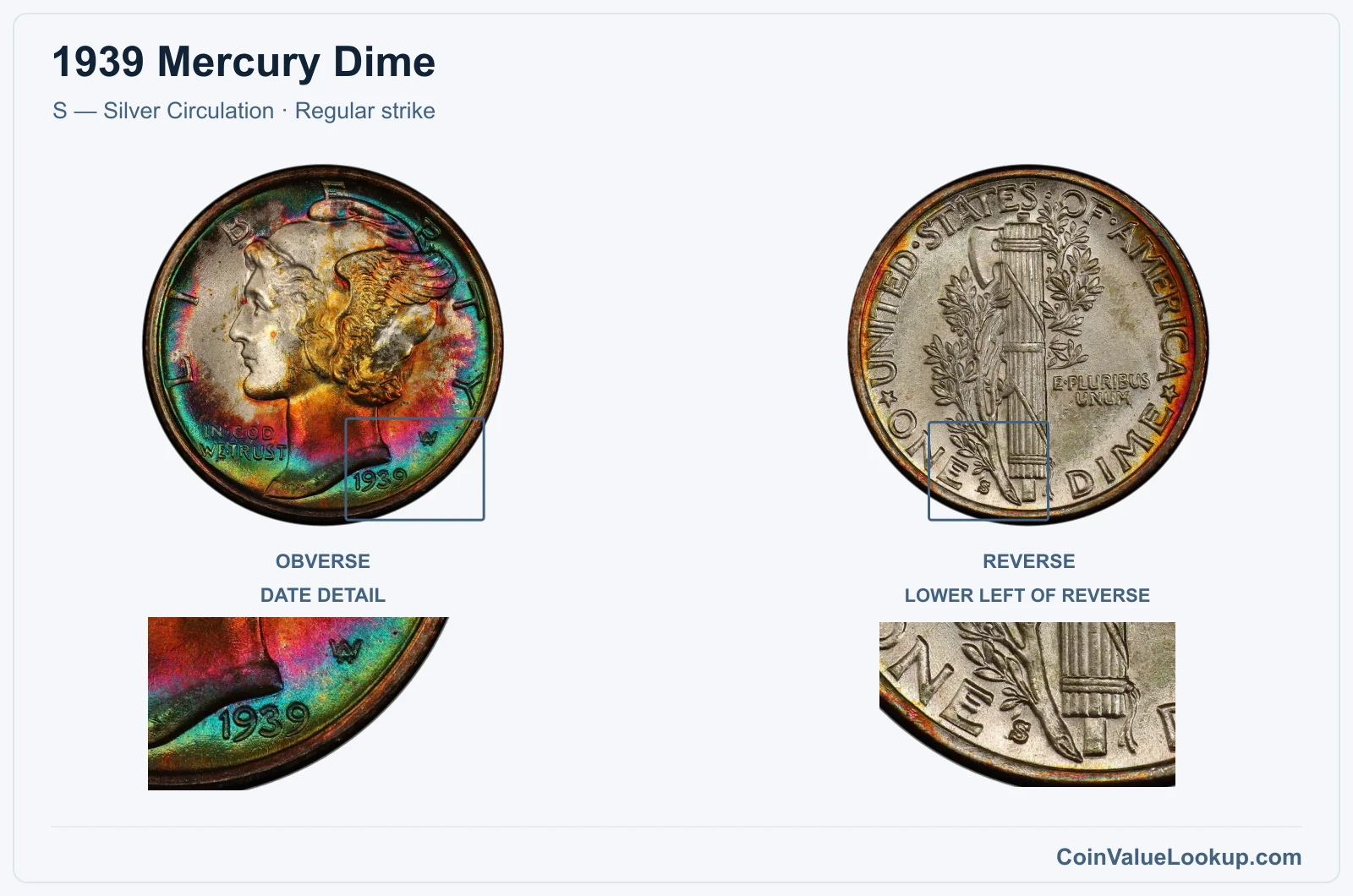
San Francisco's 1939 dime carries an "S" mintmark in the same lower-left reverse position. Guide estimates run from about $5.73 in G4 up to approximately $56 in MS65, the highest regular business-strike figure for this date.
S-mint Mercury dimes from this era often had softer strikes, which makes genuinely sharp, fully separated band examples harder to come by. That scarcity in high grades is reflected in the premium over the P and D issues.
Full Bands pricing is separate from the standard MS65 guide value listed here.
| Range | Grade | Price | Auction Records | Appraisal |
|---|---|---|---|---|
| PO | PO 1 | — | Coin Identifier | |
| FR | FR 2 | — | Coin Identifier | |
| AG | AG 3 | — | Coin Identifier | |
| G | G 4 | — | Coin Identifier | |
| G 6 | — | Coin Identifier | ||
| VG | VG 8 | — | Coin Identifier | |
| VG 10 | — | Coin Identifier | ||
| F | F 12 | — | Coin Identifier | |
| F 15 | — | Coin Identifier | ||
| VF | VF 20 | — | Coin Identifier | |
| VF 25 | — | Coin Identifier | ||
| VF 30 | — | Coin Identifier | ||
| VF 35 | — | Coin Identifier | ||
| XF | XF 40 | — | Coin Identifier | |
| XF 45 | — | Coin Identifier | ||
| AU | AU 50 | — | Coin Identifier | |
| AU 53 | — | Coin Identifier | ||
| AU 55 | — | Coin Identifier | ||
| AU 58 | Coin Identifier | |||
| MS | MS 60 | — | Coin Identifier | |
| MS 61 | — | Coin Identifier | ||
| MS 62 | Coin Identifier | |||
| MS 63 | Coin Identifier | |||
| MS 64 | Coin Identifier | |||
| MS 65 | Coin Identifier | |||
| MS 66 | Coin Identifier | |||
| MS 67 | Coin Identifier | |||
| MS 68 | Coin Identifier | |||
| MS 69 | — | — | — | |
| MS 70 | — | — | — |
1939 Mercury Dime — No Mint Mark — Silver Proof
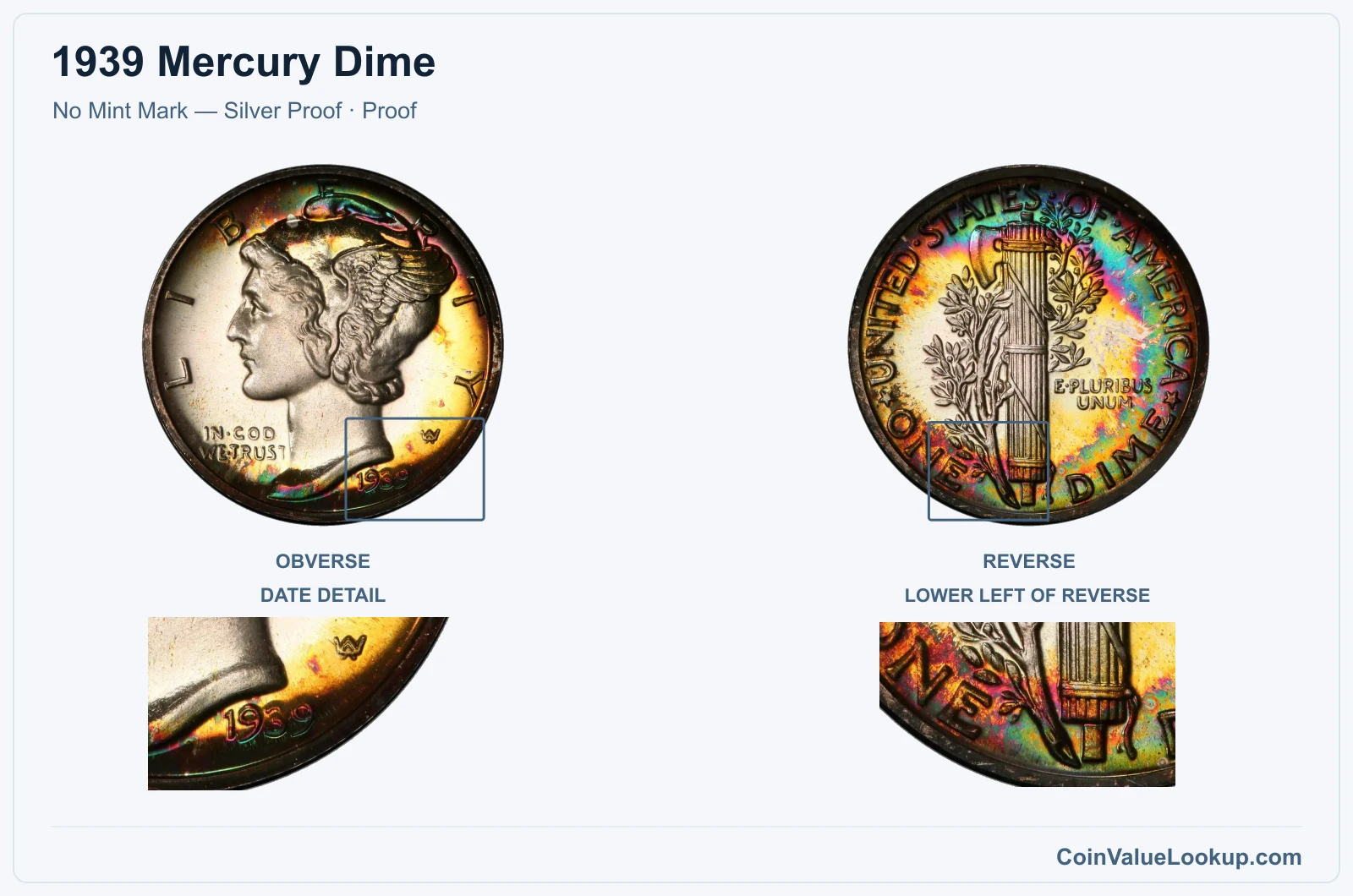
Philadelphia produced brilliant proof Mercury dimes from 1936 through 1942, and 1939 falls squarely in that run. These were struck on specially prepared planchets with polished dies, giving them mirror-like fields and sharp detail.
A PR65 example is guided at about $285. Cameo contrast, where frosted devices stand against reflective fields, may be an additional quality factor but is not a different alloy or separate issue.
There is no Full Bands filter applied to proof pricing here. Confirm proof status by checking for deeply reflective surfaces and squared-off rims rather than the satiny luster of a business strike.
| Range | Grade | Price | Auction Records | Appraisal |
|---|---|---|---|---|
| PR | PR 1 | — | Coin Identifier | |
| PR 2 | — | Coin Identifier | ||
| PR 3 | — | Coin Identifier | ||
| PR 4 | — | Coin Identifier | ||
| PR 6 | — | Coin Identifier | ||
| PR 8 | — | Coin Identifier | ||
| PR 10 | — | Coin Identifier | ||
| PR 12 | — | Coin Identifier | ||
| PR 15 | — | Coin Identifier | ||
| PR 20 | — | Coin Identifier | ||
| PR 25 | — | Coin Identifier | ||
| PR 30 | — | Coin Identifier | ||
| PR 35 | — | Coin Identifier | ||
| PR 40 | — | Coin Identifier | ||
| PR 45 | — | Coin Identifier | ||
| PR 50 | — | Coin Identifier | ||
| PR 53 | — | Coin Identifier | ||
| PR 55 | — | Coin Identifier | ||
| PR 58 | — | Coin Identifier | ||
| PR 60 | Coin Identifier | |||
| PR 61 | Coin Identifier | |||
| PR 62 | Coin Identifier | |||
| PR 63 | Coin Identifier | |||
| PR 64 | Coin Identifier | |||
| PR 65 | Coin Identifier | |||
| PR 66 | Coin Identifier | |||
| PR 67 | Coin Identifier | |||
| PR 68 | Coin Identifier | |||
| PR 69 | — | — | — | |
| PR 70 | — | — | — |
1939 Mercury Dime Error List
1. 1939 Mercury Dime — Doubled Die Obverse
Doubled die obverse errors have been reported for the 1939 dime. The diagnostic is doubled or separated lettering or design elements on the obverse that show consistent notching or displacement when compared to a normal example under the same lighting.
Look carefully at the date, LIBERTY, and IN GOD WE TRUST. Genuine hub doubling shows a uniform direction of separation across affected areas.
Machine doubling, by contrast, tends to produce flat, shelf-like distortions that lack the rounded secondary image.
No specific price range is available for this variety. Value depends on the strength and visibility of the doubling as well as the coin's overall condition.
Professional attribution helps confirm what you are seeing.
2. 1939 Mercury Dime — Repunched Mintmark
Repunched mintmark varieties have been reported on 1939 dimes. This means the mintmark punch was applied more than once in slightly different positions, leaving traces of the earlier strike visible near the final letter.
To check, inspect the D or S mintmark under magnification and compare it side by side with a normal example at the same scale. Genuine RPMs show remnants of a second impression, often as a notch, extra serif, or shadow of the letter offset in a consistent direction.
Die chips, corrosion around the mintmark, and machine doubling can mimic an RPM. No specific price is established here; the value depends on the clarity of the repunch, the overall grade, and collector interest in the specific variety.
3. 1939 Mercury Dime — Lamination / Split Planchet
Lamination or split planchet errors have been reported on 1939 dimes. These occur when the metal separates in layers, leaving a peeling flap, a missing section, or a visible crack within the planchet itself.
Photograph both the affected face and the edge together so the depth and nature of the separation are clear. A genuine lamination shows a natural split within the coin's alloy layers, often with a slightly different surface texture underneath.
Post-mint scraping, environmental corrosion, or deliberate cutting can look similar but typically leave tool marks or irregular edges that differ from the smooth internal separation of a true lamination. No specific price range is available for this error; value depends on the size of the affected area, overall eye appeal, and the coin's condition.